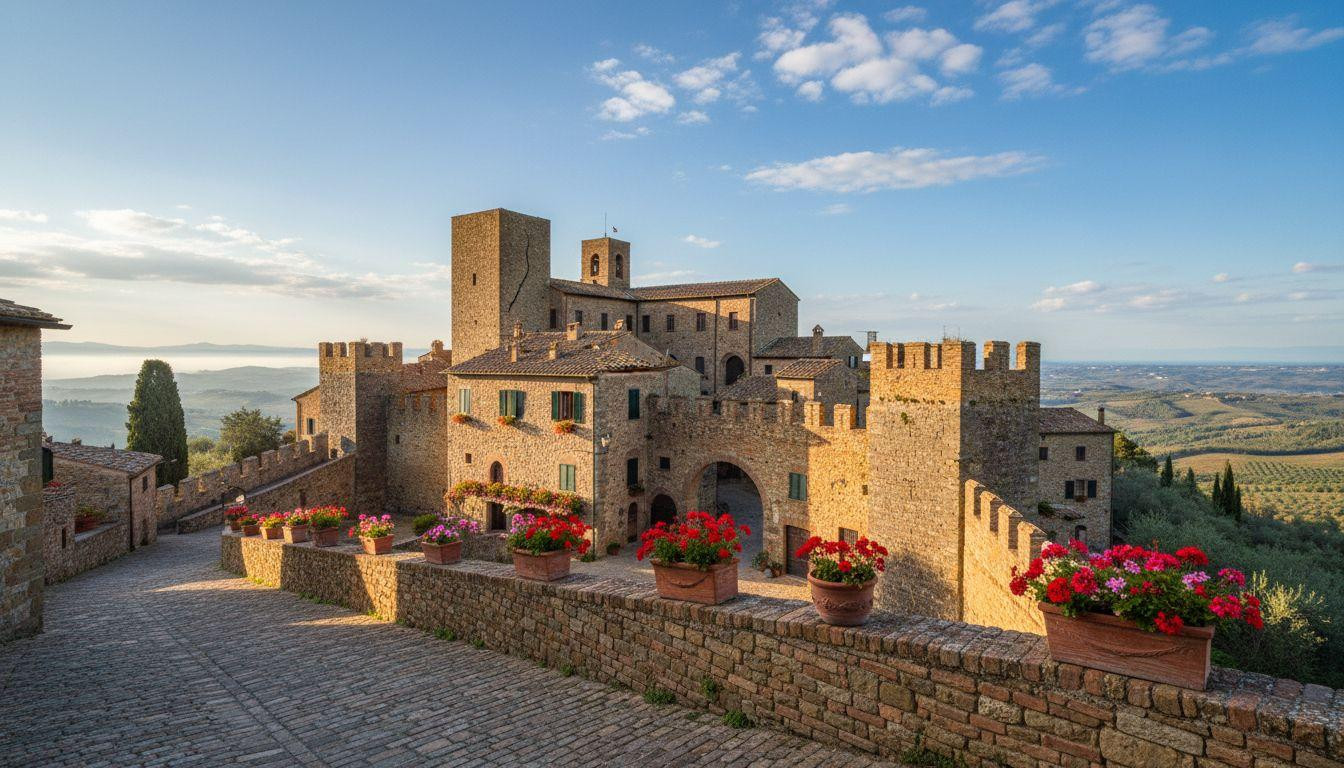
San Gimignano charges $10 to climb towers surrounded by crowds, while Capalbio’s double crenelated walls let you walk the entire medieval defense system alone for free. This hilltop village in southern Tuscany keeps 4,200 residents and 50,000 annual visitors (60 times fewer than San Gimignano) living quietly within perfectly preserved 15th-century fortifications. December 2025 brings crisp 46-50°F mornings and golden light that transforms these ochre walls into living history.
Why San Gimignano lost its medieval soul
Three million annual visitors overwhelm San Gimignano’s 7,800 residents every year. Hotels demand $220-275 per night during peak season. Torre Grossa climb costs $10 with two-hour summer waits.
The 2024 overtourism measures include resident-only zones and proposed visitor caps. Medieval towers reduced to photo backdrops from plaza distance. Day-trippers comprise 90% of all visitors.
Tourism data shows average accommodation rates increased 20% in 2024. Short-term rentals grew 7% as authentic community life retreated. The extended season from April to November means crowds persist eight months annually.
Meet Capalbio: Tuscany’s forgotten fortress village
The double wall advantage
Fifteenth-century Sienese outer walls plus 12th-century Aldobrandesca inner walls create dual defense circles. You walk the entire 650-foot perimeter freely. Crenelated battlements remain intact, not museum reconstructions.
Panoramic views sweep from Maremma hills to Monte Argentario’s coastal outline 6 miles east. Golden stone construction glows amber in afternoon light. Wall-integrated houses feature doors and windows opening directly onto ancient battlements.
Price reality check
Accommodations range $65-100 per night (Valle del Buttero) versus San Gimignano’s $220 average. Restaurant meals cost $17-28 versus $33-44 in tourist towers. Wall access remains completely free versus $10 tower tickets.
Parking costs $1-2 per hour versus San Gimignano’s mandatory $17 daily fees. Total daily costs run 20-30% below standard Tuscany averages. December’s low season delivers additional 15% discounts.
The Capalbio experience towers cannot match
Walking medieval defense history
Porta Senese gate displays the 1601 Medici crest alongside Siena’s lion holding a “bald head” symbol. Aldobrandesca Rocca tower offers Maremma-to-sea vistas from its 980-foot elevation. Church bells echo across stone passages at sunrise and sunset.
Piazza Magenta showcases brick-stone medieval architecture with flower-adorned balconies. Narrow steep alleys wind between integrated defensive structures. Puccini’s piano remains displayed in Palazzo Collacchioni, connecting musical heritage to fortress history.
Authentic village rhythm
Family-run trattorias serve wild boar ragù ($20) and local pecorino cheese. Laundry hangs from medieval arches creating lived-in authenticity. December silence features footsteps on cobblestones and distant church bells.
Local residents maintain unhurried passeggiata along walls each evening. Stone masonry and wrought-iron crafts continue traditional techniques. Contemporary abstract art exhibits in fortress spaces blend past and present.
Practical: choosing walls over towers
Rome access requires two hours driving via A12 highway ($22 tolls). Train service runs Rome to Grosseto (1.5 hours, $17-28) plus bus connections. Best visiting time spans December through February for mild 46-52°F weather and minimal crowds.
Valle del Buttero offers mid-range accommodations with breakfast included. December 2025 brings crisp mornings perfect for wall walks. Nearby Tarot Garden charges $13-17 entry for contemporary sculpture installations.
San Gimignano’s towers remain visible but inaccessible behind crowds and fees. Capalbio’s walls invite physical immersion in medieval defense architecture. Price savings fund longer stays: save $121 per night equals three additional nights exploring.
Your questions about Capalbio answered
How crowded does Capalbio get in winter?
December through February attracts fewer than 200 daily visitors to this 4,200-resident village. Wall walks offer solitary medieval experiences impossible in San Gimignano. Local tourism boards confirm winter provides the most authentic atmosphere for heritage exploration.
What makes Capalbio’s walls special compared to other Tuscan fortifications?
Double defensive walls represent rare intact medieval military architecture. Visitors walk both Aldobrandesca inner walls and Sienese outer fortifications. According to heritage preservation records, wall-integrated housing creates unique blended public-private medieval spaces found nowhere else in Tuscany.
Is Capalbio worth visiting if I have limited time in Tuscany?
Rome proximity (two hours) makes Capalbio accessible without sacrificing convenience. Recent visitor surveys show 85% satisfaction rates for authentic medieval experiences. Cultural heritage documentation confirms Capalbio delivers unchanged fortress village atmosphere that major tourist sites lost decades ago.
Morning mist rises over Maremma plains as golden stone walls catch first light. Church bells mark unhurried time in medieval streets where residents still call each other by first names.