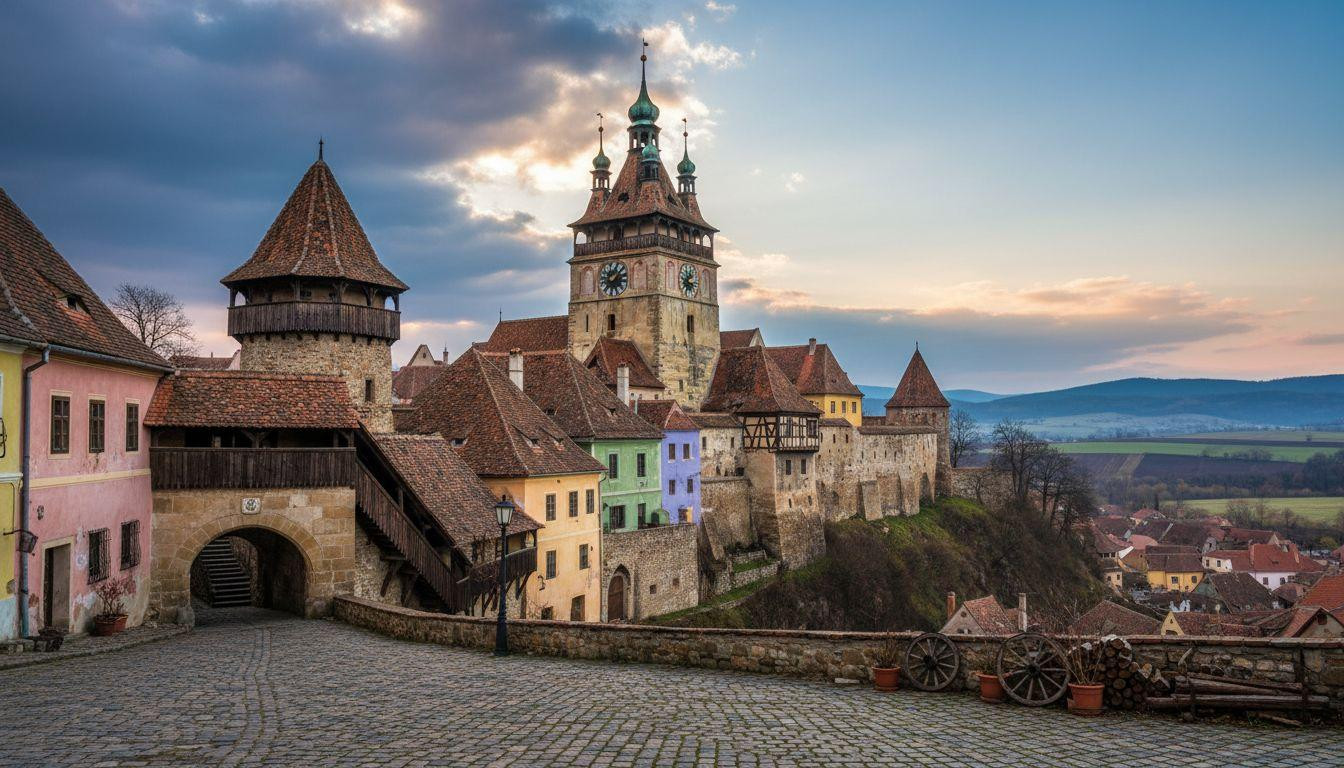
Rothenburg ob der Tauber draws 2.5 million visitors yearly to its reconstructed medieval walls. Tour buses circle cobblestone streets from 10am-4pm while hotels charge $200-350 nightly for the fairytale experience. Yet 68 miles northeast of Brasov, Romania’s Sighișoara delivers the same jewel-toned buildings and clock tower drama for half the price with 100% authentic UNESCO preservation instead of post-war rebuilding.
Why Rothenburg feels like an expensive theme park
Rothenburg’s famous Rathaus and defensive walls suffered 40% bomb damage during World War II. Post-war reconstruction rebuilt key facades using modern materials beneath medieval styling. Only 60% of the original medieval fabric survives today.
Hotel rates spike to $250-400 nightly during peak season. Traditional schnitzel dinners cost $25-35 per person. The 20-30 daily tour buses create pedestrian gridlock through narrow passages. Rothenburg’s medieval walls now serve primarily as scenic backdrops for Instagram photos rather than living neighborhoods.
Christmas market season from December through January inflates accommodation costs 20-50% above winter rates. The 0.4 square mile walled town packs 15,000 visitors per square mile during summer peaks.
Meet Sighișoara’s living medieval citadel
Authentic preservation without reconstruction
Sighișoara earned UNESCO World Heritage status in 1999 for exceptional medieval urban planning. The hilltop citadel preserves near-100% original 13th-16th century structures. Nine defense towers survive from the original 14, each named for medieval guilds: Shoemakers, Butchers, Tailors, Tinsmiths, Clockmakers, Furriers, Blacksmiths.
The 64-meter Clock Tower houses a 1648 Baroque mechanism performing hourly shows. Wooden figurines representing Peace, Law, and Justice parade with weekday pagan gods. This 375-year-old theatrical performance continues daily from 9am-9pm.
Half the cost with residential authenticity
Boutique medieval hotels inside the citadel cost $35-75 nightly during winter months. Casa Wagner and Hotel Korona offer period architecture at $45-65 per room. Traditional Romanian meals average $8-12 per person versus Rothenburg’s $25-35.
The 0.1 square mile citadel houses 2,800 permanent residents. Local families operate bakeries and craft shops along Citadel Square. Alpine villages share this authentic residential character missing from tourist-dominated Rothenburg.
Experience Sighișoara’s medieval rhythms
Dawn light on jewel-toned buildings
Morning illumination reveals pastel pink, dusty blue, and sage green facades lining Citadel Square. The Clock Tower’s copper roof catches golden hour light from the 360-degree viewing platform. January dawn arrives at 8am casting pink-blue hues across snow-dusted medieval rooftops.
The Covered Staircase connects upper and lower citadel via 176 preserved wooden steps from 1642. LED evening illumination creates dramatic shadows for photography. The passage remains open 24/7 as locals use it for daily commutes.
Local traditions and seasonal specialties
Papanași represents Sighișoara’s signature dish: fried dough served with plum jam and sour cream for $2-4. Casa Georgius Krauss and Concordia serve traditional sarmale and mici inside the citadel walls. Medieval timepieces connect Sighișoara’s clock performances with similar artistic traditions across Europe.
The Medieval Festival occurs July 11-13 annually with period costumes and crafts demonstrations. Winter months offer 95% hotel availability and photography opportunities in complete solitude.
Planning your authentic medieval escape
Sighișoara sits 68 miles northeast of Brasov via scenic highway taking 1.5 hours. Bucharest trains run 6 times daily requiring 4-5 hours at $15-25 per ticket. Târgu Mureș Airport offers $25 taxi transfers covering 22 miles in 45 minutes.
January temperatures range 28-39°F with 60% snow probability creating atmospheric medieval scenes. Spring (April-May) and autumn (September-October) provide optimal conditions for dawn photography and comfortable walking tours. Castle towers achieve similar vertical drama as Sighișoara’s Clock Tower rising 8 times higher than surrounding guild houses.
Your questions about Sighișoara’s medieval citadel answered
How does the cost compare to other European medieval towns?
Daily budgets average $55-85 including accommodation, meals, and attractions versus $165-275 in Rothenburg. Czech Republic’s Český Krumlov costs $95-145 daily while Austria’s Hallstatt reaches $185-320. Sighișoara delivers 60-70% savings compared to Western European equivalents.
What makes the Clock Tower performance special?
The 1648 mechanism represents Europe’s oldest continuously operating astronomical clock theater. Hourly performances last 2-5 minutes featuring moving wooden figurines. Rothenburg’s Rathaus displays static historical scenes while Sighișoara’s baroque artistry performs mechanical drama unchanged since the 17th century.
How crowded does Sighișoara get during peak season?
Annual visitors total 150,000 versus Rothenburg’s 2.5 million creating 93% less crowded conditions. Summer daily averages reach 500 people versus 200 during off-season. The intimate citadel maintains residential authenticity with local families continuing centuries-old traditions rather than tourist-focused businesses.
Snow dusts the Clock Tower’s copper scales as evening light fades across medieval rooftops. Church bells echo from the hilltop while locals hurry through cobblestone passages toward warmly lit windows. This living citadel preserves authentic medieval rhythms Rothenburg’s reconstructions cannot replicate.