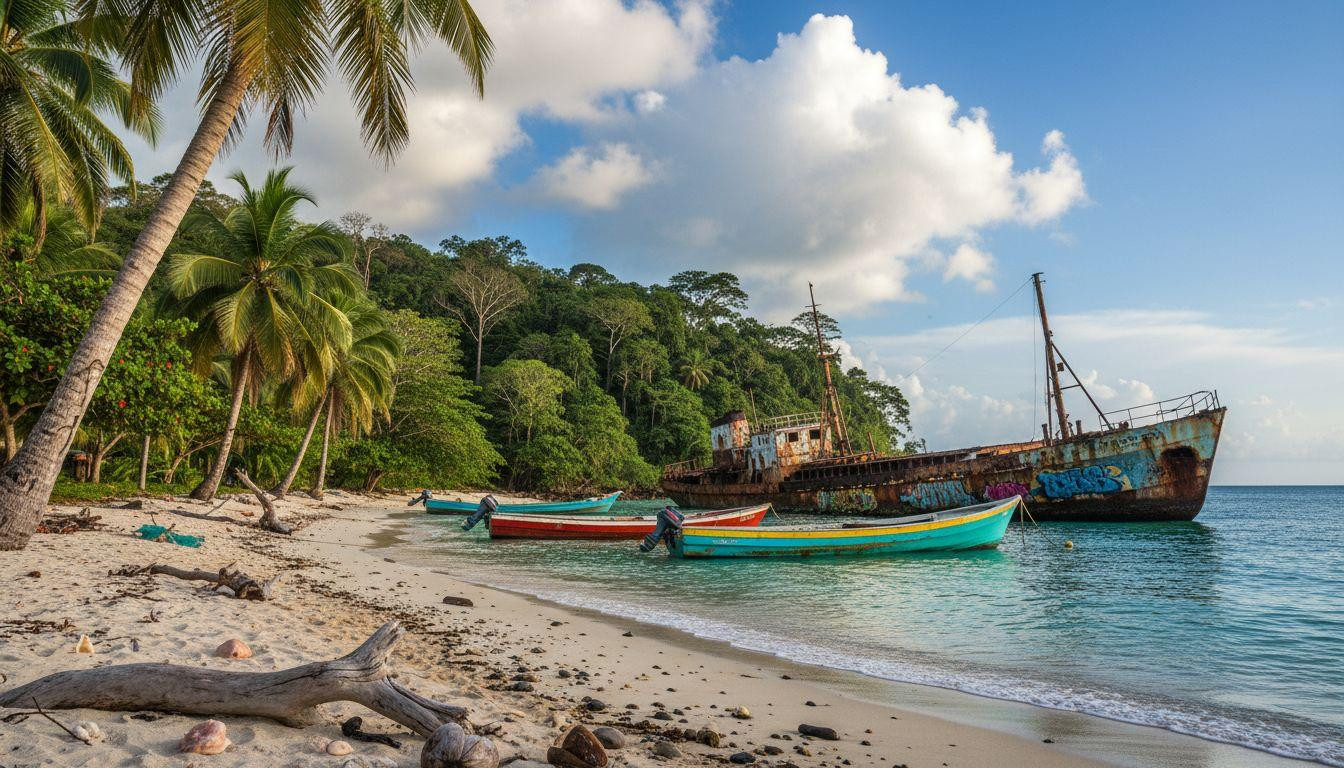
Puerto Viejo’s beaches pack with backpackers and yoga retreats where hostels average $67 per night during December-March dry season. Thirteen miles south along winding Ruta Nacional 256, Manzanillo Beach spreads the same powdery white sand and turquoise water across a fishing village of 800 residents that tourism forgot. Except for one graffiti-covered cargo ship embedded in the southern tip.
Why Puerto Viejo feels overrun in peak season
January 2025 brings peak crowds to Puerto Viejo’s main beaches. Budget hostels like Playa 506 Beachfront fill at $22 per night while mid-range options reach $43 nightly. Beach clubs and surf schools commercialize the once-sleepy Afro-Caribbean vibe.
Booking lead times stretch months ahead for December-March visits. Restaurant prices reflect tourism demand with meals averaging $10-15 versus Manzanillo’s $5-10 range. This Nicaragua beach spreads powdery sand where Caribbean water stays empty December to March, but Costa Rica’s Puerto Viejo attracts over 100,000 annual visitors seeking that same Caribbean authenticity.
Meet Manzanillo where crowds disappear
Same turquoise water without the hustle
The Gandoca-Manzanillo Wildlife Refuge protects 58 square kilometers of rainforest and coral reefs. Morning light illuminates the same reef-protected turquoise water that makes Puerto Viejo famous. Palm trees frame 1-2 miles of soft white sand where pelican flocks outnumber tourists.
No beach clubs interrupt the coastline. No vendors sell jewelry or smoothies. Village fishing boats anchor offshore while gentle waves whisper against the shore.
Authentic Afro-Caribbean culture survives here
Local sodas serve rondón (coconut fish stew) for $8-12 using recipes passed down through generations. Breadfruit and cacao grown nearby flavor traditional patí meat patties. The relaxed “pura vida” pace feels genuine rather than performed for tourists.
Bribri indigenous influences blend with Afro-Caribbean traditions in this final frontier before Panama. Five Grand Anse zones where nutmeg rum costs $8 and cricket fills empty Caribbean sand showcase similar cultural preservation across the Caribbean basin.
The Yicel shipwreck creates unexpected art
How a 1961 cargo ship became community canvas
December 2017 changed Manzanillo’s southern tip forever. The 135-foot Yicel cargo ship developed hull cracks and pump failure en route to Limón port. Rather than sink offshore, the Panamanian captain intentionally grounded the vessel in shallow water.
Authorities pumped 1,600 gallons of diesel fuel to prevent environmental damage. Refloating efforts failed as waves buried the hull deeper in sand. Since 2018, local artists transformed the rusted metal into a vibrant graffiti canvas.
What visitors find at the wreck today
Half-buried rust meets tropical greens in Instagram-worthy contrast. Visitors explore the accessible sections while respecting safety warnings about missing rungs and wave action. Low tide offers the clearest views of murals covering the ship’s bridge and hull.
Rare sunset views distinguish this Caribbean coast location. This beach hides olive-green sand from a 49,000 year volcanic eruption demonstrates how unique coastal features create unforgettable destinations.
What peaceful beach days actually look like
Activities without crowds or entry fees
Morning beach walks reveal no other footprints in the sand. Snorkeling equipment brings underwater reef exploration near the shipwreck site. The Gandoca-Manzanillo Wildlife Refuge offers hiking trails for $5-10 entry fees through protected rainforest.
Bicycle rentals from Puerto Viejo cost $5 daily for the scenic 8-mile coastal ride. Fishing village rhythms replace nightclub beats as the day’s entertainment.
Local food without tourist markup
Family-run sodas prepare fresh fish caught that morning. Rice, beans, and plantains accompany meals priced for locals rather than visitors. Coconut water comes fresh from trees rather than packaged bottles.
Limited restaurant options mean authentic experiences rather than tourist menus. Forget Malé resorts where rooms cost $1,200 and Fulidhoo keeps nurse shark lagoons for $113 shows how smaller Caribbean destinations preserve authenticity through limited development.
Practical escape from Puerto Viejo’s peak season chaos
January’s dry season brings 78-84°F temperatures with minimal rainfall. Bus service from Puerto Viejo costs approximately $3 for the 30-minute journey along the single coastal road. No navigation challenges or traffic delays interrupt the peaceful transition.
Accommodation options remain limited to basic cabinas and guesthouses priced 15-25% below regional averages. Limited ATM access requires cash planning, but Spanish language skills prove helpful rather than essential for basic interactions.
Your questions about Manzanillo Beach answered
How do costs compare between Puerto Viejo and Manzanillo?
Puerto Viejo hostels average $39-53 nightly in peak season while vacation rentals start around $20 before taxes. Manzanillo offers comparable basic accommodation at lower rates due to limited tourism infrastructure. Meals cost $5-10 versus Puerto Viejo’s $10-15 average, with free beach access versus Puerto Viejo’s commercial beach clubs.
Is the shipwreck safe to explore?
The Yicel wreck remains accessible for photography and careful exploration of exterior sections. Visitors should avoid climbing on unstable areas and respect wave conditions that change throughout the day. The site functions as community art installation rather than structured tourist attraction, requiring personal judgment about safety conditions.
What makes this better than other Caribbean beach destinations?
Manzanillo combines Caribbean beauty with authentic fishing village culture at prices 15-25% below regional averages. The December-March dry season offers ideal conditions without high-season crowds found at developed beaches. Protected refuge status ensures environmental preservation while the shipwreck provides unique visual interest unavailable at typical Caribbean destinations.
Afternoon light catches graffiti colors against turquoise water while fishing boats return with daily catches. Palm fronds rustle in warm trade winds carrying sea salt and jungle humidity across empty white sand.