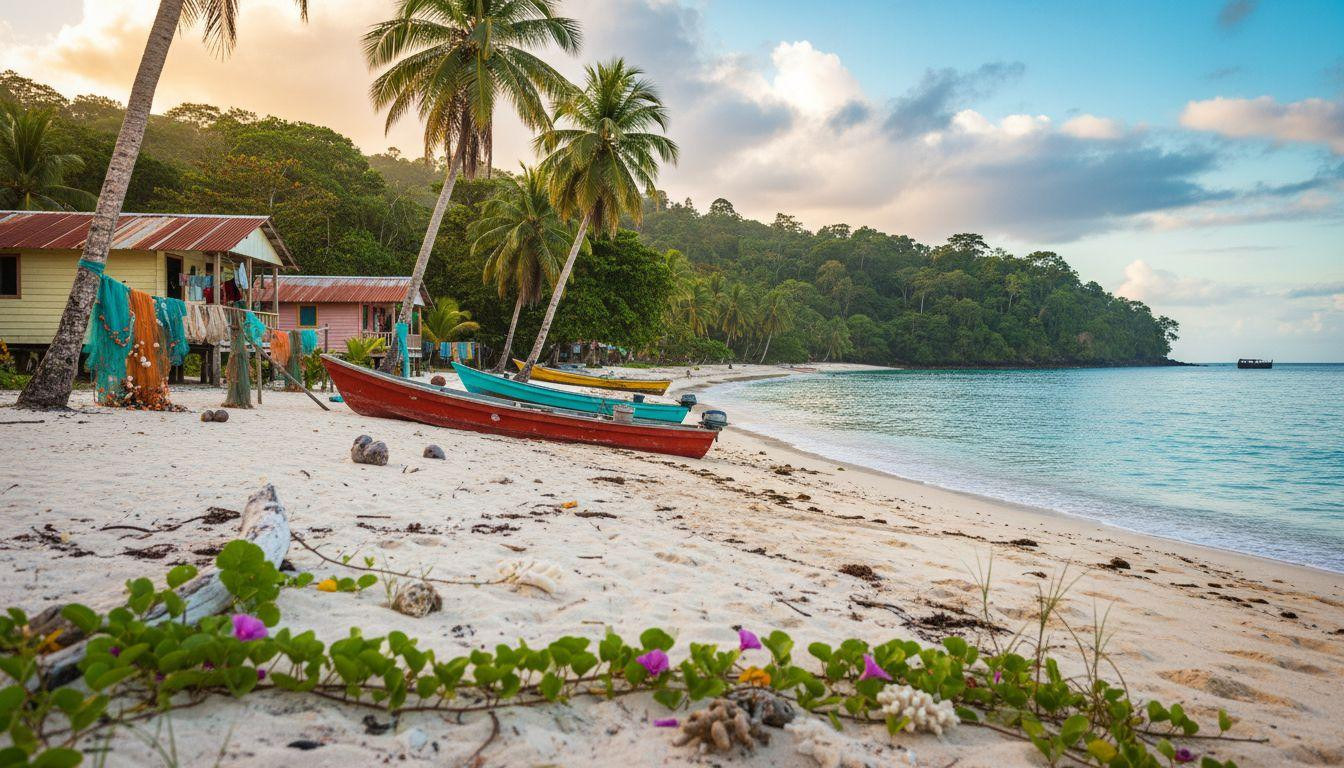
Puerto Viejo’s beach parties and $67 hostels disappear 8 miles south where Route 256 literally ends at a fishing village. Manzanillo sits at Costa Rica’s road terminus, protecting turquoise Caribbean water and authentic Afro-Caribbean culture that Puerto Viejo lost to backpacker crowds.
The mathematics are simple. Puerto Viejo averages $53-67 per night for hostels packed with party tourists. Manzanillo’s family-run cabinas cost $40-60 per night with empty beaches outside your door.
Why Puerto Viejo lost its quiet charm
Puerto Viejo transformed from authentic fishing village to party central over the past decade. The tourism boom brought 577+ hotels and hostels to a town that couldn’t handle the crowds.
Backpackers flood Playa Cocles and Salsa Brava surf breaks every December through March. Beach bars blast reggae until 2am while local families moved inland to escape the noise. Foreign-owned businesses now control 50% of the tourist core.
Restaurant meals cost $15-20 at tourist spots designed for Instagram rather than locals. The authentic Caribbean fishing culture vanished under commercial pressure from yoga retreats and beach clubs.
Meet Manzanillo where the road actually ends
The geography that protects authenticity
Route 256 terminates at Manzanillo village after 8 miles of mostly paved coastal road. No through traffic exists because there’s nowhere else to go. The Gandoca-Manzanillo Wildlife Refuge protects 9 miles of coastline from development.
This natural crowd filter means only intentional visitors reach Manzanillo. The village maintains 300-500 residents who still fish for their living rather than serve tourists.
The price reality that saves money
Manzanillo cabinas average $40-60 per night compared to Puerto Viejo’s $53-67 hostel rates. Local sodas serve fresh fish plates for $6-8 while Puerto Viejo tourist restaurants charge $15-20 per meal.
Daily budgets run $60-90 in Manzanillo versus $100-150 in Puerto Viejo. Beach access stays free unlike other Caribbean destinations where entrance fees add up quickly.
The Manzanillo experience that Puerto Viejo lost
What actually happens at road’s end
Morning arrives with pelicans diving over shipwreck silhouettes visible through crystal-clear water. Working fishing boats depart at 5am dawn light, not party boats loaded with hungover tourists.
Turquoise water temperatures hold steady at 81-84°F during December through March dry season. Visibility extends 30-60 feet for snorkeling the healthy reefs that host tropical fish Puerto Viejo’s murky water can’t support.
Refuge trails wind through jungle to secluded coves where howler monkey choruses echo at 5am instead of disco music.
The cultural difference money can’t buy
Local sodas preserve authentic rondón stew recipes. This Afro-Caribbean coconut milk dish contains fresh fish, breadfruit, yams, plantains, and dumplings slow-simmered for communal significance dating to Jamaican migrants.
Patí pastries from village market stalls cost $2-3 for spicy meat turnovers, not $8 artisanal versions marketed to wellness tourists. Sunday beach gatherings feature Tico families playing soccer and sharing food, not spring break parties.
Spanish and Caribbean English patois conversations flow naturally rather than English-only zones catering to foreign visitors.
Planning your escape from Puerto Viejo crowds
The drive south takes 20 minutes from Puerto Viejo center to Manzanillo village. Public buses run hourly for $3-5 one-way during December through March high season.
Limón International Airport sits 37 miles north requiring 1.5-2 hours by car or shuttle. Round-trip flights from Miami average $400-600 during low season December through March with connections through San José.
Kayak and snorkel gear rent for $10-20 per day for self-guided exploration. Refuge hiking trails require no entrance fees unlike other protected areas charging $5-10 admission.
Your questions about Manzanillo Beach answered
When should I visit for the best weather?
December through March offers dry season conditions with 70% calm seas and minimal rainfall. Water temperatures stay warmest at 81-84°F while turtle nesting peaks provide wildlife viewing opportunities without the September through November rains.
How does the local culture differ from Puerto Viejo?
Manzanillo maintains 80% locally-owned businesses compared to Puerto Viejo’s 40-50% local ownership. Fishing boats still work daily waters while authentic Afro-Caribbean traditions survive without commercialization for tourist consumption.
What makes Manzanillo less crowded than other beaches?
Annual visitor numbers stay under 50,000 compared to Puerto Viejo’s mass tourism boom. The end-of-road geography creates natural crowd filtering since no accidental visitors pass through. Beach density averages 0-5 people per 300 feet versus Puerto Viejo’s 20+ people in the same space.
Sunrise light touches empty white sand while fishing nets dry on palm trees. The road ends where authentic Caribbean culture still breathes.