The ferry from Hyères to Porquerolles carries 300 passengers into a harbor where selfie sticks outnumber fishing nets. Twenty miles north, a smaller boat slips quietly toward Île d’Yeu’s Port-Joinville, where pine-scented Atlantic breezes still carry the sound of working fishermen hauling nets at dawn.
While Porquerolles drowns under 1.2 million annual visitors, this 9-square-mile Atlantic island preserves what French coastal life looked like before tourism transformed it into theme park. Here, 5,000 year-round residents maintain fishing traditions that Mediterranean crowds have trampled elsewhere.
Forget Porquerolles where crowds cost you authenticity
Porquerolles ferry tickets reach $44 in summer, requiring 3-month advance bookings. Hotel rates exceed $440 nightly during peak season. The island’s 1,500 residents vanish beneath waves of day-trippers who arrive by the boatload, transforming narrow village streets into human traffic jams.
What began as France’s pristine Mediterranean jewel now resembles a crowded beach resort. Lavender fields exist primarily for Instagram posts. Traditional fishing boats surrender harbor space to luxury yachts. Local restaurants serve tourist menus at tourist prices while authentic Provençal culture retreats behind closed doors.
The famous beaches that once offered solitude now require arriving before 8 AM to claim space. By noon, pristine coastal destinations like this disappear beneath umbrellas and crowds.
Île d’Yeu delivers pine-scented Atlantic authenticity
The island tourism forgot to ruin
Twenty-minute ferries from Fromentine cost just $31 roundtrip, departing multiple times daily year-round. No advance reservations required outside July-August. The crossing delivers you to Port-Joinville, where working fishing boats still outnumber pleasure craft 3-to-1.
December brings particular magic when tourist-to-resident ratios drop to 1-in-5. Local markets operate Wednesday and Saturday mornings, selling fresh-caught sole, turbot, and sea bass hauled from Atlantic waters hours earlier. Maritime pines perfume morning walks along the 17-mile GR80 coastal path where footprints outnumber hikers.
Wild Atlantic coastlines meet fishing village charm
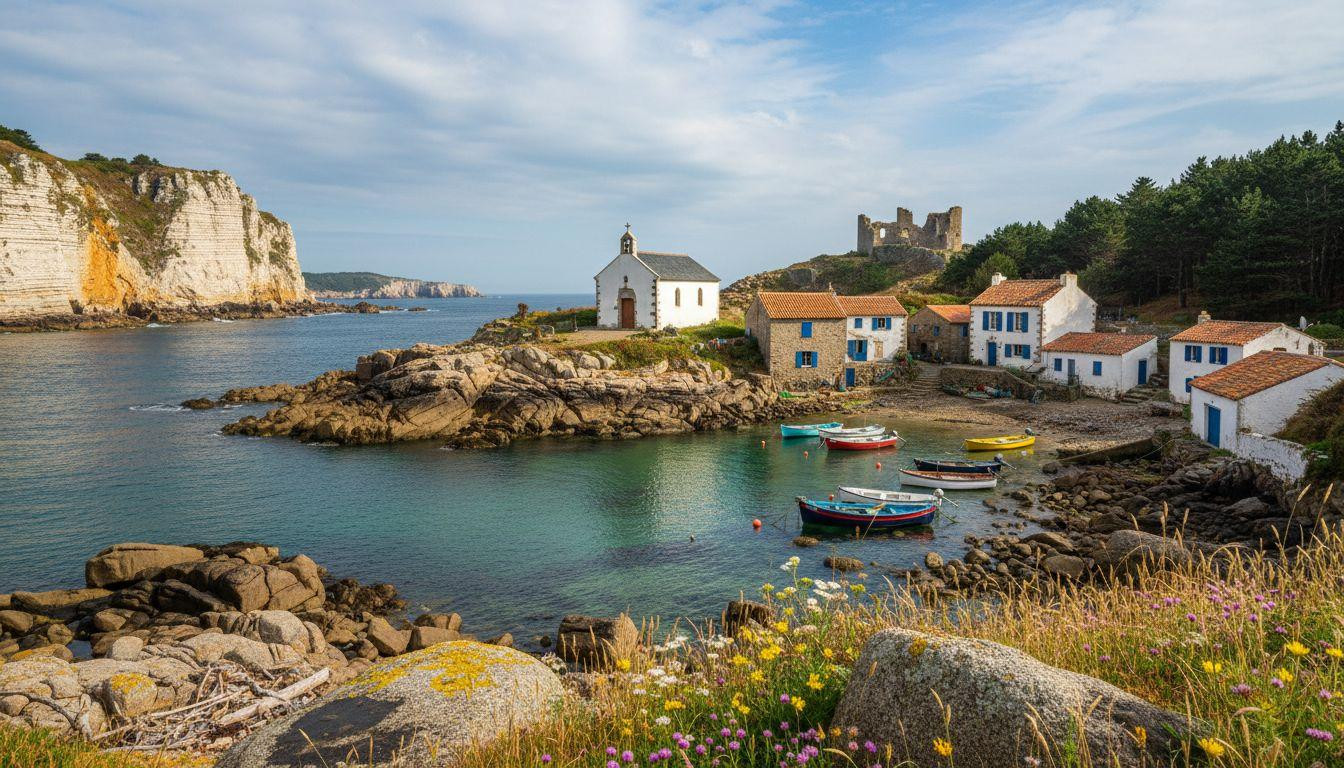
Ochre-colored cliffs at Pointe des Corbeaux rise 82 feet above waters that shift from emerald to sapphire with changing tides. Port de la Meule’s tiny harbor nestles beneath a white chapel, surrounded by traditional fishermen’s cabins that Instagram hasn’t discovered yet.
The 15th-century Vieux Château perches dramatically on clifftops where Atlantic swells crash against granite foundations. Unlike manicured Mediterranean ruins, this fortress remains genuinely wild, accessible only by coastal hiking paths where authentic French villages still preserve their character.
Experience what commercialization destroyed elsewhere
Pine-scented trails lead to empty beaches
The GR80 coastal circuit spans 17 miles through maritime pine forests that release resinous perfume with every Atlantic breeze. Unlike Porquerolles’ crowded trails, sections here remain empty for hours. December hikers encounter more seabirds than people.
Plage des Soux stretches 1 mile of golden sand backed by pine dunes, while Plage des Sabias opens wide to Atlantic swells that create dramatic winter seascapes. Both beaches charge nothing for access and offer parking steps from the sand.
Traditional island culture survives tourism
Local fishermen still practice théou, smoking fresh-caught fish over pine needle fires that release aromatic clouds across Port-Joinville’s harbor. Village bakeries in Saint-Sauveur sell fouace vendéenne (sweet brioche) and gâteau nantais (rum-soaked cake) to residents, not tourists.
December evening gatherings called veillées continue 200-year-old storytelling traditions at the island library. These intimate events welcome respectful visitors who appreciate unhurried island life over manufactured experiences.
Atlantic authenticity costs half of Mediterranean tourism
Hotel rooms average $159 nightly during December, compared to Porquerolles’ $247 winter rates. Family-run guesthouses like OLD SCHOOL charge $93 including breakfast, while Airbnb studios start at $109 per night.
Fresh seafood meals cost $31-44 in Port-Joinville restaurants where menus change based on daily catches. Compare this to Porquerolles’ fixed tourist menus at $49-66 per person. Ferry reliability reaches 92% during winter months, with crossings cancelled only during storms exceeding 37 mph winds.
From Paris, the journey takes 5.5 hours by high-speed rail to Nantes, then regional train to Fromentine. Total cost runs $61-83 depending on booking timing, making this Atlantic France escape more accessible than Mediterranean alternatives.
Your questions about Île d’Yeu answered
When should I visit for the most authentic experience?
May-June and September-October offer mild 59-68°F temperatures with wildflower blooms and minimal crowds. December provides the most authentic experience when island life returns to local rhythms. Ferry service operates year-round with heated passenger compartments during winter crossings.
How does island culture differ from typical French coastal destinations?
Active fishing culture dominates daily life rather than serving as tourist backdrop. Morning fish markets sell to locals first, visitors second. Traditional crafts like model boat building continue year-round, not seasonal demonstrations. Residents greeting strangers remains customary rather than commercial necessity.
What makes this better than other French islands?
Corsica requires flights and attracts 3 million annual visitors. Belle-Île draws comparable crowds to Porquerolles during summer months. Île d’Yeu maintains working fishing fleet, year-round ferry access, and resident population that exceeds tourist numbers during 8 months yearly. Prices remain 30-40% below other French islands.
December sunset paints Port de la Meule’s white chapel golden while fishing boats return with evening catches. Pine-scented breezes carry no sounds of crowds or commercialization, only Atlantic waves meeting French shores that tourism hasn’t yet discovered how to ruin.