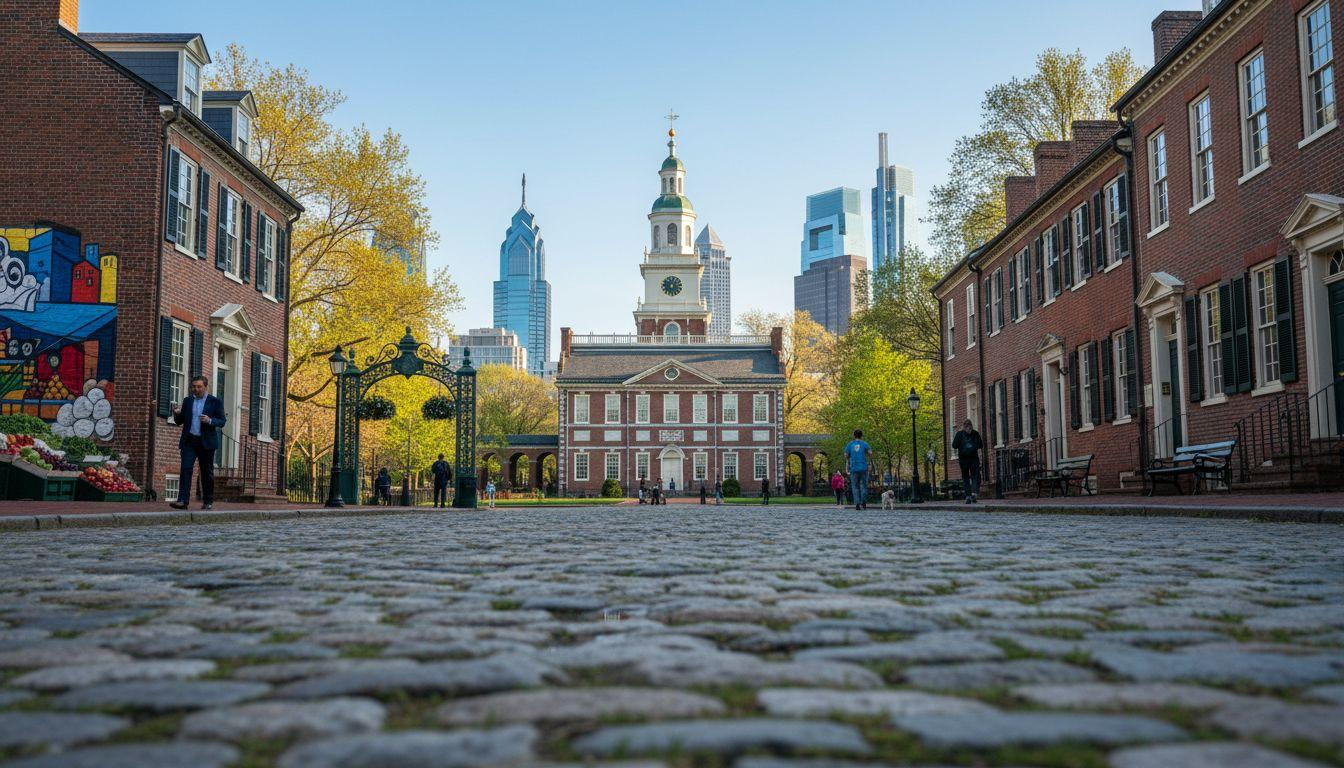
The same red brick that witnessed the signing of the Declaration of Independence in 1776 now lines affordable streets where professionals pay half of Manhattan’s rent for the same urban energy. Philadelphia offers Revolutionary-era history, world-class museums, and walkable neighborhoods at $2,103 monthly rent compared to Manhattan’s $5,709. Just 90 minutes by train from NYC, this overlooked city delivers big-city culture without the financial devastation.
Why New York has priced out its own promise
Manhattan’s median rent of $5,709 has transformed the American dream into a financial nightmare for most professionals. Coffee costs $7.51, movie tickets reach $21.81, and a simple dry cleaning bill hits $22.81. The city that once welcomed strivers now demands $70,000 just to cover basic housing costs.
Recent cost analysis shows Manhattan living expenses running 118% higher than Philadelphia across all categories. Young professionals spend 60% of income on rent alone. The constant sensory overload of sirens, crowds, and competition has replaced the neighborhood charm that once defined urban living.
Meanwhile, historic alternatives maintain authentic character without the unsustainable price tags. The solution sits 90 miles southwest, where America’s founding story unfolds on walkable streets.
Philadelphia: where history meets affordability
Revolutionary sites without tourist chaos
Independence Hall stands quietly at dawn, limestone facade catching morning light as National Park Service rangers prepare for the day. The Liberty Bell rests in its glass pavilion, free from the crushing crowds that overwhelm Statue of Liberty access. Museum of the American Revolution (opened 2017) offers immersive exhibits with 70% fewer visitors than comparable NYC institutions.
The Benjamin Franklin Parkway stretches like Paris’s Champs-Élysées, connecting world-class museums within walking distance. Philadelphia Museum of Art charges $25 admission, same as the Met, but allows actual contemplation of the Barnes Foundation’s Impressionist collection without shoulder-to-shoulder viewing.
Urban culture at sustainable prices
Reading Terminal Market bustles with Amish vendors, local cheesesteaks, and coffee at $6.41 instead of Manhattan’s $7.51. Neighborhood cafés in Fishtown and Old City offer actual seating space rather than standing-room counters. The authentic working waterfront character preserves community identity lost in NYC’s gentrification.
Mural Arts Program decorates thousands of building walls with colorful artwork, creating Instagram-worthy backdrops without admission fees. Local restaurants earn James Beard recognition while maintaining $25-60 dinner prices compared to NYC’s $40-80 equivalent meals.
Living the Philadelphia difference
Morning routines that don’t cost $50
Schuylkill River Trail offers 8 miles of running paths with skyline views, completely free and rarely crowded at sunrise. Georgian boathouses reflect in calm water while runners enjoy space to breathe. Compare this to Central Park’s human gridlock where a simple jog requires strategic timing.
Neighborhood breakfast spots serve hearty meals for $12-15 while maintaining the conversation-friendly atmosphere that Manhattan abandoned for efficiency. Local bakeries still know regular customers’ names and orders.
Evening discoveries without financial stress
South Street and Northern Liberties offer live music venues where $18 cocktails become $12 local brews. Movie tickets cost $15.97 instead of Manhattan’s $21.81, allowing spontaneous entertainment decisions. Cultural depth without tourist premiums defines the Philadelphia evening experience.
The Italian Market maintains 100-year-old vendor traditions where shopkeepers arrange colorful produce as morning light slants through narrow streets. This intimate neighborhood ritual costs nothing but provides daily beauty that Manhattan’s rushed pace eliminates.
The practical reality check
Amtrak connects 30th Street Station to NYC Penn Station in 75 minutes via Acela ($45-130) or 90 minutes via Northeast Regional ($20-65). This proximity maintains career connections while reducing daily living costs by 55%. Philadelphia’s city wage tax (3.74% residents, 3.43% non-residents) gets offset by housing savings within two months.
SEPTA monthly passes cost $96 compared to NYC’s $132 MetroCard. Parking runs $225 monthly downtown versus Manhattan’s $550. The trade-offs include earlier nightlife closures and fewer international flight options from Philadelphia International Airport. Regional nature escapes compensate with accessible wilderness just hours away.
Your questions about Philadelphia as NYC alternative answered
How much money will I actually save monthly?
Recent relocation specialists report average monthly savings of $2,200-2,800 for professionals moving from Manhattan to Center City Philadelphia. Housing accounts for $2,000+ savings, with additional reductions in dining, transportation, and entertainment expenses. The city wage tax reduces net savings by roughly $200-300 monthly for median earners.
Does Philadelphia offer genuine urban culture?
Philadelphia ranks among America’s top 10 cities for museums per capita, hosts major food festivals, and maintains 47 distinct neighborhoods with unique character. The restaurant scene earned national recognition with multiple James Beard winners, while the Kimmel Center presents world-class performing arts. Local music venues launch national acts regularly.
How does winter weather compare to NYC?
Philadelphia averages 2-3 degrees warmer than NYC in winter months, with December temperatures ranging 32-45°F. Both cities receive similar snowfall (20-25 inches annually) and rainfall patterns. Philadelphia’s smaller scale makes winter navigation easier, with shorter commute times and more accessible indoor cultural activities during cold months.
December evening light catches Georgian rowhouse windows as residents walk cobblestone streets where America’s independence began. The city that founded a nation now offers sanctuary for those seeking authentic urban living without financial surrender.