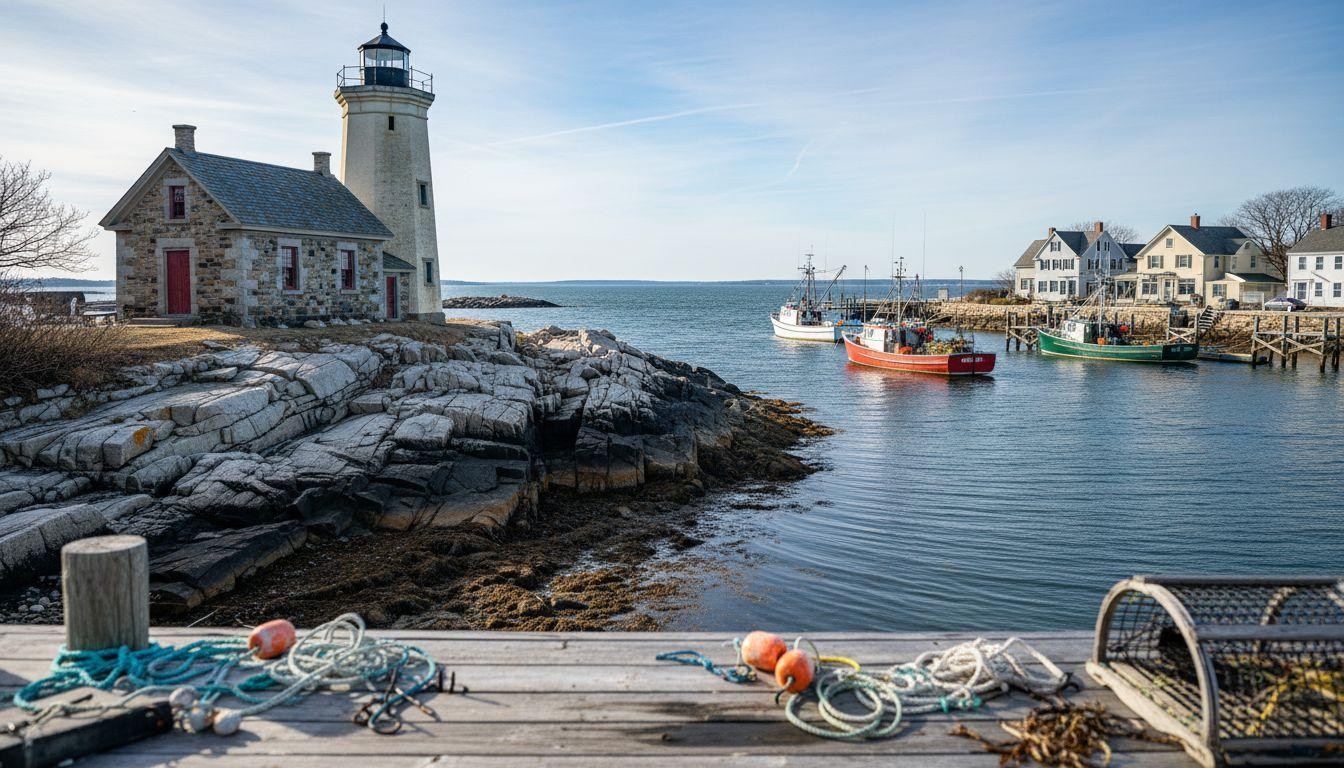
Mystic Seaport pulls 3.5 million visitors each year to its 19-acre maritime museum complex. Ten minutes east, Stonington’s working fishing fleet departs before dawn from Connecticut’s only Atlantic-facing harbor. The lighthouse stands empty most mornings. Water Street galleries open without crowds.
This is the trade Mystic made: heritage attractions for actual maritime life. Stonington kept the fishing boats.
Why Mystic became what tourists expect
Mystic built its reputation on the Charles W. Morgan whaling ship and carefully preserved 19th-century village streets. The aquarium added Beluga whales. Hotels followed: Spark by Hilton, Hampton Inn, Hyatt Place, all opened within walking distance of the seaport entrance.
Downtown parking fills by 10am in summer. Restaurants charge tourist prices. The famous pizza place appears in every guidebook, though locals drive to Stonington Pizza Palace instead.
February brings relief from summer crowds but not from the museum atmosphere. The seaport operates year-round. Admission runs higher than most New England maritime sites. Hotels drop rates to $75-110 per night off-season, still elevated compared to quieter coastal towns.
What Stonington preserved by staying small
The borough covers less than one square mile at the tip of a rocky peninsula. Population holds at 18,500. No chain hotels opened here. The fishing fleet still works Fishers Island Sound daily, bringing fresh striped bass and lobster to local restaurants.
The harbor that faces open ocean
Stonington Harbor opens directly to the Atlantic, the only Connecticut port with this geography. Fishing boats navigate Fishers Island Sound at dawn, returning by mid-afternoon. Winter fog rolls in thick enough to hide the water from shore.
The 1840 stone lighthouse stands 35 feet tall on the southern point. Twenty-nine granite steps lead to a viewing platform with sight lines across three states. The Stonington Historical Society converted it to America’s first lighthouse museum in 1925. Admission costs $10 on weekends.
What $90 buys here versus Mystic
Budget lodging in Stonington runs $90-130 per night in February, 30-40% below Mystic’s rates. Water Street boutiques and galleries operate without crowds. Maine harbor towns offer similar working maritime character at comparable prices.
Fresh seafood comes directly from the local fleet. Restaurants serve lobster rolls for $18-28, clam chowder, and daily catches. No tour buses park on these streets.
The morning Mystic cannot recreate
Fishing boats leave Stonington Harbor between 5am and 6am. Fog mutes engine sounds. Gulls follow the boats toward open water. By 7am the harbor sits quiet except for rigging clinking against masts.
Walking to the lighthouse before tourists arrive
The path to the Old Lighthouse Museum stays empty most winter mornings. Granite walls show 185 years of Atlantic weather. Inside, exhibits document the 1814 Battle of Stonington when the town repulsed British naval bombardment.
The tower’s 360-degree view encompasses Fishers Island to the south, Rhode Island coastline to the east, and Long Island Sound to the west. Winter light turns the water steel gray. Fog-wrapped lighthouse walks along the Maine coast create similar atmospheric conditions.
Victorian streets without gift shops
Water Street preserves colonial and Federal architecture in working storefronts. Galleries show local artists. Coffee shops serve organic fair-trade beans. The general aesthetic favors understatement over tourist appeal.
No chain retail opened here. The borough resisted development that would change its scale. Vermont villages maintain similar preservation approaches with 18th-century architecture intact.
The choice between museum and reality
Mystic Seaport recreates maritime history with precision. Costumed interpreters demonstrate 19th-century skills. The experience feels educational, carefully controlled. Stonington offers no interpreters, just fishermen checking traps and mending nets on working docks.
Both towns preserve New England maritime heritage. One chose tourism infrastructure. The other kept fishing boats. The difference shows most clearly at dawn when Mystic’s museum ships sit motionless and Stonington’s fleet heads to sea.
Your questions about Stonington answered
How do I reach Stonington from major cities?
Drive 2.5-3 hours from New York City via I-95 North. Boston sits 1.5-2 hours away through Providence. Amtrak serves New London station 5 miles west. Taxi or rideshare from the station costs $20-40. T.F. Green Airport in Providence offers the closest major air access 45 minutes away.
When does the fishing fleet operate?
Boats depart daily year-round, weather permitting. Winter operations continue despite cold. Dawn departures happen between 5am and 6am. Returns vary by catch and conditions but typically occur mid-afternoon. The harbor stays active through all seasons, unlike seasonal tourist attractions.
How does Stonington compare to other New England fishing villages?
Stonington maintains working fleet traditions similar to coastal Oregon fishing towns but with Atlantic geography. Population density stays lower than Marblehead or Gloucester. Prices run 30-50% below Cape Cod equivalents. The Atlantic-facing harbor provides unique Connecticut coastal access. Tourist infrastructure remains minimal compared to developed Maine harbors.
February fog lifts around 9am most days. The lighthouse tower catches morning light. Fishing boats return with the day’s catch. Water Street stays quiet until afternoon. This is what Mystic looked like before the museums opened.