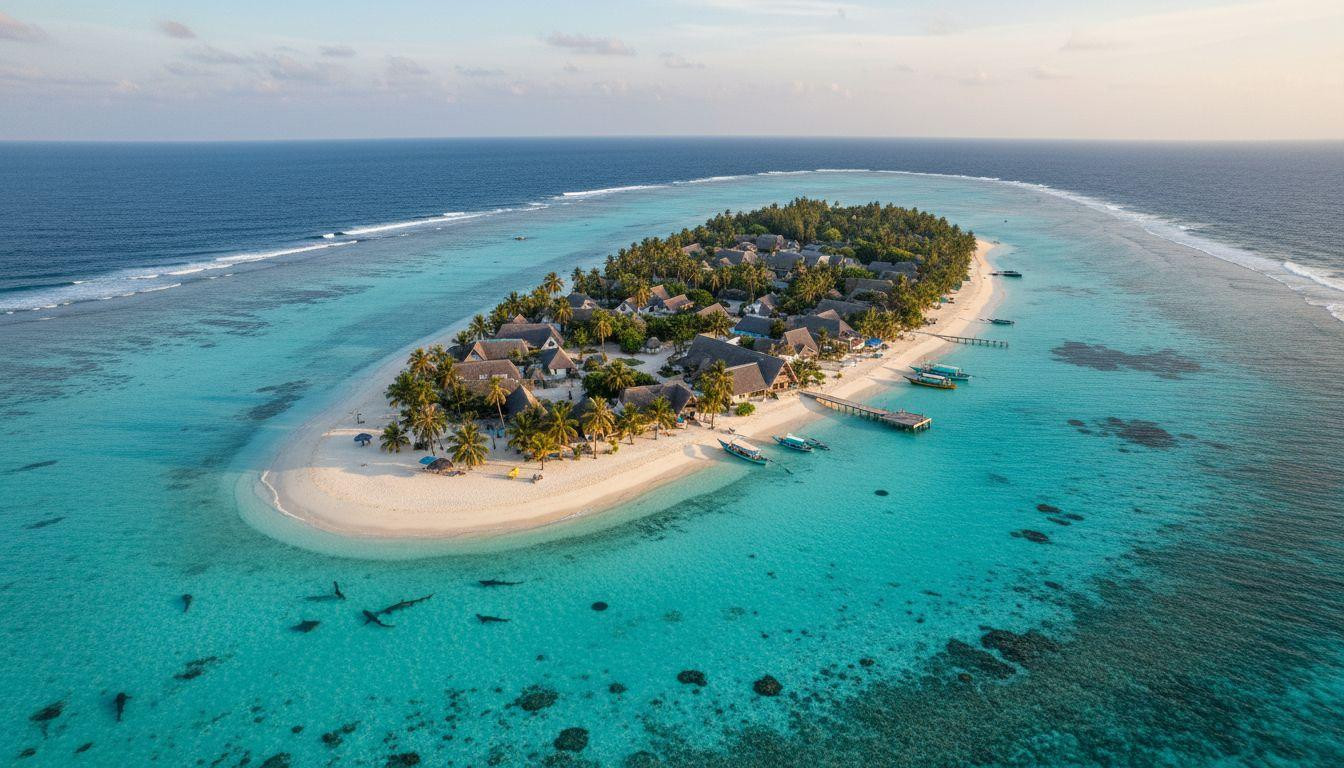
Maldives resorts charge $800-2,000 per night for artificial luxury that walls you off from authentic island life. Meanwhile, Fulidhoo in Vaavu Atoll delivers the same turquoise lagoons and reef encounters for $50-200 nightly at local guesthouses. This 700-meter island lets you swim with nurse sharks from shore while Bodu Beru drums echo through village streets at sunset.
January 2026 brings perfect dry season conditions with 82°F air temperatures and crystal-clear waters. The shallow lagoon stretches 1-5 meters deep with visibility reaching 100 feet on calm mornings.
Why Maldives resorts miss the point
Four Seasons and Soneva create beautiful prisons. All-inclusive packages starting at $1,200 per night isolate guests on artificial islands. Pre-packaged excursions charge $200-400 to see marine life that’s already there.
Resort transfers from Malé airport cost $300-500 via seaplane or speedboat. The irony cuts deep: you pay premium prices to be separated from the very culture and nature you came to experience. Environmental concerns mount as resort construction destroys the reefs guests pay to see.
These luxury bubbles offer comfort but sacrifice authenticity. Staff perform traditional dances for tips while real villages nearby preserve living traditions that tourists never witness.
Meet Fulidhoo: Vaavu Atoll’s overlooked treasure
The landscape
Fulidhoo measures just 700 meters by 200 meters yet contains infinite discovery. White sand beaches circle a turquoise lagoon where coral formations rise from depths of 3-15 feet. The dedicated Bikini Beach allows swimwear while northern coastlines remain untouched by development.
Traditional Maldivian architecture defines the village: low-rise guesthouses with thatched roofs, whitewashed walls, and open verandas. No concrete towers block ocean views. Palm groves provide natural air conditioning while hammocks sway between coconut trees.
Price reality check
Galaxy Sunrise Guesthouse charges $113 nightly while budget options start at $51. Mid-range accommodations like Kinan Retreat cost $79-120 including breakfast. Even high-end local stays max out at $200 versus resort rates of $800-2,000.
Meals cost $5-15 for fresh seafood versus resort dining at $50-100 per person. Snorkeling tours run $30-50 while resort excursions charge $150-300 for identical experiences. Similar savings multiply across every expense.
The authentic experience resorts can’t replicate
Shore-access marine life
Step from your guesthouse into waist-deep water where nurse sharks glide past each morning. Local dive operators report 90% success rates for shark encounters within 100 meters of shore. No expensive boat trips required.
The PADI 5-Star Dive Centre offers channel dives for $60-100 where visibility reaches 30 meters. Dolphins appear offshore most afternoons while manta rays cruise deeper channels during plankton blooms. Resort guests pay triple for identical wildlife experiences.
Village culture
Evening brings Bodu Beru drumming circles where 500 residents welcome visitors into centuries-old traditions. Night fishing expeditions with locals cost $25-40 and often reveal bioluminescent plankton displays that turn water electric blue.
Traditional crafts include woven palm mats and shell jewelry created by families who’ve lived here for generations. Authentic cultural immersion happens naturally when tourism supports rather than replaces local life.
January timing perfection
Dry season peaks in January with rainfall under 4 inches monthly and constant 82°F temperatures. Water stays warm at 81°F while trade winds keep humidity comfortable. Ferry access operates reliably with calm seas perfect for small boat transfers.
Public ferries from Malé cost just $5 per person versus resort transfers at $300-500. The 3.5-hour journey includes stops at neighboring islands where local hospitality welcomes curious travelers. Speedboat options cut transit to one hour for $40.
January 2026 offers perfect timing: post-holiday shoulder season means moderate crowds while maintaining peak weather conditions.
Your Questions About Fulidhoo answered
How do costs compare to typical Maldives vacations?
Fulidhoo delivers 70-90% savings versus resort packages. Weekly stays cost $350-1,400 including accommodation, meals, and activities. Resort equivalents start at $5,600 for basic packages. Transportation adds just $10-80 versus resort transfers costing $600-1,000 roundtrip.
What cultural etiquette should visitors observe?
Cover shoulders and knees outside designated Bikini Beach areas. Greet locals with “Assalaam alaikum” and respect prayer times around 5am, noon, and sunset. Photography requires permission in village areas while beach and lagoon shots are welcomed.
How authentic is the local experience compared to resort activities?
Fulidhoo offers unfiltered Maldivian life where fishing boats depart at dawn, children attend village schools, and families gather for evening meals. Resort entertainment performs culture while Fulidhoo lives it daily through work, worship, and celebration rhythms unchanged for generations.
Dawn breaks rose-gold across the shallow lagoon where nurse sharks circle in morning light. Village sounds awaken gently: prayer calls, fishing boats, children’s laughter. Here in Vaavu Atoll, the Maldives reveals its true heart to those who choose authenticity over isolation.