Lanikai Beach on Oahu draws 700,000 visitors annually to its half-mile stretch of sand. Parking citations pile up daily. Tourist hordes arrive by 8am with beach chairs and selfie sticks. The once-quiet windward shore now echoes with rental car doors slamming and tour guide megaphones.
Meanwhile, 50 miles southeast, a narrow dirt road on Molokai leads to something Lanikai lost years ago. Puko’o Beach stretches just 50 yards between volcanic boulders. Most tourists drive past the unmarked turnoff without stopping. Local fishermen still cast nets at dawn.
Why Lanikai Beach became a tourist trap
Oahu welcomed 5.8 million visitors in 2024, with 91,000-97,000 tourists on the island daily. Lanikai Beach attracts roughly 12% of these crowds, creating 1,900 visitors per day during peak season. The small residential area lacks infrastructure for such numbers.
Parking wars begin before sunrise. Residents post “no parking” signs that tourists ignore. Kailua police issue hundreds of citations monthly for illegal roadside parking. Beach access paths suffer erosion from constant foot traffic.
Instagram hashtag #LanilaiBeach generates over 500,000 posts annually. Travel blogs crown it “world’s most beautiful beach” without mentioning the crowds. Hotel rates in nearby Kailua range from $280-450 per night during winter months. The authentic Hawaiian experience disappeared beneath layers of tourism infrastructure.
Meet Puko’o Beach where dirt roads preserve authenticity
Molokai receives fewer than 70,000 annual visitors total. Halawa Valley on Molokai’s eastern shore preserves ancient taro terraces in similar quiet isolation. The entire island maintains the pace Hawaii once offered everywhere.
The 50-yard crescent that stays empty
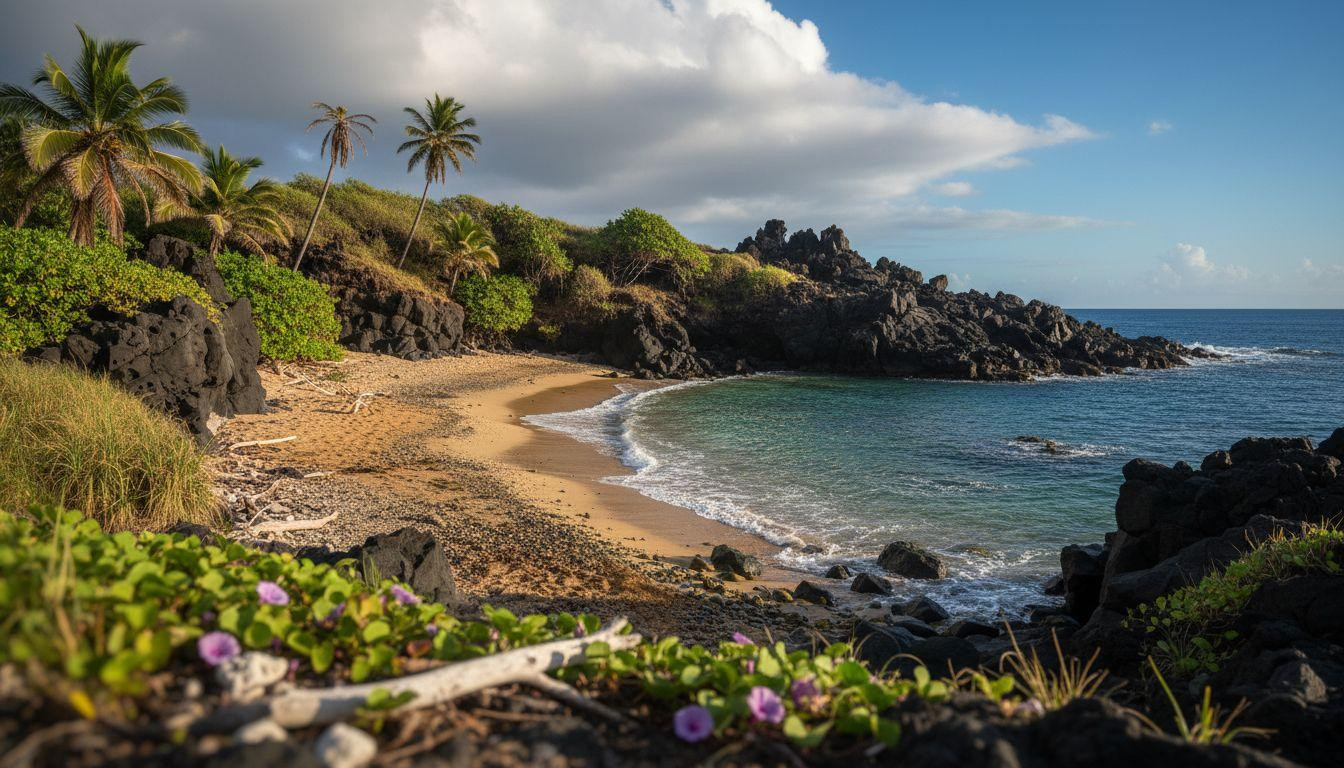
Puko’o Beach curves between black volcanic boulders like a hidden cove. Deep blue water meets coarse sand mixed with smooth stones. The narrow dirt access road at mile marker 15.8 looks like someone’s driveway. Most rental cars turn around rather than risk the unpaved track.
This natural crowd filter preserves what made Hawaiian beaches special. No facilities means no tour buses. No paved parking means no Instagram armies. The beach’s intimate 50-yard length creates connection rather than competition for space.
What $90 accommodations actually deliver
Molokai lodging averages $80-120 per night compared to Kailua’s $280-450 rates. These aren’t luxury resorts with infinity pools. They’re family-run inns where owners still greet guests personally. Local breakfast costs $12 versus Kailua’s $28 resort buffets.
The island’s 7,400 residents live at Hawaiian time. Shops close for lunch breaks. Conversations happen in parking lots. Papohaku Beach stretches 3 miles on Molokai’s western coast with similar uncrowded authenticity.
The experience Lanikai used to offer
Dawn at Puko’o brings soft pastels reflecting on calm bay water. Seabirds call from boulder perches. Salt air mixes with flowering beach vegetation scents. The only sounds are gentle waves and occasional fishing boat engines starting up in nearby Pukoo village.
Activities that don’t require reservations
Shore snorkeling happens whenever you arrive. No crowded entry points or marked swimming areas. The rocky coastline creates natural pools perfect for exploring. Water temperature stays around 75-78°F year-round with excellent visibility.
Sunset viewing requires no tripod battles or photographer queues. Volcanic haze from distant Big Island creates dramatic red-orange sky effects unique to this part of Hawaii. Mahukona’s rusted cranes rest 15 feet underwater on Big Island’s coast for similar uncrowded snorkeling experiences.
The volcanic haze sunset phenomenon
Molokai’s position southeast of Big Island’s active volcanoes creates unique atmospheric effects. Fine volcanic particles filter sunlight into spectacular reds and oranges during evening hours. This natural light show happens 3-4 evenings per week during trade wind conditions.
The intimate beach scale means sunset viewers spread across 50 yards instead of competing for prime spots. Boulder formations provide natural seating and photo backgrounds without artificial infrastructure.
Getting back to real Hawaii
The narrow dirt road to Puko’o isn’t a barrier. It’s a preservation system. Every tourist who turns around at the unpaved track helps maintain what locals call “old Hawaii.” The beach stays authentic because access requires commitment rather than convenience.
Molokai residents protect this authenticity deliberately. No high-rise hotels interrupt skylines. No chain restaurants replace local establishments. Anse Dufour in Martinique delivers turtle encounters at dawn before crowds arrive with similar community-protected quiet.
Your questions about Puko’o Beach answered
Do I need four-wheel drive to reach Puko’o Beach?
Standard rental cars access Puko’o Beach successfully with careful driving. The dirt road requires slow speeds and attention to ruts, but remains passable for regular vehicles. Parking area sits about 100 yards from the beach with space for 8-10 cars maximum.
What makes Molokai culturally different from other Hawaiian islands?
Molokai maintains the highest percentage of Native Hawaiian residents at 60% of the population. Traditional fishing practices continue at places like Puko’o. The island economy relies on agriculture and fishing rather than tourism, preserving authentic Hawaiian lifestyle patterns that disappeared elsewhere.
How does Puko’o Beach compare to other quiet Hawaiian beaches?
Puko’o’s 50-yard length creates intimacy impossible at larger beaches. Unlike Papohaku’s 3-mile stretch, Puko’o feels like a private cove. The volcanic boulder framing provides dramatic scenery without the white sand crowds that overwhelm places like Lanikai.
Evening light fades over Puko’o’s blue crescent as fishing boats return to Pukoo harbor. Volcanic boulders hold day’s warmth against cooling trade winds. The narrow dirt road that kept crowds away delivers exactly what Hawaiian beaches promised before tourism changed everything forever.