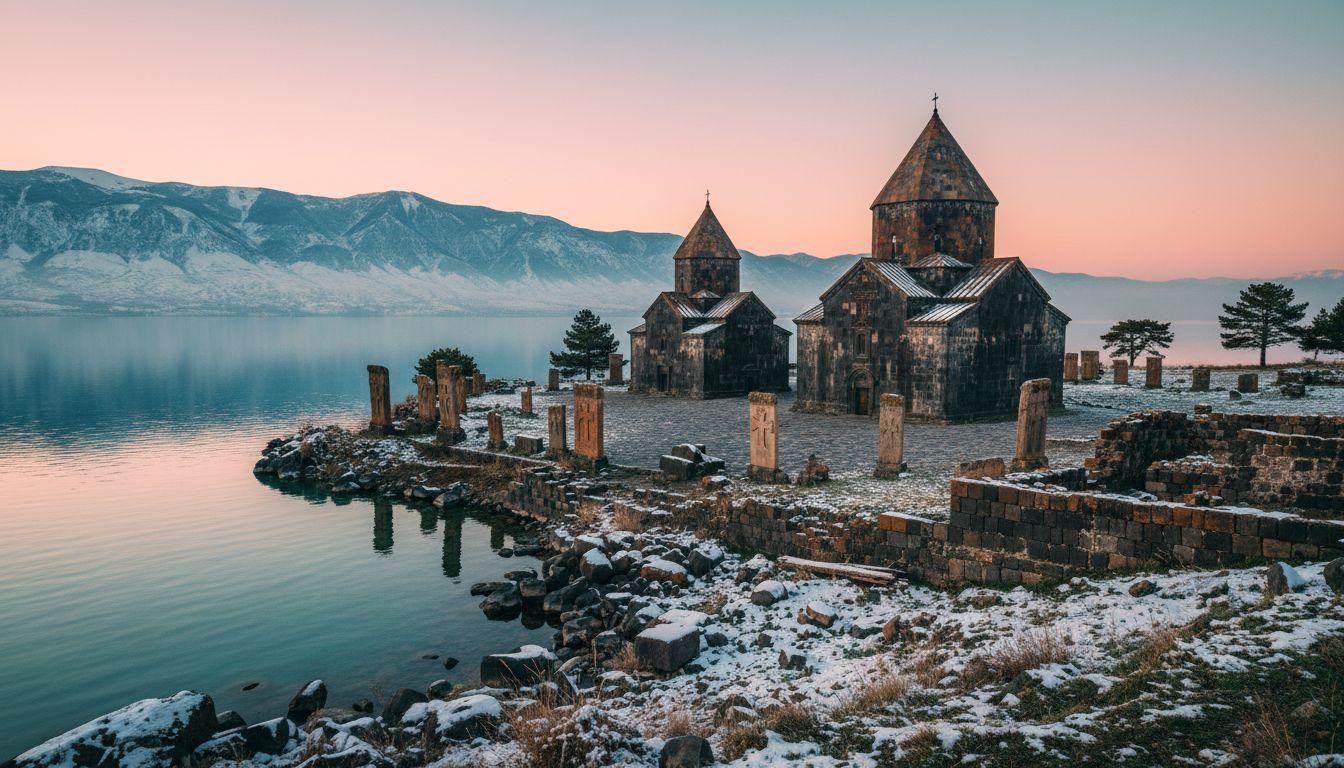
Forget Lake Como where hotel bills arrive like ransom notes at $400 per night to watch crowds photograph each other against turquoise water. Meanwhile, 1,200 miles east, Lake Sevan villages in Armenia’s Gegharkunik Province deliver the same alpine lake magic at 6,233 feet elevation for $40 daily budgets. This winter, while European lakes drown in ski resort overflow crowds, Sevan’s 496-square-mile surface reflects 10,000-foot peaks in crystalline silence.
Why European alpine lakes overwhelm your senses and wallet
Lake Como processes 3.2 million visitors annually through narrow medieval streets never designed for tour buses. January hotel rates start at $250 nightly for lakeside views. Parking costs $25 daily in Bellagio alone.
Lake Annecy drowns its medieval charm under influencer selfie chaos. Swiss lakes like Lucerne redirect ski crowds to waterfront hotels at $300-plus rates. The contradiction stings: paying premium prices for “tranquility” while dodging tour groups every 50 yards.
A Como week totals $2,500 minimum including lodging, meals, and parking fees. Lake Sevan villages deliver equivalent mountain-lake experiences for $600 total. The math makes no sense until you discover this Idaho lake mirrors 10,000-foot Sawtooth peaks in turquoise glacial water at similar elevations.
Meet Lake Sevan villages: Armenia’s highland blue eye
The volcanic crater setting
Lake Sevan sits at 6,233 feet elevation, ten times Como’s 653-foot altitude. Its 1,278-square-kilometer surface spans one-sixth of Armenia’s territory. Volcanic crater geology creates the signature turquoise clarity locals call “Sevan’s soul mirror.”
January temperatures range 23-41°F with light snow dusting the Sevan Range peaks that frame the water. Gegharkunik Province supports 160,000 residents across lakeside villages like Sevan town (13,000 people) and Tsovagyugh settlement.
What European lakes lack: spiritual depth
Sevanavank Monastery crowns a peninsula where monks first settled in 305 AD. The current stone churches date to the 9th-10th centuries when this was an island. Soviet-era water drainage connected it to shore, creating today’s walking access.
Free monastery entry contrasts sharply with Como’s villa tour fees. Two hundred stone steps climb to panoramic lake views. Khachkars (carved cross-stones) weather naturally under frost while this Greek island hides the tallest clock tower in the Dodecanese above a 478-person harbor offers similar highland heritage.
The Lake Sevan village experience
Morning monastery walks and village rhythms
Dawn arrives at 7:30 AM, bathing golden-tuff monastery stones in pink-orange light. Lake mist rises until 10 AM over deep cobalt-turquoise water. Morning pilgrims light candles while bells ring hourly across the 44-mile shoreline.
Village markets open at 6 AM selling fresh ishkhan (endemic Sevan trout) and warm lavash bread. Oak-grilled fish develops crisp smoky skin while bread ovens crackle nearby. Pine forest scents mingle with pomegranate wine notes from hillside vineyards.
Cultural elements missing from European experiences
Ishkhan trout grilled with herbs costs $8-15 versus Como’s $40 lake fish. Local shops sell handmade obsidian jewelry and carved khachkars without tourist markup. The hospitality includes offered tea and genuine conversation, not performance.
Nearby Tsaghkadzor ski area (19 miles) charges $20-30 daily for lift tickets. Winter road access stays open with optional snow chains. This Maine island sits 20 minutes offshore where 570 residents keep winter fog sacred captures similar off-season authenticity.
Practical advantages over European alternatives
Yerevan’s Zvartnots Airport sits 44 miles from lakeside villages. Taxi costs $20-40 or marshrutka minibus at $2-5. Best Western Bohemian Resort offers lakeside bungalows at $70 nightly. Budget guesthouses start at $19-33 through local booking.
Daily meal budgets of $5-10 include khorovats kebabs, matzoon yogurt, and herb-stuffed jengyalov hats flatbread. January sees 50-200 daily monastery visitors versus Como’s thousands. The New York Times featured Armenia in “52 Places to Go in 2026” for monastery-dotted shores, creating momentum without mass discovery yet.
Total Sevan budgets of $40-80 daily include comfortable lodging and authentic meals. European equivalents demand $200-300 minimum. This Croatian island fits 13,200 residents inside medieval walls 19 miles from Split shows similar Adriatic alternatives to Italian crowds.
Your questions about Lake Sevan villages answered
How does January weather affect the experience?
January temperatures of 23-41°F create manageable cold with crisp highland air. Light snow falls 5-10 days monthly. No summer swimming but perfect for monastery photography and village exploration. Roads stay open with winter driving precautions.
What cultural experiences differentiate Sevan from European lakes?
Ancient monastery heritage from 305 AD provides spiritual depth absent in purely scenic European destinations. Endemic fish cuisine, traditional khachkar stone carving, and genuine local hospitality create authentic cultural immersion rather than tourist performance.
How do costs truly compare to Lake Como or Swiss alternatives?
Verified 2025-2026 data shows Sevan guesthouses at $20-40 nightly versus Como’s $250-500 winter rates. Restaurant meals cost $5-10 versus European $25-50 equivalents. Daily budgets prove 80% lower with equivalent mountain-lake scenery and superior heritage access.
January dawn mist rises over turquoise water while monastery bells echo across empty shores. Golden stones catch first light as 10,000-foot peaks frame the horizon. No selfie sticks interrupt this ancient silence.