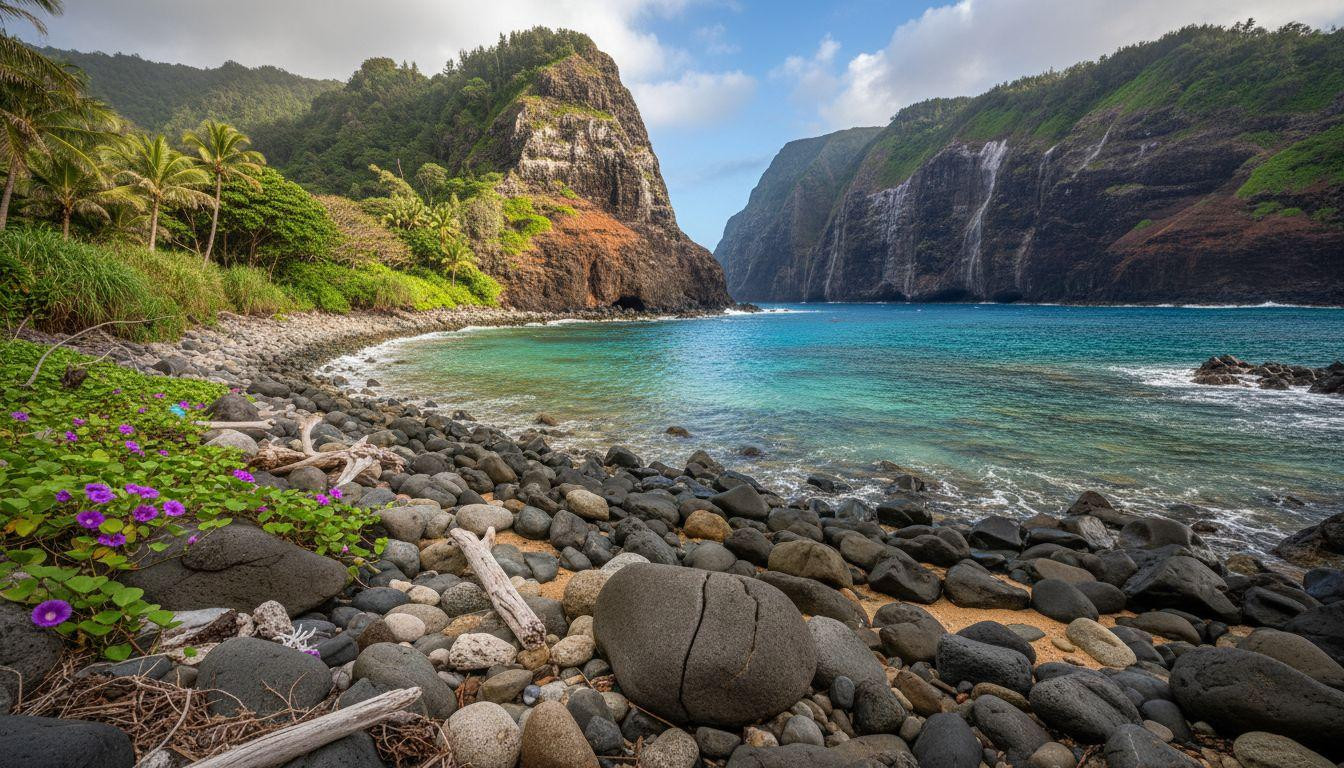
While Lahaina rebuilds with new hotels and paid beach parking, Honokohau Bay remains what West Maui was before the crowds. This boulder-strewn cove near mile marker 36 offers free access to turquoise snorkeling waters that most visitors never find.
Twenty-five miles north of rebuilt Lahaina, the narrow bay sits tucked between sea cliffs. No facilities, no vendors, no tour boats. Just a small pull-off and a quarter-mile trail through forest to rocky shores where waves echo off canyon walls.
Lahaina’s recovery brings new crowds
Maui welcomed 1,892,194 visitors in the first nine months of 2025, up 8.5% from the previous year. The rebuilt Lahaina corridor now charges $20 daily for beach parking at popular spots like Black Rock. Tour boats crowd the harbor with 500-person snorkel excursions at $125 per head.
Front Street’s new restaurants and shops draw thousands daily to the reconstructed waterfront. Hotel rates in the Kaanapali-Lahaina area average $525 per night as demand outstrips supply. Visitor spending reached $437 million in October 2025 alone, creating premium pricing across West Maui’s rebuilt infrastructure.
Honokohau Bay stays untouched
The narrow bay opens to turquoise water that stays clear 25-30 feet down. High cliffs surround the rocky entrance where boulders range from fist-sized to small car-sized. Marine Life Conservation District protections keep the ecosystem thriving with parrotfish, surgeonfish, and sea turtles visible on 70% of visits.
The boulder beach landscape
Morning light filters through calm water as waves lap granite shores. Unlike Lahaina’s sandy beaches, entry requires careful navigation over rounded stones. The sound reverberates off cliff walls as swells enter the narrow opening, creating dramatic water level changes throughout the day.
Price comparison reality
Parking costs nothing compared to Lahaina’s $20 daily fees. Kayak rentals from nearby Honolua Outfitters run $55 per day versus $65 in the Kaanapali area. No guided tours operate here, making it purely self-guided exploration. Camping at Puu Kekaa costs $25 nightly versus $200+ for rebuilt Lahaina hotels.
The trail and water experience
The quarter-mile forest trail takes 5-7 minutes through shaded vegetation with earthy scents and root textures. Emerge to serene rocky shores where kayaks slip between boulder formations into protected snorkeling zones. Best conditions occur during summer mornings before afternoon trade winds arrive.
Access routes
The small pull-off accommodates 15 vehicles maximum, typically filling by 9:30 AM on weekends. Paved road access requires no special vehicle, though parking space becomes competitive during peak visiting hours. Boat launch is possible for experienced kayakers during calm conditions.
Marine life and snorkeling
MLCD protections create abundant fish populations in the clear water. Boulder entries require moderate agility and aren’t recommended during winter swells above 3 feet. Water visibility exceeds most popular dive sites when conditions align perfectly with calm weather and minimal rain runoff.
Winter conditions and timing
December 2025 brings challenging north swells that create 4-6 foot waves inside the narrow bay. Winter water temperatures average 78°F with air temperatures reaching 82°F during midday hours. The adjacent Nakalele Blowhole erupts 50-100 feet when swells hit, offering dramatic geological displays just 6.8 miles north.
Daily visitor counts stay between 50-75 people during winter months compared to 500+ at nearby Honolua Bay on slow days. Early morning arrival ensures parking availability and the calmest water conditions for safe entry over the boulder terrain.
Your questions about Honokohau Bay answered
What makes this different from rebuilt Lahaina beaches?
Free access versus $20 parking fees, boulder terrain instead of developed sand beaches, and zero commercial infrastructure. The Marine Life Conservation District protections create abundant fish life without tour boat crowds disturbing the ecosystem.
Why has this bay remained undeveloped?
Protected conservation land status prevents commercial development while the small parking area naturally limits visitor numbers. Local community resistance has maintained the authentic fishing ground character despite West Maui’s tourism pressure over decades.
How does this compare to other north shore spots?
Honolua Bay draws 500+ daily visitors with competitive parking, while Honokohau stays under 75 people. Water clarity averages 25-30 feet versus 15-20 feet at popular Lahaina locations. Access requires more effort but rewards visitors with genuine solitude.
Sunrise colors the turquoise cove as waves echo off ancient cliffs. Boulder shores hold the sound of unhurried Hawaii, where morning light still touches water that tour boats never crowd.