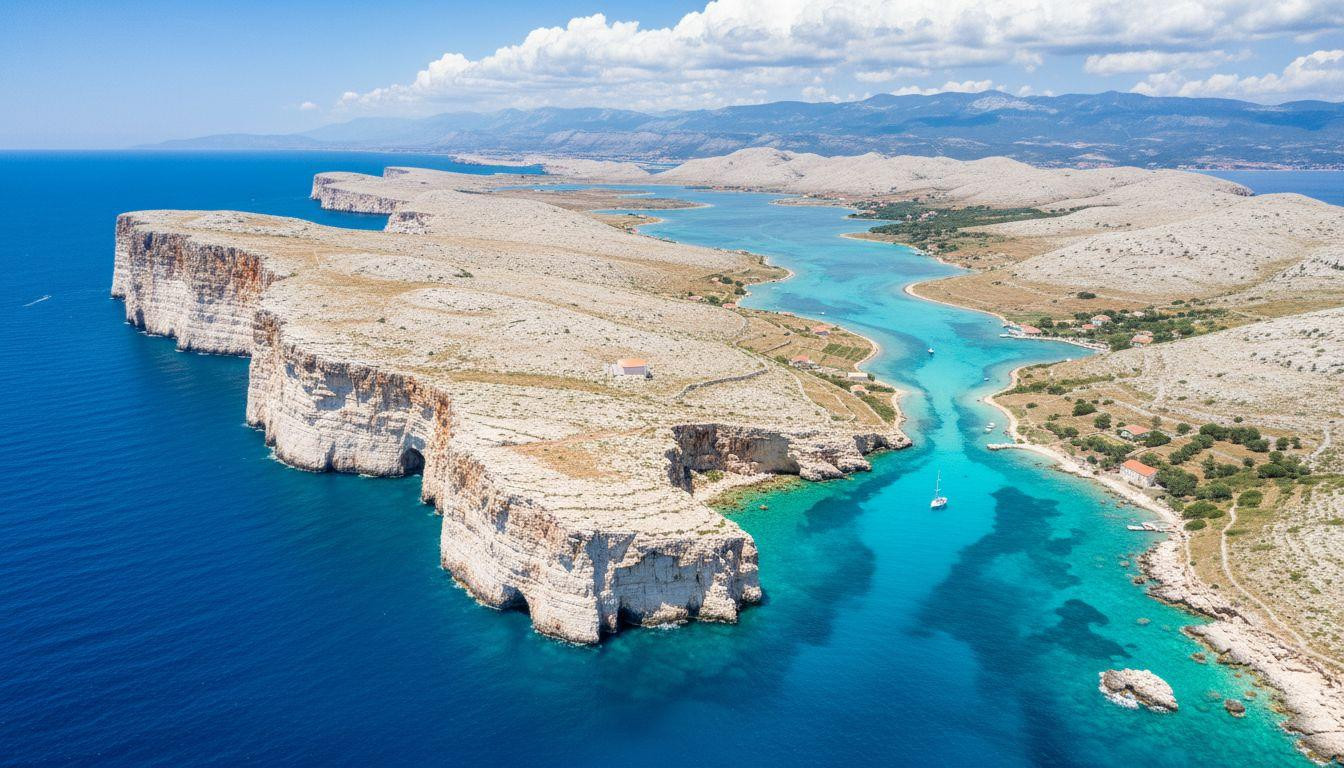
Hvar’s lavender fields drown under a million tourists each summer. Ferry queues stretch for hours while beach clubs charge $30 entry fees. But 60 miles northeast, Kornati National Park protects 89 uninhabited islands where silence replaces party music and pristine coves cost just $55 to explore.
Why Hvar has lost its Croatian soul
Hvar welcomed over 1.04 million visitors in just the first five months of 2025. That’s a 6.94% increase from an already overcrowded previous year. The island’s 10,700 permanent residents vanish beneath waves of tourists seeking Instagram shots of lavender fields.
Hotels demand $200-400 per night during peak season. Beach clubs charge $25-30 entrance fees for basic sun loungers. Lastovo’s dark skies remain empty while Hvar’s party reputation attracts crowds seeking “Croatian Ibiza” experiences.
The numbers tell Hvar’s transformation story. American tourists alone represent 23.86% of arrivals. Party tourism has pushed local families away from their own beaches. What once felt authentically Croatian now resembles any Mediterranean resort destination.
Kornati’s 89-island sanctuary
Kornati National Park spans 135 square miles across the densest Mediterranean archipelago. Its 89 islands contain zero permanent residents, no roads, and no commercial development. Only boats reach these lunar landscapes.
Stark karst beauty that humbles
White limestone cliffs rise 330 feet from crystal waters. Bura winds have sculpted barren islands into natural sculptures. No trees grow on wind-exposed shores, creating otherworldly moonscapes that photographer drones capture from above.
The largest island, Kornat, houses a 6th-century Illyrian fort called Tureta. Stone walls built without mortar still stand after 2,500 years. Stray Lighthouse perches on dramatic cliffs, abandoned yet photogenic against endless Adriatic horizons.
Private ownership preserves authenticity
Families from nearby Murter Island own 85% of Kornati’s land. They arrive seasonally to tend olive groves and fish traditional spots. Their stone cottages lack electricity or running water, maintaining authentic simplicity that mass tourism destroyed elsewhere.
These seasonal residents serve fresh fish stew and lamb peka in family konobas. Homemade rakija and local olive oil cost $12-20 for generous tastings. George Bernard Shaw once described Kornati as created “out of tears, stars and breath” during the early 20th century.
Experience true Adriatic emptiness
Day boat tours from Zadar or Šibenik cost $55-120 per person. Private yacht charters start at $220 daily for small groups. Park entry tickets add $45-55 but grant access to all 89 islands for full-day exploration.
Sailing between silent islands
Kornati’s “slalom” channels wind between barren islets. Underwater caves hide beneath 330-foot cliffs. Snorkeling reveals coral reefs and fish populations protected from commercial fishing. Greek sailing coves charge $240 for similar yacht docking.
Telascica Bay features a saltwater lake connected to the sea through underground channels. Water temperatures stay 5-7 degrees warmer than open ocean. Swimming here feels like floating in a natural infinity pool.
Winter’s peaceful advantage
December brings calm seas and empty anchorages. Tourist numbers drop 80% from summer peaks. Water temperature reaches 59°F, perfect for brave winter swimming. Small yacht charters operate from Murter Island base with heated cabins and local guides.
Visitor surveys consistently praise Kornati’s off-season tranquility. Recent travel research demonstrates that December offers the most authentic Croatian island experience. Lopud’s car-free coves provide similar winter serenity near Dubrovnik.
The silence you’ve been seeking
Kornati attracts just 82,400 annual visitors compared to Hvar’s millions. This represents barely 0.3% of Croatia’s total tourism traffic. While Hvar earned recognition as “Most Desirable Island Destination” in 2025, Kornati preserves what made Croatian islands magical before mass tourism arrived.
Local tourism boards confirm that Kornati remains Croatia’s most underdeveloped national park intentionally. No hotels exist on the islands. No restaurants serve international cuisine. Italian boat-only islands like Ponza offer similar Mediterranean authenticity.
Your questions about Kornati answered
How do I reach Kornati in December 2025?
Organized boat tours operate from Zadar (60-90 minutes) and Šibenik (45-60 minutes). Winter charters cost $220-500 daily for 2-6 passengers. Book through Murter Island operators for heated boats and local expertise. No ferries or bridges serve the islands.
What makes Kornati different from other Croatian islands?
Kornati contains zero permanent residents and no commercial development. Its 89 islands remain car-free and hotel-free by law. The archipelago represents the Mediterranean’s densest island group, creating unique sailing “slalom” experiences between barren karst formations.
How does Kornati compare to overcrowded Hvar?
Kornati welcomes 82,400 annual visitors versus Hvar’s estimated 1.5 million. Day tours cost $55-120 compared to Hvar’s $200+ hotel rates. Kornati offers pure nature experiences while Hvar focuses on party tourism and commercial beach clubs.
Morning light touches white cliffs as your boat enters Kornati’s channels. Salt air carries wild sage scents from barren shores. Silence wraps around you like the Croatia that existed before tourism discovered it. This is the Adriatic’s last secret.