The barrier appears ahead where asphalt simply ends. Beyond it, Dosewallips Road continues into Olympic Peninsula forest, but your car stops here. What looks like infrastructure failure became Washington’s accidental gift: a 6.5-mile walk to river valley solitude that Hurricane Ridge crowds will never discover.
January 2002 changed everything when winter storms washed out 520 feet of road. The Forest Service never rebuilt this section. Nature reclaimed the gap, creating an accidental filter that keeps casual visitors away while preserving access for those willing to walk.
Forget Hoh Rainforest where 400,000 annual visitors create parking chaos
Hoh Rainforest drowns in summer crowds arriving before 8am to secure parking spots. The famous Hall of Mosses trail feels like a nature-themed shopping mall by mid-morning. Families with strollers navigate boardwalks while teenagers take selfies against moss-draped maple trees.
Hurricane Ridge demands advance reservations since 2024. Timed entry windows fill within hours of release. Weekend waits stretch two hours just to reach the visitor center. Snow closes the road completely December through March, forcing winter Olympic explorers elsewhere.
Both destinations require military-precision planning: check road conditions, secure parking, arrive early, battle crowds. The wilderness experience dissolves into logistics stress. Olympic Peninsula’s most famous spots became victims of their own Instagram success.
Meet Dosewallips winter river valley
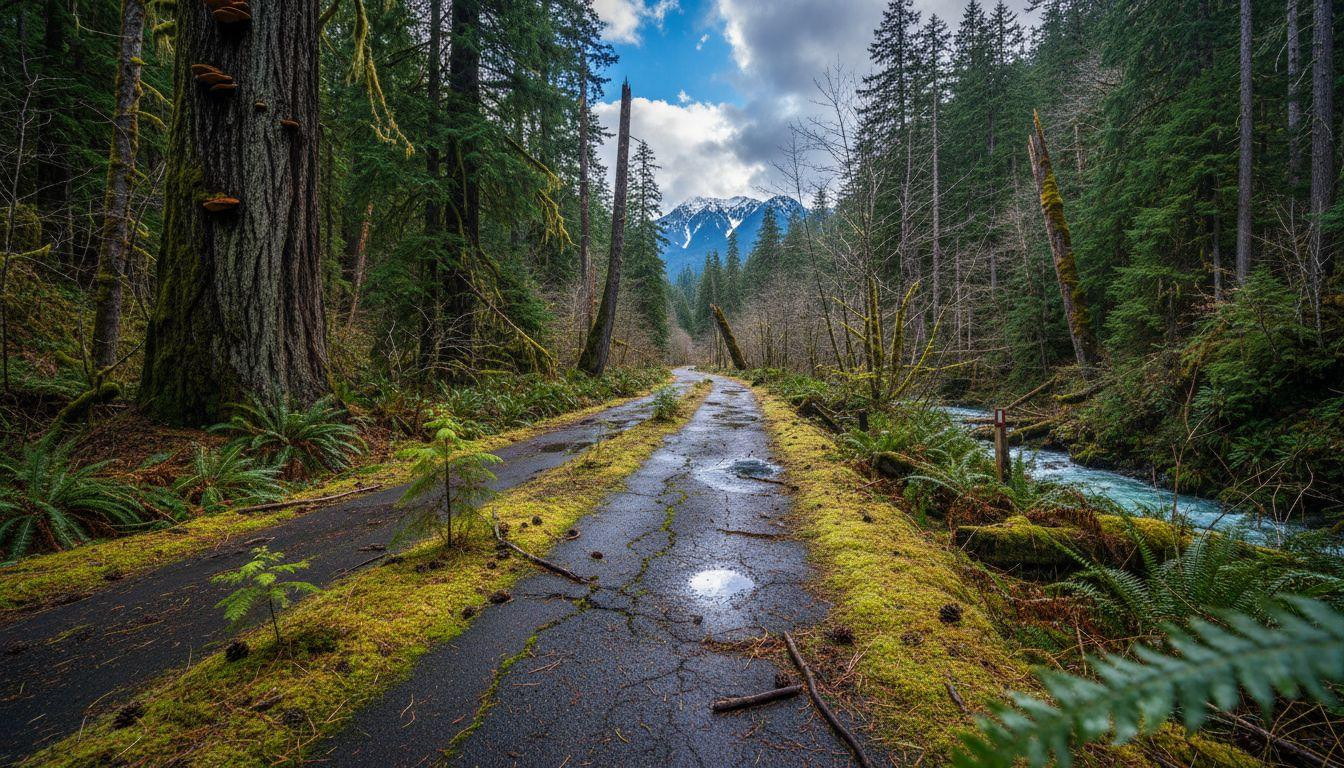
The washed-out section begins 10 miles upriver from Brinnon. Where pavement ends, your real journey starts. The road stretches ahead, perfectly flat but slowly surrendering to Pacific Northwest forest. Moss creeps across asphalt edges while alder saplings push through cracks.
Forest reclaiming infrastructure
Walking abandoned pavement feels post-apocalyptic but peaceful. Sword ferns colonize roadside ditches. Douglas fir seedlings sprout from guardrail gaps. Winter rain accelerates the takeover, creating a green carpet over what engineers built to last decades.
The washout itself spans 520 feet where Dosewallips River carved through road foundations. Metal guardrails dangle into space. Concrete chunks rest in streambed below. This Washington coastal town shows similar infrastructure battles against Pacific storms.
Complete solitude guaranteed
Winter reduces visitor numbers to near-zero. Expect to encounter 2-3 hiking parties maximum during the entire 13-mile round trip. No cell service from any carrier eliminates the digital world entirely. River sound becomes your only soundtrack as water rushes over granite boulders.
Temperature drops to 30°F in winter while summer peaks reach 70°F. Snow dusts the valley floor but rarely accumulates deeply enough to block access. The river never freezes, maintaining its hypnotic flow through dormant forest.
The experience of walking into nowhere
Your footsteps echo differently on abandoned asphalt. The 6.5-mile commitment filters out day-trippers seeking quick Instagram shots. Serious hikers appreciate the flat approach to Olympic backcountry without steep trail climbs that characterize most park access points.
Ruins of Dosewallips campground
The old campground sits empty where families once pitched tents beside rushing water. Concrete picnic tables remain anchored in place. Fire rings rust among encroaching salmonberry bushes. Restroom buildings stand locked and weathered but structurally sound.
Beyond the campground, Main Fork Dosewallips Trail continues 15 miles to Hayden Pass. This Oregon mountain spring requires similar road access challenges to reach pristine wilderness.
River canyon rewards
Dosewallips River carved deep channels through granite and schist bedrock. Ancient Douglas fir trees stretch 200 feet overhead. Winter light filters through bare deciduous canopy, illuminating moss-covered logs and granite boulders smoothed by millennia of water flow.
The sound changes as you penetrate deeper into the canyon. Traffic noise from Highway 101 fades completely after mile three. Only river music remains, punctuated by occasional winter bird calls or distant trees creaking in mountain wind.
Practical winter access reality
Drive times from major cities total 2.5 hours from Seattle and 1.5 hours from Olympia. This California coastal spot offers similar drive-time isolation from urban centers. Brinnon provides the nearest services with limited dining and lodging options.
No permits required for day hiking the closed road section. Parking remains free at the washout barrier. Winter gear proves essential: waterproof boots, layers for temperature swings, headlamp for short January days. The 13-mile commitment demands fitness and preparation.
Compare this simplicity to Hurricane Ridge reservation systems or Hoh Rainforest arrival time calculations. Dosewallips operates on old-school hiking principles: show up, walk, discover. This Colorado high-altitude lake rewards similar commitment with guaranteed solitude.
Your questions about Dosewallips winter river access answered
Will the washout ever be repaired?
The Forest Service and Olympic National Park proposed restoration in 2002 but environmental reviews stalled progress. By 2025, the washout has existed longer than some roads last entirely. Natural reclamation makes repair increasingly expensive and environmentally complex.
Is winter hiking safe on the closed road?
The flat pavement eliminates typical mountain hazards like cliff exposure or avalanche risk. River crossings occur on intact bridges. Primary winter concerns include daylight limitations (8 hours maximum), weather changes, and emergency access without cell coverage.
How does this compare to other Olympic Peninsula access points?
Most Olympic trails require steep elevation gain immediately. Dosewallips offers flat approach followed by optional elevation if continuing beyond the campground. Hurricane Ridge provides easier car access but winter closure. Hoh offers easier access but overwhelming crowds during peak seasons.
Your footprints mark snow-dusted pavement as you return toward civilization. The abandoned road holds winter silence that Hurricane Ridge timed entries and Hoh Rainforest parking chaos can never provide. Olympic Peninsula’s accidental gift keeps giving.