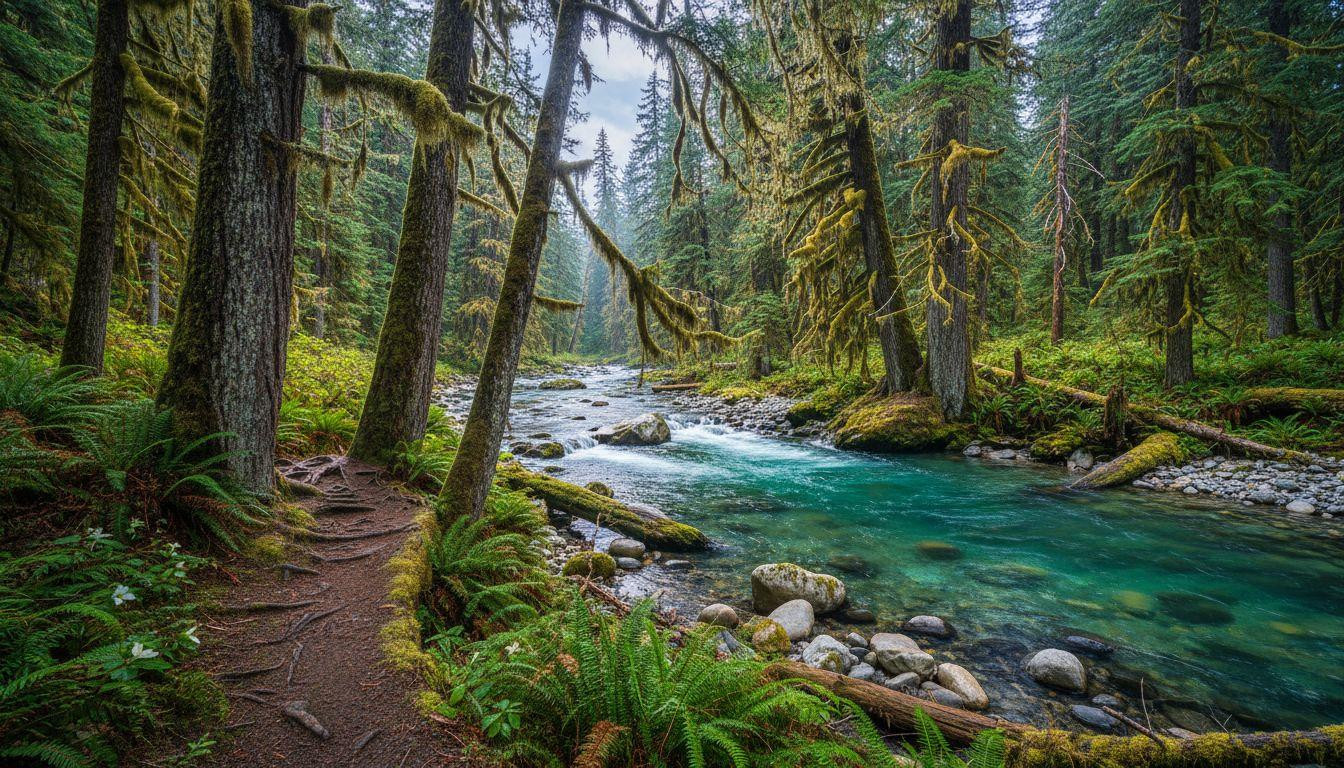
The parking lot at Hoh Rainforest visitor center overflows by 10am most summer days. Tour buses idle while 460,000 annual visitors queue for Hall of Mosses Trail selfies. Interpretive signs mark every ancient maple. Rangers patrol constantly. Twelve miles south, Bogachiel River Trail entrance sits empty. Same towering spruce draped in silver moss. Same turquoise river cutting through emerald silence. Local residents from Forks know the secret.
Why Hoh Rainforest lost its wilderness magic
Olympic National Park funnels over 3 million visitors annually through its temperate rainforest valleys. Hoh claims the largest share with 460,000 hikers yearly. The $30 park entrance fee leads to overcrowded parking lots holding just 93 vehicles. Summer mornings see cars lined along Upper Hoh Road by 9am.
Hall of Mosses Trail processes 200,000 hikers annually on its 0.8-mile paved loop. Boardwalks protect root systems while interpretive signs appear every 50 feet. Gift shops sell moss-themed souvenirs. Even December brings managed crowds to maintained trails designed for mass tourism. The wilderness experience Hoh promised exists only in historical memory.
Washington State invested $623,000 repairing Upper Hoh Road after winter 2024 washouts. Reopening in May 2025 restored access to what overtourism transforms from sanctuary to spectacle. The infrastructure exists to process visitors efficiently. The solitude doesn’t.
Bogachiel: The rainforest Olympic locals choose
The landscape nobody photographs
Bogachiel River Trail extends 24.4 miles through Olympic National Forest into Park wilderness. Western hemlock and Sitka spruce reach 250 feet. Club moss drapes every branch creating cathedral effects identical to Hoh. The difference? Zero signs marking ancient trees. No boardwalks protecting delicate ground.
River access appears every mile along turquoise water flowing over granite stones. Elk tracks mark muddy sections between towering cedar groves. Winter fog wraps the valley floor until 10am. Morning light filters through moss-covered branches casting emerald shadows across untouched forest floor.
The cost breakdown that matters
Hoh requires Olympic National Park passes costing $30 per vehicle for seven days. Annual passes cost $55. Gas from Forks adds $12 for the 31-mile drive south. Competitive parking creates stress even during winter months.
Bogachiel access remains free through Olympic National Forest. No entrance fees apply. From Forks, drive 10 miles southeast via Highway 101 to Undi Road. Trail parking accommodates 15 vehicles and never fills during December through April. Winter solitude multiplies the contrast.
What December hiking reveals
The authentic temperate rainforest experience
Trails stay muddy but navigable in this climate receiving 120 inches annual rainfall. Waterproof boots prove mandatory. Temperatures hold steady between 35-45°F throughout December. Dawn arrives at 7:45am with optimal hiking starting by 8:30am.
First mile crosses Morganroth Homestead Loop showcasing 1890s pioneer cabin ruins visible through sword ferns. River sound amplifies as the trail parallels Bogachiel’s constant flow. By mile three, maybe two other hikers share 24 miles of wilderness. Compare this to Hoh’s 50 winter visitors crowding 0.8 miles.
The moment that defines wilderness
Kahkwa Creek crossing at mile 4.2 requires log-walking over tributary waters. River sounds echo through moss-draped valley walls. December fog clings to water level creating primeval atmosphere unchanged for millennia. This captures what Hoh offered before infrastructure arrived.
Local forest service reports note Bogachiel as the “least-visited rainforest valley” among Olympic’s four temperate zones. Authentic wilderness requires choosing the path less traveled. Silence here feels complete except for water flow and occasional bird calls.
The irony Olympic Peninsula tourism created
Hoh Rainforest’s fame destroyed the wilderness character it promised to protect. Paved trails and visitor infrastructure transformed 13,000-year-old forest into outdoor museum. Bogachiel preserves what Hoh lost through benign neglect and National Forest management philosophy.
Same biological diversity exists in both valleys. Same moss species drape identical tree species. Same turquoise rivers flow over similar stone beds. The critical difference: Bogachiel demands treating it as wilderness rather than theme park. December amplifies this authenticity when fog wraps unmarked trails in primeval silence.
Your Questions About Bogachiel Rainforest Winter answered
How do I reach Bogachiel from Seattle?
Drive 140 miles northwest via US-101 to Forks (3.5 hours). From Forks, continue 10 miles southeast to Undi Road turnoff. GPS coordinates: 47.8964° N, -124.3606° W. No public transit serves this area. Rental cars cost $40-70 daily from Seattle-Tacoma Airport.
What winter conditions should I expect?
December temperatures range 35-45°F with frequent rain typical of temperate rainforest climate. Trails stay muddy requiring waterproof footwear and rain gear. Daylight lasts 8:45am-4:30pm. Morning fog lifts by 10am revealing filtered sunlight through ancient canopy.
How does Bogachiel compare to other Olympic rainforests?
Bogachiel offers identical old-growth temperate forest ecology as Hoh but receives fraction of visitors. Free National Forest access versus $30 Park fees. Unmaintained wilderness trails versus paved interpretive loops. River access throughout 24-mile trail system versus restricted boardwalk viewing.
Morning mist lifts from Bogachiel River revealing moss-covered giants standing unmarked by human intervention. The silence feels complete. This is what Olympic rainforests offered before fame found them.