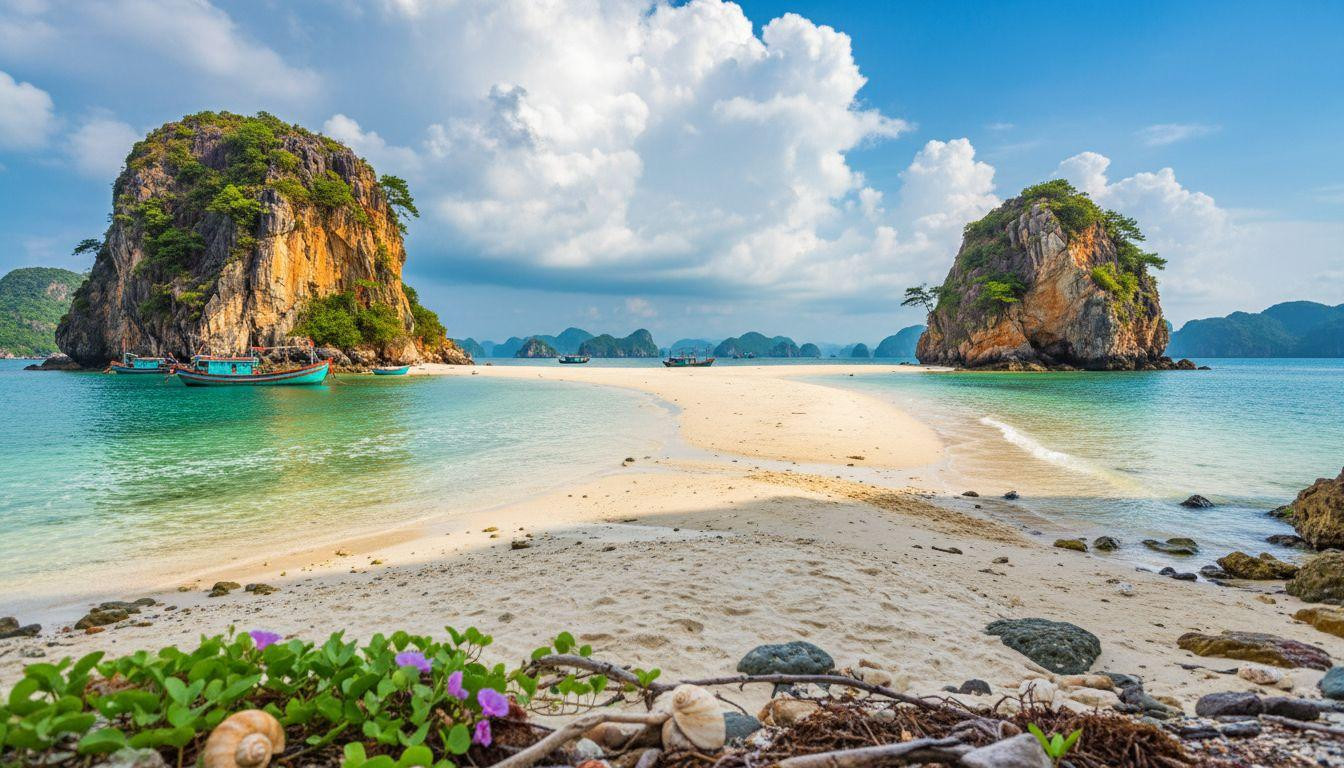
Cruise ships queue at Ha Long Bay’s limestone karsts while 6 million annual visitors jostle for photos. Thirty miles east, Co To Island emerges from turquoise waters at low tide, creating temporary sandbars between 40 scattered islets. The ferry from Cai Rong costs $8-13, not the $200 minimum for Ha Long’s mandatory overnight cruises.
December brings cool mornings and empty beaches. Water temperatures drop to 68°F, but crowds vanish entirely. Fishing boats glide silently between Co To’s volcanic cliffs as dawn breaks over Bai Tu Long Bay.
Why Ha Long Bay lost what travelers seek
Ha Long Bay welcomed 8.2 million visitors in 2025’s first nine months. Quang Ninh Province targets 14 million total tourists this year. December alone brought over 180,000 foreign visitors, triple August’s numbers.
Environmental damage accelerates with each cruise season. Plastic pollution and heavy metals from nearby power plants destroy water quality. Swimming remains largely prohibited across the UNESCO World Heritage site.
Cruise costs start at $199 for basic 2-day packages during off-peak months. Peak season prices reach $329-500 for the same experience. Every itinerary follows identical routes past identical karsts from identical boat decks.
The limestone formations that made Ha Long famous now frame overcrowded waterways. Traditional fishing villages perform culture rather than live it.
Meet Co To Island’s hidden geography
The archipelago tourism missed
Co To District encompasses 40-50 islands scattered across Bai Tu Long Bay. Van Don International Airport lies 60 minutes from Cai Rong port by taxi. Ferry journeys take 60-90 minutes depending on weather and vessel type.
The main island stretches 20 kilometers end-to-end. Van Chay and Hong Van beaches curve along the eastern shore in pale crescents. Cau My cliffs display stratified volcanic rocks in russet and ochre layers.
Population hovers under 5,000 residents across the entire district. Remote islands throughout Southeast Asia maintain similar ratios of locals to land.
The sandbar phenomenon
Co To Con and Hon Ca Chep islets connect via emergent sandbars during low tide. Visitors walk between islands on powder-soft sand paths that disappear twice daily. The phenomenon occurs predictably with lunar cycles and seasonal tides.
Morning light catches shallow turquoise water on both sides of the temporary walkways. Children and adults collect clams where land meets sea meets sky. No cruise ships schedule around natural tidal rhythms here.
The Co To experience Ha Long cannot offer
Beaches and swimming freedom
Van Chay Beach stretches over half a mile of white sand and gentle waves. Water remains clean enough for swimming year-round. Hong Van Beach faces west for watercolor sunsets without cruise ship silhouettes.
Local fishermen repair nets on the sand at dawn. Families gather shellfish during evening low tides. Thailand’s quieter islands share this rhythm of authentic coastal life.
Motorbike rental costs $6-12 daily for island exploration. Three-island boat tours run $16-40 per person depending on group size and inclusions.
Lighthouse hill at your own pace
The hilltop military fort doubles as lighthouse and panoramic viewpoint. White concrete fortifications rise from pine-covered slopes overlooking Bai Tu Long Bay’s scattered islands. Sunrise arrives without scheduled cruise departures or crowded observation decks.
Local temples dot the hillside between fort and village. Ho Chi Minh commemorative monuments mark historical significance beyond tourism marketing. European islands with similar fortress heritage charge entrance fees and restrict access.
Planning your escape from cruise crowds
December through February offers the quietest experience and lowest accommodation prices. Guesthouses average $14 nightly during winter months compared to $89 in summer peak season. Ferry services reduce frequency but maintain daily connections from Cai Rong port.
Book accommodations through local platforms rather than international chains. Coto Center Homestay offers villa-style apartments with single rooms, doubles, and dormitories. Family-run properties provide insider knowledge about tidal schedules and hidden coves.
Van Don airport connects to Hanoi in 90 minutes by air, then 60 minutes by road to ferry terminals. Total journey time from Vietnam’s capital averages 5-7 hours door-to-door. Caribbean volcanic islands require similar multi-modal transportation but cost significantly more.
Your Questions About Co To answered
How much does a Co To visit actually cost?
Budget travelers spend $80-120 total for three days including accommodation, meals, and ferry transport. Homestays cost $14-28 nightly in December. Local seafood meals range $4.50-13 per person. Ferry tickets cost $8-13 one-way from Cai Rong port to Co To main island.
What makes Co To different from Ha Long Bay culturally?
Co To residents live from fishing and farming rather than tourism performance. Women and children gather clams during low tide for family meals, not tourist photos. Village temples hold genuine festivals tied to fishing seasons. Local markets sell seaweed and fermented seafood condiments used in daily cooking.
When do the famous sandbars appear?
Co To Con sandbar emerges during low tide cycles, typically twice daily for 2-4 hours. Spring and autumn offer the most dramatic exposures when tidal ranges reach maximum. Local boat operators provide current tide schedules and guide services to optimal viewing times and walking routes between islands.
Morning mist rises from Bai Tu Long Bay as fishing boats return with the night’s catch. Co To’s beaches stretch empty under soft December light. The sand beneath your feet stays where Ha Long’s crowds cannot follow.