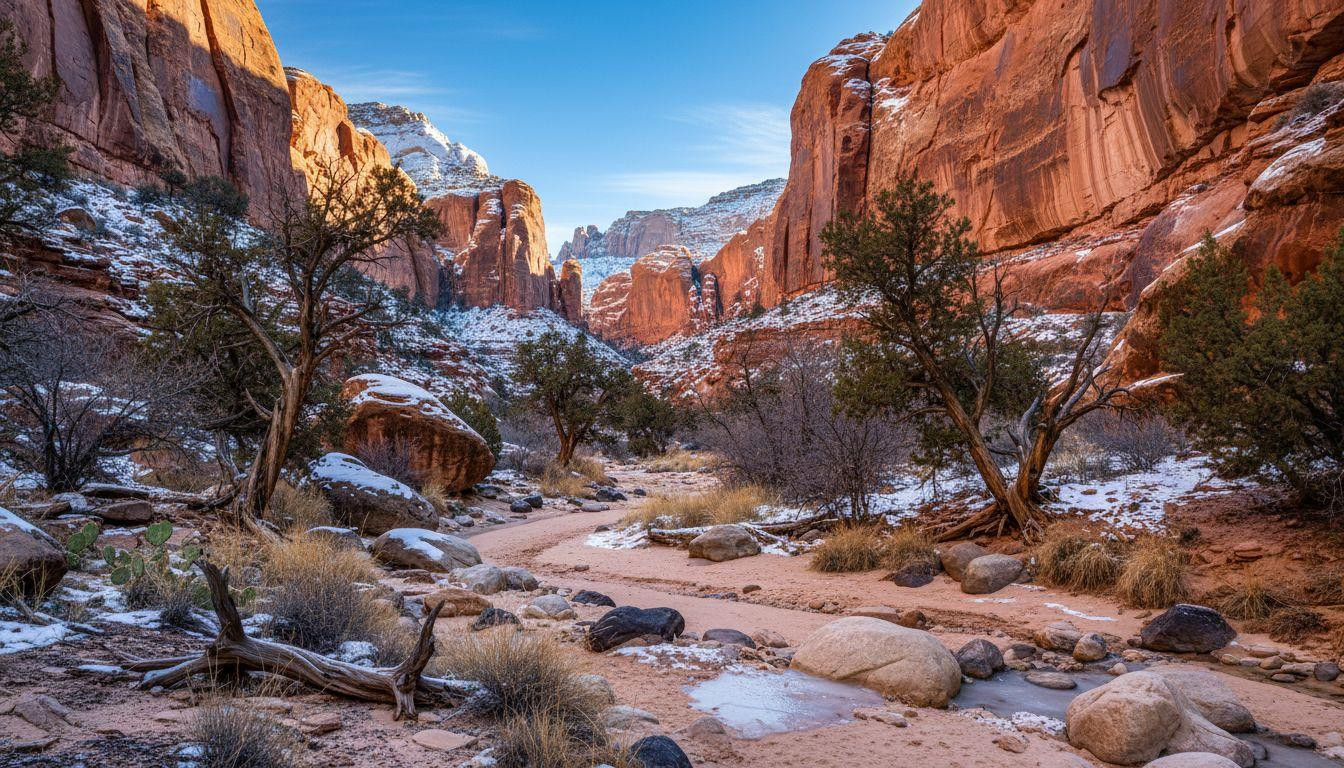
Carlsbad Caverns books tours months ahead for 400,000 annual visitors who pay $25 to walk underground marble chambers on timed schedules. Lower Spring Canyon through Capitol Reef’s Waterpocket Fold stays empty in February. Snow dusts 500-foot red sandstone walls. You walk 10 miles through the heart of a 100-million-year-old reef with no reservations, no crowds, no artificial lights.
The canyon opens to sky instead of closing into darkness. That difference changes everything.
Why Carlsbad feels like work now
Carlsbad Caverns recorded 460,474 visitors in 2024. The Big Room tour requires advance booking during peak season. Entry costs $25 per person plus lodging near Whites City runs $150-200 per night. Artificial lighting illuminates formations but limits natural photography. Timed entry means you move with groups through underground passages.
The experience delivers geological wonder but demands planning. Tours fill weeks ahead in summer. Winter offers better availability but the cave stays 56°F year-round. You see what everyone sees on the same path at scheduled times.
Lower Spring Canyon asks nothing except that you show up. The $30 Capitol Reef vehicle pass covers seven days of unlimited access. Torrey lodging 11 miles west costs $80-120 per night in February. No reservations needed. No tour groups. Just red rock and winter silence.
The Waterpocket Fold’s open-sky theater
Lower Spring Canyon cuts through the Waterpocket Fold, a 100-mile monocline of uplifted Navajo sandstone and Wingate formations. The through-hike runs 9.9 miles from Chimney Rock Trailhead at milepost 76.4 on UT-24 to the mile marker 83 parking area. Towering walls rise on both sides. February snow clings to north-facing cliffs while south walls glow rust-red in afternoon sun.
What the canyon delivers in winter
The trail drops into twisting narrows with short slot sections requiring cairned bypasses. A spring flows 3.3 miles below Chimney Rock junction. The Fremont River ford at trail’s end has no bridge. Logs span the water if you’re lucky. Expect wet feet if not.
High-clearance vehicles help at trailhead pullouts after snow but UT-24 stays paved and plowed. The route needs no permit for day hikes. Backcountry camping requires registration at the visitor center. Winter temperatures hit 35-45°F during the day and drop to 15-25°F at night. Snow dusting averages trace to 4 inches.
The cost comparison that matters
Capitol Reef charges $30 for seven days of vehicle access. That covers Lower Spring Canyon plus every other trail in the park. Fruita Campground stays open year-round at $25 per night. Torrey offers motels and cabins for $80-120 in February. Total cost for three days runs under $300 including lodging, food, and park entry.
Carlsbad requires separate cave tour fees, higher lodging costs, and advance planning. The geological drama matches Capitol Reef but the experience feels managed rather than discovered. Lower Spring Canyon lets you walk at your own pace through formations that rival underground chambers.
Walking the canyon in February quiet
Capitol Reef sees under 500 visitors daily park-wide in winter. Most stay near Fruita orchards and short trails. Lower Spring Canyon’s 10-mile length and shuttle requirement keep crowds to near zero. The canyon floor crunches with frost in morning shade. Afternoon sun warms south-facing walls to comfortable hiking temperature.
What the moderate rating means
The trail gains and loses elevation gradually through the canyon. No technical climbing required but the distance demands fitness. Most hikers complete the through-hike in 6-8 hours. The slot sections need careful footing. The Fremont River crossing at trail’s end requires wading or log-walking. Bring dry socks.
Fremont Culture petroglyphs appear on canyon walls in some sections. Pioneer inscriptions mark 19th-century passage. The Waterpocket Fold’s layered geology shows 100 million years of sediment deposition and uplift. Similar slot canyons in Death Valley require permits and draw larger crowds.
The pioneer layer around the canyon
Fruita orchards near the visitor center grow apples and peaches from trees planted in the 1880s by Mormon settlers. Gifford House sells fresh pies from these historic varieties. The settlement preserved buildings show frontier life along the Fremont River. Butch Cassidy reportedly used Capitol Reef canyons as hideouts. Cassidy Arch trail sits 3.4 miles from Lower Spring Canyon’s vicinity.
Torrey population holds at 180 residents. The town serves as base camp for Capitol Reef exploration. Local guides offer winter ATV tours to Moonscape Overlook. Winter canyon access in Colorado requires different preparation but delivers similar solitude.
When February light hits red walls
Morning sun reaches the canyon floor around 9am in February. The light turns snow-dusted cliffs pink then gold. By noon the canyon warms enough for comfortable hiking in layers. Afternoon shadows create dramatic contrasts between lit and shaded walls. The silence breaks only with wind through junipers and your own footsteps.
Capitol Reef earned International Dark Sky Park status. Winter nights offer clear views of the Milky Way from canyon overlooks. The park’s 150-plus miles of trails stay mostly snow-free at lower elevations. Snow-glow formations in South Dakota create similar winter beauty with equally low crowds.
Your questions about Lower Spring Canyon in winter answered
When should I visit for the best conditions?
February through early April offers snow-dusted walls with manageable temperatures. Highs reach 35-45°F and lows drop to 15-25°F. Snow accumulation stays light at 4 inches or less. UT-24 remains plowed and accessible. Summer heat makes the canyon uncomfortable with temperatures exceeding 90°F. Fall brings pleasant weather but loses the snow contrast on red rock.
How does this compare to other Utah slot canyons?
Zion’s Narrows draws heavy crowds and often closes in winter due to ice. Antelope Canyon near Page requires $50-100 guided tours booked weeks ahead. Lower Spring Canyon needs no guide and charges only the park entry fee. The 10-mile length filters out casual visitors. The Waterpocket Fold’s geology rivals any Utah formation but stays largely unknown.
What makes Capitol Reef different from Carlsbad?
Carlsbad shows you underground formations on a set path with artificial lighting. Capitol Reef lets you walk through above-ground geology under natural sky. Both formed over millions of years but Capitol Reef offers spontaneous access and winter solitude. The red sandstone walls with snow create visual drama that underground chambers can’t match. You trade marble stalactites for towering cliffs and open horizons.
The ferry shuttle back to Chimney Rock Trailhead requires hitchhiking or a second vehicle. Most hikers arrange rides with fellow visitors at the parking area. The canyon empties by late afternoon. Snow catches last light on the highest cliffs. Then the walls go dark and stars appear in the gap above.