“`html
Carlsbad Caverns pulls 400,000 visitors every year. Tours cost $25 and book weeks ahead. The Big Room packs 200 people at once under artificial lights. Meanwhile, Crystal Cave Road sits buried under February snow in Sequoia National Park. The gate stays locked until late May. No crowds. No reservation fights. Just marble walls sparkling with calcite formations that rival any commercial cave in the U.S., for $20 when it reopens. The catch: you can’t visit for eight months. The advantage: neither can anyone else.
Why Carlsbad feels like a theme park
Commercial cave operations mean paved trails and gift shops. Crowd management systems. Carlsbad’s infrastructure processes visitors like airport security. Same for Mammoth Cave (630,000 visitors) and Luray Caverns (500,000). Crystal Cave closed four years after wildfire damage. Reopened in 2025 with solar lights and limited tours (50 to 120 minutes). Annual cap around 50,000. No same-day tickets.
But zero commercialization. The cave stays wild. Damp 50°F air. Natural darkness between solar panels. Formations untouched by handrails. Winter closure protects it. Spring snowmelt timing creates seasonal exclusivity. Comparison: Carlsbad opens 363 days per year. Crystal Cave: 107 days.
The difference shows in the approach. Carlsbad has elevators to 750 feet depth. Fully wheelchair accessible. Crystal Cave requires a half-mile hike with 300-plus stairs. Not accessible. Not easy. But authentic in a way commercial caves can’t match.
Meet Crystal Cave’s marble secret
Geology that glitters
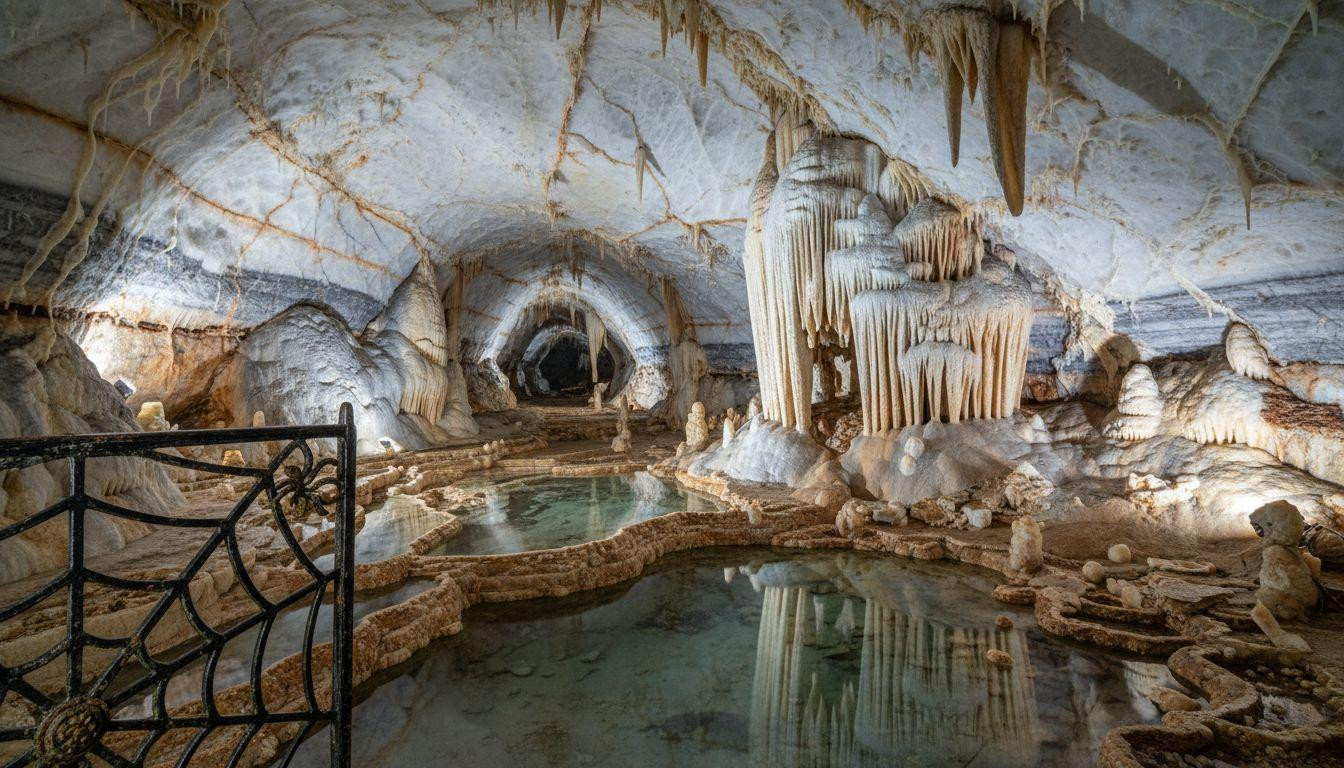
Ancient marble karst formed over 10 million years. White calcite crystals sparkle under dim light. Stalactites, flowstone, draperies. The Throne Room formations. Spider-web gate entrance. Contrast: Carlsbad uses common limestone. Crystal Cave uses rare marble. Only a handful of U.S. park caves share this geology.
The marble creates different textures. Smoother walls. Brighter reflections. When solar lights hit the calcite, the chambers glow without feeling artificial. A fisherman who explored here in the 1980s described it as walking through frozen moonlight. That precision holds up.
The price-to-beauty ratio
Adult tickets cost $20 in 2025. Carlsbad charges $25 to $30. Mammoth runs $24 to $28. Luray hits $32. Park entry adds $35 (covers entire Sequoia and Kings Canyon). Total: $55 for cave plus giant sequoias plus Marble Fork Canyon views. Carlsbad delivers cave only in a desert setting. No sequoia bonus. No canyon overlooks.
The value extends beyond price. Crystal Cave’s limited season and capacity mean smaller groups. Tours max out at 35 people. Carlsbad’s Big Room holds hundreds simultaneously. You hear your own footsteps in Crystal Cave. In Carlsbad, you hear everyone else’s.
The winter approach experience
Snowshoeing closed roads
Crystal Cave Road closes with first snow (December through May). Not plowed. Legal for non-motorized winter access: snowshoes and cross-country skis. From Giant Forest: two to three miles through sequoia silence. Canyon overlooks snow-covered. Black bears roam the unplowed roads. February 2026: chains required on Generals Highway just to reach the trailhead.
Extreme contrast to Carlsbad’s paved parking and elevator access. The winter approach to Crystal Cave isn’t a tour. It’s a pilgrimage. Snow depth hits three to 10 feet January through March. The road disappears. Only tracks from wildlife and the occasional winter hiker mark the route.
For those who make the trek, the reward is solitude. This Colorado canyon drops 2,700 feet and you ski to the edge alone, offering similar winter isolation. Crystal Cave’s snowbound access creates the same earned discovery.
The payoff in May
Reopening happened May 23, 2025. Post-wildfire repairs complete. Road stabilized. Hazard trees removed (thousands of them). Summer access easier than winter, but timing matters. Early May means fewer tourists. Schools still in session. June through August: peak crowds return. Strategy: book opening week for lowest competition.
Tickets went on sale March 31 for the 2025 season. Sold out within weeks. Reservations open two months maximum in advance. No walk-ups. The system forces planning. But it also guarantees your spot when you secure it.
Practical reality check
Distance from Three Rivers: 15 miles in summer. Winter: impassable. Fresno airport sits 50 miles away. Rental cars run $50 to $100 daily. Wuksachi Lodge charges $150 to $250 per night. Three Rivers motels: $50 to $100. Cave stays 50°F year-round. Bring layers even in summer. Tours sell out fast post-reopening. Reservation-only via Sequoia Parks Conservancy.
Altitude: 5,900 feet. Mild compared to Colorado. Trail: half-mile, 300-plus stairs. Not wheelchair accessible. Versus Carlsbad: elevator to depth, fully accessible. Crystal Cave requires authentic backcountry effort. The trail gains elevation through cascading waterfalls (summer only). The approach is part of the experience.
Winter camping access rates very low. No facilities. High avalanche risk in surrounding canyons like Marble Fork. Better than Titus where roads wash out and Golden Canyon keeps sunrise glow for $30, winter conditions here demand serious preparation. Backcountry permits cost $5. But most visitors wait for summer tours.
Your questions about Crystal Cave winter approach answered
When does Crystal Cave actually reopen?
May 23 for 2025 season, running through September 7. Winter 2026 dates not yet confirmed, but expect similar timeline. Road closure typically starts early December. Reopening depends on snowmelt and road repairs. Check Sequoia Parks Conservancy website for exact dates. Tickets go on sale roughly two months before opening. Book immediately when available.
Why is marble rarer than limestone in caves?
Marble forms from metamorphosed limestone under extreme heat and pressure. Requires specific geological conditions. Most U.S. caves form in sedimentary limestone. Crystal Cave is one of 275 caves in Sequoia and Kings Canyon, but only a handful use marble. The result: smoother walls, brighter calcite reflections, different formation patterns. 6 Texas grottos where waterfalls stay 10 degrees cooler year-round showcase limestone variety, but marble caves remain exceptional.
How does this compare to Oregon Caves?
Oregon Caves also uses marble but smaller scale. Less accessible. Lower annual visitors. Crystal Cave offers developed infrastructure (stairs, solar lights) while maintaining wild character. Oregon Caves requires more remote access. Crystal Cave balances accessibility with authenticity. Both avoid the theme-park feel of Carlsbad or Luray. Better than Pinnacles where 50 people crowd sunset and Hay Butte keeps snow-glow formations for you alone captures similar balance between access and solitude.
Carlsbad’s Big Room holds 200 people. Crystal Cave’s Throne Room holds 20. One feels like a museum. The other feels like discovery. The winter closure isn’t a limitation. It’s the feature that keeps this place real. When snow buries the access road for eight months, the marble formations wait in 50-degree darkness. No gift shops. No elevator rides. Just geology and timing. May 2026 reservations open soon. Book the first week. Before summer crowds remember it’s back.
“`