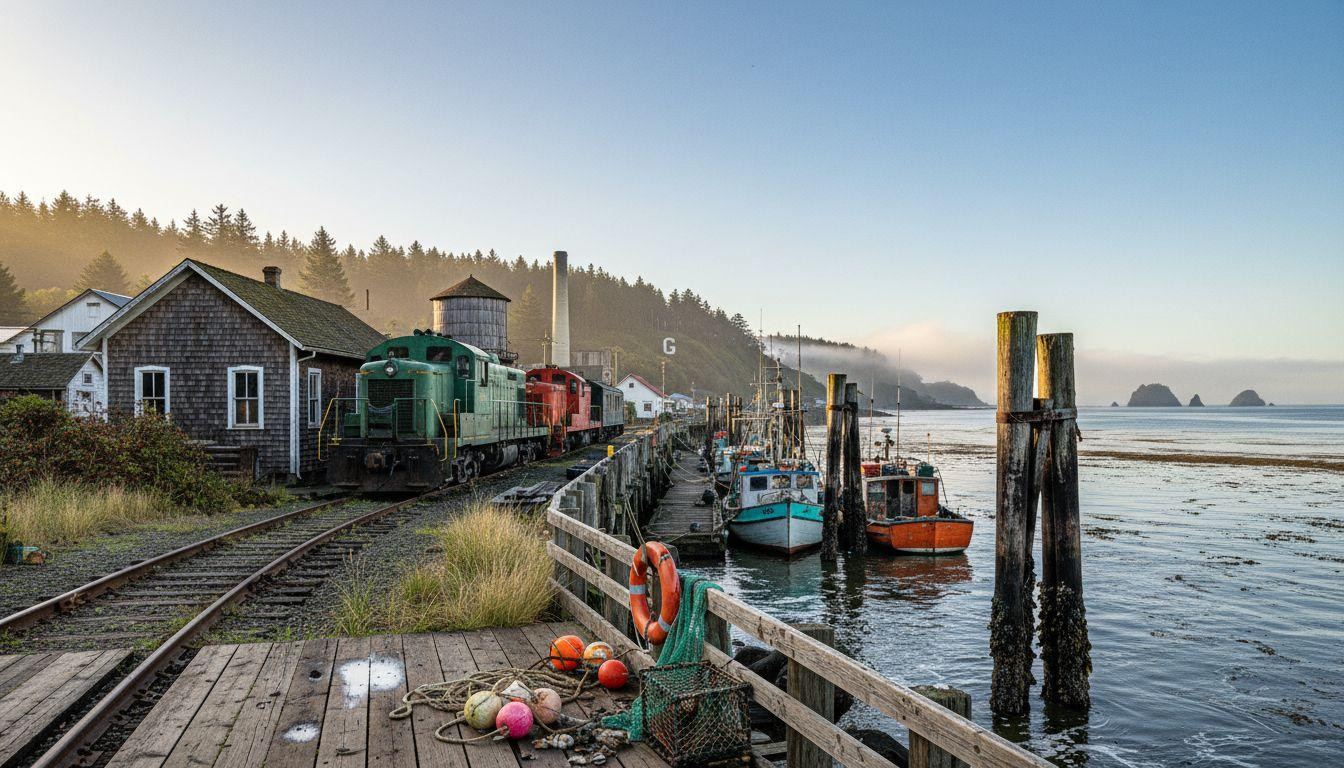
Cannon Beach draws over 1.5 million visitors annually to Haystack Rock. Hotels charge $200-400 per night. Downtown galleries replaced working docks decades ago. Parking lots fill by 8am in summer. Fifteen miles south, Garibaldi keeps what Cannon Beach paved over: a 1912 railroad depot, fog-wrapped pilings, and fishing boats unloading at dawn.
The Oregon Coast Scenic Railroad still runs vintage diesel engines at 10mph along tracks that hug the Pacific. Population 1,100. No boutique hotels. The general store sells bait and coffee from the same counter.
Why Cannon Beach lost what made it special
Cannon Beach transformed from fishing village to art destination in the 1970s. Galleries occupy buildings where net-menders worked. Summer weekends bring gridlock. The beach itself remains stunning, but the town around it serves Instagram more than memory.
Hotel occupancy rose 2-9% in early 2025 despite declining room rates. International visitors dropped 21% that July. Locals call it “upscale in a comfortable way” but acknowledge the tourist orientation. Three million annual visitors was an overestimate, but 1.5 million still overwhelms four miles of coastline.
The difference shows in prices. Cannon Beach hotels average $200-400. Restaurants cater to weekend crowds. Parking requires strategy. The experience feels managed, not discovered.
Meet Garibaldi: Oregon’s last working coastal railroad town
The depot that time preserved
The railroad arrived in Tillamook County in 1912, hauling timber from valley to coast. The Southern Pacific line carried passengers too. When freight service ended, preservationists leased 46 miles of track from the Port of Tillamook Bay Railroad.
Today the Oregon Coast Scenic Railroad operates 30-minute excursions from Garibaldi to Rockaway Beach. Vintage diesel locomotives pull passenger cars past surf-fringed beaches. The depot displays a 1930 Rayonier engine, touchable history under a replica water tower. Trains depart several times daily in spring, including Spring Break weeks from late March through mid-April.
The track speed stays capped at 10mph. Windows open. Salt air mixes with diesel exhaust. Seagulls wheel above pilings that extend into gray Pacific water.
How Garibaldi stays real
The wharf still works. Fishing boats unload Dungeness crab at dawn. Barnacle-crusted pilings date to the 1900s fishing boom. Low tide reveals their full height, creating what locals call the “dancing forest” effect when waves make them appear to sway.
Hotels run $80-250 per night, roughly half Cannon Beach rates. The town has three restaurants. The one by the water charges tourist prices. The one behind the church costs less and serves better food. Fog rolls in most March mornings, thick enough to muffle sound.
Oregon tourism hit $14.3 billion in 2024, but international visitors declined 47% coastwide in 2025. Garibaldi absorbed the change quietly. Roughly 50,000 people ride the railroad annually. The rest of the year, the depot sits empty except for locals checking train schedules.
What you actually experience
Morning at the wharf
Arrive at low tide. The pilings stretch 0.5 miles into the bay, exposed timbers slick with kelp. Seagulls outnumber residents 10-to-1. Their cries echo off wooden docks that creak underfoot. Water temperature stays around 50°F in March, air temperature similar.
The depot opens at 9am. Static displays include engines from the logging era. Similar morning rhythms define Bodega Bay, where crab boats follow the same schedule 200 miles south. The 30-minute train ride to Rockaway Beach departs mid-morning. Round-trip tickets cost $20-30 for adults.
Fog typically burns off by 10am, revealing the full Pacific horizon. March precipitation averages 8.7 inches, greening the coastal bluffs. Layered clothing works best. The wind carries salt mixed with distant pine scent from inland forests.
The Oregon Coast without the crowds
Tillamook sits 15 miles south. The cheese factory draws tourists, but dairy scents reach Garibaldi on south winds. Dungeness crab costs $25 per plate at the wharf restaurant. Clam chowder runs $12. Both use catches from boats visible through the window.
Special railroad trips venture into Salmonberry River Canyon, one of America’s wildest rail routes. Trestles cross fog-choked gorges. Fog transforms coastal bridges throughout the Pacific Northwest, but few remain as accessible as Garibaldi’s working infrastructure.
The town’s unhurried pace shows in details. Residents greet with “how’s the fog?” instead of “how are you?” Pilot house architecture dots the waterfront, vernacular design from the fishing era. The depot’s non-profit status ensures preservation over profit. No ghost train legends verified, but locals mention unexplained whistles in heavy fog.
Why 1912 rhythms matter in 2026
Cannon Beach serves a purpose. Art galleries, accessible tidepools, dramatic rock formations. But it serves tourism first. Garibaldi serves memory. The difference appears in morning light when fog lifts over empty docks.
Oregon Coast visitor numbers surged post-COVID, with state parks seeing 53.8 million day-use visits in 2024. Hug Point near Cannon Beach experienced over 100% visitor increases. Garibaldi absorbed minimal overflow. The railroad draws enthusiasts, not crowds. Working waterfronts maintain authenticity when tourism pressure stays manageable.
The depot-to-wharf walk takes two minutes. Distance: 0.1 miles. That proximity between heritage and function defines the experience. You watch history, then watch fishing boats unload. Both feel equally present.
Your questions about Garibaldi answered
When should I visit Garibaldi for the best experience?
Late winter through spring offers optimal conditions. March through May brings fog, fewer crowds, and Spring Break railroad schedules. Summer sees moderate visitor increases but nothing like Cannon Beach’s density. Fall provides clear days but less dramatic atmosphere. Winter storms close some railroad operations.
How does Garibaldi compare to other Oregon Coast towns?
Garibaldi maintains working maritime infrastructure that Astoria commercialized and Cannon Beach replaced entirely. Transportation heritage defines character in towns that resist modernization. Population 1,100 keeps services authentic. No chain hotels. Three locally owned restaurants. One working wharf.
What makes the railroad experience worth the trip?
The Oregon Coast Scenic Railroad operates on original 1912 track. Vintage locomotives maintain historical accuracy. The 10mph speed allows full sensory engagement: salt air, seagull cries, fog patterns, Pacific rhythms. Round-trip costs $20-30. Departures run multiple times daily during peak seasons. The experience educates about Northwest logging history while preserving functional rail infrastructure.
The ferry back from Rockaway Beach leaves at 4:30pm. Most visitors make it with time to spare. The depot closes at 5pm. Fog usually returns by 6pm, wrapping the pilings in gray silence again. Seagulls settle on weathered wood. The Pacific whispers against empty docks.