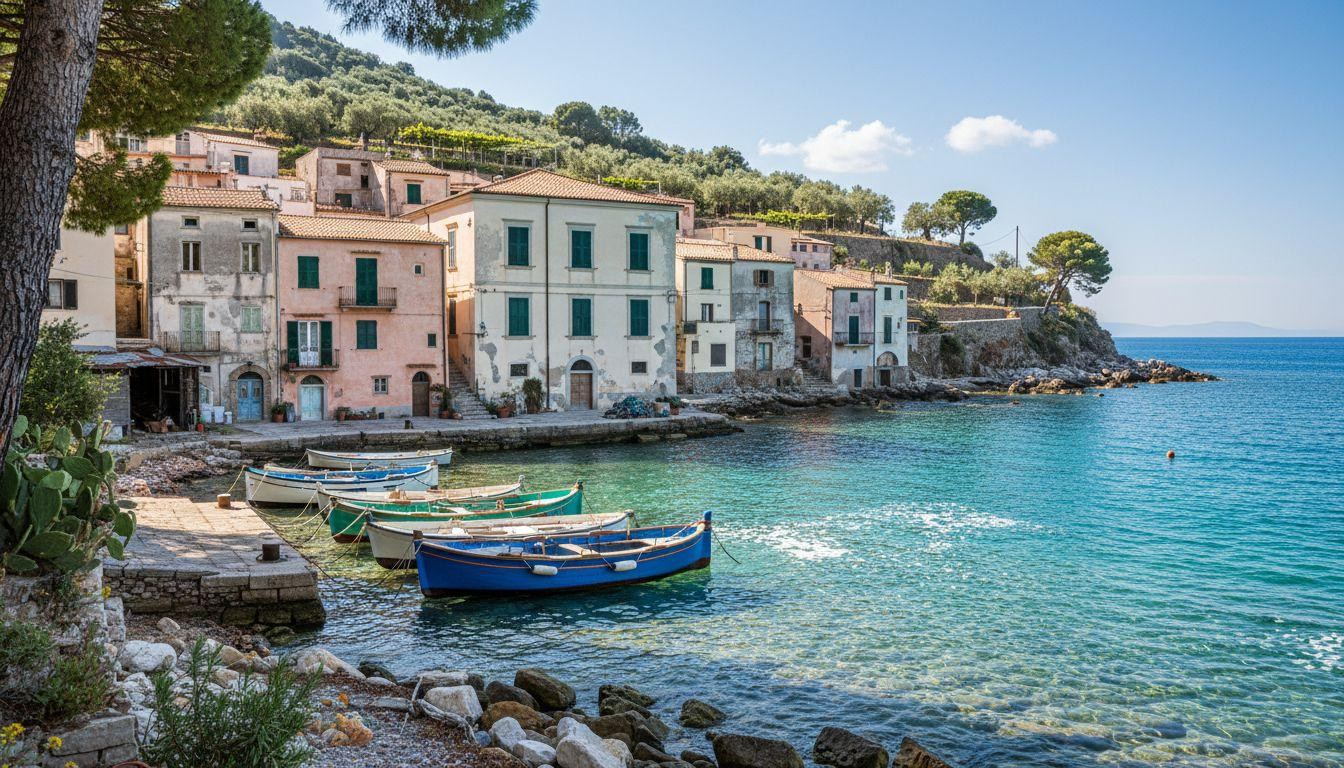
Forget the Amalfi Coast where 2.3 million tourists cramped into record-breaking overnight stays in 2024. Just 19 miles south, Pioppi quietly houses 197 residents who average 89 years of life in a fishing village that gave the world the Mediterranean diet. While Positano hotels surge 17% this winter, this Cilento coast gem offers authentic longevity science for $55-165 per night.
Why the Amalfi Coast became unsustainable
The Amalfi Coast topped Italy’s 2025 overseas visitor rankings, beating Lake Como and Chianti. Over 65 million international visitors flooded Italy in 2024, with 18 million arriving during peak summer months alone. The coastal road SS163 transforms into a parking lot during high season.
Hotel rates climbed relentlessly through 2024. Online travel agencies now project another 17% increase for 2025 holiday periods. A simple trattoria meal in Positano costs $45-75 per person, while parking fees reach $35 daily in peak months.
The infrastructure buckles under pressure. Cruise ships disgorge thousands daily into Salerno, feeding tour buses that clog narrow coastal roads. Local beaches become sardine cans, losing the tranquil Mediterranean character that originally drew visitors.
Meet Pioppi: where longevity science began
American physiologist Ancel Keys chose this Cilento village in the 1940s for his Seven Countries Study. He discovered that local residents enjoyed remarkable cardiovascular health and exceptional longevity. Keys documented their traditional diet of olive oil, vegetables, legumes, whole grains, and fresh fish.
The Mediterranean diet birthplace
The village maintains no supermarket by design. Residents source food seasonally from local gardens and daily fishing catches. This constraint creates the eating patterns Keys observed: meals tied to harvest cycles rather than industrial convenience.
The Palazzo Vinciprova houses the Museo della Dieta Mediterranea, displaying Keys’ original research materials. UNESCO recognized this heritage, making Pioppi part of the Cilento National Park World Heritage Site. The museum exhibits demonstrate how simple dietary principles correlate with exceptional health outcomes.
What 89-year average lifespan looks like
Male life expectancy reaches 89 years here, compared to Italy’s national average of 80.9 years. The village contains an unusual concentration of centenarians with remarkably low rates of Alzheimer’s disease and heart conditions. Five generations coexist in many families, creating intergenerational community rarely seen elsewhere.
Physical terrain encourages daily movement through hillside paths. Elders remain integrated in village life rather than isolated in age-care facilities. According to recent visitor surveys, this active aging model attracts health researchers and longevity enthusiasts from universities worldwide.
The experience: living versus touring
December brings mild temperatures of 46-59°F, perfect for coastal walks without summer crowds. Morning light illuminates golden limestone houses against deep blue Tyrrhenian Sea waters. Fishing boats return at dawn with fresh catches for the day’s markets.
Morning markets and seasonal eating
Local markets display seasonal vegetables, herbs, and fresh fish caught hours earlier. Rosemary grows wild throughout the region, featuring prominently in traditional recipes. UC San Diego researchers recently identified rosemary’s potential to activate pathways affecting blood sugar and cholesterol levels.
Market produce costs $2-5 per kilogram, significantly cheaper than tourist areas or major Italian cities. Visitors can purchase locally pressed olive oil, seasonal vegetables, and artisanal pasta made by village families.
Authentic dining at coastal trattorias
A Casa di Delia restaurant offers approximately 30 seats on a terrace covered with grape vines, creating dappled Mediterranean light. The menu features entirely meat-free dishes using seasonal ingredients grown in adjacent gardens. Fresh blue fish remains the protein centerpiece.
Meals cost $14-28 per person, including local wine. Dinner service begins at 8 PM, following traditional Italian timing. The unhurried pace allows genuine conversation and proper digestion, contrasting sharply with tourist-oriented restaurants designed for rapid table turnover.
Why Pioppi matters now
Italy’s tourism GDP reached $262 billion in 2024, rising further in 2025. Yet Pioppi offers the counter-narrative: wellness as lived practice rather than marketed product. The village demonstrates sustainable tourism where visitor presence doesn’t overwhelm local infrastructure or culture.
The 2025 Milan Longevity Summit (March 21-29) highlights growing global interest in longevity science. Pioppi provides direct access to the birthplace of modern dietary research, inhabited by people still practicing the lifestyle Keys documented.
Your questions about Pioppi answered
How do you reach Pioppi from major airports?
Fly into Naples Capodichino International Airport, 81 miles away. Take the train to Salerno (1 hour), then bus or rental car to Pioppi (additional 1.5 hours). Total journey time: 3-3.5 hours. Car rental provides flexibility for exploring the broader Cilento region.
What accommodations exist in this small village?
Pioppi offers guesthouses and agriturismo farm stays rather than conventional hotels. Budget options cost $55-88 per night, mid-range properties $88-165 per night, with higher-end seaside accommodations reaching $165-275 per night. Book advance arrangements during spring and fall seasons.
How does Pioppi compare to other Blue Zone destinations?
Pioppi provides easier European access than remote Blue Zones in Sardinia, Greece, or Ecuador. The dedicated museum offers institutional interpretation of longevity research, while most Blue Zones lack scientific infrastructure. The Mediterranean diet enjoys global recognition and practical replicability compared to other regional dietary patterns.
Evening walks along the waterfront reveal why residents live so long. Gentle sea breezes carry rosemary scent from hillside gardens. Families gather on modest terraces, sharing simple meals and unhurried conversation. Tourism hasn’t altered this rhythm yet.