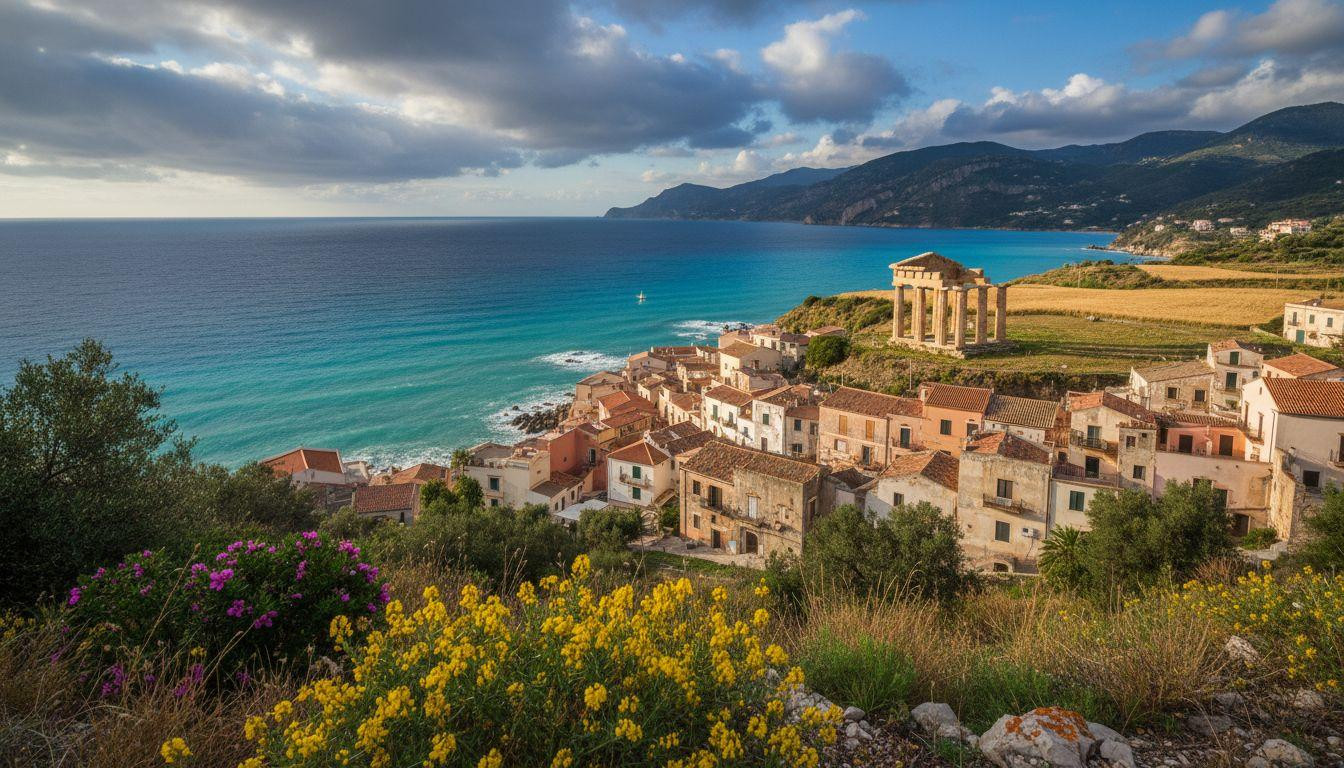
The Amalfi Coast highway backs up for two hours in May. Traffic crawls 9 miles from Positano to Amalfi while cruise passengers queue for the same photo spots. Hotels charge $440 per night. Lunch costs $38. The coastline 31 miles south stays empty.
Cilento Coast runs 62 miles along the same Tyrrhenian Sea. Same turquoise water. Same cliffside villages. Different century. Rooms cost $99 at family agriturismi. Seafood pasta with house wine runs $13. The beaches earned 13 Blue Flag certifications in 2025. Most mornings you walk them alone.
Why Amalfi stopped working
Five million visitors arrived on the Amalfi Coast in 2024. The 13 towns can’t absorb them. Positano’s population sits at 3,900. On summer days 15,000 tourists pack the beaches. The math doesn’t work.
State Road 163 connects the villages. The road measures 25 miles. In peak season it takes four hours to drive. Cars idle while tour buses squeeze past on curves built in 1840. Parking spots don’t exist. The ones that do cost $35 for three hours.
Hotels know their value. Mid-range three-star properties charge $154 per person per night in June 2025. Couples pay $490 daily for lodging and meals. The views cost extra. So does the stress.
What Cilento delivers instead
The landscape nobody markets
Cilento National Park became a UNESCO site in 1991. The designation protected 70,000 acres from development. Coastal macchia covers the hills in yellow broom and purple rockrose each May. The wildflowers bloom before summer heat arrives. By June they’ve faded.
Three Greek temples stand at Paestum, 62 miles south of Positano. Doric columns from 450 BC rise from wheat fields half a mile from the beach. The Temple of Neptune preserves better than anything in Athens. Visitors in May 2025 numbered 340 per day. The Parthenon sees 17,000.
Cala degli Infreschi won Italy’s most beautiful beach award four times. You reach it by boat from Scario or hike 3 miles down coastal trails. The cove measures 200 yards across. White limestone cliffs frame turquoise water clear to 20 feet down. On weekday mornings in September you might share it with six people.
The price comparison that matters
Agropoli agriturismi charge $99 to $132 per night for rooms with breakfast. The properties sit in olive groves or hilltop villages. Families run them. Some have been operating since the 1970s. None take cruise ship groups.
Restaurant meals in Castellabate cost half what Amalfi charges. A plate of spaghetti alle vongole with local white wine runs $13. The same dish in Positano costs $28. The clams come from the same sea. The difference is who’s eating them.
Couples visiting Cilento in May 2025 spend $245 daily for lodging, meals, and activities. That’s 50% less than Amalfi’s $490. The savings buy extra days. Or better meals. Or the drive stays relaxed instead of frantic.
What you actually do here
Morning routines worth keeping
Fishermen dock at Agropoli harbor by 6am. The catch goes straight to market stalls behind the medieval castle. By 7am locals arrive for anchovies and sea bream. Tourists sleep until 9am and miss it. The fish sells out by 10am.
Le Saline beach stretches 3 miles south of Paestum. Fine sand backs against Mediterranean scrubland. Water temperature hits 72°F in June. Parking costs nothing. Sunbed rental runs $8 for the day. Most visitors bring their own towels and claim space near the dunes.
The temples open at 8:30am. First light hits the columns around 7am if you walk the perimeter fence. By 11am tour buses arrive from Naples. The quiet window lasts three hours. That’s enough time to understand why Greeks sailed here 2,500 years ago.
Buffalo mozzarella at the source
Vallo di Diano sits 25 miles inland from the coast. Water buffalo farms produce DOP mozzarella under protected designation rules. The cheese must be made from local buffalo milk within 24 hours of milking. It can’t travel far before quality drops.
Farms open for visits by appointment. You watch the milking at 5am or the cheese-making at 8am. The mozzarella gets hand-stretched in hot whey until it reaches the right texture. You taste it 20 minutes later while it’s still warm. It costs $6 per pound direct from the producer. Tourist shops in Amalfi charge $14 for the same cheese shipped in yesterday.
Locals buy their mozzarella this way. They know which farms make it best. They know what time to arrive. A baker in Agropoli whose family opened their shop in 1953 uses only Vallo di Diano mozzarella for their morning focaccia. You can taste why.
September delivers what May promises
Cilento in late September runs cooler than August but warmer than October. Daytime temperatures hold at 77°F. Water stays 72°F through the first week. The macchia turns golden brown. Figs ripen on roadside trees.
Crowds thin after Italian schools reopen. The villages that stayed quiet all summer get quieter still. Restaurant owners have time to talk. They’ll tell you which beach the locals prefer. Which hiking trail offers the best sunset view. Where to buy olive oil pressed last week.
The rhythm changes. Morning fish markets still operate but without the urgency of peak season. Afternoon siestas last longer. Evening passeggiate through village squares feel unhurried. This is what Amalfi offered in 1960 before the tour buses found it.
Your questions about Cilento Coast answered
How do you get there without a car?
You don’t. Salerno airport sits 28 miles north of Agropoli with direct flights from London, Paris, and Frankfurt. Naples airport offers more US connections but adds 56 miles to the drive. Rental cars from Salerno start at $180 per week in May 2025. Public buses run twice daily between coastal towns. They don’t reach the beaches or temples on useful schedules.
Why did development skip Cilento?
National park designation in 1991 restricted hotel construction and road expansion. The same protection that kept cruise ships out kept authenticity in. Agropoli’s population stayed at 21,000 for 30 years. Castellabate added 200 residents since 2000. Growth happened slowly enough that character survived.
How does it compare to other Italian coasts?
Cinque Terre draws 2.5 million visitors annually to five villages. Cilento spreads the same coastline across 40 towns. The density difference changes everything. Beaches stay accessible. Restaurants serve locals first and tourists second. Prices reflect what things actually cost rather than what visitors will pay. The wildness remains intact because profit motive never overwhelmed preservation instinct.
The ferry back to Salerno leaves Agropoli at 4:30pm. Most visitors make it with time to spare. The ones who linger usually do so because someone at the harbor cafe started talking about where the good beaches really are. Those conversations run long. The next ferry doesn’t leave until tomorrow.