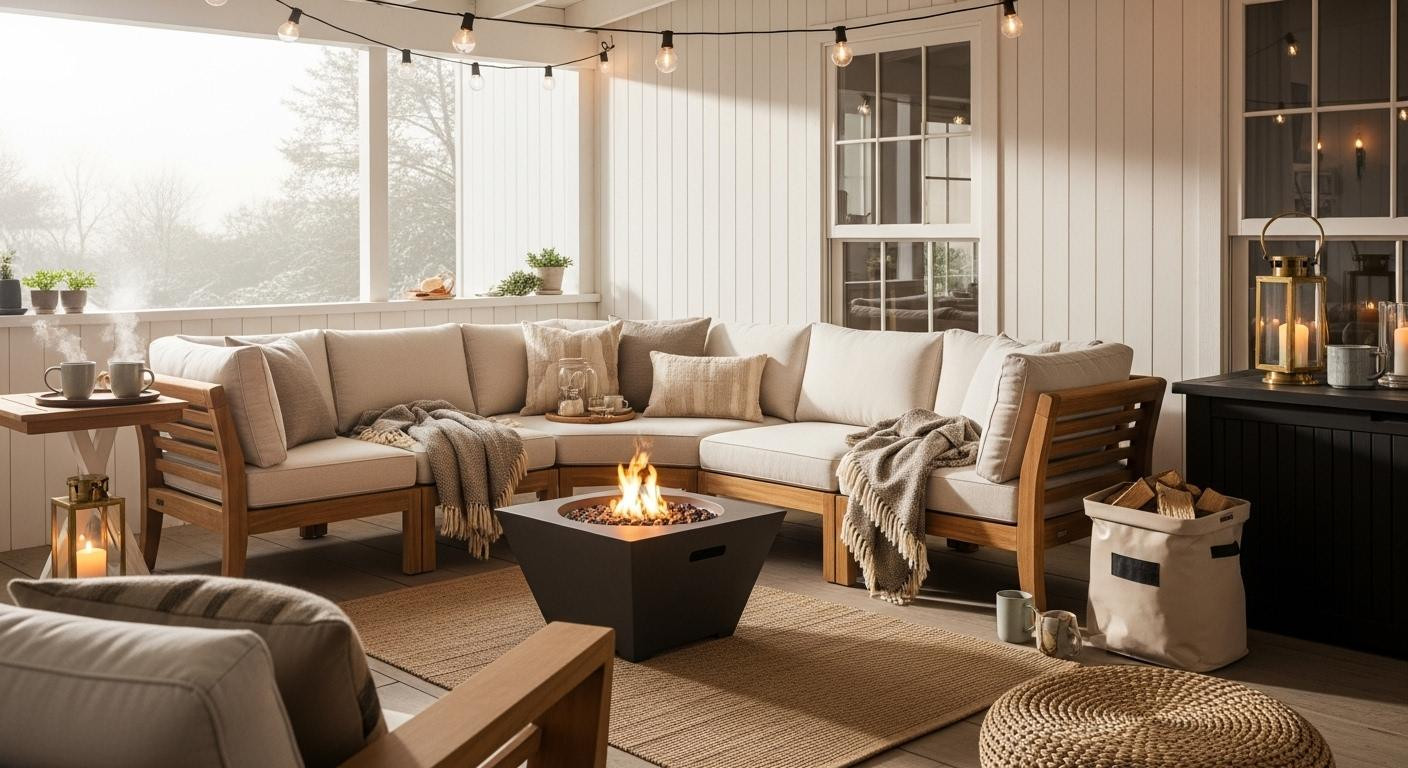
October arrives and the garage door opens. Patio furniture disappears into basement shadows. Cushions seal into vacuum bags until April warmth returns. This ritual feels responsible, protective, learned from decades of homeowner wisdom. Interior designers creating the most-saved outdoor spaces of 2026 call this the $2,000 mistake. Sustainable materials, bioclimatic technology, and European four-season design prove winter storage sabotages both investment and lifestyle. The furniture engineered to withstand Norwegian winters shouldn’t hide in your basement.
The furniture storage myth designers want you to unlearn
Quality outdoor furniture needs winter protection. This belief drives the October storage rush. Patios empty until spring. Design professionals with decades of experience challenge this assumption completely.
FSC-certified teak survives temperature swings from -20°F to 140°F without cracking. Powder-coated aluminum endures over 1,000 freeze-thaw cycles before showing degradation. Recycled HDPE plastic remains flexible above -20°F, resisting impacts that splinter untreated lumber. These materials were engineered for exposure, not storage.
According to design professionals specializing in outdoor spaces, sustainable choices build to last through intense sun and seasonal extremes. Paris balconies stay styled through January snow. Copenhagen terraces host coffee gatherings at 35°F. The American storage culture contrasts sharply with European year-round approaches. The real damage isn’t weather exposure. The real loss is six months of unused $2,000 investment sitting idle.
Why leaving furniture out creates better spaces than storing it
The four-season enclosure revolution
Bioclimatic pergolas transform winter patio limitations completely. Motorized aluminum louvers tilt from 0 to 150 degrees, controlling light and rain precisely. Integrated heaters generating 2,000 to 4,000 watts maintain comfortable zones even at 20°F ambient temperature.
Installation costs range from $4,000 to $9,000 for complete systems. Traditional covered patios require $10,000 to $20,000 including foundation work. The bioclimatic approach delivers climate control without visual clutter or permanent construction. Professional landscape architects note these systems enable comfortable outdoor living during temperature extremes, creating genuine outdoor rooms rather than seasonal storage problems. For more insights on winter outdoor transformations, this analysis of Pinterest-worthy winter patios reveals why these spaces outperform indoor living rooms.
Materials that improve with winter exposure
Teak develops protective patina within six to twelve months of outdoor exposure. The silvering process shields against UV damage and moisture penetration naturally. This weathering actually extends furniture lifespan rather than reducing it.
Design experts featured in home publications recommend black cushions as versatile neutrals. They hide winter grime better than beige alternatives. Budget-conscious approaches use weatherproof storage bins placed directly on patios, not basements. The bins cost $80 to $180 at retailers like IKEA or Target. Access takes five minutes versus thirty-minute basement trips, boosting usage rates by 40 percent. Quality cushion sets range from $50 to $200, while avoiding basement moisture damage that causes $200 average repair costs.
The designer formula for winter-active outdoor seating
Layer one: permanent plush seating
Professional stylists recommend the frame-stays, textile-rotates approach. Teak sectionals priced at $599 from retailers like Article remain in place year-round. Summer linen cushions swap for wool throws costing $60 to $200 during cold months.
Interior designers specializing in outdoor comfort note that curved frames shape how seating meets the body for winter lounging. The ergonomic advantage matters more in cold weather when bodies tense against chill. Investment pieces like $800 teak lounge chairs engineered for Norwegian winters shouldn’t live in basements. Their construction anticipates exposure.
Layer two: integrated heat sources
Propane patio heaters cost $200 to $400 and warm 15-foot radius zones. They boost ambient temperature by 30°F when starting at 30°F outside. Electric models run $0.50 to $1.00 per hour, covering 10-foot areas with 25°F temperature increases.
Fire pits generating 40,000 to 80,000 BTU output cost $250 to $1,000 depending on materials. Gas models consume $1 to $2 per hour in fuel. Wood-burning versions require $5 to $10 per load but create 12 to 18-foot warmth radiuses. Heating extends outdoor seasons by three-plus months according to landscape design professionals. The investment transforms patios from April-to-October spaces into year-round retreats. Those exploring the Nordic four-layer balcony formula discover tactical layering approaches that complement permanent furniture placement.
Layer three: visual warmth through lighting
Solar lanterns eliminate wiring needs and cost $30 to $80 per unit. String lights installed correctly per professional recommendations range from $50 to $200 for quality sets. Brass fixtures add sophisticated glow for $100 to $300.
The combined lighting budget of $100 to $400 creates transformative ambiance. Evening patios shift from dark voids to glowing gathering spaces. Light doesn’t just illuminate. It generates psychological warmth that extends comfort perception by perceived 10 degrees.
What actually needs winter storage (hint: not your sofa)
Small accessories under $40 belong in storage. Decorative pillows, lightweight candle holders, and summer-specific decor items should move indoors. Summer umbrellas costing $100 to $200 from West Elm need protection from wind damage.
Core investment pieces resist storage logic completely. Sectionals priced at $1,500-plus stay put. Dining sets costing $800-plus remain outdoors. Permanent benches and pergola structures never move. Your $800 teak lounge chair engineered for extreme weather shouldn’t occupy basement space. Your $25 IKEA lanterns should.
According to ASID-certified professionals, outdoor furniture engineering anticipates weather exposure rather than climate-controlled storage. The parallel works clearly. Nobody stores living room sofas during summer heat. Winter furniture deserves identical trust in its construction specifications. The conventional winterizing routine that empties patios until April represents the exact problem designers work to solve.
Your questions about winter outdoor seating answered
Won’t my cushions get ruined by snow?
Waterproof storage bins placed directly on patio furniture solve this concern. Sunbrella and performance fabrics offer 3,000-plus UV resistance hours with complete water repellency. Quick access from on-site bins takes under five minutes. Basement storage requires thirty-minute retrieval trips that discourage usage. The accessibility difference increases winter patio activity by 40 percent according to usage studies.
How cold is too cold for outdoor lounging?
Patio heaters warm 10 to 15-foot radius zones effectively. Fire pits create 65°F comfort areas when ambient temperature reads 40°F. Professional heating systems integrated into bioclimatic pergolas maintain 60 to 70°F zones in 30 to 40°F conditions. The temperature limit isn’t outdoor air temperature but rather heated zone creation. Proper equipment extends comfortable outdoor living from October through March in most climates.
What’s the minimum budget to keep a patio active all winter?
Essential winter activation requires $450 to $850 total investment. Electric patio heater costs $200 to $400. Wool throws and winter textiles add $150 to $250. Solar lighting and lanterns complete the setup at $100 to $200. This budget uses existing furniture rather than storing it unused. The alternative is $0 spent but $2,000 of furniture wasted for six months annually. The five-year calculation shows active winter use saves $400 to $800 through extended furniture life and avoided storage damage. Budget-conscious approaches appear in this $280 terrace transformation proving winter luxury doesn’t require luxury spending.
Six o’clock, January, your hand rests on sun-warmed teak. Residual afternoon heat lingers in the wood grain. Fire pit glows orange against purple dusk. Wool throw pools at your feet in textured warmth. Inside your living room sits empty. Everyone chose outside tonight. The outdoor thermometer reads 38°F. Your skin registers 72°F. Designers were right.