“`html
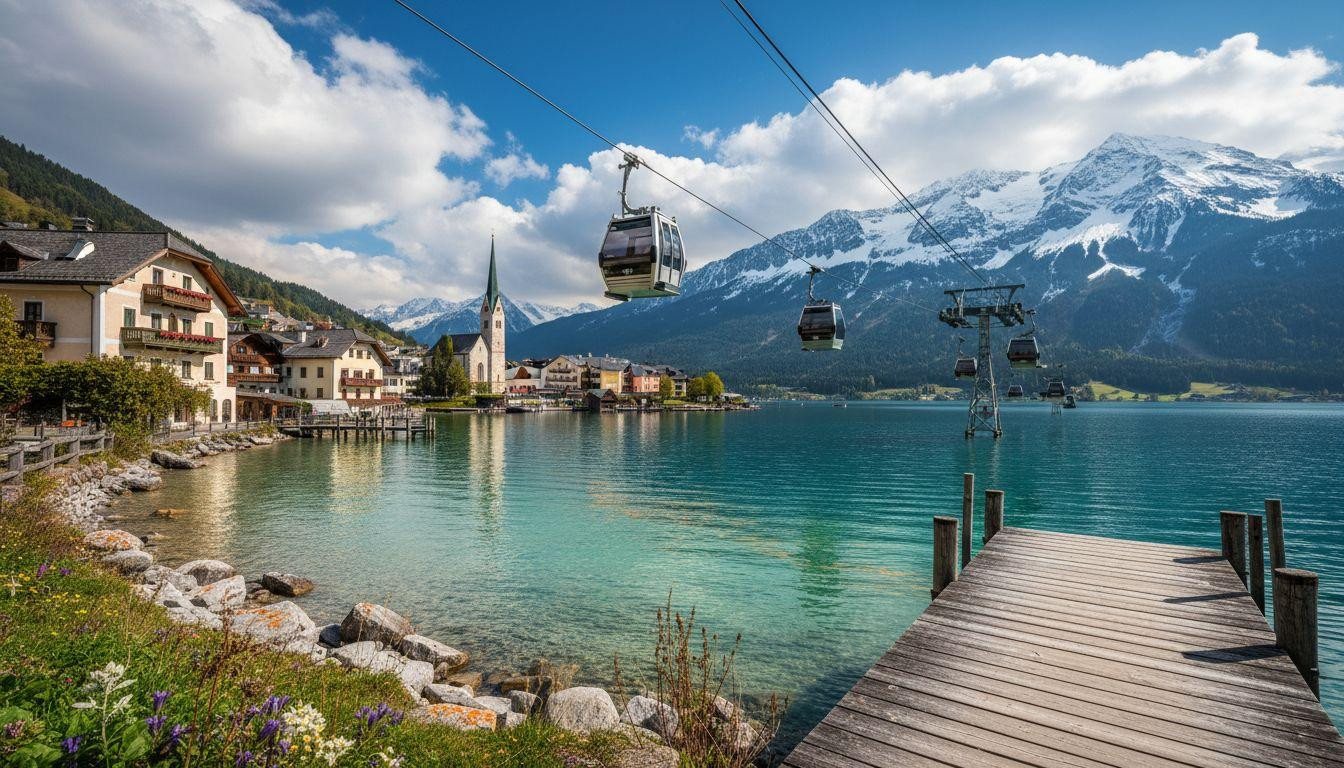
The Matterhorn costs $90 for a lift ticket. Zermatt hotels average $450 per night in February 2026. Crowds queue at cable cars even in shoulder season. The Austrian Alps around Salzburg deliver the same glacier-fed lakes and 3,000-meter peaks at 40% of the price. Zell am See sits 50 miles from Salzburg Airport. The turquoise water reflects snow-capped summits. Locals outnumber tourists on most trails.
Why Swiss Alps became unaffordable for most travelers
Switzerland built its alpine reputation on luxury branding. Zermatt and Jungfrau region hotels charge $450-800 per night for mid-range rooms. Ski passes run $90 daily with dynamic pricing that climbs during peaks. Cable cars to Klein Matterhorn cost $100 round-trip. The Swiss Pass transit system requires $200 daily for regional access.
Overtourism compounds the expense. Zermatt sees 20 million annual visitors across Swiss alpine regions. Lift queues form even in February. Car-free zones force expensive shuttle dependency. The postcard villages became theme parks for wealth. Budget travelers face $1,200-1,800 for a basic three-day trip.
Austria’s Salzburg region operates differently. Zell am See-Kaprun draws 8 million regional visitors annually. Hotels charge $120-200 for equivalent three-star comfort. Ski passes cost $60-70. The Schmittenhöhe gondola runs $40-50 round-trip. A three-day trip totals $500-700 including lodging, food, and mountain access.
The landscape Austria shares with Switzerland
Peaks and lakes that rival Zermatt
Hohe Tauern National Park surrounds Zell am See with 3,798-meter Großglockner as centerpiece. The Matterhorn stands taller at 4,478 meters but the visual drama reads identical. Glaciers carve valleys. Alpine meadows bloom yellow and purple in June. Turquoise lakes mirror jagged summits at dawn.
Zell am See’s water stays warmer than Swiss counterparts. Summer temperatures hit 72°F for swimming. The Schmittenhöhe cable car climbs to 2,000 meters for panoramic views across 30 peaks above 3,000 meters. Tree-lined ski runs descend through larch forests. The 4 Lakes Trail connects four alpine tarns in a single afternoon hike.
What you actually pay for the same experience
Mid-range lodging in Zell am See costs $120-200 per night versus Zermatt’s $450-800. Ski day passes run $60-70 at Kaprun compared to Swiss $90-100. Mountain hut meals cost $20-30 for schnitzel and beer. Zermatt charges $40-60 for equivalent portions. Ski rentals drop to $40-50 daily from Swiss $70-90.
The Großglockner High Alpine Road opens May through October. The 30-mile scenic drive costs $40 per car. No Swiss equivalent exists for this engineering marvel from the 1930s. Viewpoints face Austria’s highest peak across glacier tongues. The road gains 1,243 meters vertical through 36 switchbacks.
The Austrian experience Switzerland lost to luxury tourism
Trails where you walk alone
Pinzgauer Spaziergang summit trail sees maybe 15 hikers daily in September. The path hops between 2,000-meter ridges with Hohe Tauern views. Wildflowers carpet meadows in June. Cow bells echo from summer pastures. Recent visitor surveys show Austrian trails run at 30% capacity during shoulder seasons.
Krimml Waterfalls drop 380 meters in three tiers. The mist creates rainbows at noon. Wooden walkways climb alongside the cascade. No reservation system exists. You arrive and walk. Compare this to Swiss Lauterbrunnen where crowds pack viewing platforms. The quiet makes the water sound louder.
Villages where locals still live year-round
Maria Alm keeps a pilgrimage chapel from medieval times. The village population of 2,400 includes farmers who work the surrounding alps. September brings Almabtrieb cattle parades when decorated cows descend from summer pastures. Tourists watch but locals organize the tradition.
Zell am See’s lakefront avoids yacht club pretension. Family-run guesthouses outnumber luxury chains. The general store sells hiking maps and local cheese from the same counter. A resident who moved from Vienna in 2019 noted the town still closes for lunch on Wednesdays. Zermatt lost this rhythm decades ago.
Planning your Austrian Alps visit for maximum value
February 2026 delivers reliable snow at Kaprun’s glacier. Snow depth runs 57-64 inches with temperatures around 23°F for skiing. Pre-spring break timing means 40% fewer crowds than Swiss resorts. Trains from Salzburg Airport reach Zell am See in 90 minutes for $20-30. No shuttle complexity or Swiss Pass required.
May through June opens hiking season with wildflower meadows. September offers golden larch forests and empty trails post-summer rush. The Salzburg regional pass costs $50 daily for unlimited mountain transport. Compare this to Switzerland’s $200 daily requirement. Base in Zell am See for lake and mountain access or Maria Alm for traditional village quiet.
Kaprun focuses on family skiing with 38 slopes across 86 miles of terrain. The vertical drop reaches 1,243 meters. Zermatt offers more extensive terrain at 2,279 meters vertical but crowds dilute the experience. For budget mountain alternatives, Austria delivers Swiss scenery without Swiss expense.
Your questions about Austrian Alps versus Swiss Alps answered
How much cheaper is Austria really for a ski trip?
A three-day February ski trip in Zell am See-Kaprun costs $500-700 per person including mid-range lodging, lift tickets, rentals, and meals. The same trip in Zermatt runs $1,200-1,800. Austria delivers 60% savings with comparable snow quality and mountain scenery. Accommodations account for the largest difference at $120-200 nightly versus Swiss $450-800.
Do Austrian Alps offer the same dramatic scenery as Switzerland?
Großglockner at 3,798 meters provides glacier views matching Matterhorn’s drama. Hohe Tauern National Park spans 1,836 square kilometers of alpine terrain. Turquoise lakes like Zell am See mirror Swiss counterparts. The main difference lies in altitude maximums. Swiss peaks reach 4,478 meters but visual impact from valley floors reads identical. Austrian tree-lined runs add variety Swiss above-treeline zones lack.
When should I visit to avoid crowds while keeping good conditions?
January through March delivers reliable skiing with February offering peak snow depth and pre-holiday pricing. May through June opens hiking trails with wildflower blooms and under 30% tourist capacity. September combines golden larch colors with post-summer quiet. Avoid July and August when even Austrian resorts see 70% capacity. For year-round quiet destinations, shoulder seasons prove essential.
Morning light hits Zell am See around 7am in February. The lake surface turns gold before crowds arrive. Ski lifts open at 8:30am. By 9am you’ve claimed first tracks on Schmittenhöhe’s north face. The gondola descends at 4pm. Locals gather at lakeside cafes for afternoon coffee. This rhythm disappeared from Swiss resorts when luxury tourism took over. Austria kept it.
“`