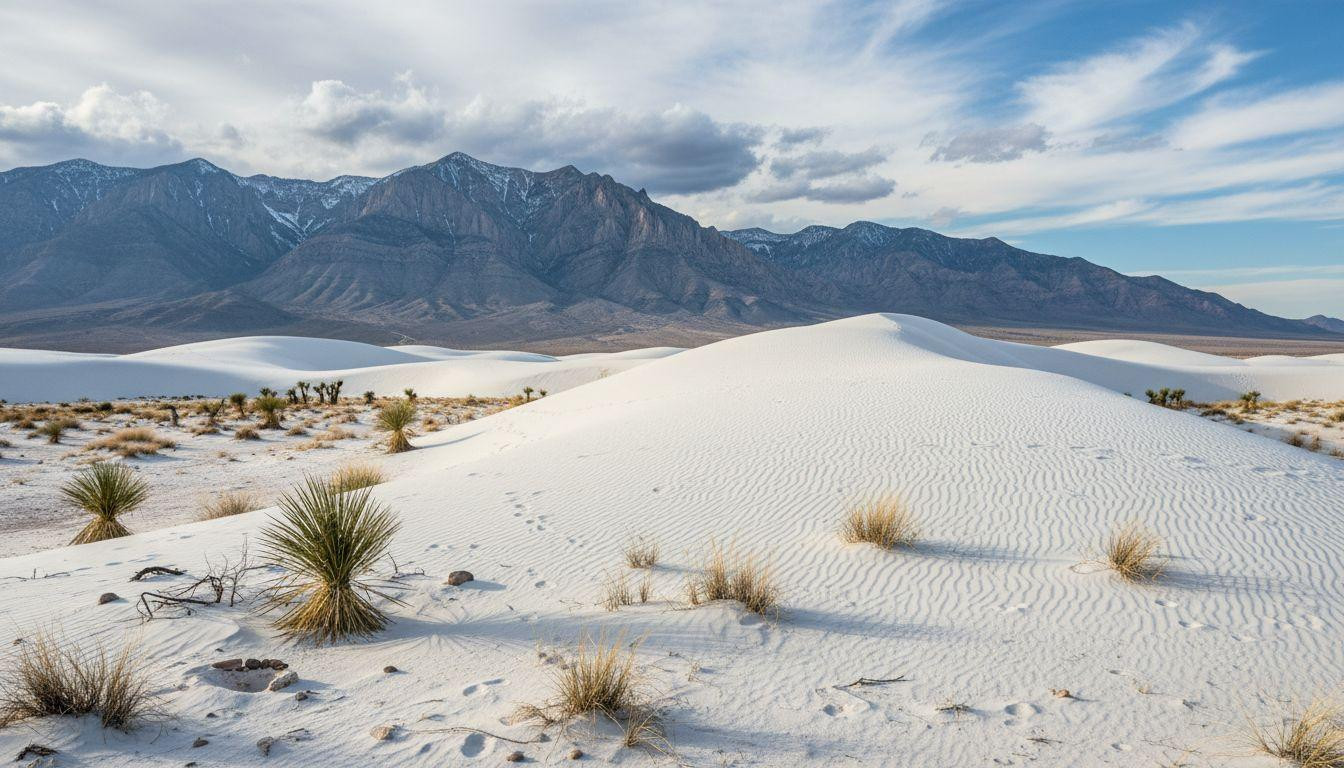
White Sands National Park fills its parking lots by 10am most days. Rangers manage shuttle buses through dunes where 729,000 visitors arrived in 2023. Gift shops sell sleds for $25. Families line up at Instagram spots. Ninety miles northeast in Texas, Salt Basin Dunes spreads white gypsum across 2,000 acres where fewer than 1,000 people visit all year. No pavement. No shuttles. Just clay roads through salt flats and the Guadalupe Mountains rising 8,400 feet against winter sky.
The drive from El Paso takes two hours on Highway 62 through Dell City, population 400. Turn north on FM 1576 for 17 miles, then right onto Williams Road. High-clearance 4WD required. The clay surface turns to glue when wet, impassable for days after rain.
Why White Sands feels crowded
White Sands spreads across 275 square miles in New Mexico’s Tularosa Basin. Paved roads lead to parking areas. Ranger programs run hourly in peak season. The park recorded 101,000 visitors in March 2023 alone.
Sledding hills pack 200 people on weekends. The Interdune Boardwalk sees constant foot traffic. Moonlight tours sell out weeks ahead. Entry costs $25 per vehicle for seven days.
The setting stays flat. Dunes rise from basin floor with no mountain backdrop. Gift shops and visitor centers anchor the experience. It feels managed, organized, processed for maximum throughput.
What Salt Basin delivers instead
The dunes sit at 3,500 feet elevation, lowest point in Guadalupe Mountains National Park. Wind carries gypsum grains east from ancient lake beds at 0.008 to 0.35 inches per year. The northern section reaches 60 feet high, bare white slopes sculpted into ripples and swales.
The mountain contrast
El Capitan’s limestone cliffs rise 2,000 feet from the western escarpment, dark gray against white sand. In February, snow dusts peaks above 8,000 feet. The visual split between desert floor and alpine zone creates drama White Sands lacks in its flat basin setting.
Salt flats shimmer west of the dunes like frozen lakes. The clay surface cracks into polygons. After rare summer rains, water pools inches deep for weeks before evaporating back to white crust.
The access filter
Williams Road runs seven miles from FM 1576 to the trailhead parking area. Clay ruts demand careful tire placement. Speed limit 25 mph to avoid wandering cattle from nearby ranches. Cell service ends at Dell City.
The final 1.5 miles cross on foot. No marked trail, just your own route through mesquite and toward white dunes visible ahead. Day use only, sunrise to 30 minutes after sunset. No camping allowed to protect the fragile ecosystem.
The winter advantage
February brings daytime temperatures of 55 to 65 degrees Fahrenheit. Nights drop to 25 to 35 degrees. Clear skies dominate. Wind sculpts fresh ripples overnight, erasing yesterday’s footprints by dawn.
What you actually do here
Walk the dunes barefoot. Gypsum stays cool even in direct sun. Climb to crests for views across the basin to Sierra Diablo 40 miles south. Watch light change on mountain faces as afternoon progresses.
Bring water, at least one gallon per person. No services exist at the site. The Texas canyon that hides springs lies 20 miles north for those combining Guadalupe explorations.
Dell City as gateway
The town offers two small motels charging $80 to $120 per night. Cornudas Cafe serves burgers and Tex-Mex for $10 to $15. May’s store stocks basic groceries and fuel. Pecan farms line Highway 62, selling fresh nuts roadside in fall.
Hipcamp sites near town run $20 to $40 per night for primitive camping with mountain views. Devil’s Hall slot canyon makes a natural pairing, 30 miles east via park roads.
The silence you earn
Most visitors to Guadalupe Mountains never learn Salt Basin exists. The park receives 200,000 annual visitors total. Maybe 1,000 make the drive to the dunes. You might see no one else all day.
Wind whispers over gypsum grains. Your boots squeak on packed sand. The quiet runs so deep you hear your own heartbeat. This solitude costs nothing beyond fuel and the willingness to drive dirt roads. Overtourism alternatives rarely deliver this level of authentic isolation.
Your questions about Salt Basin Dunes answered
When does Williams Road become impassable?
Any rain makes clay roads unsafe for 24 to 48 hours. Check conditions at Pine Springs Visitor Center before driving. Summer monsoons July through September create the highest closure risk. Winter stays drier, with February averaging under one inch of precipitation.
How does gypsum differ from regular sand?
Gypsum crystals stay cool to touch, never heating like silica sand. The white color reflects 90% of sunlight. Grains dissolve slightly in water, creating the slick clay roads when wet. Ancient lake evaporation 10,000 years ago left deposits that wind still redistributes today.
What makes this better than White Sands?
Salt Basin costs $30 for seven days of Guadalupe Mountains access versus $25 for White Sands alone. You get mountain drama, zero crowds, and authentic wilderness experience. White Sands offers easier access and facilities. Budget winter adventures favor remote sites like Salt Basin for value and solitude combined.
Dawn light turns gypsum pink for ten minutes before full sunrise. The Guadalupe escarpment catches first rays while dunes stay shadowed. Then white sand ignites, bright enough to squint. By 8am you understand why 729,000 people visit White Sands yearly. And why the 1,000 who find Salt Basin keep it quiet.