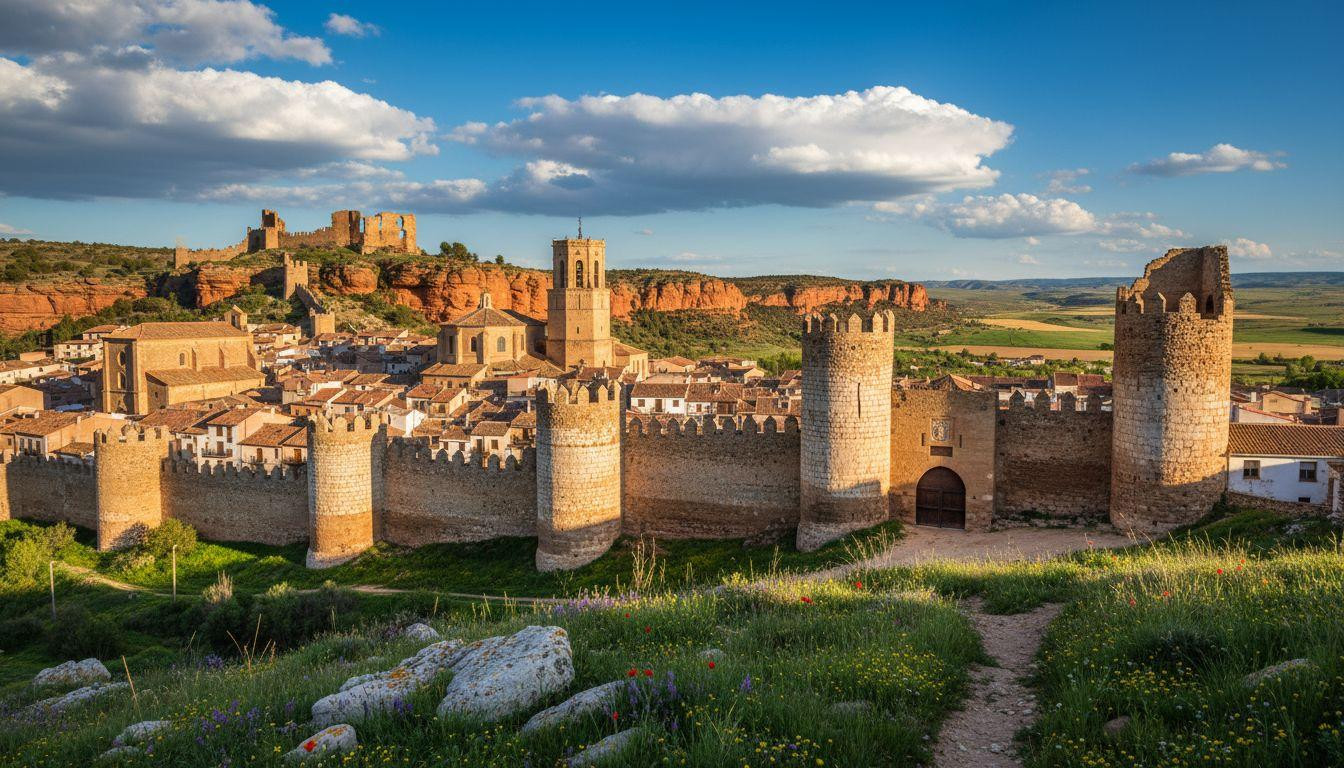
Toledo charges $180 per night for hotels where tour buses arrive every 20 minutes. Daroca sits 40 miles from Zaragoza with 2.8 miles of medieval walls, 114 towers, and rooms from $55. The difference shows in morning light when you walk ramparts alone.
Spring 2026 brings mild weather to Aragón’s interior plateau. Temperatures reach 65°F by late March, 72°F through May. Rain stays light, 1-2 inches monthly. Wildflowers cover hillsides around the Jiloca River valley where Daroca spreads beneath red cliffs.
Why Toledo and Segovia feel overrun
Toledo draws 3 million visitors annually. Segovia pulls similar crowds to its aqueduct and Alcázar. Both cities charge $12-15 for cathedral entry, $140-220 per night for mid-range hotels during shoulder season. Restaurants near main squares cost $35-50 per person for dinner.
Tour buses dominate parking areas from 9am to 6pm. The famous sites see 500-1,000 visitors per hour during peak times. Souvenir shops outnumber local businesses three to one in historic centers. Salamanca runs slightly cheaper at $110-190 nightly, but university tourism keeps crowds steady year-round.
The pattern repeats across Spain’s heritage circuit. Famous equals expensive equals crowded. Daroca breaks this equation with comparable medieval architecture and 60% lower costs.
Meet Daroca, Aragón’s intact fortress town
Population 2,200. Medieval walls stretch 2.8 miles around the old town with 114 fortified towers still standing. Construction dates from the 13th through 16th centuries. The system remains more complete than Toledo’s fragmented 1.8-mile sections or Segovia’s partial defenses.
The landscape tourism forgot
Red sandstone cliffs frame the northern walls where Castillo Mayor crowns the highest point. The castle dates to the 11th century, 165 feet above town level, 200 stone steps to the top. Views span the Jiloca River valley, terracotta roofs, sunflower fields, and cereal crops stretching toward distant plateaus.
Honey-colored stone walls glow warm at golden hour, 7-8pm in March. Swallows nest in tower crevices, their calls mixing with cafe conversations from Plaza Mayor. No chain hotels interrupt the skyline. Better than Rothenburg where hotels cost $200 and Dinkelsbühl keeps medieval walls for $90, Daroca maintains working-town authenticity without theme park polish.
The price reality
Posada de Don Lope charges $66 nightly for 17th-century stone rooms. Hotel Cienbalcones runs $77 with wall views from family-run quarters. Compare Toledo’s $150-300 range or Segovia’s $130-220 averages for equivalent character properties.
Mesón El Comendador serves Aragón lamb dinners, $20-25 set menu. La Casona de Daroca features local truffles for $22-33 per person. Toledo restaurants near the cathedral start at $40 before wine. Daily budget for two people (lodging, two dinners, sites) runs $130-220 in Daroca versus $270-440 in comparison cities. That’s 50-60% savings.
What walking these walls actually feels like
Four access points let you climb onto the wall circuit. Puerta Baja, the 13th-century lower gate, shows intact machicolations where defenders dropped stones on attackers. Puerta Alta displays Carlos I’s coat of arms from the 16th century. Both gates underwent restoration in 2024-2025, stonework cleaned without modernization.
The medieval experience preserved
The complete circuit takes 2-3 hours at walking pace. Uneven steps require moderate fitness but no technical climbing. Panoramic views shift as you move: agricultural valleys south, red cliffs north, the Basilica de Santa María’s Gothic tower rising from the town center.
Morning walks (7-9am) offer solitude. Afternoon light (4-6pm) warms the stone. Zero crowds mean you stop where you want, photograph without waiting, sit on ancient ramparts hearing only wind and birds. Forget Albi where hotels cost $130 and Lautrec keeps ramparts free 22 miles away, Daroca charges nothing for wall access.
The working town advantage
Jamonería Daroca sells ibérico bellota ham, $27-44 per kilogram, 30% below Madrid prices. Pastelería La Plaza bakes sobaos pasiegos and ternasco empanadas, traditional Aragón pastries unknown in tourist zones. Thursday market fills Plaza Mayor with local produce, ceramics from Cerámica Jiloca pottery workshops.
Cafe culture runs genuine. Locals outnumber visitors 20 to 1 even in May. Evening paseo (stroll) happens naturally, residents greeting neighbors, no performance for cameras. Three restaurants serve the town. The one near water charges tourist rates. The one behind the church costs half and tastes better.
Practical reality check
Zaragoza sits 34 miles north via A-23 highway. Drive time: 45-60 minutes depending on traffic. ALSA buses run daily, $9, one hour. No train service exists. Old town parking stays free and abundant at Plaza Alta, five-minute walk to main sites.
Book accommodations 1-2 months ahead for May visits. Limited options (under 10 properties) mean advance planning matters despite 90% availability. 5 Greek villages where 1,084 locals keep pebble mosaics and 5,000-year shipwrecks quiet face similar capacity constraints with superior preservation rewards.
What you actually save: A three-day Daroca trip (two nights, six meals, all sites) costs $360-440 for two people. The same itinerary in Toledo runs $660-880. Salamanca falls between at $540-740. Daroca delivers 40-50% savings with longer walls, fewer crowds, authentic atmosphere.
Your questions about Daroca answered
When should I visit for best weather and lowest crowds?
Late April through May offers 68-77°F days, blooming wildflowers, and negligible tourism. September-October brings harvest season atmosphere with similar temperatures. March works for 59-65°F mild weather but occasional rain. Avoid July-August when temperatures hit 90°F and limited lodging fills with Spanish domestic travelers.
How does Daroca compare to famous Spanish heritage towns?
Daroca’s 2.8-mile wall system with 114 towers exceeds Toledo’s fragmented sections and Segovia’s partial defenses in preservation completeness. Cost runs 50-60% lower across lodging, dining, and attractions. Tourism density stays under 50 visitors daily in shoulder season versus 500-1,000 hourly at famous sites. Better than Chattanooga where hotels cost $220 and Murphy keeps rivers clear for $120, Daroca proves overlooked doesn’t mean inferior.
What’s the local wine situation?
Cariñena wine region sits 15 miles west. Bodega San Valero offers tastings, $5-16, featuring Garnacha and Tempranillo varietals. Local restaurants pour regional wines at $6-12 per bottle versus $18-30 in Toledo. The denomination protects traditional production methods dating to Roman times.
The castle climb ends at sunset. Red cliffs turn amber, then purple. The Jiloca valley darkens while the town lights one window at a time. You descend alone, walls cooling under your hand, thinking about the cities you skipped to find this.