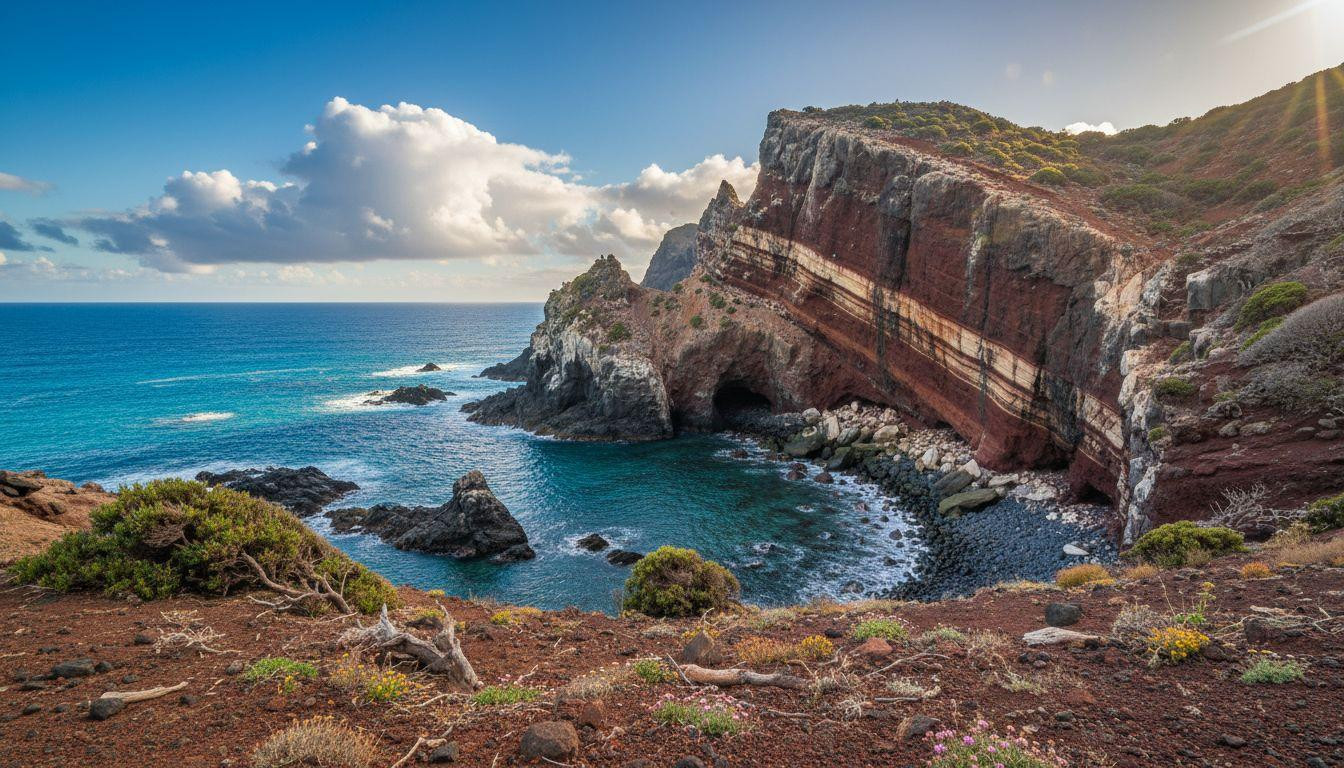
While 18 million tourists flood the Canary Islands each year, turning volcanic coastlines into resort corridors, a tiny Portuguese refuge guards its wild Atlantic shores. Deserta Grande, 14 miles southeast of Madeira, welcomes fewer than 5,000 visitors annually. This nature reserve protects what the Canaries commercialized: untamed volcanic cliffs, seal colonies, and December warmth without crowds.
Why Tenerife lost its wild edge
Tenerife alone drew over 7.3 million visitors in 2024. Hotel occupancy stayed above 75% year-round. The Canary Islands generated $25 billion in tourism revenue, transforming every accessible beach into developed coastline.
Resort development blocks natural viewpoints. Volcanic landscapes disappear behind hotel chains. Mass tourism creates artificial experiences where wild Atlantic beauty once thrived.
Peak season hotel rates reach $330 per night. Beaches designed for 500 people host 2,000 daily. This Spanish beach stretches 12 miles where December warmth replaces winter crowds, but development pressure threatens similar transformations across Atlantic islands.
Meet Deserta Grande, Madeira’s protected secret
Deserta Grande rises 1,450 feet from turquoise Atlantic waters. Reddish-brown volcanic cliffs contrast against deep blue sea. No hotels exist. No restaurants operate. Only research wardens live here permanently.
Volcanic landscapes without development
Barren rocky terrain stretches across the island’s 7.5-mile length. Sparse shrubby vegetation adapts to dry volcanic soil. Sheer cliffs create natural grottos and secluded coves inaccessible to mass tourism.
Zero permanent structures except the warden station. Portuguese law protects this landscape under nature reserve status since 1990. This Greek island bans cars and preserves 19th century mansions only boats reach, showing similar protection models work across Europe.
Mediterranean monk seals vs beach crowds
Around 40 critically endangered Mediterranean monk seals breed here. This represents Portugal’s only stable colony of these rare marine mammals. Visitors must maintain 330-foot distances from seal beaches.
Cory’s shearwaters and Bulwer’s petrels nest on clifftops. Endemic land snail species, rediscovered between 2012-2017, thrive in protected habitats. Wildlife encounters replace resort entertainment.
The Deserta Grande experience
Access requires boat charters from Funchal Marina or Caniçal port. Journey times range 45-90 minutes depending on departure point and sea conditions. December weather stays mild at 59-66°F.
How to visit responsibly
Private yacht excursions cost $440-660 per person. Small group eco-tours start around $110 per person. All visits require advance registration through official Portuguese portals. Forget Malta where cruise ships dump 15,000 daily and Gozo’s cliffs glow gold for free – similar boat-access requirements protect Mediterranean nature reserves.
Tours include guided cliff walks, seal observation from respectful distances, and snorkeling in crystal-clear coves. No overnight camping permitted. Day visits only preserve the ecosystem.
What you’ll actually discover
Morning light illuminates amber volcanic rock faces. Waves crash against untouched coastlines 330 feet below clifftop viewpoints. Silence breaks only for seabird calls and Atlantic surf.
Snorkeling reveals underwater volcanic formations. Water clarity extends 80-100 feet visibility. This Caribbean reef offers $45 dives where competitors charge $100 or more – proving marine wildlife experiences justify premium pricing.
The choice between developed and wild
Tenerife offers predictable resort experiences. Deserta Grande provides unpredictable wildlife encounters. Mass tourism versus conservation create fundamentally different travel philosophies.
Officials report tourism satisfaction increases when visitor numbers decrease. Quality over quantity benefits both travelers and ecosystems. Deserta Grande proves sustainable tourism models work.
December temperatures stay warmer than northern European winters. Atlantic location provides consistent mild weather. Nature reserve status ensures this warmth comes without commercial development pressures affecting other Atlantic islands.
Your questions about Deserta Grande answered
How do I get permits for visiting Deserta Grande?
Register through Portugal’s Simplifica portal before traveling. Advance booking essential due to strict daily visitor limits. Tour operators handle permit requirements for group excursions.
What makes this different from other Atlantic islands?
Complete development prohibition distinguishes Deserta Grande. Nature reserve status protects all landscapes. Mediterranean monk seal colony provides unique wildlife unavailable elsewhere in Portugal.
How does December weather compare to the Canary Islands?
Similar mild temperatures around 60-65°F. Less tourist infrastructure means authentic outdoor experiences. Weather patterns favor wildlife activity during winter months when crowds stay minimal.
Golden sunrise illuminates volcanic cliffs where seal colonies rest on rocky shores. Atlantic waves continue their ancient rhythm against protected Portuguese coastlines. Warm December air carries only ocean salt and seabird calls across this preserved wilderness refuge.