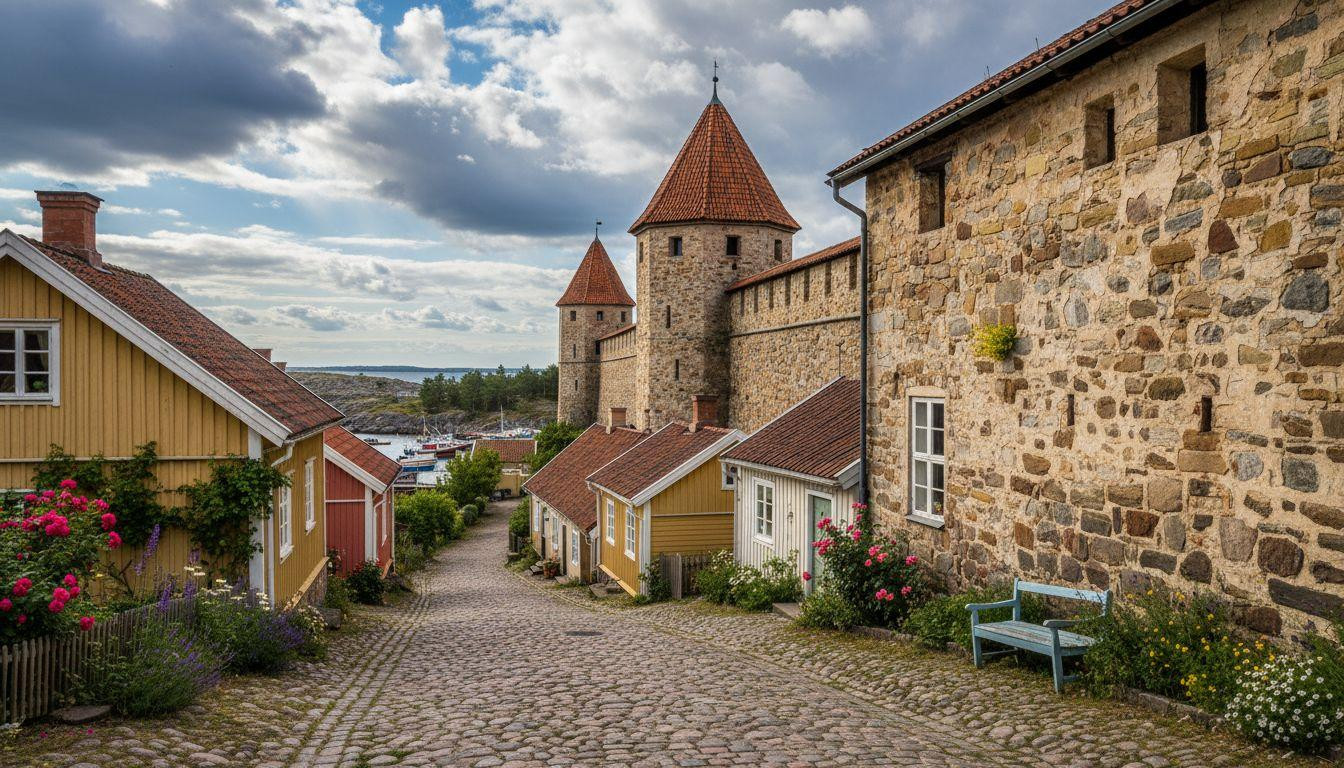
Tallinn’s Old Town receives 3.5 million visitors annually. Cruise ships dump 5,000 passengers daily into narrow medieval streets during summer. Restaurant reservations require booking 48 hours ahead. Hotel rates hit $180 per night in peak season. Visby offers the same UNESCO medieval walls, the same Baltic atmosphere, with 70% fewer crowds and 40% lower costs.
Both cities preserve Hanseatic League trading heritage. Both earned UNESCO World Heritage status for medieval architecture. The difference shows in how you experience them.
Why Tallinn became its own problem
Tallinn’s medieval core spans 1.3 square kilometers. Summer visitor density reaches 2,700 people per square kilometer. The Old Town increasingly serves tourists rather than residents. Local shops converted to souvenir stands. Traditional restaurants became themed dining experiences charging premium prices.
The city’s 1.9 kilometers of medieval walls fragment across disconnected sections. Walking the full circuit requires navigating modern streets between historic segments. Cruise ship schedules dictate crowd patterns. Between 9am and 4pm, the experience becomes crowd management rather than medieval immersion.
Winter brings opposite extremes. Tourist infrastructure hibernates. Many restaurants close or reduce hours. The city empties but loses vitality. Temperatures drop to -2°F to -6°F with harsh Baltic winds.
Visby delivers the same experience without the chaos
Visby’s Ringmuren stretches 3.4 kilometers in continuous circuit. You walk the entire medieval wall in 90 minutes without interruption. The honey-colored limestone ramparts wrap around pastel cottages with red-tiled roofs. Forty-four towers punctuate the walls. Most remain accessible for climbing.
The walls tell a different story
Tallinn’s fortifications required restoration after Soviet-era neglect. Visby’s walls survived 700 years with minimal intervention. The difference shows in weathered stone texture and organic integration with surrounding neighborhoods. Walking the Ringmuren at dawn, you’re often alone with Baltic horizons.
The town maintains 24,000 year-round residents within medieval boundaries. Grocery stores, hardware shops, and family bakeries operate alongside tourist cafes. Locals outnumber visitors even in August. This creates authentic atmosphere rather than theme park simulation.
What you actually pay
Visby accommodation ranges from $55 per night in February to $198 in peak summer. Mid-range hotels average $119 to $181. Tallinn’s equivalent properties charge $150 to $180 year-round, with summer peaks hitting $200. Restaurant meals in Visby follow Swedish pricing but avoid tourist markup. A waterfront dinner costs what it costs, not what cruise passengers will pay.
Ferry service from Stockholm runs year-round. Three-hour crossings cost less than international flights to Tallinn. SAS operates daily 30-minute flights to Visby Airport, 2.5 miles from town center. For non-EU travelers, Swedish entry avoids visa complexity some face with Estonia.
The medieval experience that actually works
Start at Stora Torget, the main square where medieval merchants traded Baltic goods. Cobblestone streets radiate outward through the Old Town. Rose gardens bloom in the Botanical Garden from May through September. The garden opened in 1885 within the city walls. Ancient trees provide shade. Wooden sculptures hide among plantings.
Walking the Ringmuren at your own pace
The wall walk offers continuous Baltic views. Morning light hits the harbor around 7am in summer. Fishing boats return by mid-afternoon. You climb tower stairs to rampart walkways. Stone worn smooth by centuries of footsteps. No ticket required. No guided tour necessary. Just medieval fortifications and sea horizons.
Medieval Week runs August 2-9 in 2026. Over 300 events fill the calendar with period music, crafts, markets, and tournaments. This represents Visby’s peak tourist season. Visit any other month for the same medieval architecture with minimal crowds. This Scottish island keeps 12 thatched roofs alive where Gaelic names the streets, offering similar preserved heritage on a smaller scale.
What locals actually do
Cafes on Stora Torget serve Swedish pastries and coffee. The harbor fish market operates mornings when boats unload catches. Artisan shops sell locally made goods rather than mass-produced souvenirs. You browse at your own pace. No pressure. No crowds pushing through narrow doorways.
Gotland’s Burgundy truffles mature in autumn. Local restaurants feature them September through November. This represents genuine seasonal cuisine rather than tourist menu engineering. This Brittany island opens medieval mill paths where 254 locals farm oysters at low tide, demonstrating similar food traditions tied to place.
January reality check
Winter in Visby means cold but not brutal. Temperatures hover around 33°F with occasional drops to 10°F. Snow falls but rarely accumulates. Ferries and flights maintain year-round schedules. Daylight lasts six hours. This creates atmospheric medieval experience rather than sunny beach vacation.
The trade-off favors solitude seekers. You walk empty cobblestone streets. Cafes welcome locals catching up over coffee. Hotel rates drop to $55 per night. The medieval walls stand against gray Baltic skies. Stone architecture gains dramatic quality in winter light. This Colorado town soaks in 104°F springs while snow falls at 7,040 feet, proving winter destinations offer unique rewards.
Your questions about Visby answered
How do I get there from major cities?
Destination Gotland operates year-round ferries from Nynäshamn and Oskarshamn on the Swedish mainland. Journey takes three hours. Book ahead even in winter for reliable scheduling. SAS flies daily from Stockholm to Visby Airport in 30 minutes. Airport sits 2.5 miles from town center. Taxis and buses connect to Old Town.
What makes Visby different from other medieval towns?
The continuous 3.4-kilometer wall circuit remains intact and walkable. Most European medieval cities preserve fragments. Visby maintained complete fortifications. The combination of island setting, Baltic coastal location, and functioning residential community creates lived-in medieval experience rather than museum reconstruction. UNESCO recognition confirms exceptional preservation.
Should I visit in summer or shoulder season?
Summer offers 19 hours of daylight, rose garden blooms, and Medieval Week festivities. Expect higher prices and more visitors but nothing approaching Tallinn’s cruise ship chaos. May and September deliver pleasant weather with minimal crowds. Winter suits those seeking authentic quietude and dramatic atmosphere. This Spanish town built white houses under rock ledges instead of roofs, showing how unique architecture rewards off-season exploration.
The ferry back to Stockholm departs at 6pm. Most visitors make it with time to spare. I almost missed it once because a local started talking about truffle season at a harbor cafe. The conversation lasted two hours. That’s the difference between Visby and Tallinn.