St. Moritz charges $345 per night for a basic hotel room in February 2026. Guarda sits 25 miles away and costs $138. Same Alps. Same snow. Zero crowds.
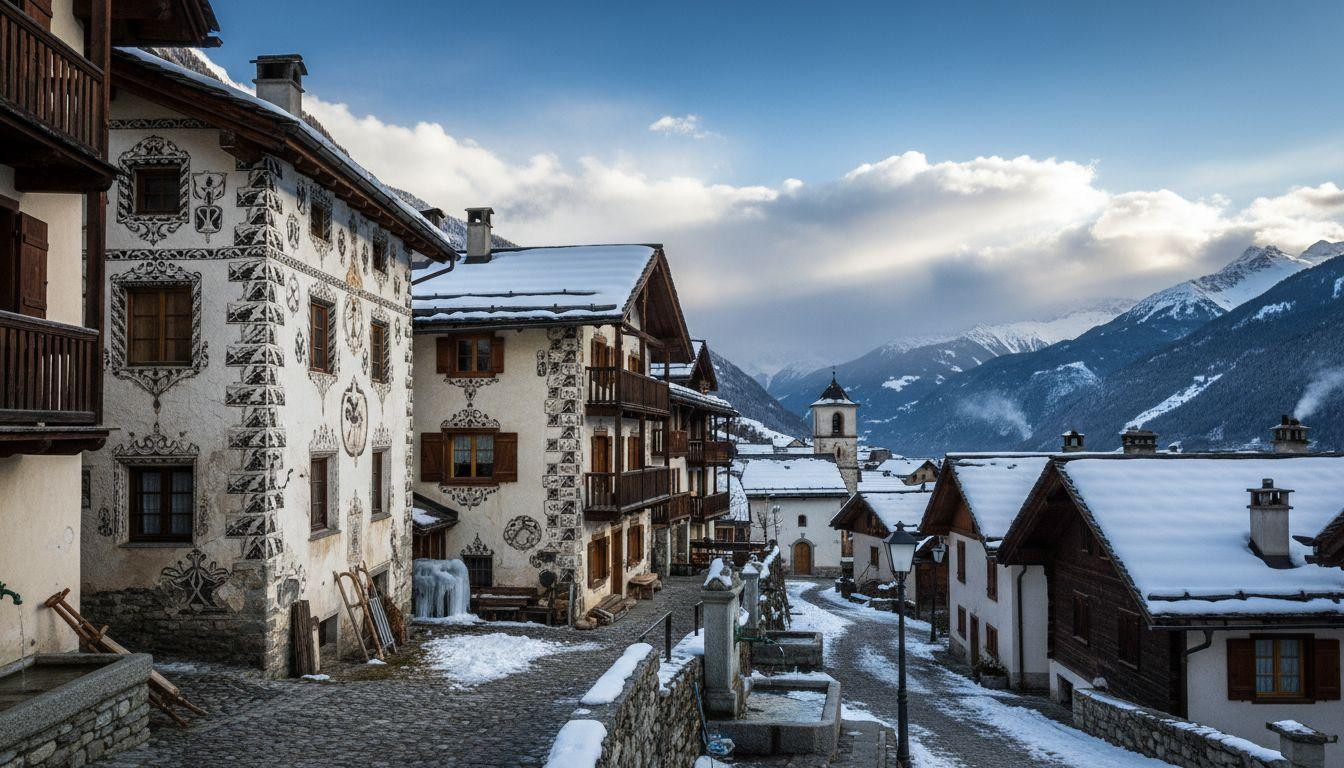
The train from St. Moritz takes 69 minutes and costs $24. You arrive in a village of 400 people where Romansh is the first language and sgraffito houses line car-free streets. Afternoon sun hits the white-black etched facades at 5,413 feet. The valley spreads below in silence.
Why St. Moritz costs what it does
St. Moritz built its reputation on luxury skiing and frozen lake events. February brings peak crowds. Hotels average $460 per night for mid-range rooms. Parking costs $20-40 daily. Restaurants charge $58-92 per person for dinner.
The resort handles thousands of visitors daily during winter season. Lift tickets run around $80-90. The infrastructure supports international tourism at scale. Prices reflect that volume and the century-old prestige brand.
It works for people seeking that specific experience. But 40 kilometers away, the Lower Engadine offers something St. Moritz lost decades ago.
Meet Guarda, where costs drop 50-70%
Guarda preserves Engadine architecture without the resort overlay. Hotel Meisser and similar guesthouses charge $138-207 per night with breakfast included. Meals cost $29-46 per person. Daily budgets run $230-345 total compared to St. Moritz’s $460-690.
The village center is car-free. Parking is free where you need it. Snowshoe rentals cost $23 per day. The toboggan run and ice rink charge minimal fees. Mountain villages across Europe share this preservation approach, but few remain this accessible.
The sgraffito houses
Dozens of houses display traditional sgraffito technique. White plaster gets scratched away to reveal black underlayers. The patterns show biblical scenes, animals, geometric designs. Some date to the 17th century.
One house from 1918 breaks the pattern with colored Italian motifs. The owner traveled and brought back different ideas. It stands out among the monochrome facades. Winter light at 1,650 meters makes the contrast sharper.
What Romansh culture means here
About 80-90% of daily conversation happens in Romansh. Shop signs use it first. The language shapes how the village operates. German and English work fine for visitors, but the cultural layer runs deeper than tourist-focused towns.
Chalandamarz festival happens February 28, 2026. Children parade with bells weighing up to 44 pounds to mark the end of winter. The tradition predates Christianity. A dance follows in the school building. No tickets, no crowds from St. Moritz.
The winter experience St. Moritz can’t deliver
St. Moritz offers groomed slopes and organized activities. Guarda offers silence. The difference matters if you want to actually hear the Alps instead of just photograph them.
Snowshoeing empty valleys
Trails leave directly from the village into Lower Engadine terrain. Easy to moderate routes. You can walk for hours and see maybe three other people. Recent visitors mentioned discovering new paths on their sixth trip.
Cross-country skiing tracks stay uncrowded even on weekends. The valley position gives Guarda more sun hours than higher St. Moritz despite similar snowfall. Temperatures run -5°F to 41°F in February. Reliable snow without the resort chaos.
The Schellen-Ursli connection
Guarda inspired the 1945 children’s book about a shepherd boy and his bells. The story became a Swiss cultural touchstone. Guided tours show locations from the tale. It adds context without feeling manufactured for tourists.
The village maintains a family ski lift and toboggan run. These exist for locals first. Visitors use them second. That priority shows in the pricing and the atmosphere. Alpine villages that preserve this balance become rarer each year.
Getting there and staying
Zurich Airport sits 155 miles away. The train journey takes 3-4 hours and costs $92-115 one-way. From St. Moritz, the Rhätische Bahn runs direct service in 69 minutes for $22-26. Driving from St. Moritz takes 45 minutes and uses $9-14 in fuel.
Hotel Meisser anchors the lodging options with traditional rooms and local food. Guesthouses and holiday homes fill out the choices. Everything sits within 1,640 feet of everything else. You walk. No shuttle buses needed.
The village protects its heritage through building codes and tourism limits. New hotels don’t appear. Existing places maintain standards without expanding. Mountain destinations that resist overdevelopment create better experiences for the visitors who do show up.
Your questions about Guarda answered
When should I visit Guarda instead of St. Moritz?
February through March offers peak snow conditions with the Chalandamarz festival on February 28. July through August brings hiking weather with afternoon temperatures around 68°F. Weekdays stay quieter than weekends year-round. Avoid if you specifically want ski resort infrastructure or nightlife.
Do I need to speak Romansh?
No. German works everywhere. English is common in hotels and restaurants. But hearing Romansh in daily use adds authenticity absent in international resorts. Signs appear in Romansh first, then German. The language isn’t a barrier but it does create cultural texture.
How does Guarda compare to other Engadine villages?
Zuoz and Sils offer similar architecture but see more through-traffic. Guarda’s car-free center and smaller size (400 residents versus 1,000-plus) create more intimacy. Villages that maintain working cultural traditions rather than performing them for tourists stand out. Guarda falls in that category.
Morning sun hits the sgraffito houses around 8am in February. The black-white patterns emerge from shadow. By 3pm the light goes golden. That window between morning clarity and afternoon warmth shows why the village faces south at this exact altitude.