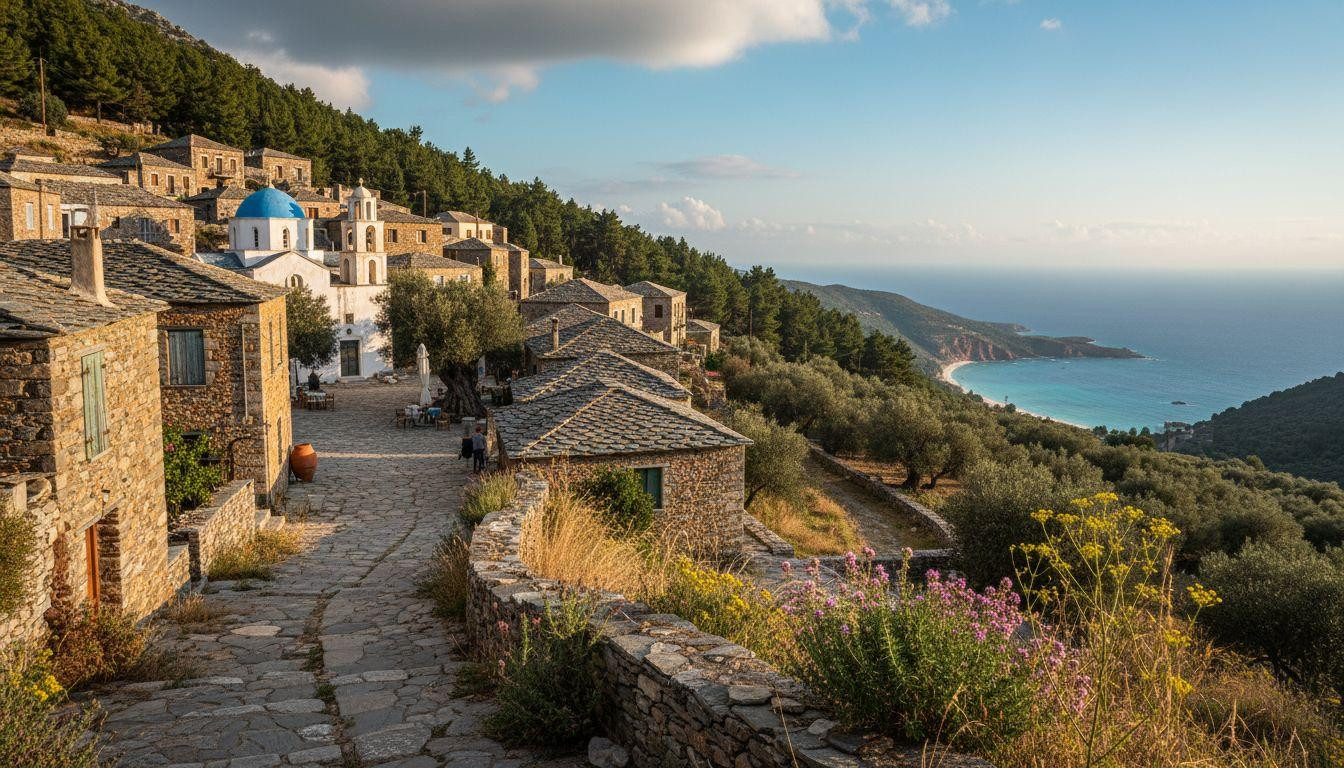
While Santorini’s white buildings attract 2.3 million visitors and $220 hotels, Ikaria’s golden stone villages keep 8,000 residents living the longevity secrets that help one in three reach their 90s. Ferry passengers arrive at Evdilos port to goat bells instead of cruise ship horns. This Blue Zone island delivers authentic Greek life for $75 guesthouses and zero crowds.
Why Santorini overdelivers crowds and underdelivers authenticity
Santorini welcomes 8,000 daily cruise passengers during peak season. Oia sunset viewpoints require 20-minute waits with selfie sticks. Cave hotels in Fira cost $330-$650 nightly in December 2025.
The famous white buildings mix authentic Cycladic architecture with modern tourist constructions. Restaurant meals inflate to $18-$25 for basic dishes near caldera viewpoints. Sunbeds on black sand beaches charge $80-$150 daily.
Ferry connections run hourly but cost $70-$100 from Athens. Parking fees, entrance tickets, and photo session charges add $35-$50 daily. The island serves manufactured Greek fantasy over lived Greek culture.
Meet Ikaria where science proves Greek islands still heal
The Blue Zone difference
One in three Ikarians reach their 90s compared to one in nine Americans. Dementia rates approach zero among residents. National Geographic research validates exceptional longevity patterns.
Wild greens, olive oil, and red wine from pre-phylloxera vines create the Ikarian diet. Multi-generational homes foster purpose and connection. Daily siestas boost cardiovascular health scientifically.
A nearby Greek village shares similar longevity traditions. Thermal springs at 100-104°F mix with Aegean waters naturally.
Real costs and real savings
Guesthouses range $45-$100 nightly versus Santorini’s $220-$650 rates. Taverna dinners with house wine cost $15-$22 island-wide. Car rentals average $42-$54 daily for exploring 158 square miles of terrain.
Athens flights take 55 minutes for $105-$150 roundtrip via Olympic Air. Winter ferries run twice weekly for $43-$61 from Piraeus port. Accommodation costs stay 25% below Greek national averages.
Living the Ikarian rhythm
What daily life actually looks like
Panigiri festivals last three days with wine and traditional dancing. No clocks dictate schedules in villages like Armenistis and Evdilos. Garden-to-table meals feature revithada chickpea stew for $13 and melopita honey pie.
Families share homegrown vegetables across generations. Residents walk mountain paths to 3,280-foot Ravni Peak daily. Evening domino games extend past midnight with local wine flowing freely.
Morning markets in Agios Kirykos fill with fresh sage and rosemary. Traditional fishing harbors maintain authentic rhythms. Black-eyed peas and wild greens replace processed foods completely.
Natural beauty without the crowds
Nas Beach stretches 1.2 miles of turquoise waters and white pebbles. Seychelles Beach offers secluded coves accessible by foot. Drakontoschilo castle ruins overlook endless Aegean horizons at sunset.
Pine and oak forests cover 65% of the island’s landscape. Thermal springs bubble naturally along rocky coastlines. Annual visitors number 50,000-100,000 compared to Santorini’s millions.
Planning your Ikarian escape
May through June and September through October provide ideal weather at 68-82°F. Winter months offer serenity but ferry schedules reduce to twice weekly. Caribbean alternatives suit winter travelers seeking warmth.
Evdilos port serves northern beaches while Agios Kirykos connects southern thermal springs. The 19-mile drive between ports takes 45 minutes through mountain villages. Other quiet island alternatives offer similar escapes from overtourism.
Direct bookings with local guesthouses like Anthemis and Cavos Bay secure better rates. Car rental becomes essential for reaching beaches and hiking trails. Cell service reaches most areas for digital nomads seeking winter retreats.
Your questions about Ikaria answered
How do costs compare to other Greek islands?
Ikaria averages $60-$95 nightly for accommodation versus $350+ in Santorini or Mykonos. Meals cost 30-40% less than tourist-heavy destinations. Ferry access from Athens costs half of high-speed routes to popular islands.
What makes the longevity culture authentic?
Residents maintain traditional diets with foraged wild greens and minimal processed foods. Multi-generational households create natural support systems. Daily physical activity through walking and gardening replaces structured exercise routines.
When should Americans visit for the best experience?
Late spring and early fall avoid summer crowds while maintaining pleasant temperatures. Winter visits suit travelers seeking maximum solitude and lower prices. Panigiri festivals peak in August and September for cultural immersion.
Golden morning light filters through olive terraces as herbal tea steam rises from village cafés. Ikaria preserves what Greece offered before Instagram discovered it. Here, longevity isn’t a wellness package but simply how 8,000 people choose to live.