“`html
San Andrés draws over one million visitors annually to its turquoise Caribbean waters. The island sits 70 kilometers off Nicaragua’s coast in the same archipelago as a quieter alternative. Little Corn Island delivers identical reef-protected beaches and coral gardens at half the cost. No cars. No cruise ships. Just 300 tourists at any given time sharing white sand with 1,000 residents who’ve kept the island deliberately undeveloped.
Why San Andrés became Caribbean mass tourism
San Andrés built its reputation on duty-free shopping and cruise ship accessibility. Direct flights from Bogotá brought 3,000 daily visitors at peak season before 2023. Hotels lined the beaches. Golf carts clogged the main road. The commercialization that attracts crowds also erases the quietness that makes Caribbean islands worth visiting in the first place.
Recent airline bankruptcies dropped occupancy from 75% in 2022 to 25% by late 2023. The island saw 84,000 international tourists in 2024 compared to pre-pandemic millions. Local tourism boards confirm recovery is underway with 57.3% occupancy in May 2025. But the infrastructure remains: lounge chair rows on beaches, tour operators hawking snorkel trips for $60-100, seafood dinners priced for cruise passengers.
Little Corn Island offers the same water without the crowds
The landscape you actually see
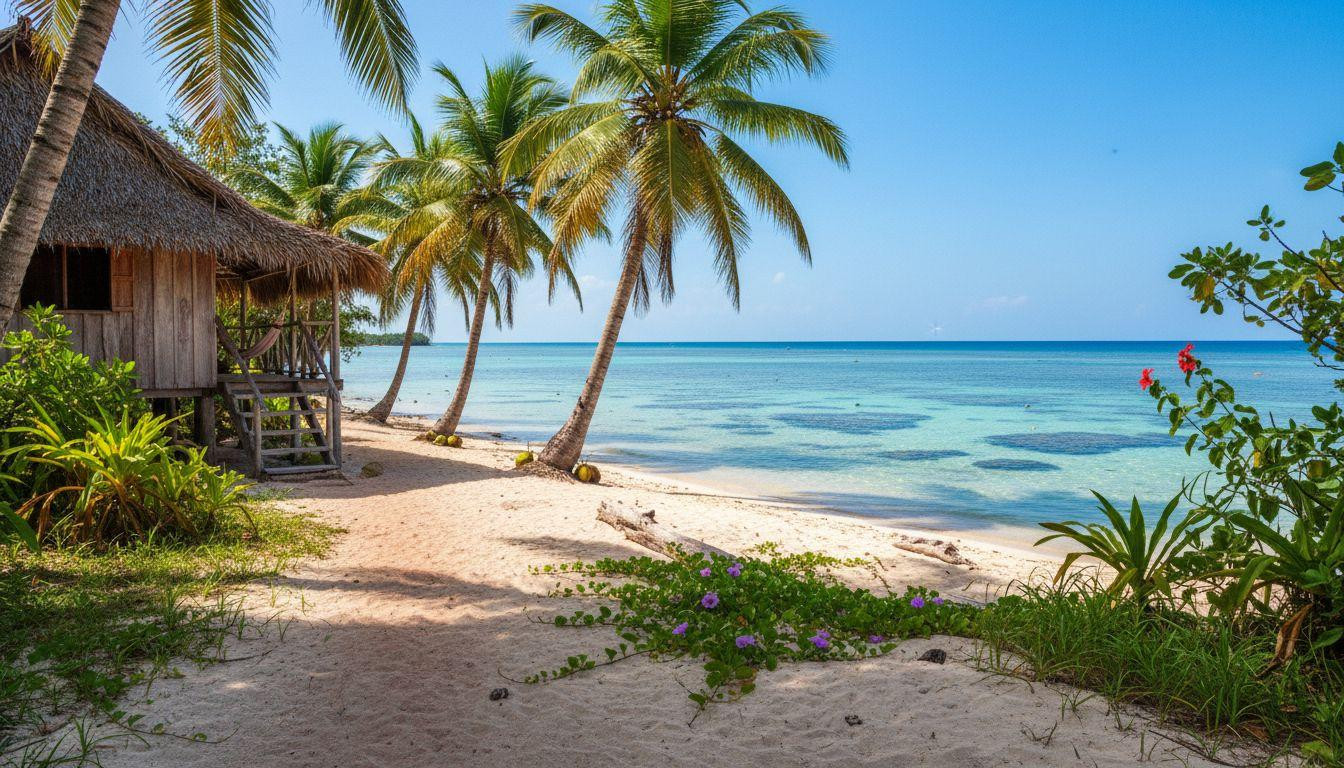
Soft dirt paths wind through coconut groves connecting the island’s northern and eastern coasts. No pavement. No vehicles. Walking barefoot from your guesthouse to Otto Beach takes 15 minutes through jungle shade. The eastern shore opens to white sand meeting turquoise water so clear you count coral patches at 12 feet depth from the beach.
Yemaya Reefs and Otto Beach provide walk-in snorkeling access. Step off the sand into waist-deep water and you’re already watching eagle rays glide over seagrass beds. Nurse sharks rest in the shallows. Sea turtles surface near the reef edge. No boat tour required. No other snorkelers blocking your view of the coral.
What half the price actually means
Hostels on Little Corn Island start at $10-20 per night. Mid-range guesthouses with private rooms run $40-80. Diving costs $40 per tank compared to San Andrés’ $60-100. Fresh seafood at local restaurants comes without tourist markup. A three-night stay including accommodations and activities costs roughly half what San Andrés charges for equivalent experiences.
The trade-off is infrastructure. Little Corn Island has limited restaurants, no ATMs, and boat-dependent access. You bring cash. You accept local schedules. You choose quietness over convenience. For travelers seeking Caribbean islands that feel like luxury resorts but cost $120 a night, this represents the authentic version.
What you do on an island with 300 tourists
Water activities without crowds
Stand-up paddleboard rentals operate from Dos Tiburones Dive Shop. Fishing charters with guides who’ve worked these waters for 10-plus years target barracuda, mahi-mahi, and yellowtail. The catch gets cooked at local restaurants at no extra charge. Snorkeling routes along the northern reefs reveal healthy coral coverage and regular sea turtle sightings.
Diving explores seagrass beds and reef systems comparable to Cozumel or Belize in biodiversity. The difference is access. Walk from your room to the water in five minutes. No boat transfers. No group scheduling. Just you and the reef at whatever hour you choose to swim.
Island culture beyond the beach
The 1,000 residents speak English, Creole, and Spanish reflecting Caribbean heritage distinct from mainland Nicaragua. A lighthouse marks the island’s highest point with views across the entire coastline. Picnic Beach draws locals and visitors for sunset watching. The reggae vibe feels genuinely Caribbean rather than manufactured for tourists.
Small guesthouses and eco-lodges replace chain hotels. Owners cook breakfast. Fishermen sell the day’s catch directly. The artist and chef community creates a low-key cultural scene without nightlife excess. This is the Caribbean island travelers imagine before discovering how commercialized most destinations have become.
February 2026 brings optimal conditions
The dry season runs December through April with February offering peak weather. Air temperatures reach 80-90°F during the day, dropping to the 70s at night. Water temperature holds steady around 80°F. Rainfall stays minimal. Sea conditions remain calm making the 30-minute panga boat transfer from Big Corn Island smooth rather than stomach-churning.
Snorkeling visibility peaks in dry season. The turquoise water clarity that defines Little Corn Island’s visual appeal shows best when rain and wind stay low. Coral colors appear sharpest. Marine life activity increases. Beach access stays consistent without storm erosion. Nicaragua’s tourism growth in 2025 brought restored flight routes and improved access, but Little Corn Island maintains its low-impact character.
Your questions about Little Corn Island answered
How do you actually get there from the US?
Fly from Miami to Big Corn Island airport. The panga boat to Little Corn Island costs $6 and runs frequent schedules during dry season. Total travel time is approximately 4-5 hours. Package deals bundling flights and accommodations are available from major US cities. The boat transfer requires dry bags for luggage protection.
What makes this different from other budget Caribbean islands?
The car-free infrastructure creates genuine quietness. Most budget Caribbean destinations still have roads and traffic. Little Corn Island’s barefoot paths and absence of motorized transport eliminate the noise that defines modern tourism. You hear waves and palm fronds instead of engines. The sensory experience matches what Caribbean islands offered decades before development.
How does it compare to similar destinations like Caye Caulker?
Little Corn Island offers comparable reef quality to Belize’s smaller cayes with walk-in access and lower costs. Caye Caulker has more infrastructure and dining variety. Little Corn Island has fewer visitors and more authentic local culture. Both deliver turquoise water and healthy coral. The choice depends on whether you prioritize convenience or isolation. For travelers seeking Caribbean bays where reefs keep swells calm, Little Corn Island’s protected eastern shore provides the same shelter at lower prices.
Morning light hits Otto Beach around 6am when the water turns glass-smooth. A few early swimmers wade into the shallows. Most tourists sleep until 8am. The reef belongs to whoever shows up first. That quietness costs half what San Andrés charges and delivers twice the authenticity.
“`