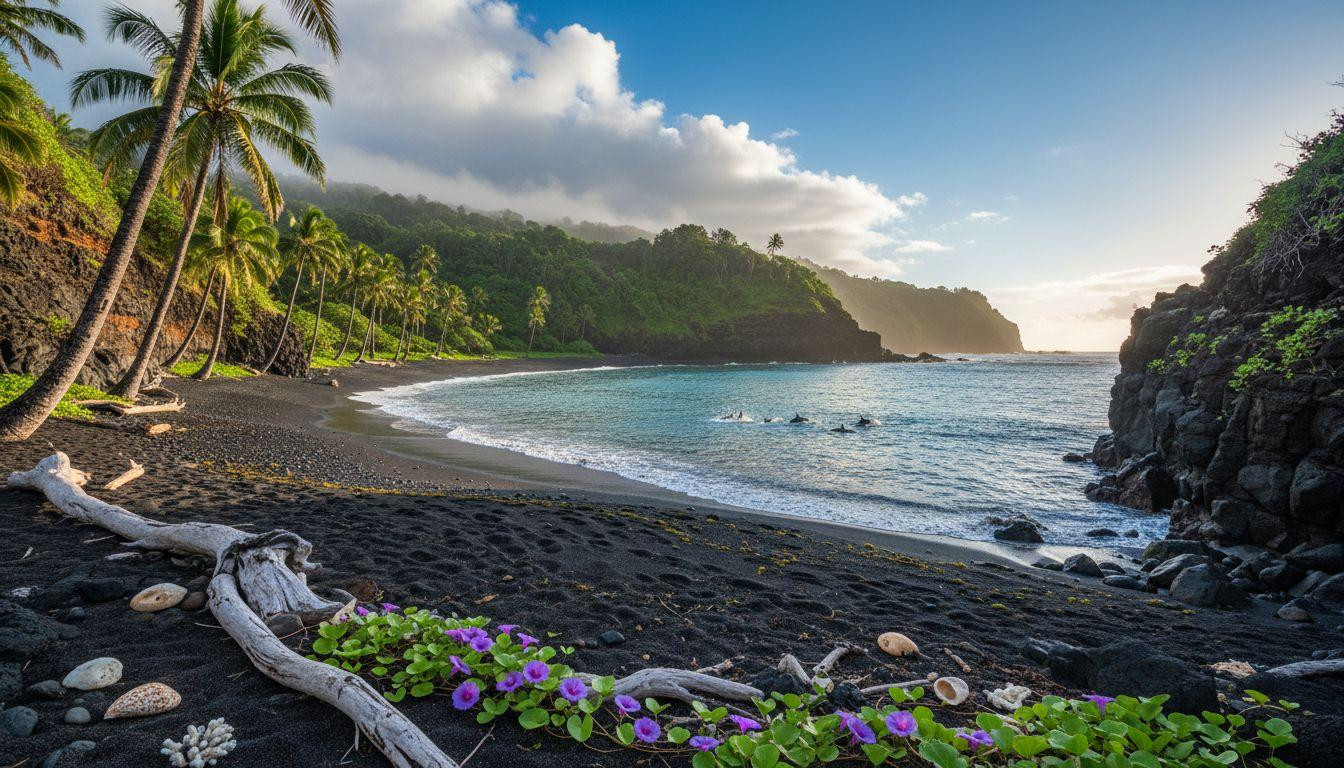
Punalu’u Black Sand Beach draws 2,000 visitors daily during peak season. Tour buses idle in crowded lots while families queue for turtle viewing spots behind roped barriers. The beach that appears in every Big Island guidebook delivers volcanic drama, but the experience feels managed and commercial.
Four miles south of Pahoa, Kehena Black Sand Beach offers the same jet-black volcanic sand and turquoise water. The difference: a steep rocky trail from Highway 137 keeps tour buses away. No parking lot. No facilities. No ropes around the turtles because spinner dolphins, not sea turtles, visit these waters.
Why Punalu’u lost what Kehena keeps
Punalu’u’s easy access made it famous. Flat parking, paved paths, picnic tables, restrooms, and food vendors serve the 730,000 annual visitors who stop between Volcanoes National Park and Kona resorts. The Hawaii Department of Land and Natural Resources installed viewing guidelines for endangered green and hawksbill turtles. Stay 10 feet back. No touching. Rangers monitor compliance.
The infrastructure works. Families with strollers reach the sand easily. But the beach lost its quiet. Morning arrives with idling diesel engines and guide announcements in three languages. The black sand that formed when Kilauea lava met ocean now hosts selfie lines at turtle resting spots.
Kehena formed the same way during a 1955 lava flow. Then a 1975 earthquake dropped the beach three feet and destroyed the access stairs. The disaster created a natural crowd filter. Only visitors willing to descend a steep lava rock trail from the roadside cliff reach the narrow pocket beach below.
The descent that preserves the experience
Access requires effort, not fees
Park along Highway 137 near mile marker 19, about 22 miles southeast of Hilo. A small unpaved lot holds maybe eight cars. The trail drops roughly 50 feet through sharp volcanic rock. Sturdy shoes matter. The descent takes 5 minutes with careful footing. No stairs, no handrails, no signs.
This access barrier costs nothing but keeps daily visitors under 100. Punalu’u charges no entry fee either, but its easy parking and tour bus access deliver 10 times the crowds. The trail to Kehena functions like a $50 admission price without the actual cost.
What the steep trail protects
The beach stretches maybe 150 feet between lava walls. Tall palms provide midday shade. The sand retains volcanic heat, warming quickly in morning sun on this southeast-facing shore. Water visibility reaches 30 feet on calm days from May through October when trade winds settle.
Spinner dolphins appear offshore most mornings during summer months. They hunt at night in deep water, then return to shallow bays at dawn to rest and socialize. Kehena’s protected cove attracts pods of 20 to 40 dolphins. Watch from shore or swim out 50 yards. They spin, breach, and ignore humans who keep respectful distance.
Punalu’u offers turtle guarantees but dolphin sightings stay rare. The commercial atmosphere and constant activity push marine life to quieter coves. Like this Hawaii cove that stayed empty for 27 years, Kehena’s difficulty preserves what easy access destroys.
The Puna difference you actually experience
Sunday drum circles and clothing-optional culture
Kehena adopted a clothing-optional policy after the 1975 earthquake reduced visitor numbers. The culture stuck. Nude sunbathers share the beach with families in swimsuits. Everyone coexists without drama or regulation. Sunday afternoons bring drum circles starting around 3pm. Locals gather with djembes and congas. The rhythm carries across black sand until sunset.
This alternative vibe defines Puna District’s 50,000 residents. The region attracts artists, farmers, and people seeking rural Hawaii away from resort development. Pahoa, 4 miles northwest, offers plate lunches for $12 and poke bowls for $15 at local markets. Accommodations like Kehena Beach Cottages rent for $100 to $150 nightly, while Kalani Oceanside Retreat 1.2 miles away runs $200 to $300.
Punalu’u sits in a more developed corridor. Nearby towns cater to tour groups with higher prices and less local character. The beach itself feels institutional with its managed turtle viewing and vendor stalls. Similar to trails that lead to hot pools through ancient cedars, Kehena rewards those who accept rustic conditions for authentic experience.
Ocean conditions and practical limits
No lifeguards patrol Kehena. Strong currents and shore break demand ocean awareness. Winter swells from November through April create dangerous conditions. Locals swim only during calm summer months when southeast trade winds flatten the surface. Water temperature holds steady at 77°F year-round.
The beach provides zero facilities. Bring water, food, and shade. The nearest restroom sits 4 miles away in Pahoa. Cell service works intermittently. This isolation appeals to visitors seeking beaches where coral reefs start close to shore without commercial infrastructure.
Why locals choose the steep trail
A resident who has lived in Puna for 30 years explained the appeal simply. Punalu’u offers convenience. Kehena offers solitude. The black sand looks identical. The ocean temperature matches. But one beach feels like a park attraction while the other feels like discovery.
Morning light hits Kehena’s southeast-facing shore around 6:30am. The turquoise water glows against black sand. Dolphins spin offshore. Palm shadows stretch across volcanic grains. No tour groups arrive before 10am because the trail filters casual visitors. This window of quiet justifies the descent.
The 1975 earthquake that destroyed easy access accidentally preserved what makes Kehena special. Like beaches where wild horses roam free from development, natural barriers protect better than regulations.
Your questions about Kehena Black Sand Beach answered
When should I visit for dolphins and calm water?
May through October offers the best conditions. Spinner dolphins appear most frequently during summer months when they use the protected cove for daytime rest after night hunting. Ocean conditions stay calmest from June through September. Arrive before 8am for dolphin viewing and empty beach. Winter months from November through April bring dangerous shore break and high surf. The beach becomes unsafe for swimming during this period.
Is the clothing-optional culture mandatory or optional?
Completely optional. Families in swimsuits and nude sunbathers share the beach without issue. The culture developed organically after 1975 when the earthquake reduced crowds. No signs announce the policy. Visitors choose their comfort level. Sunday drum circles attract a mix of clothed and unclothed participants. The atmosphere stays relaxed and judgment-free. Respect for others’ choices defines the vibe.
How does Kehena compare to other Big Island black sand beaches?
Punalu’u offers easier access, facilities, and guaranteed turtle sightings but draws 10 times more visitors. Kehena trades convenience for solitude and dolphin encounters. Both beaches formed from volcanic lava meeting ocean. The sand composition and water clarity match. The experience differs entirely. Punalu’u feels managed and commercial. Kehena feels wild and authentic. The steep trail creates the distinction.
The trail back up takes 8 minutes. Black sand clings to wet skin and towels. Spinner dolphins continue their morning rest offshore. The turquoise water holds its color until afternoon clouds arrive. No crowds form because the cliff keeps them away.