Salto del Nervión draws 200,000 hikers yearly to its 222-meter drop in Basque mountains. Parking fills by 9am on weekends. The 3-hour mountain trail closes November through March when snow blocks access. And from July through September, the waterfall often runs dry.
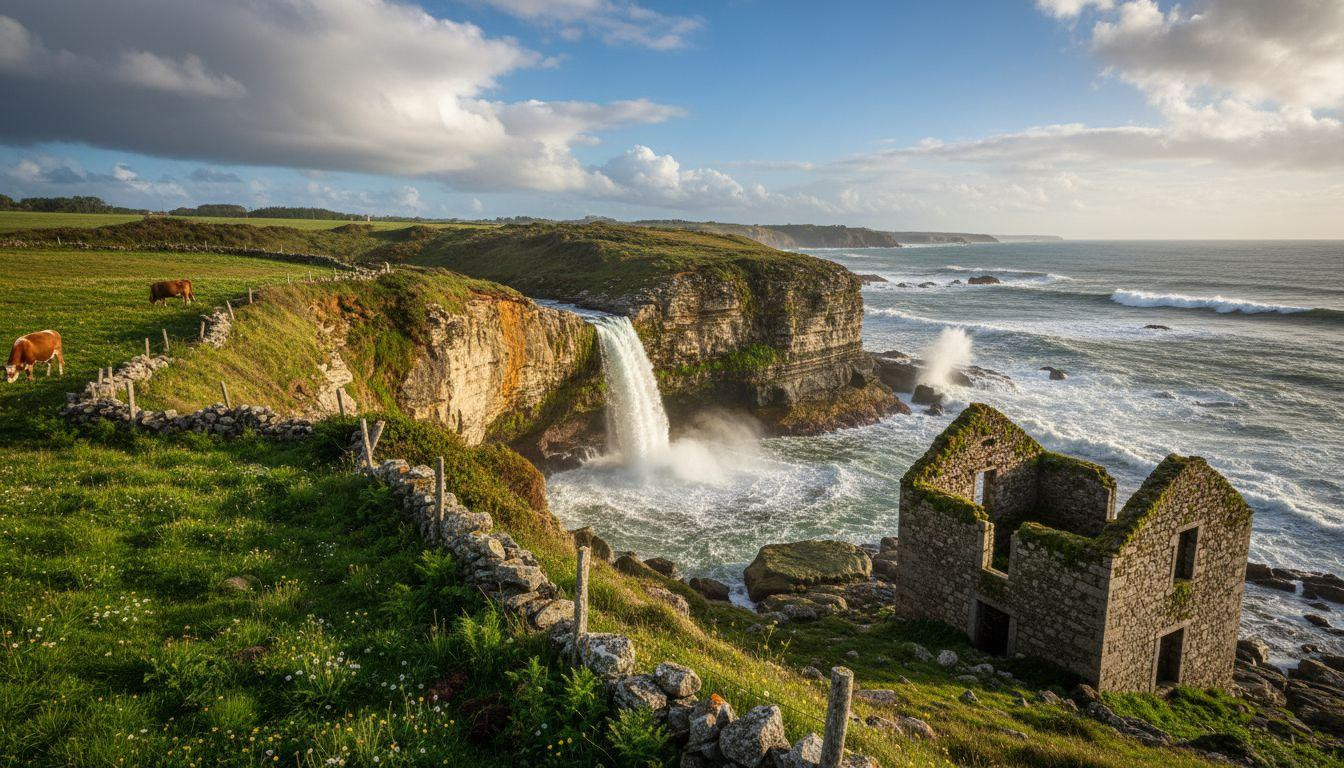
45 miles west on Cantabria’s coast, a different kind of cascade exists. El Bolao sends a narrow stream over green cliffs directly into Atlantic waves. The walk takes 20 minutes through meadows where cows graze. No fees. No crowds. Water flows year-round.
Why inland waterfalls overwhelm while coastal ones stay quiet
Salto del Nervión sits in Soba mountains at 4,265 feet elevation. The trail gains 1,640 feet over rocky terrain. Hikers need proper boots and stamina. Weekend parking lots hold 150 cars and fill before breakfast. Summer heat dries the limestone aquifer. The falls become a trickle or vanish completely for three months.
Winter conditions close the route. Snow covers the final approach from November through March. Rangers post closure signs at trailheads. Even experienced hikers turn back. The waterfall becomes inaccessible for five months every year.
El Bolao operates on different geography. Cantabria’s oceanic climate delivers 47 inches of rain annually. The coastal stream never stops flowing. Atlantic storms in February actually increase the cascade’s power. No elevation gain. No technical hiking. The path stays open every season.
What makes a waterfall cascade into ocean waves
The rare coastal geology
Cantabrian cliffs rise 165 feet above the Atlantic near Cóbreces village. A stream called La Presa cuts through green meadows for 2 miles before reaching the cliff edge. The water drops straight down into white foam and gray-green coastal rocks. Spain has only a handful of waterfalls that meet the ocean directly.
An 18th-century flour mill sits at the cliff base in ruins. Stone walls remain where millers once ground local wheat and corn. The building used La Presa’s flow to turn grinding wheels. When the mill closed, nature reclaimed the site. Now the ruins frame photos of the cascade meeting Atlantic swells.
Access without the mountain effort
The trail starts at San Felices de Mies church in Cóbreces. Yellow arrows mark the 4-kilometer circular route through farmland. Cows and horses graze in fields on both sides of the path. The walk takes 20 to 30 minutes at a relaxed pace. Families with young children complete it easily.
Compare that to Nervión’s 3-hour mountain trek. El Bolao requires no special fitness or gear. Regular walking shoes work fine in dry weather. The coastal route stays mostly flat until the final approach to the cliff viewpoint. A wooden mirador platform lets visitors look straight down at the waterfall hitting ocean spray.
The experience from meadow to clifftop
Walking through working farmland
Cóbreces sits in Alfoz de Lloredo municipality, population 1,800. The village maintains its rural character. No resort hotels. One small general store. The church of San Felices dates to the 12th century and marks the trailhead.
The path crosses green pastures where livestock roam freely. Wooden fences separate fields. Stone walls mark old property lines. In February, morning mist lifts around 8am to reveal the Atlantic in the distance. The sound of waves grows louder as you approach the coast. Salt air mixes with wet grass smells.
The clifftop moment
The mirador platform sits at the cliff edge with safety railings. From here, the waterfall’s full drop becomes visible. Fresh stream water falls 50 feet before hitting rocks and ocean together. White foam spreads where the two waters meet. On windy days, spray reaches the viewpoint.
The mill ruins sit just below the platform, accessible by a short scramble. Stone walls stand three feet high. Window openings frame ocean views. Photographers spend time here waiting for the right light. Sunset turns the Atlantic gold and silhouettes the ruins against the water.
Practical details for visiting in 2026
El Bolao sits 28 miles west of Santander on the A8 highway. Take the Unquera exit and follow signs toward Cóbreces. Limited free parking exists near the church trailhead. Arrive before 10am to secure a spot. The nearby town of Comillas is 6 miles east with more lodging options. Rooms in Cóbreces start at $55 per night in February.
Winter offers the best conditions. Fewer visitors walk the trail. The waterfall runs at full power from Atlantic storms. Temperatures stay mild, averaging 50°F. Bring a wind jacket for the exposed clifftop. The path can get muddy after rain, so waterproof shoes help.
Nearby wine villages in Alsace offer similar rural tranquility in different terrain. For more coastal exploration, Hawaii’s Kiholo Bay provides uncrowded beach access. Spain’s northern coast holds other quiet spots like mountain villages after storms. Even Mississippi’s Gulf Coast has overlooked wharfs worth discovering.
Your questions about El Bolao waterfall answered
When does the waterfall flow strongest?
December through March brings the most rainfall to Cantabria’s coast. Atlantic storms increase La Presa stream’s volume significantly. The cascade hits the ocean with maximum force during these months. Summer flow continues but at reduced levels. Unlike mountain waterfalls that dry up, El Bolao’s coastal location ensures year-round water.
Why do so few tourists visit compared to Nervión?
Salto del Nervión appears on most Basque Country tourism lists as the region’s tallest waterfall. That height record draws visitors despite the difficult access. El Bolao lacks the dramatic vertical drop. Its uniqueness comes from meeting the ocean, not from height. Tourism boards promote mountain waterfalls more heavily than coastal ones.
How does this compare to other European coastal waterfalls?
Portugal’s Risco de Gete near Cabo Espichel offers similar coastal cascade geography. Iceland has several waterfalls near the ocean, but most sit inland from the shore. Scotland’s coastal cliffs have small streams but few significant drops. El Bolao’s combination of accessible walking, year-round flow, and direct ocean meeting makes it unusually visitor-friendly for this rare landform type.
The wooden bench at the mirador faces west. Late afternoon light turns the Atlantic copper-colored. The waterfall’s white stream cuts through that warm glow. Waves crash. Fresh water falls. The two sounds blend into one constant roar that carries across the empty meadows back toward Cóbreces.