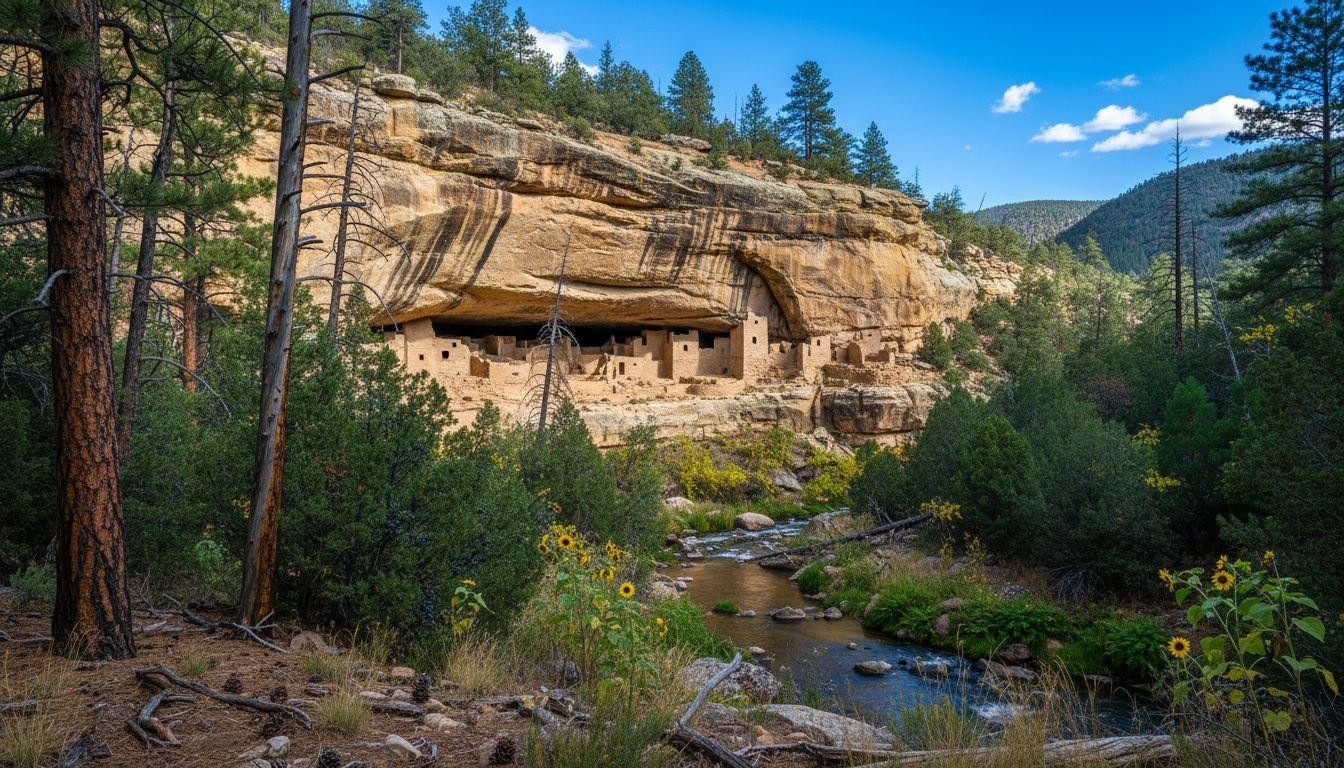
Mesa Verde’s parking lots fill with 500,000 annual visitors waiting two hours for crowded cliff dwelling tours that cost $30 per vehicle. Meanwhile, 44 miles north of Silver City, New Mexico, the Gila Cliff Dwellings preserve 42 Mogollon rooms in five natural alcoves with original wooden beams from the 1280s. No entry fees, no timed tickets, no crowds disrupting the forest silence where morning light filters through pine and juniper canopy onto golden-brown stone walls.
Why Mesa Verde disappoints serious archaeology lovers
Mesa Verde National Park processes over 500,000 visitors annually through mandatory timed entry systems. Summer peak seasons require advance reservations through recreation.gov for cliff dwelling access. Tour groups of 20-30 people shuffle through Cliff Palace and Balcony House on ranger-led schedules that limit exploration time.
The $30 vehicle entry fee covers seven days, but most visitors need only one afternoon. Lodging in nearby Cortez and Mancos averages $150-250 per night during peak season. The high desert location at 7,000 feet creates exposed, often scorching conditions with minimal shade along rim trails.
Heavy restoration work has reconstructed roofs and walls using modern materials. Original architectural elements blend with contemporary repairs, creating a museum-like atmosphere rather than authentic archaeological discovery.
Meet Gila Cliff Dwellings
The landscape advantage
Dense pine-juniper cloud forest surrounds the monument at 5,700 feet elevation. Cliff Dweller Creek flows beneath the alcoves, creating a lush microclimate that stays 10-15 degrees cooler than Mesa Verde’s exposed plateau. Silver City’s Victorian mining heritage lies just two hours south via winding Highway 15.
The forested canyon setting offers dramatic overlooks unavailable at drier southwestern sites. Visitors hear creek water, wind through pines, and bird calls echoing in stone alcoves instead of highway noise and tour group chatter.
The crowd reality
Free entry eliminates the financial barrier that still allows overcrowding at paid parks. Estimated annual visitors total under 50,000, creating natural solitude impossible at major destinations. The remote two-hour drive from Silver City requires no advance planning or timed reservations.
Self-guided exploration allows unlimited time in each room. Visitors climb wooden ladders into alcoves, examine pottery fragments, and photograph pictographs without ranger supervision or group pressure to keep moving.
The authentic Mogollon experience
What you’ll see
Original wooden beams cut between 1276-1287 remain intact after 700 years, verified through tree-ring dating. The Tularosa Mogollon people constructed rooms using local stone and minimal mortar, creating structures that appear to grow from the cliff face naturally.
Five alcoves contain different room configurations: storage areas, living spaces, and ceremonial chambers. Unlike heavily trafficked sites, pottery fragments and pictographs remain visible throughout the monument. The nearby Trail to the Past adds pictograph panels accessible via a half-mile walk.
The cultural depth
Mogollon culture differs significantly from Mesa Verde’s Ancestral Puebloan traditions. The Tularosa Mogollon specialized in black-on-white pottery and built exclusively in natural cave formations rather than open canyon walls. Their occupation from 1260s-1280s represents a brief but intensive period before migration south.
Modern Acoma, Hopi, and Zuni peoples trace ancestry to these builders. The monument sits within Gila National Forest at the edge of America’s first designated wilderness area, preserving the nomadic cave-dwelling tradition that predates permanent settlements.
Practical reality check
Highway 15 winds through mountain terrain for two hours from Silver City, unsuitable for vehicles over 20 feet. Cell service vanishes immediately after leaving town, requiring paper maps and self-reliance. Winter conditions may create ice on roads and trails, though the monument stays open year-round.
The one-mile loop trail gains 180 feet through stone steps and wooden bridges. Moderate fitness handles the 616 stairs easily. Pack-in, pack-out policies maintain wilderness standards. Remote locations like this require preparation but reward visitors with authentic solitude.
Silver City accommodations range from $80-120 per night compared to Mesa Verde area lodging at $150-250. Free monument access versus Mesa Verde’s $30 entry fee saves families significant money while providing superior archaeological authenticity.
Your questions about Gila Cliff Dwellings answered
How does road access compare to other cliff dwelling sites?
The two-hour drive via winding Highway 15 creates natural crowd control impossible at paved-road destinations. No public transportation serves the area, requiring personal vehicles but eliminating tour bus traffic. Road conditions stay passable year-round except during severe winter weather when ice may temporarily close access.
What makes Mogollon culture unique from other Southwest peoples?
Tularosa Mogollon people built exclusively in natural cave alcoves rather than constructing freestanding cliff structures. Their black-on-white pottery traditions differed from Mesa Verde’s geometric patterns. The brief 20-year occupation period from 1260s-1280s represents intensive settlement before southward migration, leaving remarkably preserved archaeological evidence.
How does preservation compare to Mesa Verde National Park?
Original wooden beams from 1280s remain intact at Gila while Mesa Verde required extensive roof reconstruction. Minimal restoration maintains authentic textures and construction techniques. Self-guided access allows close examination impossible under ranger supervision at major parks. Free entry eliminates commercial pressure that can compromise archaeological integrity.
Pine resin scents drift through alcoves where 700-year-old beams frame doorways into rooms where Mogollon families once gathered. Creek water murmurs below as morning light touches stone walls unchanged since the 13th century.