Lowell’s mill museums draw 300,000 visitors annually to static exhibits behind velvet ropes. Thirty minutes away, Maynard transforms its 1847 Assabet Mill into living workspace where artisans forge jewelry and tech startups code in Victorian brick halls. No admission fees, no crowds, no museum barriers.
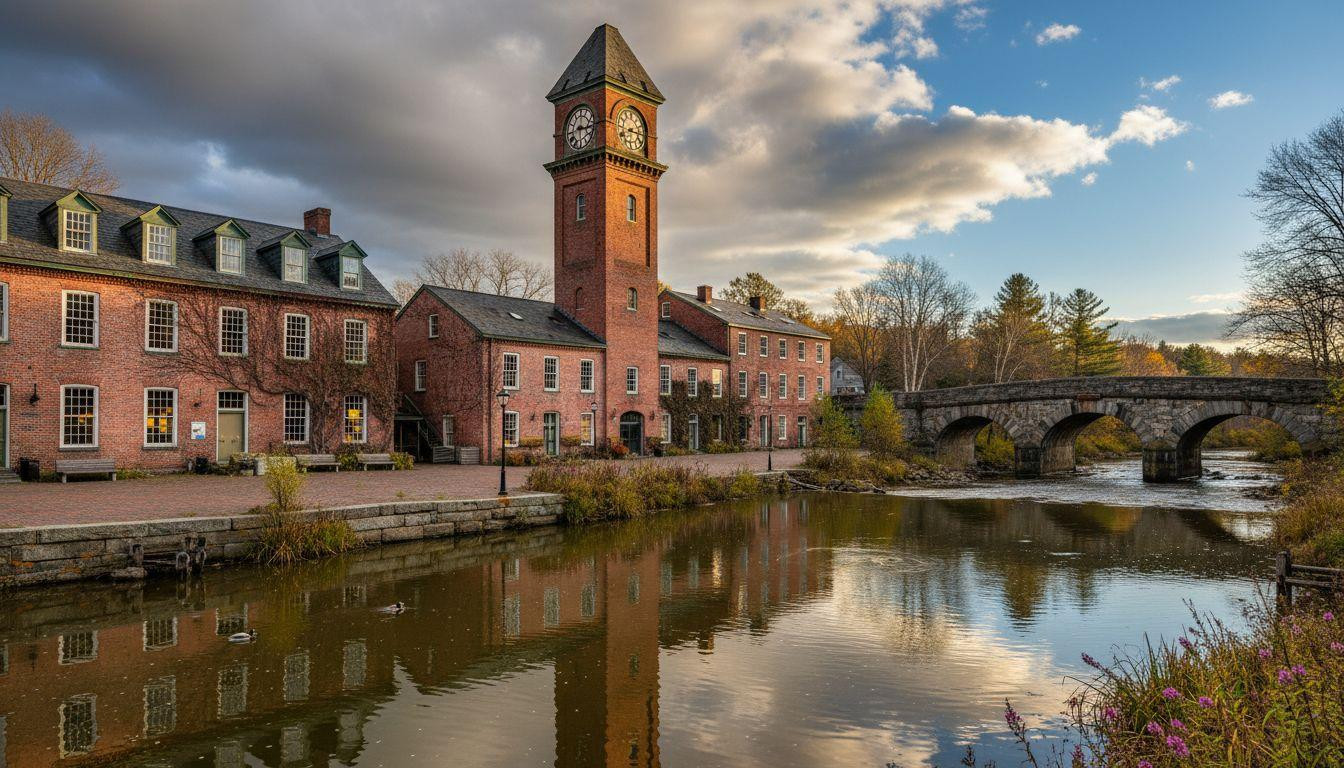
The mill pond reflects warm brick facades at dawn. Clock tower chimes echo across empty streets. This is mill town authenticity without the tourist circus.
Why Lowell’s mill museums feel like theme parks
Boott Cotton Mills Museum charges $15 per adult plus $20 downtown parking. Summer crowds snake through roped-off machinery displays. Audio guides recite scripted mill worker stories while visitors shuffle past glass barriers.
The National Park Service reports 683% visitation spikes during summer folk festivals. Tour buses idle outside gift shops selling mass-produced “heritage” items. Real mill work happened here once, but today feels manufactured for tourists.
Restaurant meals average $25-30 near the museum complex. Concord’s Revolutionary War sites offer similar crowded heritage tourism 20 minutes east.
Meet Maynard’s working mill renaissance
Victorian architecture meets modern creativity
The 1892 Clock Tower still operates with hand-wound weights weekly. America’s oldest functional mechanism chimes every quarter hour above Mill & Main complex. Red brick Victorian mills house ArtSpace studios where potters shape clay and jewelers set stones.
Mill pond waters mirror century-old facades. The Assabet River flows beneath stone bridge arches where wool once powered looms. Winter frost outlines window frames in original mill buildings.
Tech incubators in textile history
Digital Equipment Corporation transformed these mills into “Minicomputer Capital of the World” from 1957-1990s. Today’s entrepreneurs code apps in the same spaces where DEC revolutionized computing. Tech startups occupy floors where American Woolen Company once employed thousands.
The mill-to-tech evolution continues organically. No corporate sponsors or staged historical reenactments. Just working people in working spaces with working history.
The mill experience tourists actually want
Open studios versus museum displays
ArtSpace galleries welcome visitors into active studios. Watch glassblowers shape molten art or metalworkers forge copper sculptures. 6 Bridges Gallery showcases local fiber arts and paintings created on-site. No ropes, no “Do Not Touch” signs.
Amory’s Tomb Brewing operates in mill building basements. Craft beer flows where machinery once hummed. Brewery tours include mill architecture stories from staff who work there daily. Boston’s Freedom Trail lies 30 minutes east via I-495.
Real costs versus tourist prices
Free downtown exploration beats $15 museum admission. ArtSpace exhibits cost $5-10 when special shows run. Amory’s Tomb pints cost $8 versus $12 tourist brewery prices in Lowell. Local farm-to-table meals average $18-22.
Hotel rates near Maynard run $150-250 nightly in winter. Lowell downtown hotels charge similar rates but add parking fees and tourist surcharges. Jerome’s artist studios in Arizona offer comparable artisan authenticity.
Planning your authentic mill town day
Logan Airport sits 30 minutes away via Route 2 west. MBTA Commuter Rail connects South Acton station to Boston in 40 minutes for $8-12. Maynard’s 5.2 square miles stay walkable once you arrive.
WinterFest takes place January 31, 2026 with ice sculptures and live music. The 3.5-mile Assabet River Rail Trail connects downtown to the 2,230-acre National Wildlife Refuge. Discovery Museums in nearby Acton welcome families year-round.
Winter crowds stay minimal compared to summer tourist seasons. January temperatures average 24°F highs and 13°F lows with 10-15 inches monthly snowfall. Bethel’s Sunday River transformation mirrors Maynard’s mill-to-destination evolution.
Your questions about Maynard answered
How much does a Maynard mill town visit cost?
Free activities include downtown walking, rail trail hiking, and mill architecture viewing. ArtSpace exhibits charge $5-10 for special shows. Brewery pints cost $8, local meals $18-25. Winter accommodation averages $175 per night at nearby properties.
What makes Maynard different from typical mill museums?
Working artisans create in original mill spaces versus static museum displays. Tech companies operate where textile machinery once ran. Visitors interact with creators instead of reading placards. The mill legacy lives through current work rather than historical recreation.
How does Maynard compare to Lowell for mill tourism?
Maynard hosts under 100,000 annual visitors versus Lowell’s 300,000-plus crowds. No admission fees versus $15 Boott Mills Museum tickets. Active workshops versus behind-barriers exhibits. Free downtown parking versus $20 Lowell garage rates. Authentic mill conversion versus tourist-focused presentations.
Evening light catches mill windows as artisan studios glow from within. Clock tower shadows stretch across brick courtyards where wool workers once gathered. The mills still hum with human creativity, just in different forms.