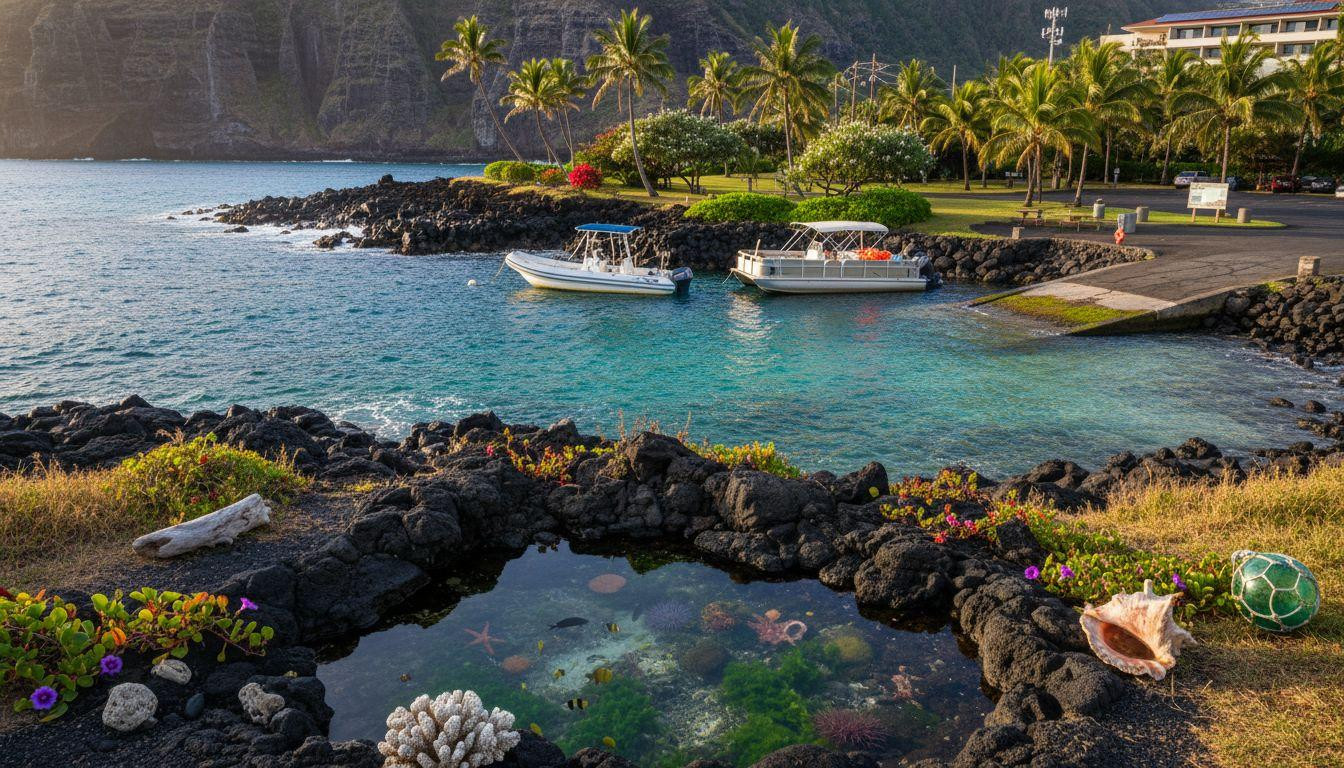
North Kona manta ray tours run 45 minutes by boat through open ocean. Motion sickness hits halfway. You pay $150 for the privilege. Keauhou Bay sits 8 miles south where the same mantas feed 3 minutes offshore in sheltered blue water. Tours cost $99. The boat barely leaves the harbor before you’re floating above feeding rays doing barrel rolls under LED lights.
This isn’t a hidden spot. It’s the original manta site that launched Hawaii’s night snorkel industry in 2000. Locals call it Manta Village. The 96% sighting rate beats every other location in the state. But tourists keep booking the crowded northern operators because that’s where the marketing budget goes.
Why north Kona manta tours miss the point
Kailua Bay operators load 40 to 65 people onto catamarans for rides that take 20 to 40 minutes each way. The boats pitch in open swells. Half the passengers turn green before reaching the site. You pay $100 to $170 depending on the operator and season.
The manta sighting rate hovers around 80 to 90% at northern sites. Weather cancellations run higher because exposed ocean conditions force boats to stay docked. When you do get out, you’re sharing the water with multiple tour groups at once. The experience works. It just works harder than it needs to.
Keauhou Bay keeps the original manta magic
The bay sits in a natural shelter where volcanic cliffs block wind and swells. Water stays calm even when northern sites close for weather. Keauhou Harbor serves as the departure point. Most boats reach the feeding site in 3 to 10 minutes.
The sheltered cove advantage
Geography creates the difference. The bay curves into protected water where families and non-swimmers handle conditions easily. No white-knuckle boat rides. No seasickness drama. You spend energy watching mantas instead of fighting nausea.
Water temperature holds at 77°F in March 2026. Wetsuits come included with most tours but you won’t need them for warmth. Operators provide them for buoyancy and minor abrasion protection from the floating platform.
The 96% sighting success story
Keauhou earned the Manta Village nickname because resident rays feed here nightly when plankton blooms. The site recorded a 96% sighting rate in 2013 research. No other Hawaii location matches that consistency. Operators guarantee free re-rides if you see zero mantas. They use that policy less than 1% of the time.
The rays measure 5 to 18 feet across. Most average 8 to 12 feet. They perform somersault feeding patterns where they flip upside down to scoop plankton attracted by boat lights. You float on the surface watching white underbellies spiral 5 feet below your mask.
The night snorkel experience at Keauhou
Tours depart around sunset between 6:30 and 7pm in March. Boats carry 20 to 27 guests maximum on raft-style vessels. Larger catamarans max out at 40. Either way you’re looking at half the crowd size of northern mega-boats.
What happens on the water
Crew fits you with wetsuit and snorkel gear at the harbor. The short boat ride gives you time to adjust your mask before arrival. At the site, guides position a floating platform with LED lights underneath. The lights draw plankton. Plankton draws mantas.
You hold the platform and float face-down in 75°F water. Mantas glide underneath doing feeding loops. Sessions run 45 to 75 minutes depending on the operator. Sea Quest charges $146 for 75 minutes. Hawaii Island and Ocean Tours runs $99 for similar duration. Sea Paradise offers the catamaran experience at $130 with snacks included.
Why calm matters for families
Kids age 7 and up handle Keauhou conditions without issues. The protected bay eliminates the anxiety of rough water. Non-swimmers use flotation devices and stay attached to the platform. Guides position everyone for optimal viewing without fighting currents or swells.
Compare that to northern beaches where conditions change hourly. Keauhou’s shelter creates consistency. You book with confidence knowing weather rarely cancels tours here.
The numbers that matter
Drive time from Kona International Airport to Keauhou Harbor runs 30 to 45 minutes south on Highway 11. That’s 10 to 15 minutes longer than reaching northern operators. The tradeoff buys you shorter boat time and calmer seas. Parking at the harbor costs nothing. Walk 5 minutes to the boat ramp for check-in.
March 2026 sits in shoulder season before spring break crowds arrive. Weekday tours run lighter than summer peak. Water visibility stays good despite occasional winter swells that affect northern sites more. The bay’s protection means you’re snorkeling when others are weathered out.
Tour costs break down clearly. Budget $99 to $146 per adult depending on operator and boat type. Wetsuits come included. No hidden fees for equipment. Some operators offer photo packages but most people bring waterproof phone cases. The experience itself matters more than documentation.
For context on Hawaii’s other overlooked coastal spots, Keauhou represents the pattern of southern Big Island locations that deliver without the hype tax. The island’s geography concentrates tourism in specific zones. Keauhou sits just outside that zone.
Your questions about Keauhou Bay manta snorkeling answered
When should I book for March 2026?
Book 2 to 4 weeks ahead for March weekday tours. Shoulder season means availability runs higher than summer but popular sunset departure times fill first. Operators include Sea Quest, Sea Paradise, and Hawaii Island and Ocean Tours. All offer similar experiences with slight variations in boat size and duration.
What if I’m not a strong swimmer?
Every operator provides flotation devices and wetsuits that add buoyancy. You hold onto a stable platform the entire time. Guides stay in the water with you. The 3-minute boat ride and calm conditions make this the easiest manta snorkel option in Hawaii. Non-swimmers handle it regularly.
How does this compare to other Hawaii manta sites?
Keauhou offers the shortest boat rides (3-10 minutes vs 20-40+ minutes elsewhere), highest documented sighting rate (96%), and most sheltered conditions. North Kona sites cost $100 to $170 with longer exposure to rough seas. Keauhou runs $99 to $146 with guaranteed calm. The mantas are the same resident population feeding at different locations along the coast.
The boat returns to harbor around 8 to 9pm. The short ride back means you’re not exhausted from fighting seasickness. Most people head to nearby restaurants in Keauhou or drive 20 minutes north to Kailua-Kona. The evening stays warm. Salt dries on your skin. You smell plumeria from resort gardens mixing with ocean air. That’s the part that sticks after the manta somersaults fade from immediate memory.