“`html
The Great Barrier Reef draws 2.5 million visitors annually to crowded dive sites where liveaboards cost $2,000-$4,000 for seven days. Palau’s Rock Islands Southern Lagoon offers 385 coral species across 445 uninhabited limestone islands for $800-$1,500 on three-day trips from Koror. The difference shows in the water: 40% live coral cover here versus bleached sections across Australia’s famous reef. January 2026 marks dry season’s start, when 30-meter visibility and 82°F water meet post-holiday calm.
Why Great Barrier Reef disappoints in 2026
Agincourt Reef sees dozens of day-trip boats by 10am. Norman Reef’s mooring buoys stay full through lunch. The scale that made the Great Barrier Reef famous now works against it.
Bleaching events hit in 2016, 2017, 2020, and 2022. Sections recovered, others didn’t. Divers arrive hoping for pristine coral gardens and find boat traffic instead.
Cairns serves as staging city, adding hotel nights and transfers before you reach water. The wilderness feeling dissolves in logistics. Seven-day liveaboards run $2,000-$4,000 per person, not including flights from the US that cost $800-$1,500.
Meet Rock Islands Southern Lagoon
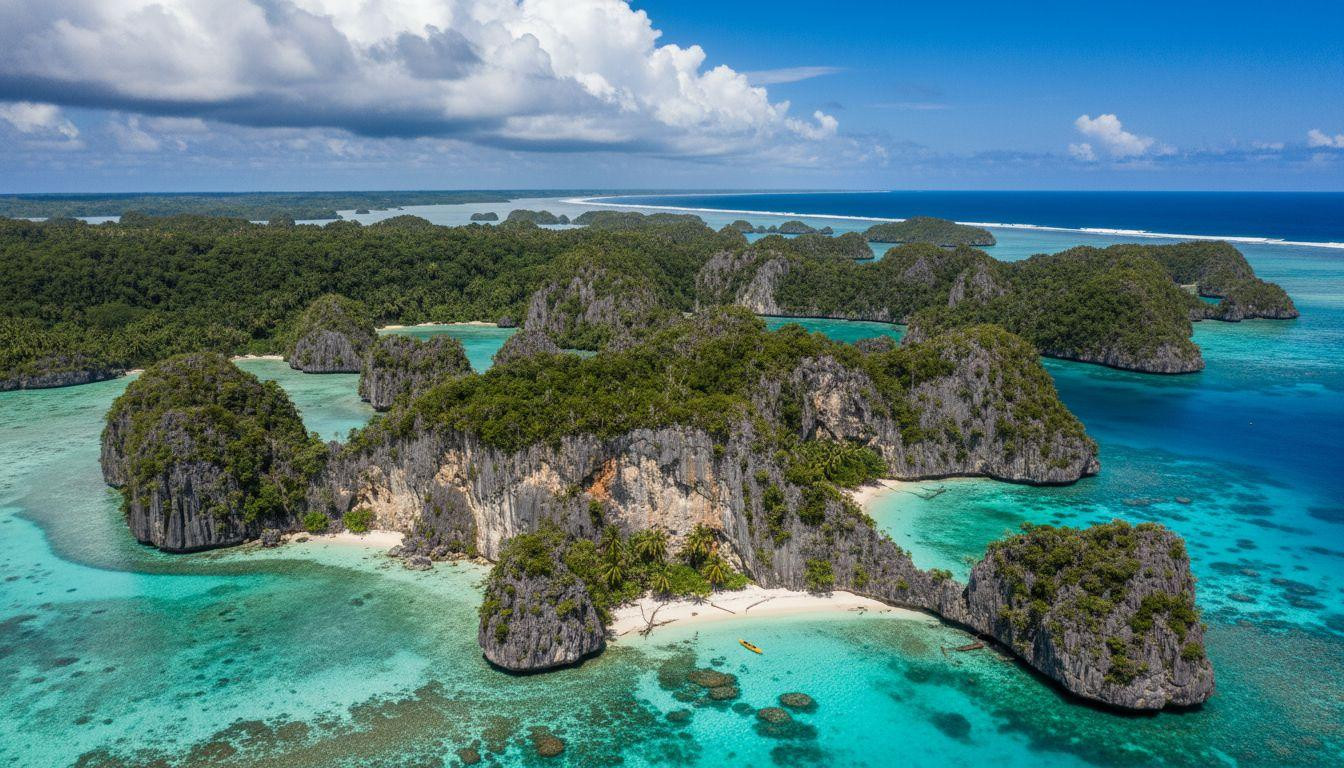
UNESCO designated 100,200 hectares here in 2012. The site protects 445 limestone islands rising from turquoise lagoons 30 minutes by boat from Koror. None have permanent residents.
Mushroom-shaped karst formations create the signature silhouette. Jungle covers the tops. White sand beaches hide in coves accessible only by kayak. The barrier reef keeps inner waters calm year-round.
The numbers that matter
Scientists documented 385 hard coral species during the Global Reef Expedition. That matches the entire Caribbean’s collection in one concentrated Pacific site. The team measured 40% live coral cover, higher than Fiji’s 30% and sections of the Great Barrier Reef.
The lagoon supports 746 fish species and 13 shark types. Giant clams grow in shallow water at Clam City. Palau became the world’s first shark sanctuary, protecting all species from fishing.
Fifty-two marine lakes dot the islands. Jellyfish Lake holds the famous population: millions of golden jellyfish that lost their stingers over millennia in predator-free isolation. You swim through pulsing clouds in silence.
Cost reality for January 2026
Three-day trips from Koror run $800-$1,500 total. Rock Islands tours cost $200 for five to eight hours including Jellyfish Lake access. Koror hotels range from $100-$150 per night for guesthouses to $200-$400 for resorts.
Diving costs $150 per dive versus the Great Barrier Reef’s liveaboard requirement. Kayak rentals run $100 for half-day paddles through hidden lagoons. The $100 Pristine Paradise Environmental Fee covers a 10-day visa.
Flights from major US cities take 20-24 hours via Guam or Manila. Book three to six months ahead for January shoulder-season rates when post-holiday crowds thin and dry season begins.
The underwater experience
Blue Corner ranks among the world’s top drift dives. Currents sweep you along walls dropping 3,000 feet. Napoleon wrasse patrol the reef edge. Bumphead parrotfish move in schools. Barracuda circle in silver tornados.
German Channel hosts a manta cleaning station. The rays arrive predictably during plankton blooms. You hover at 50 feet watching them bank and turn through the current.
What you’ll actually see
Nikko Bay’s sharks circle in water shallow enough to stand. Reef sharks patrol without fear. The population stays healthy because Palau banned shark fishing decades ago.
Clam City lives up to its name. Giant clams sit in 15 feet of water, their mantles showing electric blues and greens. Seven species grow here. Some measure three feet across.
Snorkelers find Japanese Zero fighters from World War II in diveable depths. The wrecks sit where they crashed, now covered in soft corals. For a deeper look at Pacific island marine life, this Hawaii cove hid Harrison Ford’s plane crash and stayed empty for 27 years.
The silence factor
Boats from Koror take 30-45 minutes to reach dive sites. Daily permits limit visitor numbers. Most marine lakes require special access that tour operators arrange in advance.
No cruise ships anchor here. No day-tripper crowds from resort beaches. The maze of islands absorbs the few boats that do arrive. You kayak for an hour and see nobody.
Mangrove channels wind between islands in blue-green light. Kingfishers call from branches. The only sound is your paddle dipping water. Similar isolation defines 6 white sand beaches where coral reefs start 20 yards from shore for $5.
What Great Barrier Reef can’t match
Jellyfish Lake exists nowhere else at this scale. You enter through a short trail from the boat dock. The lake sits in a limestone basin surrounded by jungle. Descend the wooden steps and swim into gold.
Seven million jellyfish pulse through the water. They follow the sun across the lake each day. Their bells brush your skin like warm rain. No stingers, no fear, just silent drifting through living clouds.
Kayak routes reach reefs without boat dependency. Paddle from Koror to outer islands, beach the kayak, and snorkel directly from shore. The mushroom island scenery above water rivals the coral gardens below.
Palauan culture remains authentic because tourism hasn’t dominated the economy yet. The 12,000 residents of Koror go about their lives. Fishermen sell catches at the dock. The general store serves locals, not souvenir hunters. For comparison with other budget-friendly Pacific destinations, Better than Galápagos where cruises cost $5,000 and Espíritu Santo keeps sea lions for $150 offers similar value.
Your questions about Rock Islands Southern Lagoon answered
When should I visit for the best conditions?
December through April marks dry season. January 2026 offers post-holiday calm with optimal visibility reaching 30 meters. Water temperature holds steady at 82-86°F year-round. Wet season runs May through November with afternoon rains and rougher seas, though the islands stay lush and green.
How does coral health compare to other famous reefs?
The Global Reef Expedition measured 40% live coral cover here, exceeding Fiji’s 30% and matching healthy Great Barrier Reef sections. Scientists documented 385 hard coral species in one concentrated area. The reef maintained stable species composition from 2002-2016 while outer reefs declined after 2010 bleaching events. Palau’s conservation laws prohibit destructive fishing and limit development.
Why visit Palau instead of more accessible dive destinations?
The 445 uninhabited islands create genuine wilderness. No resorts line the beaches. No permanent structures interrupt the landscape. The combination of healthy reefs, unique marine lakes, and kayak accessibility delivers experiences unavailable at crowded alternatives. Three-day costs run $800-$1,500 versus $2,000-$4,000 for Great Barrier Reef liveaboards. If you’re considering other Southeast Asian options, 18 turquoise coves where scooter trails reach manta rays for $55 from Bali provides mainland alternatives.
Morning light turns the lagoons gold around 7am. Limestone islands cast long shadows across still water. A kingfisher calls from the mangroves. The boat engine cuts. You slip into silence where seven million jellyfish wait.
“`