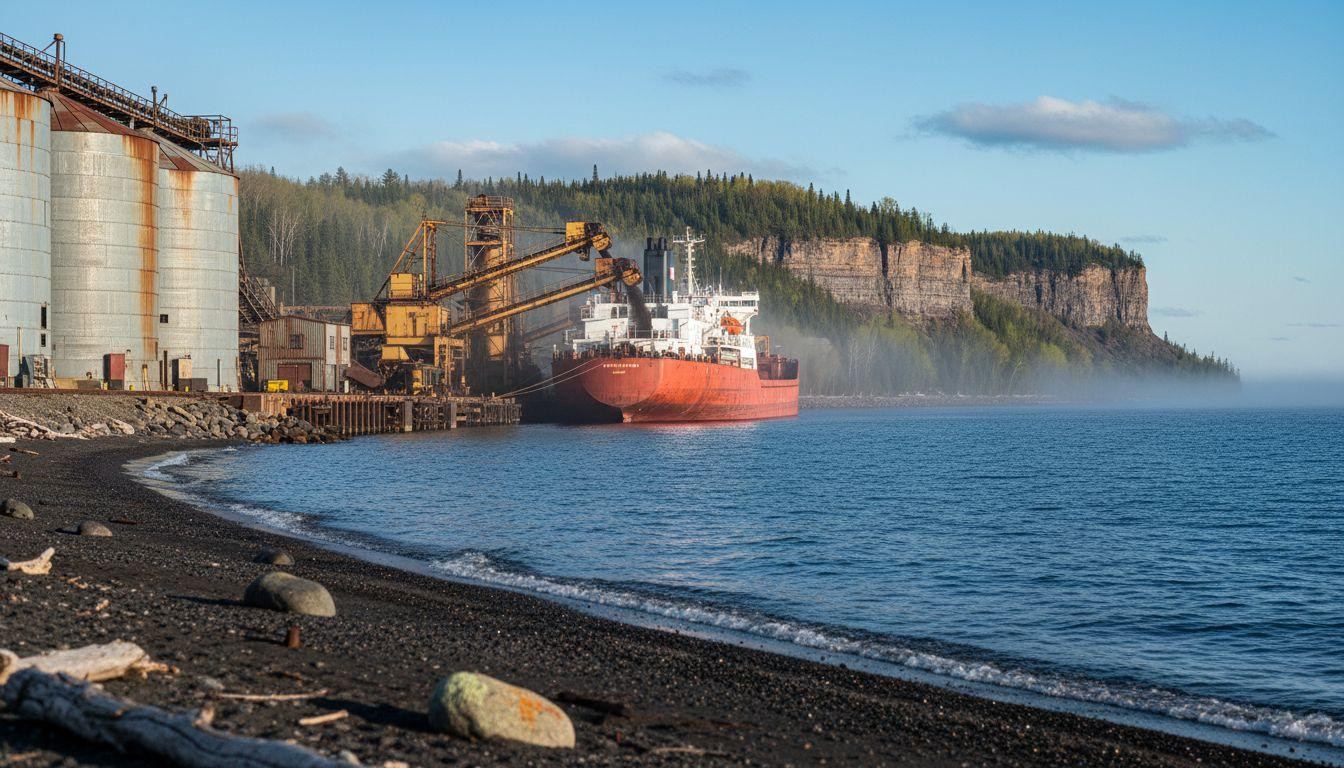
Grand Marais turned into boutiques. Silver Bay kept the ore ships. That difference defines Minnesota’s North Shore in 2026. One town chased tourism dollars and lost its fishing docks. The other stayed a working port where 1,800 residents load taconite pellets onto freighters while visitors watch from the marina. The industrial hum you hear at 7am is not background noise. It is the point.
Silver Bay sits 55 miles north of Duluth on Highway 61. The drive takes an hour. Grand Marais sits 110 miles out, over two hours in traffic. Both face Lake Superior. Only one still works for a living.
Why Grand Marais lost what made it honest
Grand Marais built twin harbors in 1884 for herring exports and shipping. Commercial fishing defined the town through the 1900s. Then tourism arrived. The Grand Marais Art Colony opened in 1947. The North House Folk School followed. Galleries replaced net sheds. Boutique hotels replaced fishermen’s lodges.
By 2026 the working waterfront exists only in festival nostalgia. The Fisherman’s Picnic still fries herring each August, but no commercial boats unload catches anymore. Summer crowds overwhelm the harbor. Art walks and plein air festivals pack the streets. Hotel rates spike to $220 per night in peak season. A sandwich at the harbor costs $18.
The town chose curation over commerce. That choice erased what made it real.
Meet Silver Bay where taconite ships still load at dawn
Northshore Mining’s taconite plant sits lakeside in Silver Bay. The facility processes low-grade iron ore from the Peter Mitchell Mine 47 miles inland. Ore arrives by rail. The plant crushes it, concentrates it, pelletizes it. Freighters dock to load the finished product for worldwide shipping.
Operations restarted in April 2025 after a brief shutdown tied to steel demand. The plant runs intermittently as of March 2026. When it operates, you hear the crushers from downtown. You see ore trains rumble past hiking trails. You watch massive ships dwarf the loading docks from Bayside Park.
The working waterfront
Ship watching is a recognized activity here. Visitors gather at the marina to observe ore tankers being loaded. The scale creates drama without pretense. Industrial sounds integrate as town character, not pollution. Morning fog wraps the waterfront between 5am and 10am during shoulder seasons, blending ship horns with wilderness quiet.
Mayor Wade LeBlanc, a lifelong resident and small business owner, noted revenue losses during the 2024 closure but expressed optimism for the restart. Local contractor Steve VanHouse said simply, “They’ll be back and running again.” The town protects the plant because it employs residents, not tourists.
Black sand beach
Silver Bay has Minnesota’s only black sand beach. The material comes from ancient volcanic flows, creating dark pebbled shoreline against Lake Superior’s deep blue water. The beach sits near the marina, accessible via a short walk. No fees. No crowds. Just geological rarity you can touch.
One visitor described it as “like being on the beach without the hot sun.” The comparison holds. Late March water temperature sits at 34°F. Air temperature ranges from 25-35°F during the day. You come for the visual, not the swimming.
What you actually do here
Silver Bay sits between Split Rock Lighthouse State Park (15 miles west) and Tettegouche State Park (8 miles north). The Superior Hiking Trail runs through town with trailheads at zero distance from downtown. Bean and Bear Lakes access sits 2 miles north. Trail usage remains low compared to popular hiking destinations farther from Duluth.
No permits required. No reservation systems. You park and walk. The trails stay accessible through March with traction spikes as snow melts variably due to lake-effect patterns.
Main activities
Hiking dominates. The Gitchi Gami Bike Trail runs through town for cyclists. Cross-country skiing operates in winter. The 9-hole golf course opens seasonally. Most activities cost nothing. The few paid options (zipline at North Shore Adventure Park, guided tours) cater to summer visitors, not March shoulder season travelers.
Restaurant prices stay below tourist town rates. Local spots near the plant serve workers first, visitors second. No $18 sandwiches. No reservation-required dining. Walk-ins work year-round.
Local rhythm not tourist schedule
Fishing boats leave early. Ore trains rumble at intervals tied to production, not visitor convenience. Diners fill after shifts end. The town operates on working schedules. Tourism adapts to that rhythm, not the reverse. March brings the slowest pace. Core services stay open for residents. Visitors experience what locals experience, not a curated version.
This creates authenticity by default. Silver Bay did not choose to market industrial heritage. It simply never hid it.
Practical reality check
March 2026 hotel rates in Silver Bay run 30-50% below summer peaks, estimated at $70-100 per night for basic properties. Grand Marais charges $180-250 for comparable rooms in peak season. The difference reflects demand. One town depends on tourism. The other tolerates it.
Parking in Silver Bay stays free and abundant year-round. Grand Marais restricts parking near the harbor in summer, with paid lots the norm. Gas prices hover around $3.50 per gallon regionally. The drive from Duluth to Silver Bay costs roughly $8 in fuel. To Grand Marais, $16.
Reservations matter in Grand Marais for popular spots. Silver Bay operates on walk-ins. The town’s 1,800 residents create stable year-round business for local services. Seasonal flux stays minimal compared to tourist-dependent communities that swing wildly between peak and off-season.
Best months for lowest prices: March through May. Best weather: June through August, with highs reaching 65-75°F and Lake Superior water warming to 55-60°F by late summer. Fall brings peak pricing as leaf tourism hits the North Shore.
Your questions about Silver Bay answered
When do ore ships actually load and can you watch?
Loading happens intermittently tied to production schedules, typically daytime hours when the plant operates. Bayside Park and the marina offer clear views. No schedule exists for public reference. Locals check by sound and sight. If the plant runs, ships arrive. Operations restarted April 2025 and continue as of March 2026, though frequency varies with steel demand.
Why did Silver Bay keep its industrial character while Grand Marais went boutique?
Economics. Northshore Mining remains Silver Bay’s largest water and sewer customer and a major employer. The town protects the plant because it sustains the community, not because it attracts tourists. Grand Marais lost commercial fishing by the late 20th century and filled the economic gap with arts tourism. One town had industry to preserve. The other needed replacement revenue.
How does Silver Bay compare to other North Shore towns for budget travelers?
Silver Bay offers the lowest baseline costs on the North Shore due to its non-tourist focus. Fewer boutique properties mean cheaper lodging. Working-class restaurants mean lower meal prices. Free parking and trail access eliminate hidden costs common in tourist-heavy waterfront towns. Proximity to state parks matches or exceeds pricier alternatives. The trade-off: fewer dining options and no art galleries.
The taconite plant sits visible from Black Beach. Ore trains pass near hiking trails. Industrial sounds mix with Lake Superior waves. This is not a flaw. It is what Silver Bay chose to keep when other towns chose to erase their working past. The ships still load. The town still works. That honesty costs less and means more.