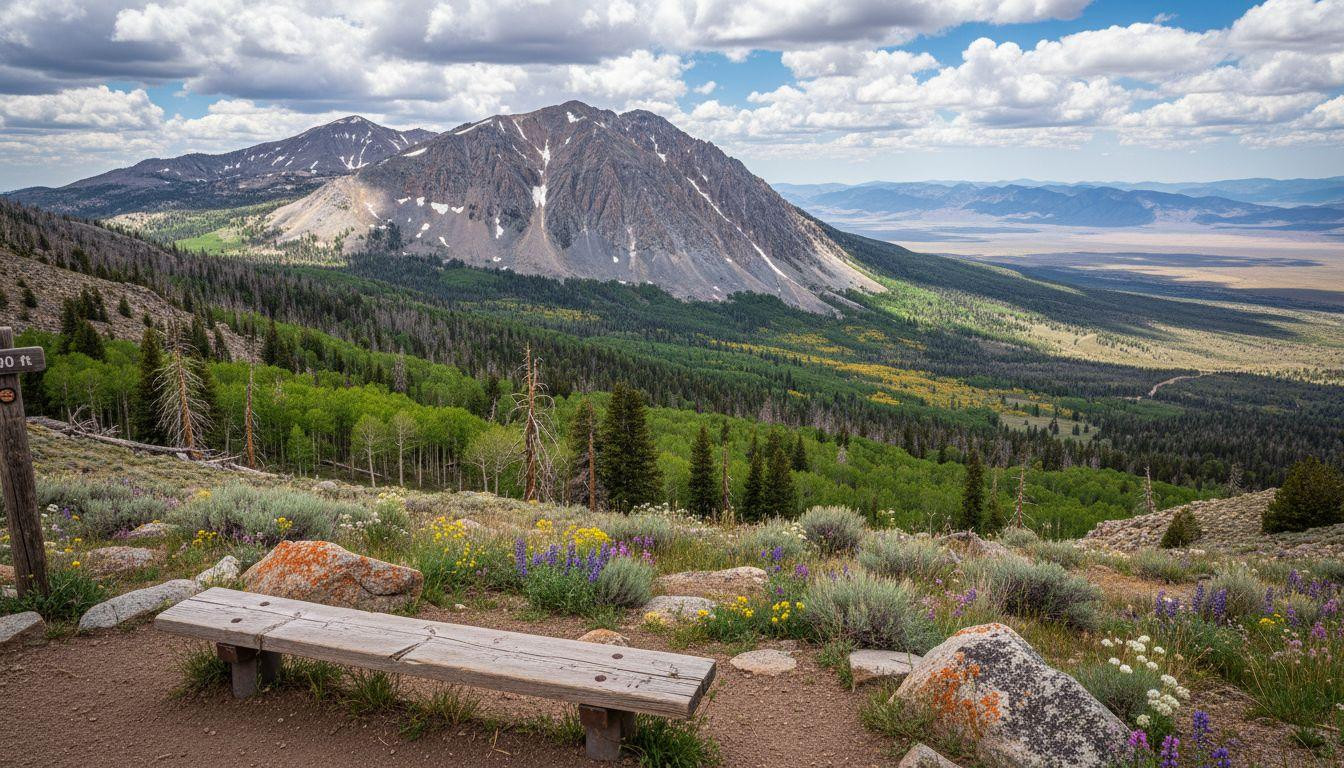
Colorado’s Front Range overlooks require permit lotteries, $200 motels, and trailhead parking full by 6:45am. South Snake Range Overlook sits at 8,200 feet in Great Basin National Park delivering identical snow-capped alpine views to fewer than 20 visitors daily instead of 1,600. Same dramatic granite ridges. Same golden valleys stretching to white horizons. None of the chaos that defines Rocky Mountain tourism in 2026.
Why Colorado overlooks cost more and deliver less
Grays Peak and Bierstadt overlooks start at 11,200 feet. That altitude hits lowlanders hard. Fifty percent report headaches or nausea within two hours. Parking lots hold 100 vehicles but fill before dawn on summer weekends. Permit systems via recreation.gov show 50-70 percent success rates for peak dates. Miss your window and you drive home empty.
Lodging in Breckenridge or Estes Park runs $200-350 nightly during hiking season. Gas stations along I-70 charge 15 percent above state averages. Trailhead congestion turns what should be wilderness into a queue. Rocky Mountain National Park logged 4.17 million visitors in 2025. That’s 30 times Great Basin’s 142,000 annual count.
The math favors Nevada. Baker motels cost $80-120. Great Basin charges $35 for seven days. No permits. No lotteries. No 2am alarm to beat crowds.
What South Snake Range Overlook actually gives you
The landscape at 8,200 feet
The overlook sits above Snake Creek drainage where ponderosa pines give way to white fir and aspen. Morning light turns the Great Basin valleys below into layers of gold and shadow. Snow lingers on Wheeler Peak’s 13,063-foot summit through May. Granite ridges frame the view east toward Utah. Sagebrush meadows roll away in every direction with no roads visible.
The trail gains 1,000 feet over four miles. That’s half the elevation gain of comparable Colorado routes. Starting altitude matters. Eight thousand feet lets your body adjust. Twelve thousand feet forces it. A ranger at the trailhead mentioned most visitors from sea level handle the Snake Creek approach without altitude issues. Colorado’s 14ers send 20-50 percent of hikers back down early.
Price and crowd comparison that matters
Baker population hovers around 70. One gas station. Two motels. A cafe serving $15 meals. The drive from Elko airport takes three hours on empty highways. No traffic. No construction zones. No resort towns marking up everything within 50 miles of a trailhead.
Great Basin recorded 144,875 visitors in 2021. That’s 397 people per day spread across 77,100 acres. Rocky Mountain National Park sees 11,400 daily visitors compressed into popular corridors. The difference shows on the trail. Snake Creek paths stay quiet enough to hear wind move through aspens and water rush over creek stones.
For context, Bishop delivers Sierra access for similar savings compared to Mammoth’s resort pricing.
The experience on the ground
What you actually do here
Snake Creek Road leaves Highway 487 as gravel. High-clearance vehicles handle it fine. Sedans scrape but make it. The road closes November through April when snow blocks upper elevations. March 2026 timing depends on winter severity. Call the visitor center before driving out. Cell service drops after Baker.
The trailhead holds maybe 15 vehicles in a dirt pullout. No facilities. No water. Bring three liters per person. The path starts through mixed conifers with creek sounds to your right. After two miles the forest opens. Another mile brings you to a wooden bench facing south. That’s the overlook. Valley floor sits 2,000 feet below. On clear days you see 40 miles.
Primitive camping exists near the trailhead. Free. No reservations. Pit toilet only. Locals recommend arriving before noon to claim a spot on summer weekends. Winter and spring see almost no one.
Food and local products
Baker’s cafe serves burgers and Basque-influenced lamb stew. The Sinclair station stocks basics. For real meals drive 50 miles to Ely where sheepherding history left restaurants serving chorizo and sourdough bread. Snake Valley cheese comes from small farms outside town. The general store sells it when they have it.
Pack food for the trail. No services exist between Baker and the overlook. Water from Snake Creek needs filtering. Springs run cold even in July.
Similar backcountry solitude defines Giant Forest’s winter snowshoe routes when crowds disappear.
Why altitude and timing matter
Starting at 8,200 feet instead of 11,200 feet changes everything. Your lungs work normally. Headaches stay rare. The body adjusts during the hike instead of fighting elevation from the first step. Colorado forces that fight. Great Basin lets you ease into it.
March weather at this elevation runs 45-55 degrees by midday. Snow depth at the overlook averages two to four feet in late March. Trails stay passable with microspikes. Wildflowers start mid-April. By May the snow melts except on north-facing slopes. Summer brings 75-degree days and afternoon thunderstorms. Fall delivers the clearest skies.
The park recorded fewer than 150,000 annual visitors even during pandemic outdoor booms. That’s 0.04 percent of total National Park Service traffic. Rocky Mountain National Park alone captures 1.3 percent. The math explains the quiet. Nobody markets Great Basin. No Instagram influencers flood the feed. The place stays overlooked by design and distance.
For permit-free alternatives, Elizabeth Lake avoids Glacier’s permit chaos with similar alpine rewards.
Your questions about South Snake Range Overlook answered
When does Snake Creek Road open for spring access
The gravel road typically opens late April to early May depending on snowmelt. Winter storms close it November through March. Call Great Basin National Park at 775-234-7331 for current conditions before driving out. High-clearance vehicles handle the road best. Sedans manage in dry conditions but scrape on rough sections. The 10-mile drive from Baker takes 45-60 minutes at careful speeds.
How does altitude affect lowlanders at 8,200 feet
Starting elevation at 8,200 feet causes minimal altitude issues for most visitors. Hydrate with three to four liters daily. Ascend slowly. Symptoms like headache or nausea affect fewer than 10 percent of hikers at this elevation compared to 20-50 percent on Colorado 14ers starting above 11,000 feet. The lower start point gives your body time to adjust during the hike instead of forcing immediate adaptation.
What makes this better than Colorado Front Range overlooks
South Snake Range sees fewer than 20 daily visitors versus 500-2,000 on popular Colorado 14er routes. Baker lodging costs $80-120 compared to $200-350 in Breckenridge or Estes Park. No permit lotteries. No timed entry. No 6am parking lot races. Great Basin’s 142,000 annual visitors spread across 77,100 acres deliver genuine backcountry solitude. Rocky Mountain’s 4.17 million concentrate on crowded corridors. The views match. The experience doesn’t.
Morning fog lifts from the valley around 8am in spring. For maybe 20 minutes the whole basin turns gold before the sun climbs higher and the color fades to white and brown. The bench at the overlook faces that moment. Most mornings nobody else sits there to see it.