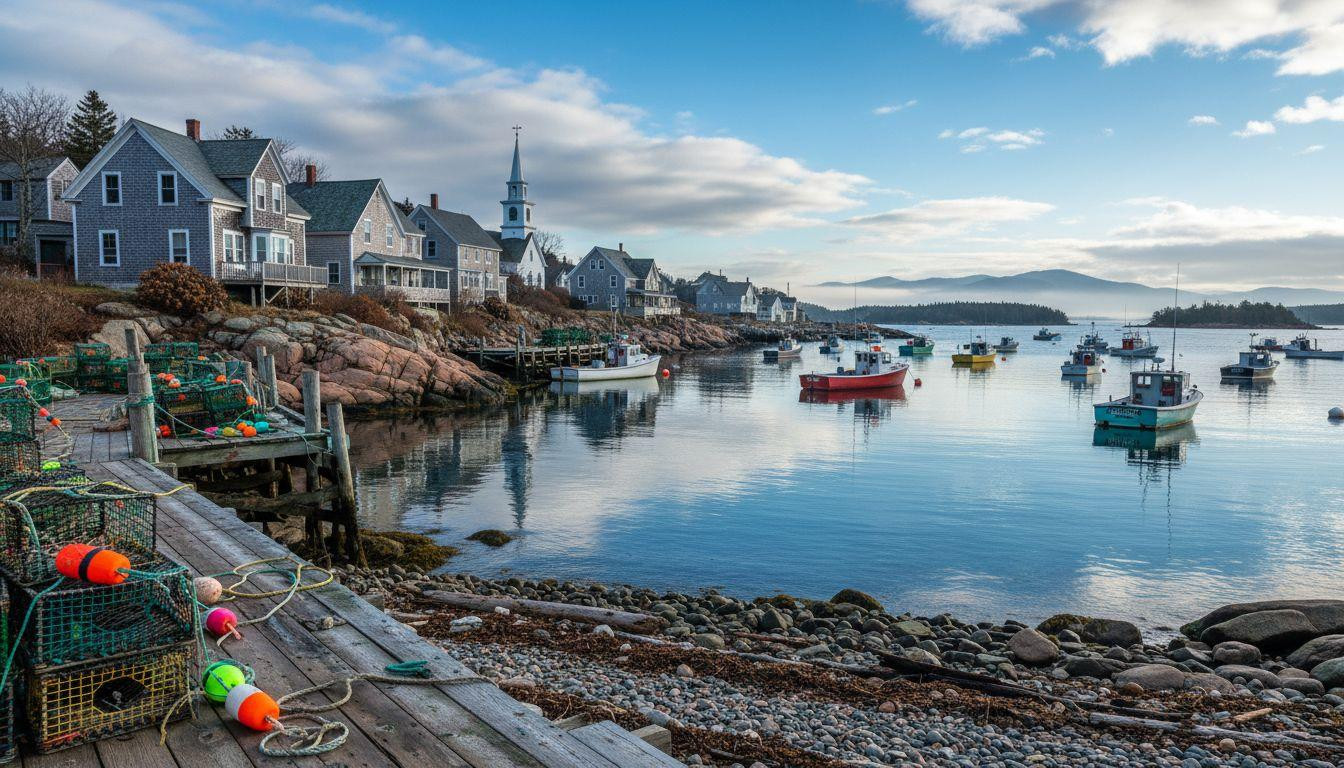
Bar Harbor draws 4 million annual visitors to Acadia National Park, cramming Victorian streets with cruise ship passengers and $400 hotel rates. Fifty miles south, Stonington preserves Maine’s authentic fishing village soul with 300 working lobster boats, weathered Victorian docks, and winter lodging at $150 per night. This December morning reveals why locals guard their secret: bitter Atlantic winds sculpt empty pebble beaches while lobster boats named Scallowag depart at dawn, carrying the timeless rhythm of America’s last genuine coastal town.
Why Bar Harbor lost its Maine soul
Acadia National Park welcomed 3.88 million visitors in 2023, funneling tourist masses through Bar Harbor’s narrow streets. Cruise ships delivered 378,166 passengers in 2024 alone, transforming fishing wharves into gift shop rows.
Summer hotel rates soar to $250-400 per night as occupancy pressures create housing shortages for year-round residents. Only three dentists serve the community while tourism businesses crowd out essential services. The town now limits cruise ships and caps vacation rentals, acknowledging overtourism’s toll on authentic coastal life.
The Victorian dock architecture that survives
Stonington’s 1880s Inn on the Harbor preserves four joined Victorian buildings overlooking working waterfront operations. The 1883 Oceanview House displays original tin work and bay windows facing granite quarry islands. Weathered clapboard structures in grays and whites rise directly from harbor granite, untouched by souvenir shop conversions.
A working waterfront worth protecting
Nearly 12 million pounds of lobster worth $44 million pass through Stonington annually, making it Maine’s top lobster port. Twenty percent of the town’s 1,030 residents hold lobster licenses, maintaining traditions that survived granite quarrying’s boom and cod fishing’s collapse. Local fishermen resist commercialization like neighboring coastal towns surrendered to tourism pressure.
What Stonington delivers better than Bar Harbor
Winter reveals Stonington’s advantage over summer tourist destinations. Empty pebble beaches stretch for solitary walks while bitter winds from rocky islands create Scotland’s Hebrides atmosphere. Tidal pools emerge at low tide, revealing granite formations 300 million years old.
Empty Atlantic beaches in winter silence
December transforms Stonington into a coastal sanctuary where footprints mark virgin snow on salt-crusted beaches. The town dock becomes a social hub for residents, not tour groups. Sunrise illuminates Penobscot Bay islands in pale light while lobster boats emerge from mist like ghosts of Maine’s maritime past.
Authentic community over gift shops
Residents successfully fought Dollar Store development, preserving local character against chain store encroachment. The 1886 Opera House hosts year-round concerts while Bar Harbor businesses close off-season. Nautical craftsmen create bell ropes from linen and hemp, continuing traditions that tourist towns abandoned for mass-produced souvenirs.
Same Bangor access with zero traffic
Both towns sit 1.5 hours from Bangor International Airport via scenic drives. Route 15 to Stonington avoids Route 3’s tourist traffic jams that plague Bar Harbor approaches. Car rentals cost $50-80 daily while flights from major hubs average $200-400 round-trip.
Stonington receives thousands of annual visitors compared to Bar Harbor’s millions, creating 80% fewer crowds for identical coastal Maine experiences. The town dock offers free harbor access while Bar Harbor charges premium prices for waterfront proximity. Local resistance to tourism development maintains authentic fishing village character that disappeared elsewhere along Maine’s coast.
Your questions about Stonington answered
When should I visit Stonington for the best experience?
December through March offers winter solitude with frozen bay walks and empty beaches. Summer brings mild 55-75°F temperatures ideal for kayaking and hiking. Off-season lodging drops to $100-150 per night while summer rates rarely exceed $200, maintaining affordability year-round.
How does Stonington’s food scene compare to Bar Harbor?
Fresh lobster costs $10 per pound directly from boats versus $30 restaurant markup in tourist towns. Aragosta and Fin & Fern offer upscale dining with $30 entrees while dock-side lobster rolls cost $20. Local traditions emphasize salt-crusted seafood and wild blueberries over tourist-oriented menus.
What makes Stonington authentically different from other Maine coastal towns?
Working lobster fleet operations dominate daily life rather than recreational boat tours. Victorian maritime architecture remains functional harbor infrastructure, not museum pieces. Residents successfully resist chain development while maintaining granite quarrying heritage through active Crotch Island operations and immigrant worker monuments.
Dawn breaks over Penobscot Bay as lobster boat engines rumble to life, their weathered hulls cutting through morning mist toward rocky islands. Salt air carries diesel exhaust and seaweed scents while Victorian buildings emerge from winter darkness, preserving Maine’s coastal soul in weathered gray silence.