“`html
The 4WD truck bounces down a dirt road. You’re wedged between strangers clutching cameras. Everyone paid $85 to $225 for this. The guide announces you have 20 minutes inside Antelope Canyon. Twenty minutes to see what a million Instagram posts promised. Then you notice something. The couple ahead brought tripods. The guide says no.
Fifty miles south, White Pocket sits empty. Same orange-red Navajo Sandstone. Same swirling waves carved by wind and time. No trucks. No guides. No fees. You can stay all day.
Why Antelope Canyon costs what it does
Upper Antelope Canyon operates on Navajo Nation land. That means mandatory guided tours. No exceptions. The base tour runs $85 per adult in low season. Peak midday slots in summer hit $225. Add the $15 Navajo Park Fee. Total: $107 to $240 per person.
You book 6 months ahead for decent time slots. The 11:40am tour costs $132 plus $8 fee. That’s when light beams pierce the narrow slot. Those beams last maybe 10 minutes. Photographers pay $150 to $200 for extended access. Even then, tripods aren’t allowed on standard tours. Too many people. Too little space.
The canyon itself runs 100 yards. The truck ride takes 15 minutes each way. You walk on flat sand between walls 100 feet high. It’s beautiful. But you’re in a line of 20 people. The guide hurries you along. Next group waits outside.
What White Pocket delivers instead
The same stone, different rules
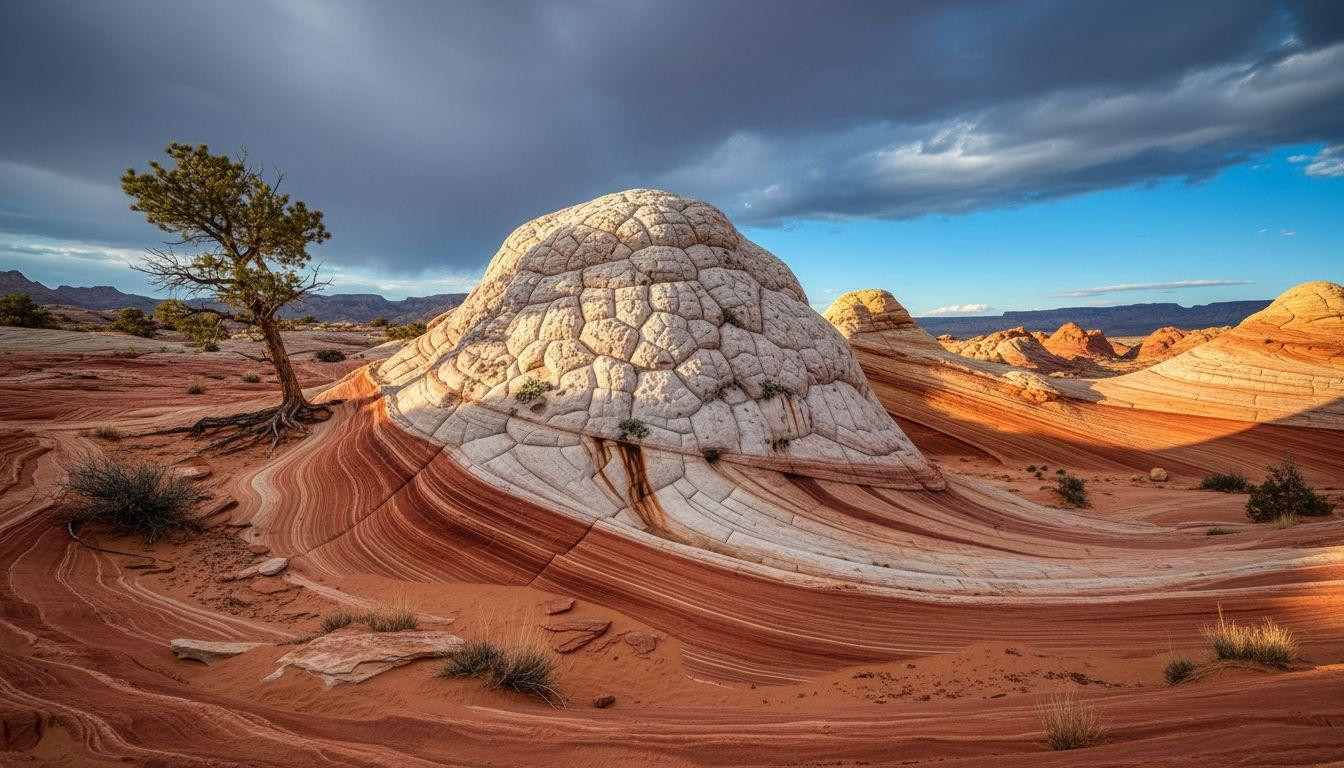
White Pocket formed from identical Navajo Sandstone. Same 190-million-year-old dunes. Same iron oxides creating orange and red bands. Same calcium carbonate cementing ancient sand. The difference: erosion carved open waves instead of narrow slots.
The formations spread across open desert. Brain rocks. Swirling mounds. Undulating ridges. Colors shift from deep crimson to pale cream. Light hits from all angles. Not just narrow shafts at noon. Golden hour lasts 90 minutes here. You photograph what you want. However long you want.
No one rushes you. Most days you see fewer than 50 people. Many days you see none. The silence feels complete. Wind moves sand. That’s the only sound.
Access without gatekeepers
White Pocket requires a high-clearance 4WD vehicle. The drive from Page takes 2 to 3 hours via House Rock Valley Road. BLM Road 1069. No pavement. Deep sand in places. Winter mud closes it sometimes. Check conditions before you go.
You need a free BLM day-use permit. Self-issue at the trailhead or print from recreation.gov. No lottery. No booking window. No fees beyond the permit. Primitive camping allowed with the same permit. Bring everything. No services for 40 miles.
The nearest gas station sits in Jacob Lake or back in Page. Cell service ends 20 miles out. Download offline maps. Gaia GPS works well here. Bring 1 gallon of water per person per day. Sun protection. Extra food. A satellite communicator if you have one.
Planning your visit to Vermilion Cliffs
March through May offers the best conditions. Temperatures run 50°F to 70°F. Roads stay mostly dry. Wildflowers bloom in April. September and October work too. Cooler mornings. Fewer afternoon thunderstorms than summer.
Winter visits require serious preparation. January 28, 2026 means cold. Lows hit 20°F to 30°F. Roads freeze. Snow closes access some weeks. But if you catch a clear window, you get the place to yourself. Just check BLM alerts first. The Kanab Field Office updates road status.
Summer heat reaches 90°F to 110°F. Monsoons arrive July through September. Flash flood risk closes roads fast. Spring planning makes sense. Book your Page accommodation now for April or May. Roadside waterfalls nearby add options if weather turns.
The freedom factor
You arrive at White Pocket before sunrise. No one else here. The formations glow pink as light builds. You set up your tripod. Take 100 shots if you want. Walk barefoot on cool sandstone. Touch the swirls. No guide tells you not to.
By 10am, three other vehicles show up. Everyone spreads out. The area covers several acres. You never feel crowded. Lunch happens wherever you stop. Shade under a rock overhang. The afternoon light shifts. New patterns emerge. You stay until sunset. No one makes you leave.
Compare that to Antelope Canyon’s 20-minute window. The tour groups stacked every 30 minutes. The $200 you paid. Both places show you ancient sandstone. One lets you experience it. The other shows it to you. Similar gorges in Colorado offer the same trade-off.
Your questions about White Pocket vs Antelope Canyon answered
Can I visit White Pocket without 4WD experience
The road requires high-clearance 4WD. Eight inches minimum. Deep sand and rocky sections demand attention. If you’ve never driven off-road, hire a guide service in Page. They run $200 to $300 per person for day trips. Still cheaper than Antelope’s photography tours. And you get 4 to 6 hours on site instead of 20 minutes.
Why does Navajo Nation require guides at Antelope Canyon
The canyon sits on tribal land. Sacred to the Diné people. The $15 park fee supports Navajo Nation Parks. Guides protect the formations and share cultural context. Flash floods killed 11 tourists in Lower Antelope Canyon in 1997. Mandatory guides prevent that now. The system works. It just costs money and limits freedom.
Which location works better for photography
Antelope delivers dramatic light beams. Narrow slots create those famous shafts. But you shoot fast. No tripods on standard tours. White Pocket gives you all day. Tripods welcome. The open formations photograph differently. Less dramatic. More sculptural. Professional photographers prefer White Pocket. Casual visitors often choose Antelope for the iconic shots. Wave rock at Vermilion Cliffs splits the difference.
The sun drops behind White Pocket’s western ridge. Orange light floods the brain rocks. You’re still here. Still photographing. Still touching 190-million-year-old stone. No truck waits. No next group pushes in. Just you and the Navajo Sandstone. Exactly what you came for.
“`