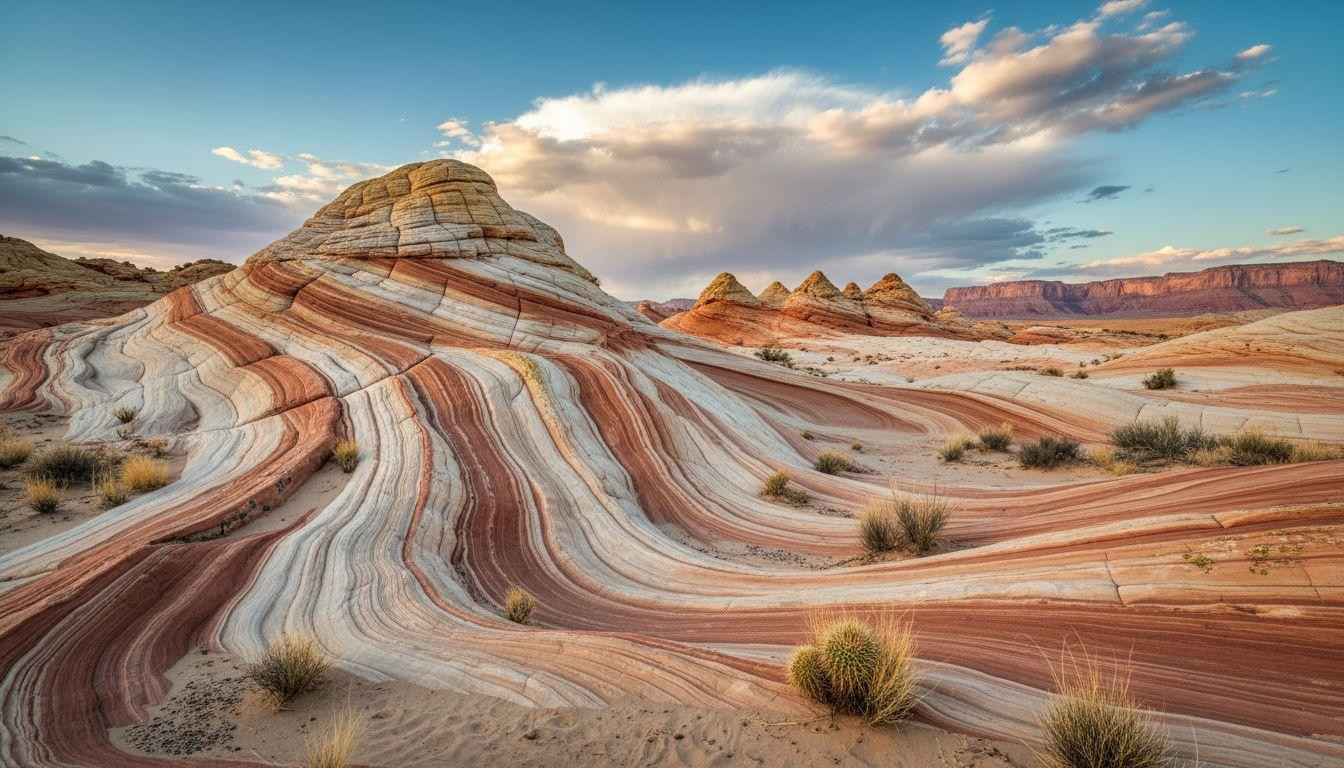
Standing at Antelope Canyon’s entrance, you watch tour groups shuffle through in 20-minute windows. Each visitor pays $87-$115 for this rushed experience. One hour north, Vermilion Cliffs National Monument offers the same swirling sandstone formations for free. No crowds, no time limits, no tour guides rushing your photography.
The secret lies in geological timing. Both destinations share identical Navajo sandstone, carved by wind over 190 million years. Yet Antelope Canyon attracts over 1 million visitors annually while Vermilion Cliffs sees fewer than 100,000.
Why Antelope Canyon feels restrictive
Antelope Canyon operates on rigid tour schedules. Upper Antelope costs $72-$100 plus a $15 Navajo Park fee. Lower Antelope runs $72-$89 per person. Both require bookings 4-6 months in advance.
Photography restrictions limit creativity. No tripods, no selfie sticks, groups of 20-30 people crowd every viewpoint. Your allocated 60-90 minutes barely allows for composition adjustments. Tour guides control the pace, moving groups through predetermined stops.
Winter 2026 sees marginally fewer crowds, but tours still sell out weeks ahead. The experience feels manufactured, optimized for volume rather than wonder.
Meet Vermilion Cliffs National Monument
The landscape that rivals Antelope
White Pocket delivers Vermilion Cliffs’ crown jewel. Swirling sandstone formations create patterns locals call “brain rocks” for their convoluted surfaces. The same geological forces that carved Antelope Canyon shaped these 280,000 acres of red-orange escarpment.
Colors intensify at golden hour. Sunrise at 7:30am paints layers in soft pinks and oranges. The Teepees formation displays conical hoodoos rising from terracotta plains. Paria Canyon offers slot canyon experiences without the Antelope crowds.
The freedom factor
General monument access costs nothing. White Pocket requires a free lottery permit, but roadside viewing needs no authorization. BLM management emphasizes primitive recreation over commercial tourism.
Self-guided exploration means unlimited time. Photographers capture perfect light without tour guide interruptions. Buckskin Gulch hides 16 miles of narrows accessible through Vermilion Cliffs’ vast trail system.
The winter experience
What you can explore
White Pocket’s plateau sits at 5,000-6,000 feet elevation. Winter temperatures range from 20-50°F during the day, ideal for hiking without summer’s brutal heat. Snow occasionally dusts the formations, creating ethereal contrasts.
The 3-4 mile White Pocket loop reveals elephant skin textures and wave patterns. Balanced rocks at Lee’s Ferry defy gravity, formed by millions of years of erosion. Colorful geological formations extend throughout the region’s diverse landscapes.
The solitude element
Winter brings fewer than 20 visitors daily to White Pocket. Compare this to Antelope Canyon’s 1,000-2,000 daily visitors even in low season. Recent visitor surveys confirm 80-100% solitude at Vermilion Cliffs viewpoints.
Morning photography sessions often happen in complete isolation. The silence breaks only with wind whistling through slot canyons and distant raven calls. Cell coverage remains spotty, enhancing the disconnected wilderness experience.
Practical comparison
Access requirements differ significantly. Antelope Canyon provides transportation via tour operators. Vermilion Cliffs demands a high-clearance 4×4 vehicle for White Pocket access. Rental costs in Page average $100-$150 daily.
Time freedom creates the biggest advantage. Antelope allows 60-90 minutes maximum. Vermilion Cliffs permits all-day exploration with camping options. Similar geological wonders throughout the Southwest offer comparable freedom.
The drive from Page takes 1.5-2 hours via rough gravel roads. BLM Road 1065 requires careful navigation but remains passable in winter conditions. Emergency services operate 2 hours away, making preparation essential.
Your Questions About Vermilion Cliffs Answered
How do I secure White Pocket permits for winter 2026?
White Pocket requires advance lottery permits through BLM’s online system. Applications open 60 days prior to desired dates. Success rates hover around 60% for winter slots, significantly higher than The Wave’s 5% lottery odds.
What makes the geology comparable to Antelope Canyon?
Both locations feature Navajo sandstone from ancient sand dunes. Wind and water carved similar wave patterns over 190 million years. White Pocket’s exposed plateau setting creates more varied formations than Antelope’s narrow slots.
How does winter weather affect access and photography?
Winter offers optimal photography light with softer shadows and enhanced colors. Occasional snow creates dramatic contrasts against red rock. Road conditions require 4×4 capability but rarely close completely. Winter desert exploration rewards prepared travelers with exceptional solitude.
Dawn breaks over White Pocket’s formations, painting ancient sandstone in gentle pastels. No tour groups disturb the silence. No time limits pressure your pace. The same geological wonder that draws millions to Antelope Canyon exists here, waiting patiently in winter’s quiet embrace.