
Basement speakeasy ideas work best when you stop fighting the low ceiling and start styling it on purpose. I learned that the hard way after trying to brighten one basement into fake daylight, and it only made every duct and soffit look sadder. The short answer: a moody lower level usually looks better with paint, texture, and tighter lighting than with more recessed cans. Once you lean into the hush, the room starts to feel deliberate instead of unfinished.
- Conceal the bar behind paneled bookcases
- Wrap the seating in oxblood velvet
- Install amber sconces along stone walls
- What’s the smartest seat for a dead corner?
- Frame the TV with vintage liquor cabinets
- Paint the ceiling a smoked charcoal
- The Brass Foot Rail, Done Right
- Why a Persian rug over concrete changes the room
- Hide bottle storage inside end tables
- Hang prohibition prints in mismatched frames
- The Passcode-Style Sliding Wall
- Why a tucked game table beats the open floor
- Use fluted glass for cabinet doors
- Create a cigar-lounge reading nook
- Stage a moody tray on the ottoman
1Conceal the bar behind paneled bookcases
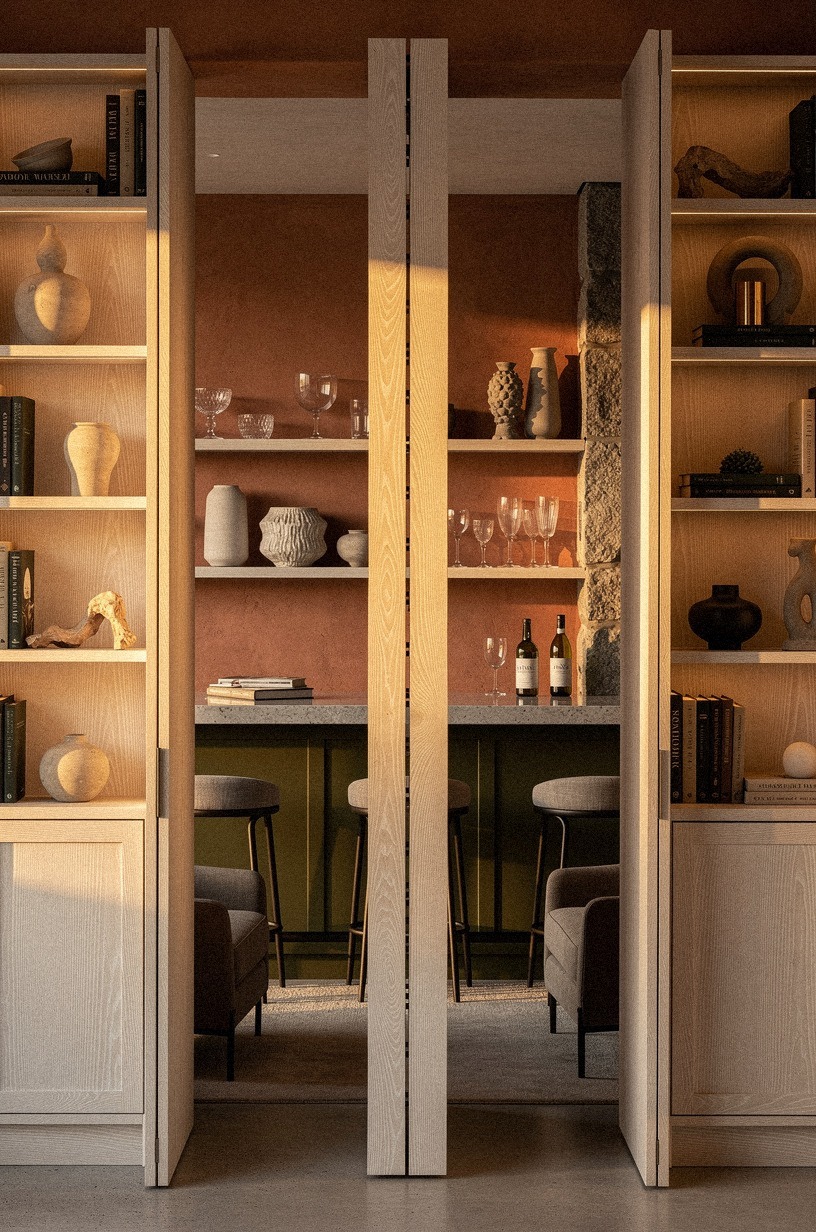
Start with a wall that looks useful before it looks dramatic. Cerused white oak shelving has enough grain and lift to keep a basement from feeling sealed shut, especially when you run the panels floor to ceiling and let the doors read like proper library millwork. If your finished ceiling is hovering near the 7 ft minimum, vertical bookcase lines help your eye travel up instead of parking on the clearance.
The reveal should feel hush-quiet, not theatrical. When the center section swings open, that’s when the basement speakeasy mood lands.
Inside, go warmer than the outer shell. Terracotta plaster sets the warm wall, with olive accents in the bottle line and stone on the back counter. Add a few brand-free bottles with breathing room.
The whole inside should feel like its own little room.
I wouldn’t cram every cubby. You want one shelf for glassware, one for spirits, and one for the thing that softens the scene, maybe a small lamp or a bronze ice bucket.
If you’re building your palette first, this warm terracotta reference is a smart place to start. That moment of the door gliding open is everything!
2Wrap the seating in oxblood velvet
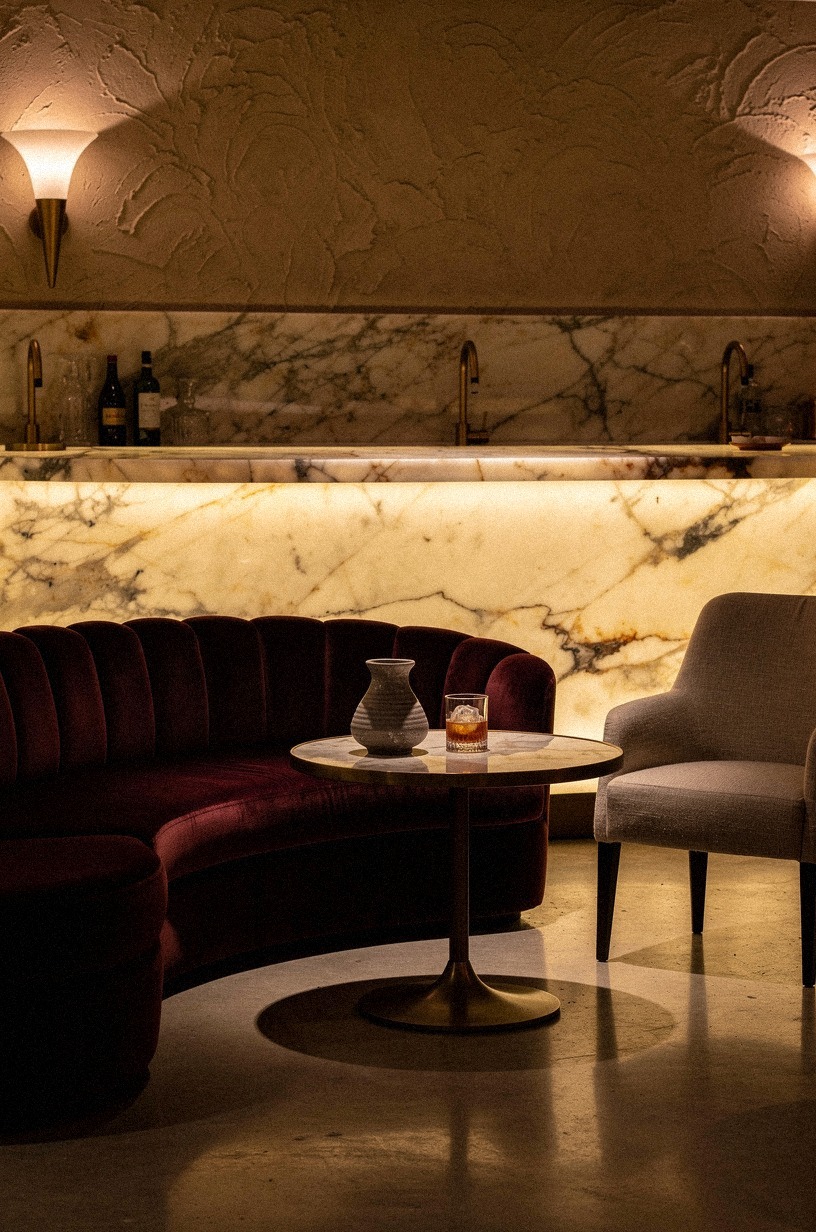
Go darker on the main seat than you think you should. Oxblood cotton velvet on a curved sofa gives you that old-club weight without turning the room black, and the red-brown undertone plays especially well with a glowing onyx bar in the background.
If you want the lower level to feel expensive by 6 p.m., this is one of the fastest ways to get there. The room should feel like a private room, not a showroom.
But keep the shape soft. A tight, squared sectional fights the speakeasy idea, while a crescent sofa pulls people inward and makes conversation happen almost by accident.
I also like a low cocktail table here, something in smoked glass or dark walnut, because you don’t want a bulky piece blocking the line to the bar. Add linen pillows in clay or tobacco, then stop.
Too many extras and the room starts feeling like a lounge set, not your lounge. The whole point is intimacy.
3Install amber sconces along stone walls
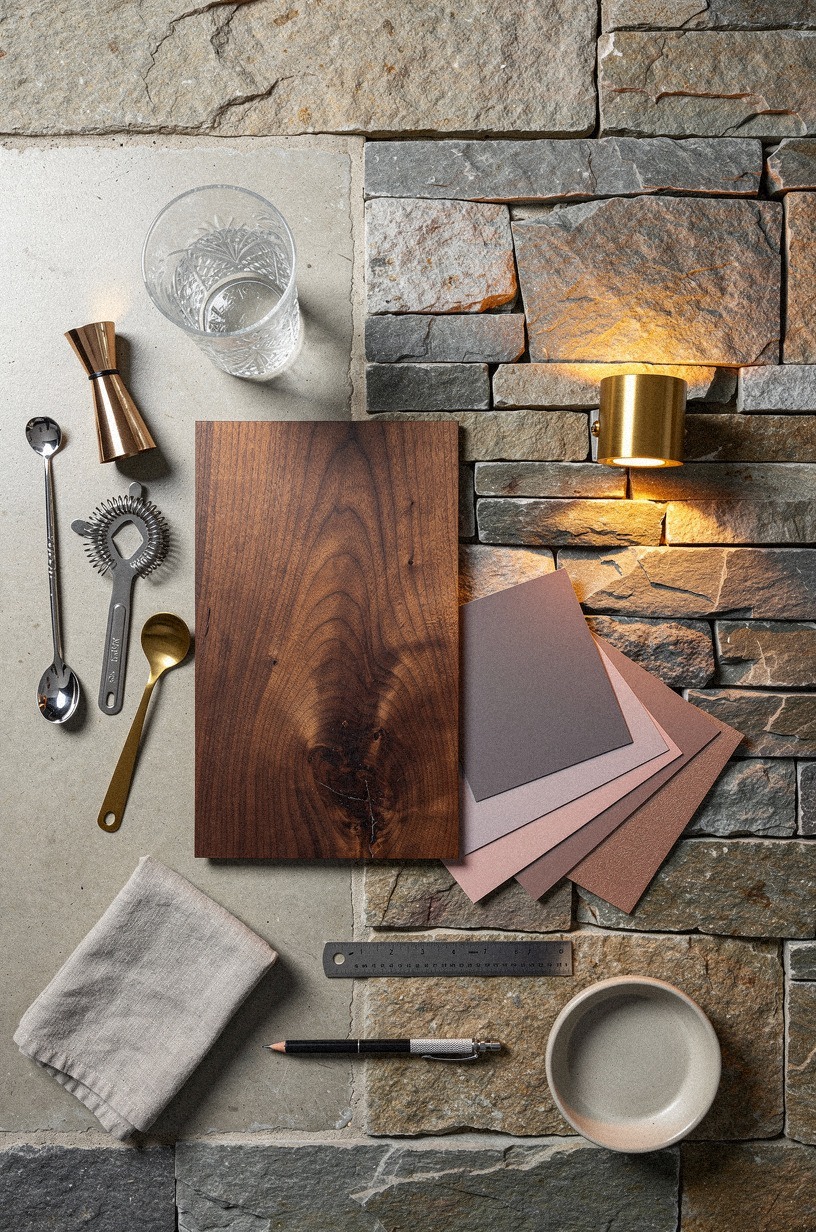
Light the walls, not the whole room. Amber glass sconces mounted against stone make the surface ripple a little after dark, which is exactly what keeps a basement from reading flat. You don’t need stadium coverage down here.
You need pockets of glow that leave the corners slightly unresolved. That’s the whole point of moody lighting.
If you’re cladding a wall, use stone with some movement instead of a perfect machine-made pattern. Honed limestone, rough travertine, even a stacked veneer with shadow lines will do more than another ceiling fixture ever could.
A recessed light usually runs about $20-$100 each, and this is one of those times I’d skip adding more of them. Put the money into the sconces, dim them low, and let the wall do the work.
For a layered-material read, I keep coming back to this texture pairing note.
4What’s the smartest seat for a dead corner?
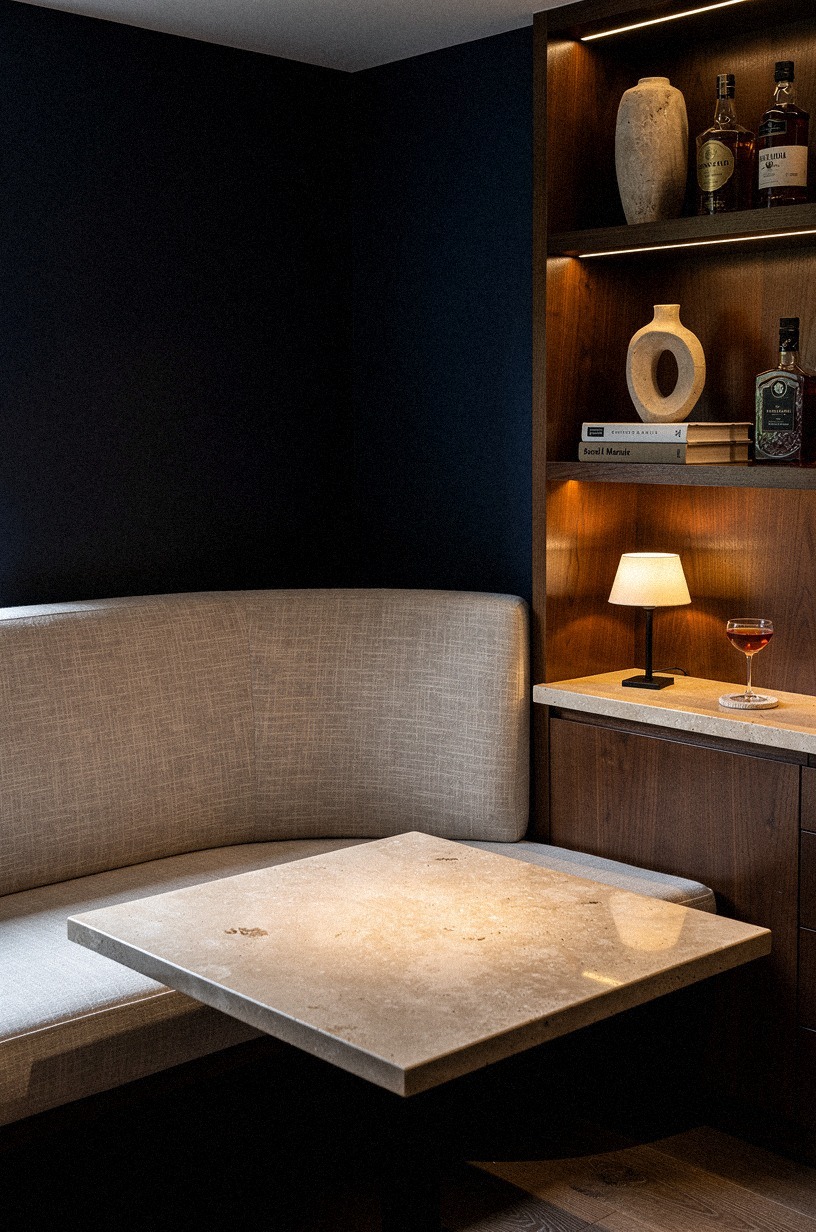
Use the corner your sofa can’t solve. Navy performance upholstery on a built-in banquette turns a dead angle into the most booked seat in the room, especially when you pair it with a warm travertine cocktail table and a walnut edge detail. In a lower-level lounge, built-ins are often better than freestanding furniture because they hold the perimeter and keep your central floor zone open.
The corner should feel tucked in, not awkward.
And make the seat deeper than a breakfast nook. Around 24 inches feels loungy without becoming sloppy, and a curved back keeps the line from looking too hard against the basement walls.
I like this move when you’ve got a 100+ sq ft seating zone and want it to feel social rather than TV-first. If you need a reminder that the room should still feel lived in for fall, the ideas in this seasonal decor checklist push the same warm direction without overdoing it.
5Frame the TV with vintage liquor cabinets
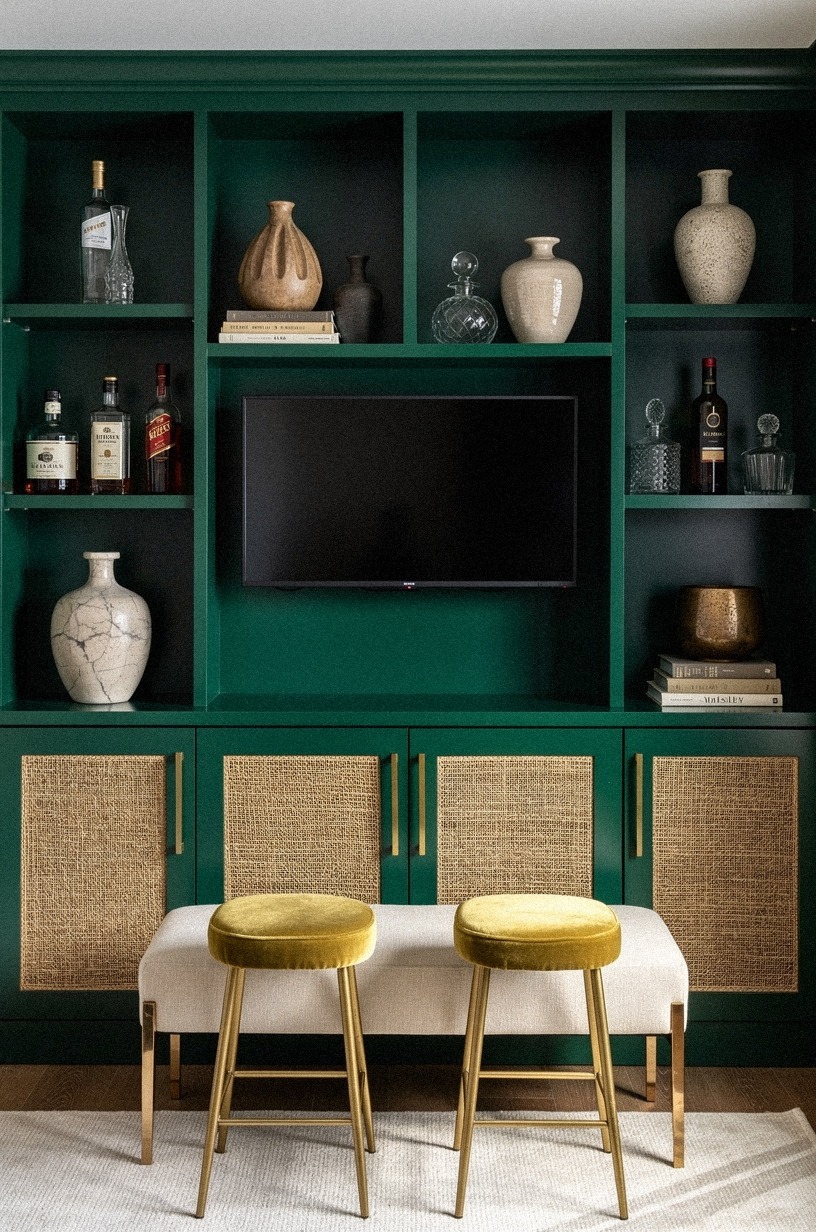
Treat the screen like the least interesting thing on the wall. Emerald built-ins on both sides of the TV let you shrink the visual weight of the black rectangle, and vintage-style liquor cabinets are better than open shelves because they keep the setup feeling private.
You can still watch the game. It just doesn’t need to announce itself from the stairs.
The TV should disappear into the woodwork.
I wouldn’t center a giant media console under everything and call it done. A basement speakeasy looks better when the liquor storage rises vertically, with glassware above, closed drawers below, and one or two cream-upholstered accents nearby to soften the green.
If you want a paint that holds its own after sunset, Benjamin Moore Hale Navy HC-154 is a safer call than a generic black. The tone still reads rich when the lamps are dim, and your cabinets won’t disappear into a single dark block.
6Paint the ceiling a smoked charcoal
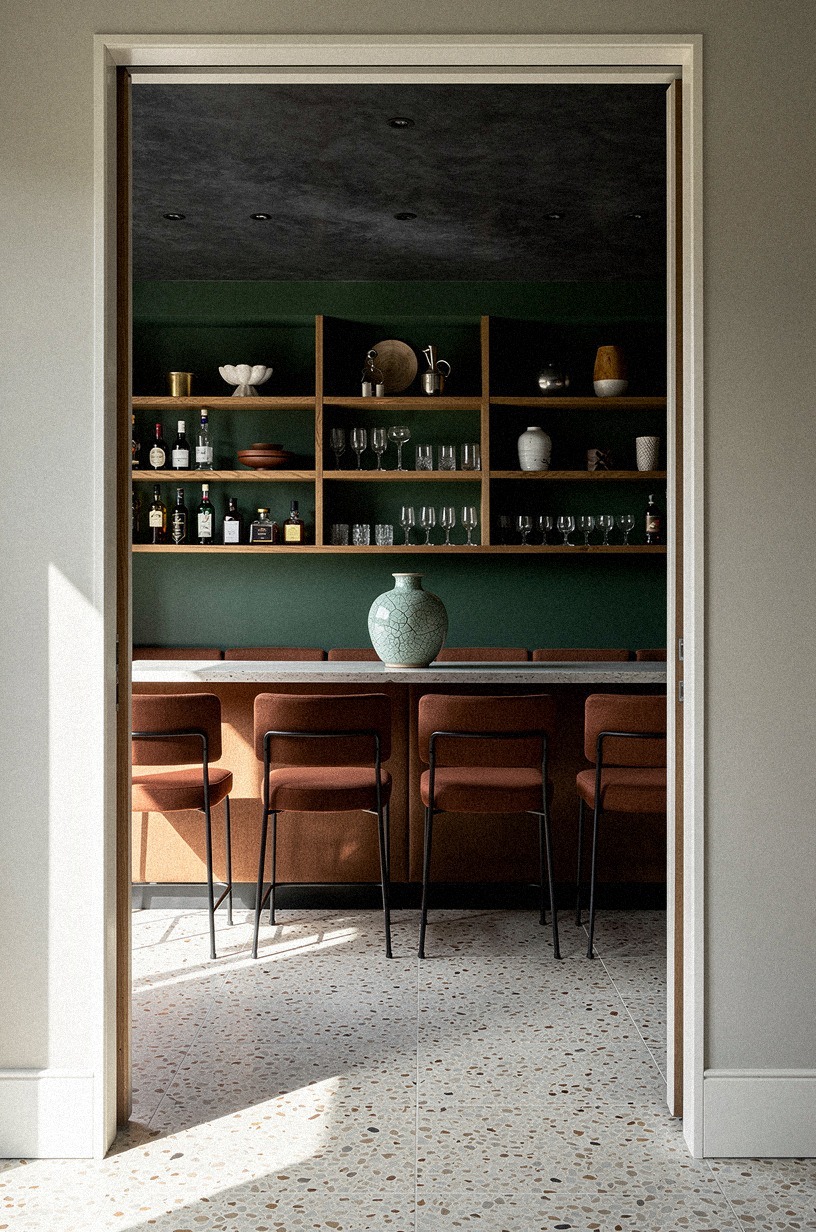
This is where most people panic, and it’s usually the move that saves the room. Farrow & Ball Railings No.31 or a close smoked-charcoal cousin on the ceiling pulls pipes, vents, and awkward transitions into one quiet plane.
Instead of making the basement feel lower, it makes the ceiling stop interrupting you. The room just settles.
Pair it with forest green walls, rust seating, and natural oak so the darkness has something warm to bounce off. I made the mistake once of leaving the ceiling bright white while painting the walls deep, and the whole room looked chopped in half.
Never again. If your lower level has a drop ceiling, paint the grid and tile together so it reads deliberate.
For budget planning, paint belongs firmly in the first tier, and that’s why it outperforms a lot of flashier upgrades. This is the move!
7The Brass Foot Rail, Done Right
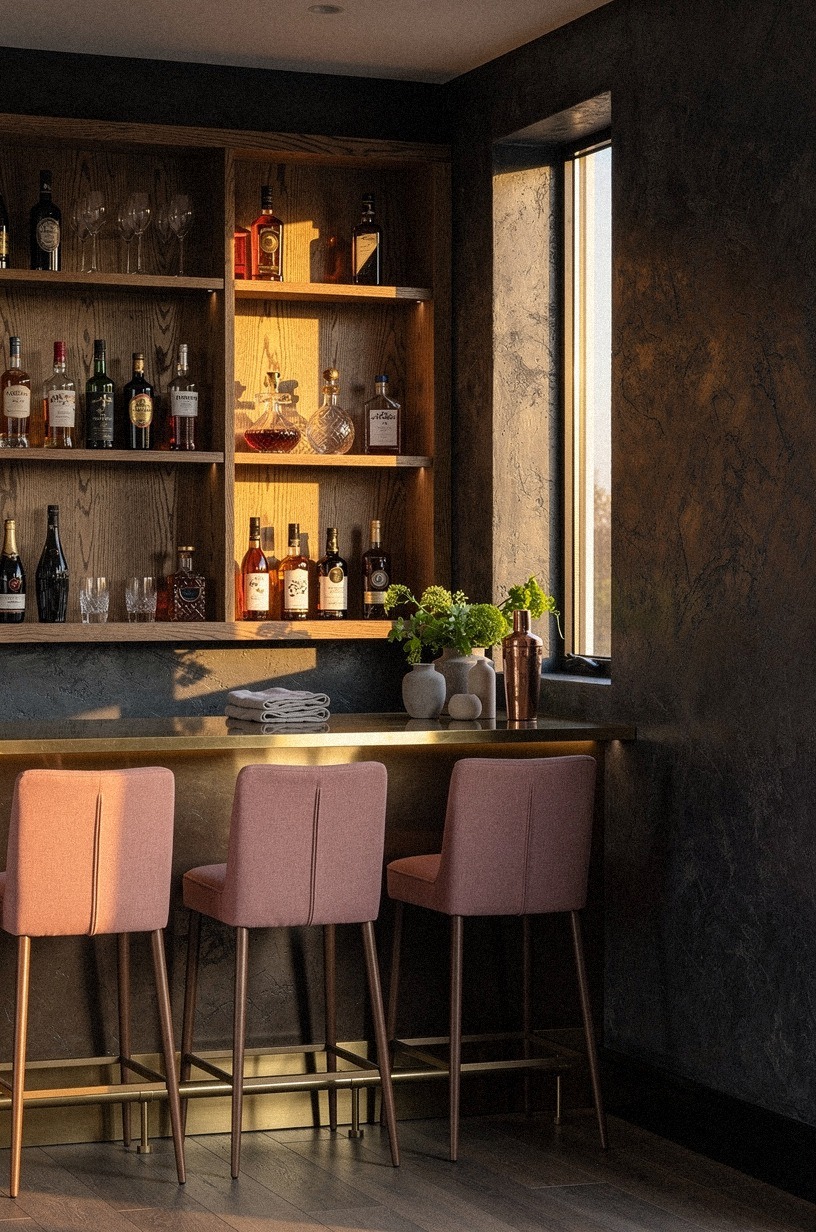
Add one hotel-bar detail and watch the room sharpen up.
8Why a Persian rug over concrete changes the room
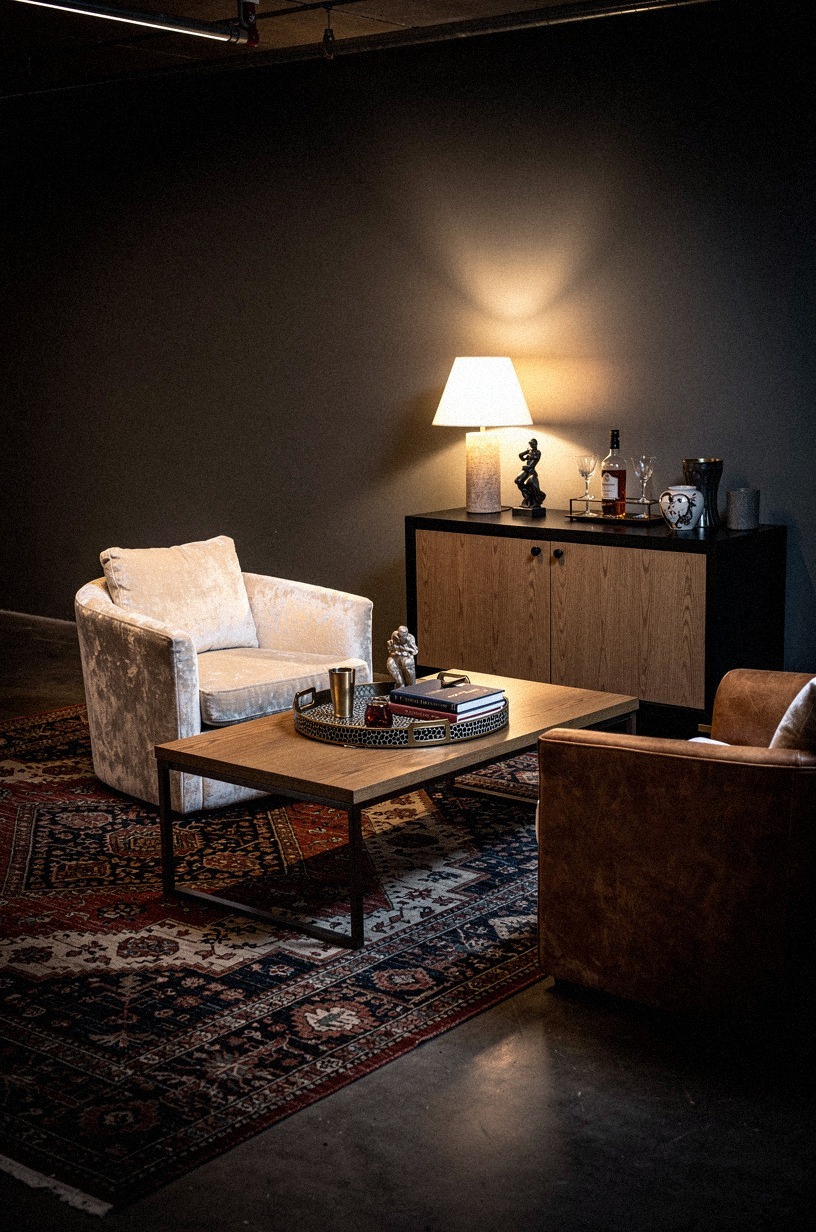
Concrete isn’t the problem. Bare concrete is. Low-pile Persian rugs over a dark slab give you softness, pattern, and acoustic help without forcing you into wall-to-wall carpet that never quite feels right in a speakeasy basement.
If you’re installing new flooring elsewhere, remember that LVP over slab with underlayment is still one of the most practical envelope moves, but rugs get you warmth faster. The whole room sounds warmer the second one goes down.
I prefer one larger rug anchoring the zone and a second, slightly offset layer if the room needs more age. Camel, warm white, black, and a touch of faded brick work especially well beside mohair or bouclé seating.
Why pretend the floor is precious when the whole point is that people will live on it? Let the rugs take the pressure off. If you’re mixing warm neutrals, this terracotta palette piece lands in a similar place.
The floor should feel like it has history, even when it doesn’t.
9Hide bottle storage inside end tables
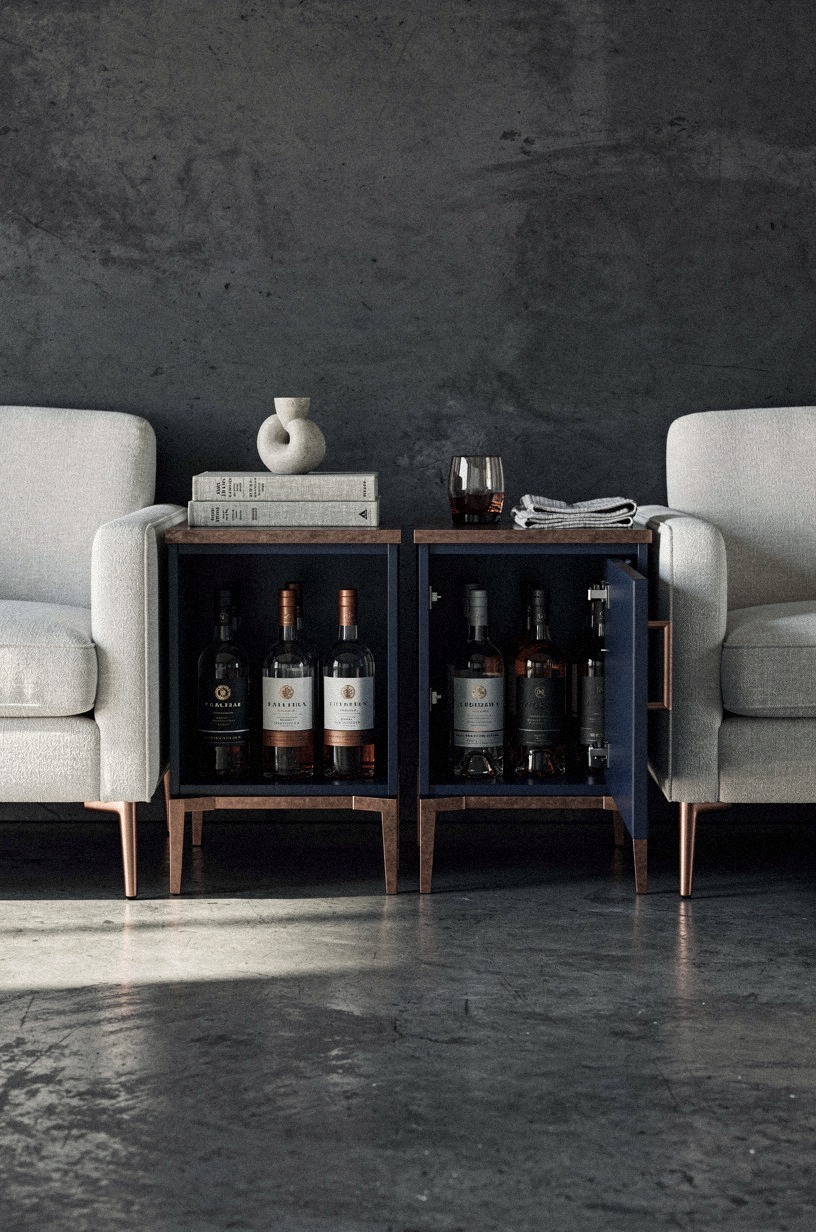
Use pieces that earn their square footage. Midnight blue storage tables beside a seating pair can hide bottles, bar tools, and coasters while still reading like furniture first.
In a smaller basement speakeasy, that matters. You don’t always want the whole room advertising itself as a bar from every angle.
The clever end table is the unsung hero here.
I like hinged or drum-style tables here because the reveal feels a little theatrical without getting cheesy. One can hold spirits, the other glassware, and the top stays clear enough for a brass lamp and a drink. If you’re working on a renter-friendly setup, this is also smarter than committing to built-ins too early.
And if your budget is tight, secondhand hunting at stores that feel upscale for less can go surprisingly far; the mix in this budget-store roundup is a useful mindset check.
10Hang prohibition prints in mismatched frames
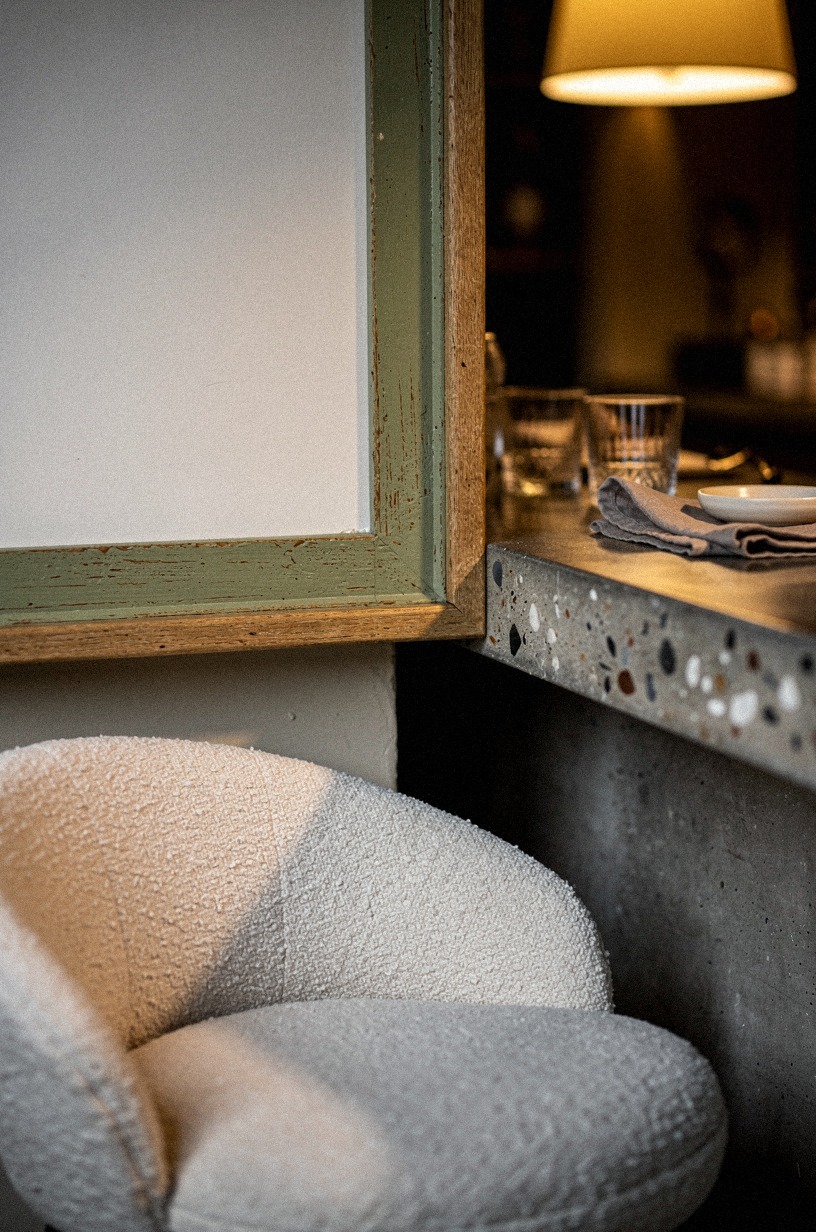
Let the art feel collected, not themed. Mismatched wood and sage-painted frames around prohibition-era prints, menus, maps, or jazz ephemera add history without screaming novelty bar.
I wouldn’t buy fifteen matching black frames and call it charm. A basement with low light needs variation at the wall edge so the composition stays alive.
The wall should feel curated, not coordinated.
Keep the matting warm, the glass low-glare if you can, and the subject matter a little restrained. One portrait, one menu, one architectural sketch, one old liquor ad, then stop. Beside an organic bouclé chair or bench, the mix reads thoughtful rather than costume-y.
If the room already has terracotta or walnut elsewhere, repeat that tone in at least one frame. That echo is what makes the wall feel settled.
That’s the move!
11The Passcode-Style Sliding Wall
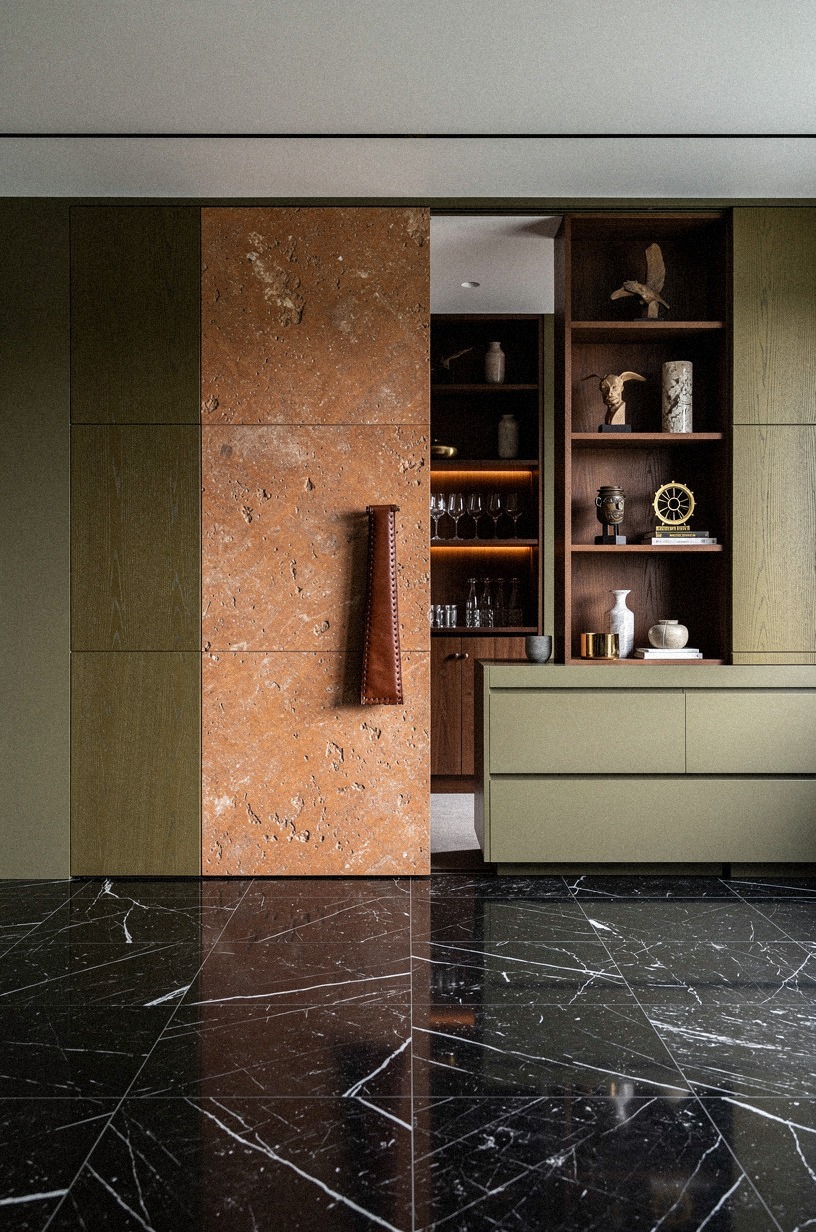
This is the playful move that can still look grown up. Nero Marquina marble flooring with a centered sliding wall panel already has enough drama, so the panel itself should stay tactile rather than gimmicky. Think olive paint, stone, terracotta, and a discreet hardware pull that suggests secrecy without turning your basement into an escape room.
The drama should be in the materials, not the props.
And yes, you can do the passcode idea subtly. A row of brass toggles, a numbered latch detail, or a tiny concealed release feels smarter than a fake vault wheel.
If the panel glides open to reveal a bar, keep the inside palette warmer and more luminous than the outer room. That contrast is the payoff. I wouldn’t use glossy black here.
It reads showroom. Matte surfaces and real weight read private club, which is the better direction every time.
12Why a tucked game table beats the open floor
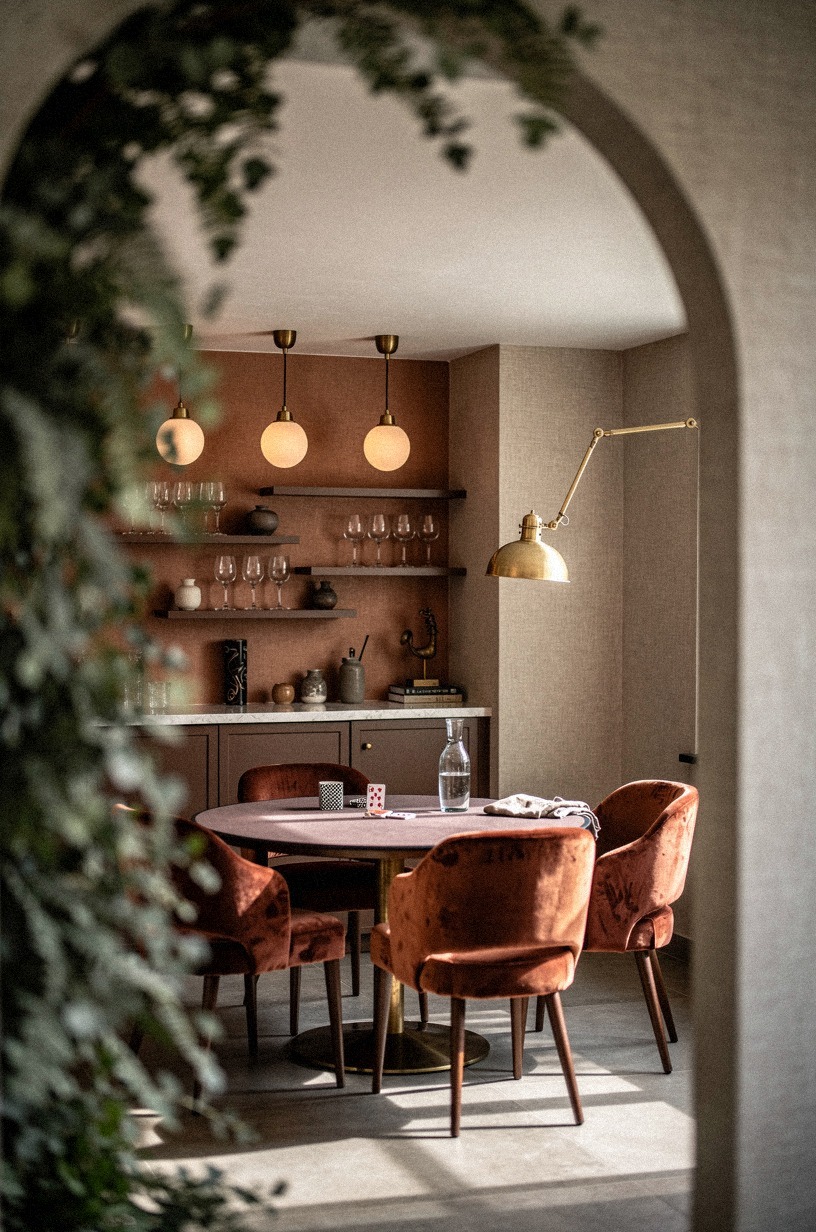
Give the room one reason to linger beyond drinks.
13Use fluted glass for cabinet doors
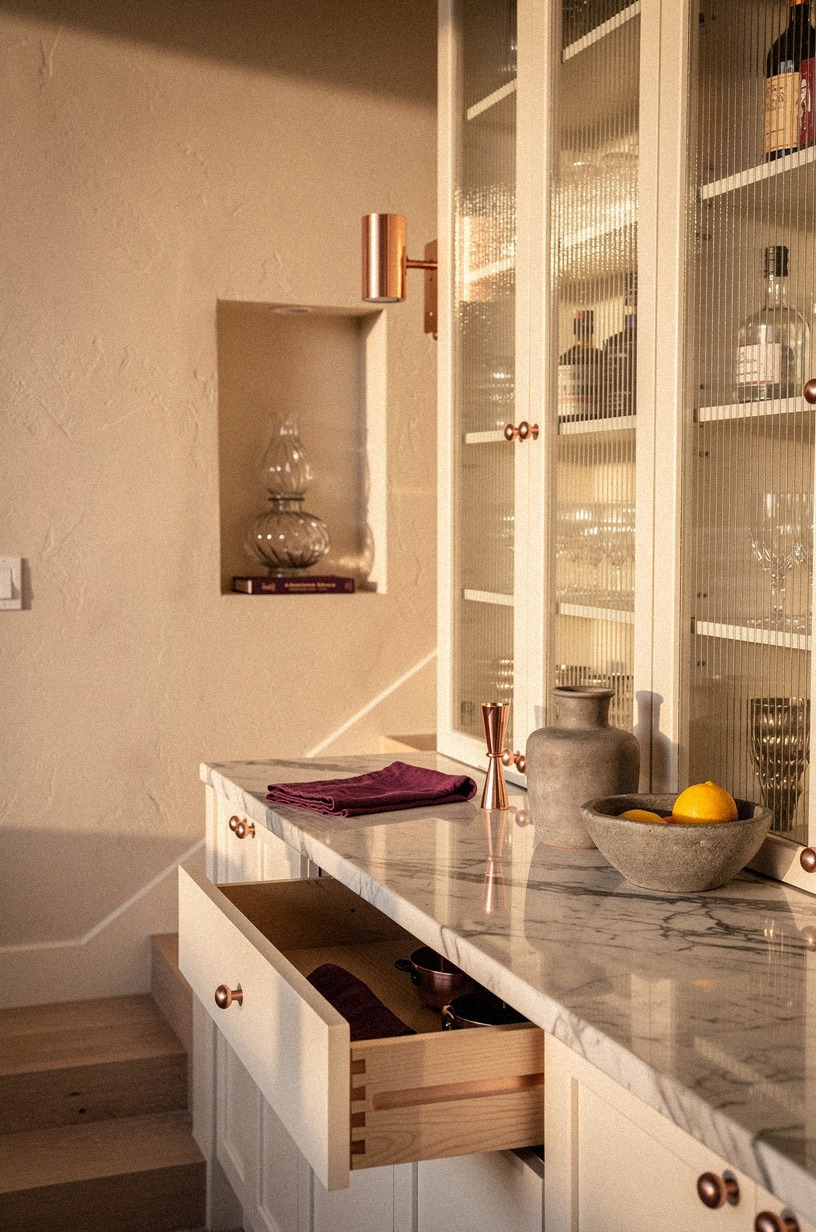
When you want storage to disappear a little, fluted glass fronts are the answer. They soften bottle shapes, hide visual clutter, and still let the cabinet wall feel lighter than a solid run of doors.
In a plum, grey, and rose-gold palette, that ribbed surface catches just enough light to keep the whole bar from looking heavy. The reveal should feel like a slow curtsy, not a stage curtain.
I especially like fluted glass with Carrara or pale stone nearby because the softness of the glass keeps the stone from feeling too crisp. If you’re choosing between clear, smoked, and fluted, I’d skip clear first.
You will see every label, every mismatch, every random mixer bottle. That’s not mystery, that’s inventory.
A cozy basement bar should reveal itself slowly, and this is one of the easiest ways to control that reveal.
14Create a cigar-lounge reading nook
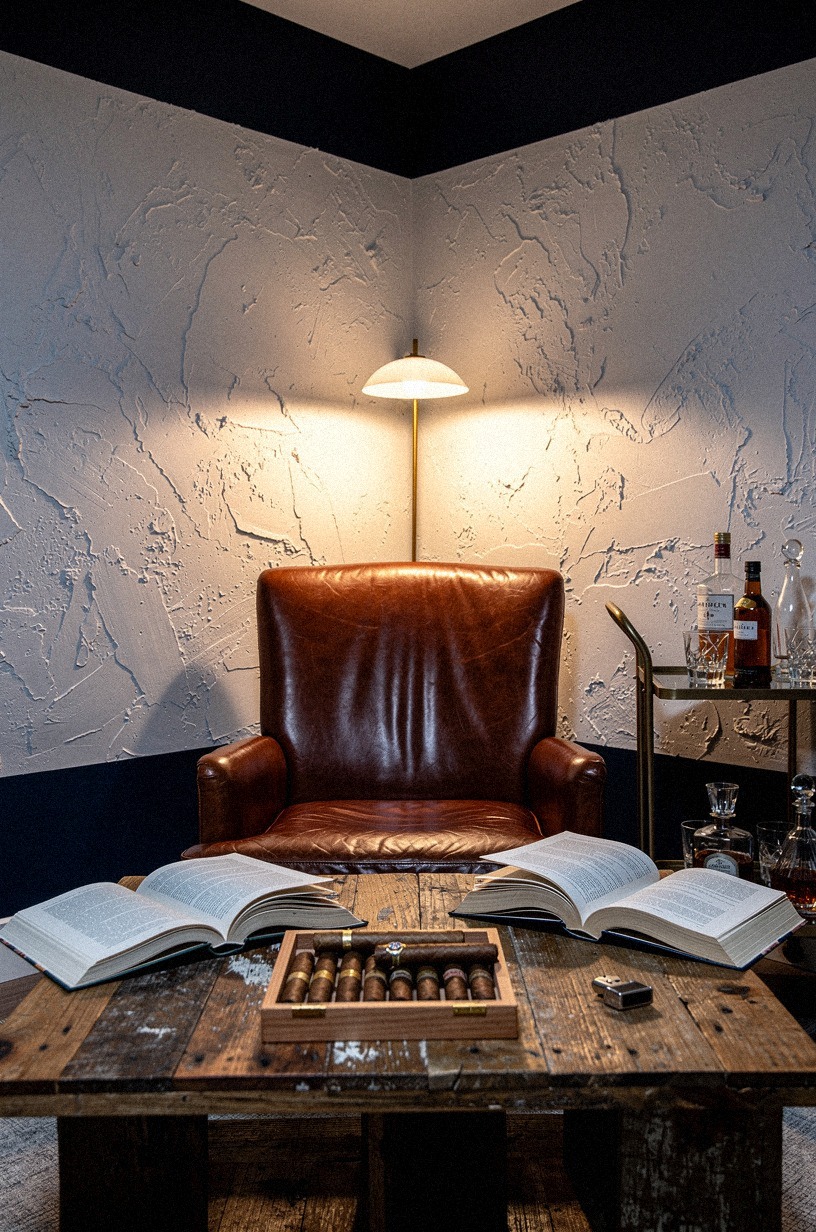
Every good basement speakeasy needs one seat that feels a little removed from the rest. Leather club seating in a navy, white, and walnut corner does that job beautifully, especially if you add reclaimed wood, open books, and a lamp with a low shade to keep the light intimate.
It doesn’t need to be literal cigar-lounge styling to work. It needs that hush.
The corner should feel like a secret you keep from the rest of the house.
I think this nook works best when the chair is angled, not jammed square to the wall, and when the side table is big enough for a book stack plus a drink. A worn leather finish beats a slick new one here because the room already has plenty of polish elsewhere.
If you want more material depth, add a wool throw and a small vintage ashtray, even if it only ever holds matches. Suddenly the basement feels like a place you choose, not the place you ended up.
15Stage a moody tray on the ottoman
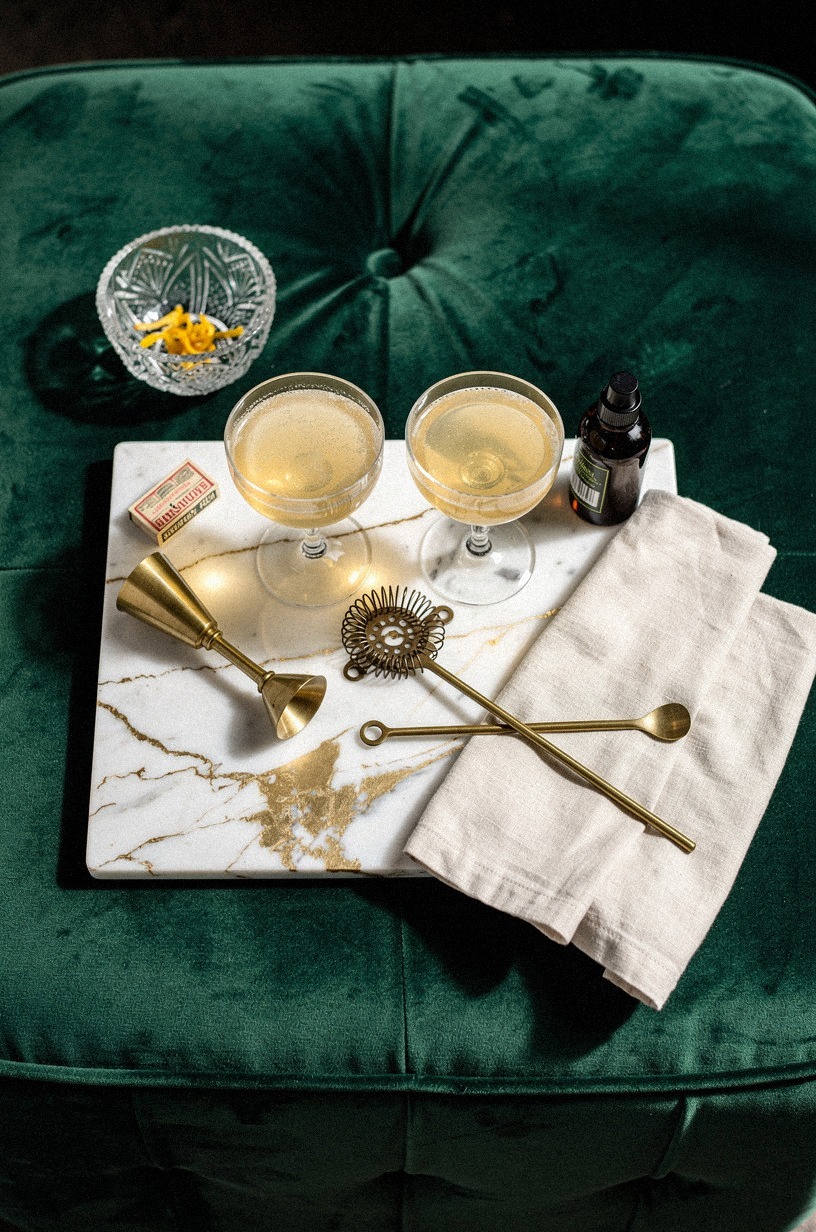
Finish the room at hand level. Calacatta marble on a small tray over an emerald velvet ottoman gives the seating area a focal point when nobody’s looking at the walls, and that’s usually when a basement either feels complete or falls apart.
A tray is also where you can bring in the little gleam that keeps all the dark tones from going dull. The little things are what carry the room.
Keep the edit tight: one gold lighter, one low candle, one coupe, maybe a tiny bronze bowl. That’s it.
I wouldn’t crowd the ottoman with books, remotes, and decorative filler because the whole charm of the setup is that it looks ready for the next round. And the emerald-plus-gold mix really does work every single time!
If you need a last pass on warm accent balance, this fall styling checklist nudges the same mood without getting repetitive.
What this look typically costs
The budget tier is where most people should start. Paint, one rug, and better lighting change the basement faster than almost anything else, and you can feel the shift before you ever touch plumbing. Mid-range money is where built-ins and flooring start to matter, especially if you’re covering a slab or repairing an old drop ceiling.
If you’re going full finish, be honest with yourself about what adds daily value and what only photographs well. A wet bar typically runs $2,000-$8,000, a sectional can land anywhere from $800-$3,000, and LVP flooring usually sits around $2-$7 per sq ft.
I wouldn’t jump to the highest tier first. The mood comes from surfaces, scale, and light, not bragging rights.
Why this room works when you lean into the darkness
I have spent enough time in basements to know the losing strategy by heart: you paint everything pale, add more overhead light, then wonder why the room still feels vaguely apologetic. The reason is simple.
A basement isn’t upstairs, and the faster you stop asking it to behave like a sunroom, the better your decisions get. Low ceilings, odd corners, and limited daylight sound like flaws until you realize they naturally support intimacy.
That’s the whole speakeasy brief.
What finally changed my mind was seeing a lower level where the owner stopped correcting every basement trait and started editing around it. The ceiling was dark.
The seating sat low. The lights were amber and local instead of bright and universal. There was one reading chair, one hidden bar, one rug big enough to hold the conversation zone, and not a single apologetic can light trying to bleach the place back to neutral.
I remember thinking, yes, that’s it. The room wasn’t pretending to be larger. It was making smaller feel deliberate. That visit is honestly why I stopped fighting basements and started styling them.
And that’s the real design lesson you can use in your own home. You don’t need more stuff. You need fewer moves that are more committed. If your walls are deep green, let them be deep green.
If your bar is hidden, let the reveal be dramatic. If your seating is velvet, pick the color with some blood in it and let the lamp light hit it at night.
The worst version of this look is half-speakeasy, half-rec-room, with every choice watered down in the middle. The best version has edge. It says you understood the room you had and designed for the feeling you wanted.
That’s worth far more than chasing brightness you were never going to win.
The Questions I Get Asked Most
What is the best Basement Speakeasy Ideas to Transform Your Lower Level for a small living room?
The best move is a hidden bar wall plus one compact seating zone. IKEA KALLAX can fake the millwork look if you trim it out, and an Article Sven chair gives you one seat with real presence.
Keep the TV small, the lighting warm, and your rug large enough to unify the whole zone. This small-space terracotta example is useful if you want the palette to stay warm.
Where can I buy Basement Speakeasy Ideas to Transform Your Lower Level pieces on a budget?
Start with IKEA, Target Threshold, and Wayfair for the basics, then fill the character gaps secondhand. Facebook Marketplace is great for brass lamps, old frames, and storage tables.
Thrift stores for trays. Salvage yards for panel hardware. That’s usually where the room starts feeling personal instead of packaged.
I also like this budget-store roundup when you need a reminder that mixed-price rooms usually look better.
How much does a Basement Speakeasy Ideas to Transform Your Lower Level makeover cost?
About $500-$2,500 for the budget version, which usually covers paint, rugs, lamps, and furniture tweaks. A more serious lower-level redo with flooring or built-ins lands around $8,000-$25,000. If you add a bath and wet bar, the high tier starts around $30,000 and climbs from there.
For ordering the upgrades, I like this step-up sequencing note as a mindset.
Can I create a Basement Speakeasy Ideas to Transform Your Lower Level on a budget?
Yes, and the cheap wins are usually the strongest ones. Paint the ceiling dark.
Add one Persian-style rug. Swap white bulbs for amber ones.
Use a tray to organize the ottoman. Even a removable LED strip inside a cabinet can fake a custom bar reveal without major work.
This fall checklist helps if you want a warmer mix without adding clutter.
Is a Basement Speakeasy Ideas to Transform Your Lower Level worth it in a small space?
Yes, because a small space benefits from intimacy faster than a big one does. Layered lighting makes the room feel held instead of cramped, and hidden storage keeps every inch working harder.
Put your largest furniture on the perimeter, then leave the middle open enough that you don’t have to sidestep everything. The texture-mixing reference here is useful when you want softness without bulk.
Is Basement Speakeasy Ideas to Transform Your Lower Level a good idea for a rental?
Yes, if you focus on reversible moves. Peel-and-stick wallpaper, tension-mounted drapery, plug-in sconces, rugs, and storage tables all get you most of the way there.
Skip permanent stone and built-ins until you own the place. The mood can move with you, which is the useful part.
For renter-safe color direction, this warm terracotta palette note is a good starting point.
Where I’d Start First
If I had to pick one, I’d start with the smoked charcoal ceiling. You can’t build mystery under a bright white lid, and every lamp, rug, and velvet seat will fight that glare.
Paint the top plane first. The whole basement settles down.