
The first thing you notice in a good Zen bedroom is what’s not there. No visual clutter, no competing textures pulling your eye in six directions.
Just materials that feel honest and light that lands soft. These 14 ideas show how that actually looks in a real room.
Plaster, Amber Light, and a Room That Slows You Down


This is the kind of room that makes you exhale the moment you walk in.
Why it works: The hand-troweled plaster wall catches raking amber light across every ridge, which keeps the room from feeling flat or finished in the sterile sense.
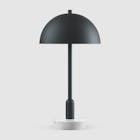
Steal this move: Pair a warm bedside lamp with dark walnut floors and let the contrast do the heavy lifting. Nothing else needed.
Morning Light Through Flax Panels
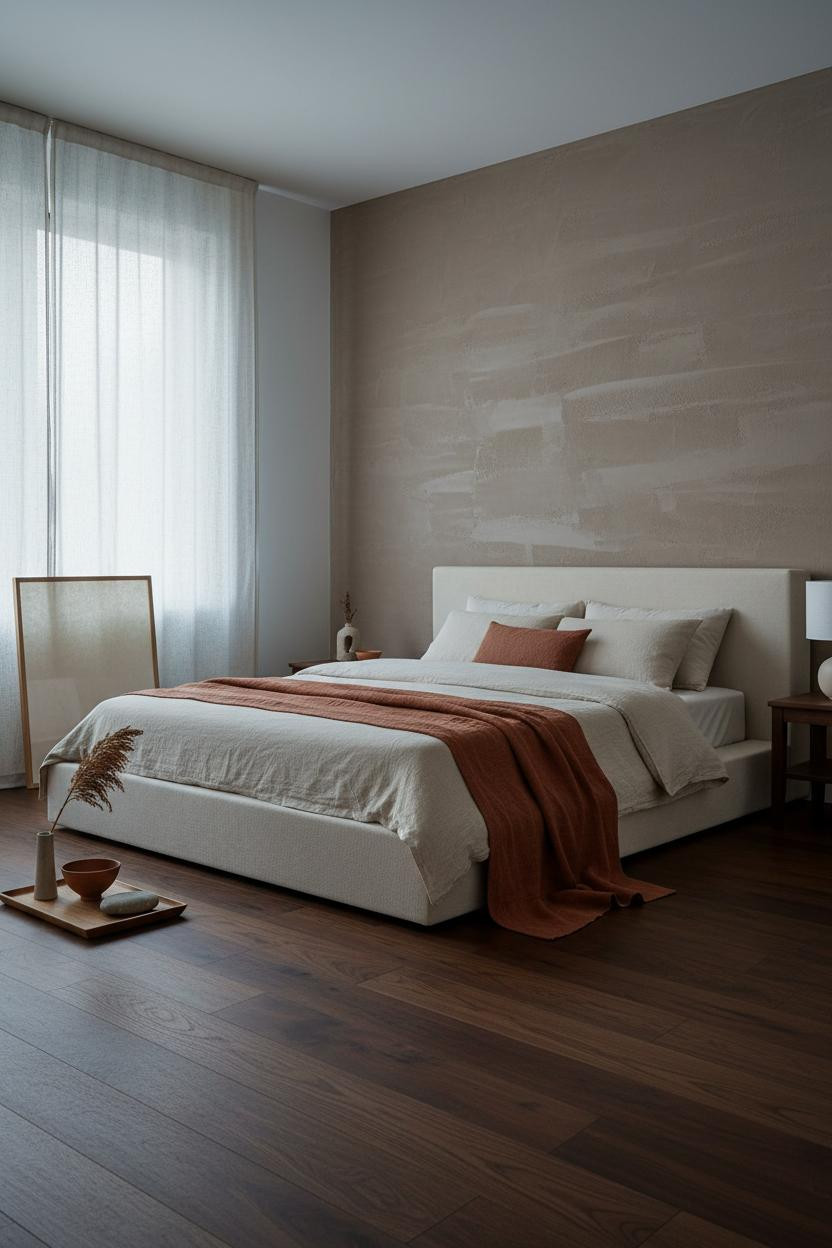
I keep coming back to this one. There’s something about cool first light filtered through undyed flax that makes a room feel suspended.
The taupe-grey limewash wall shifts between warm and cool depending on where the light hits, so the texture reads as sculptural rather than just a paint finish. That’s the whole difference.
Try this: Lean an unframed washi paper panel against one wall instead of hanging art. Costs almost nothing and the effect is genuinely quiet.
The Board-and-Batten Move That Actually Works Here
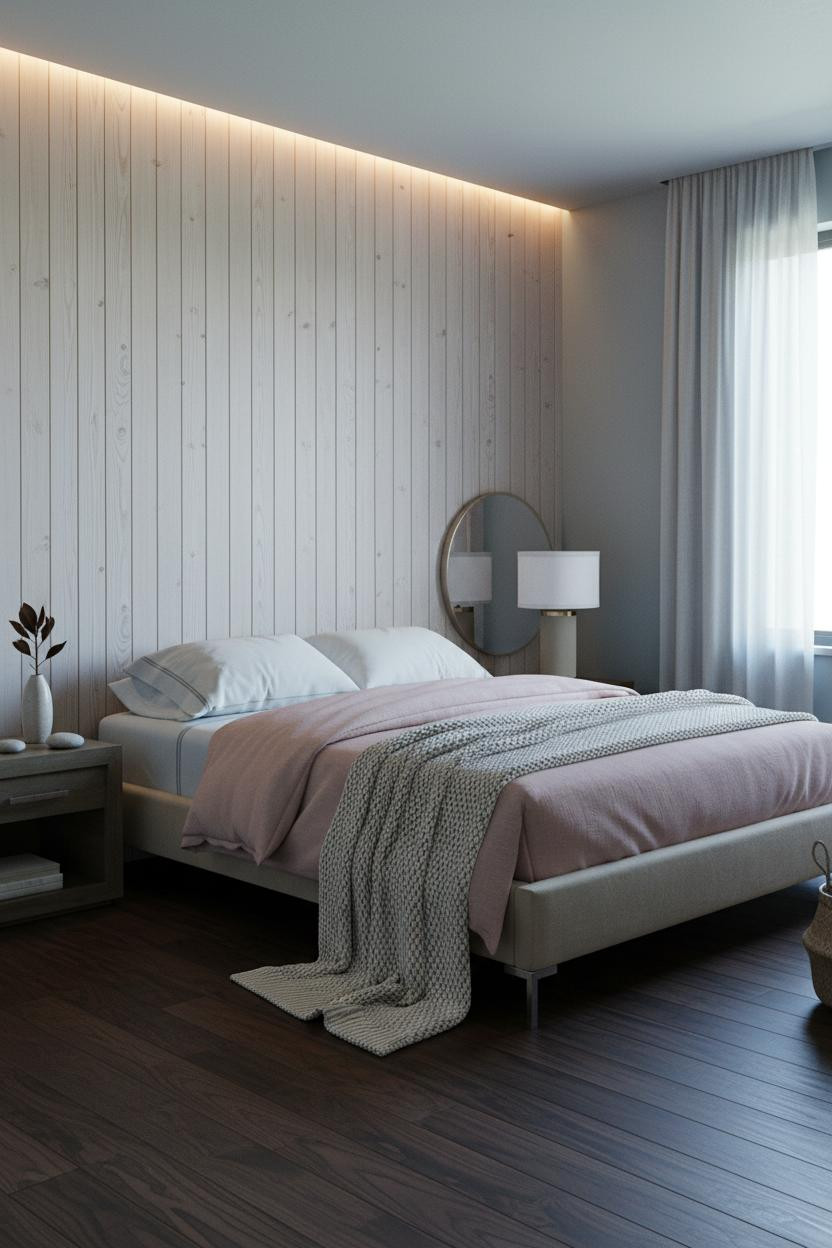
Board-and-batten gets misused constantly in farmhouse rooms that are just a bit too loud. But floor-to-ceiling pale ash timber battens in a cool stone-blue room land completely differently.
Why it looks custom: Each vertical batten casts a hairline shadow that multiplies into a meditative rhythm, which gives the wall real depth without any paint tricks.
In a room this calm, the smarter choice is going full-height with the batten wall. Chair-rail height loses the whole effect.
The Indigo Alcove Idea I Wasn’t Expecting to Love
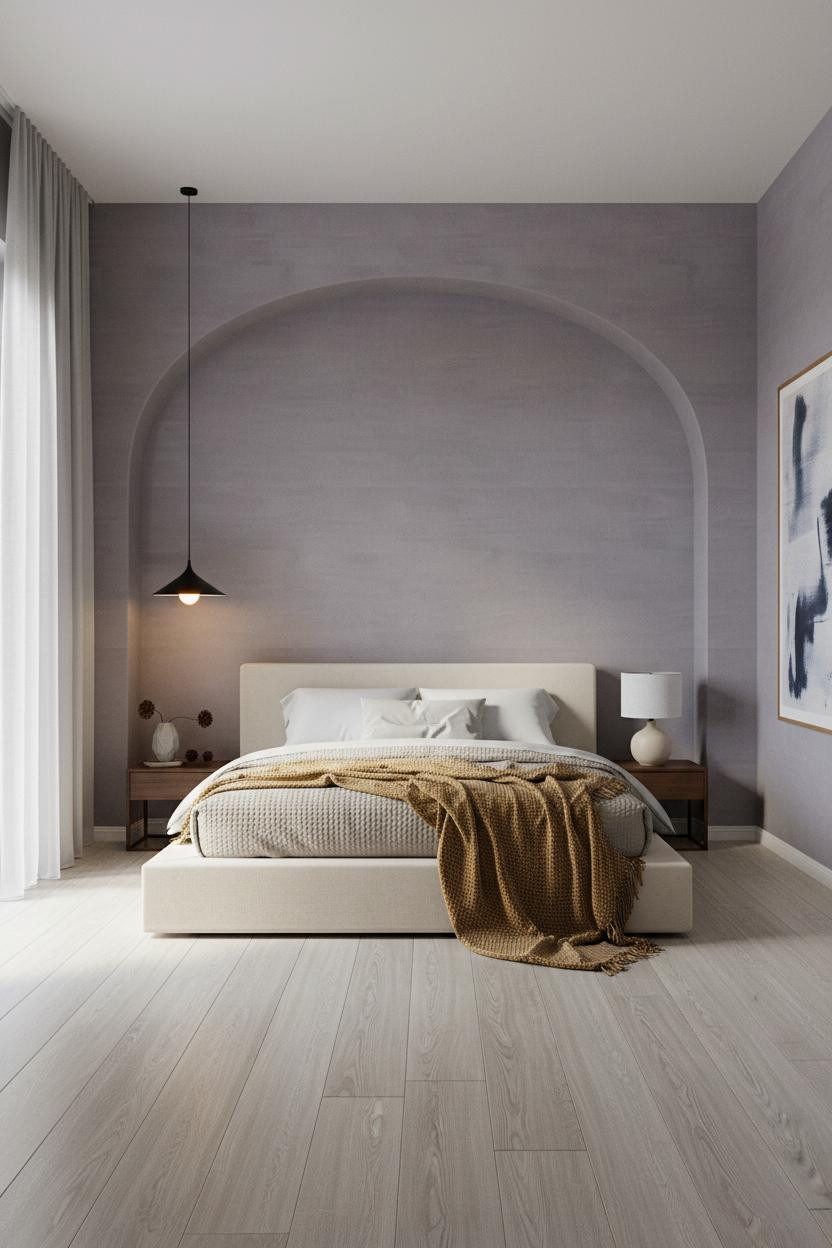
Bold choice. Indigo in a bedroom designed around stillness sounds like it shouldn’t work.
But the curved plaster alcove keeps it from reading as dramatic. The hand-troweled limewash lets diffused light pool in the inner curve while the outer edge stays pale, which means the color has depth without weight.
What to borrow: Center the bed inside the alcove so the architecture does the framing. You won’t need a headboard.
Worth noting: Reclaimed pale ash flooring keeps the contrast from tipping heavy. Don’t swap it for anything darker.
Botanical Prints Without the Gift-Shop Energy
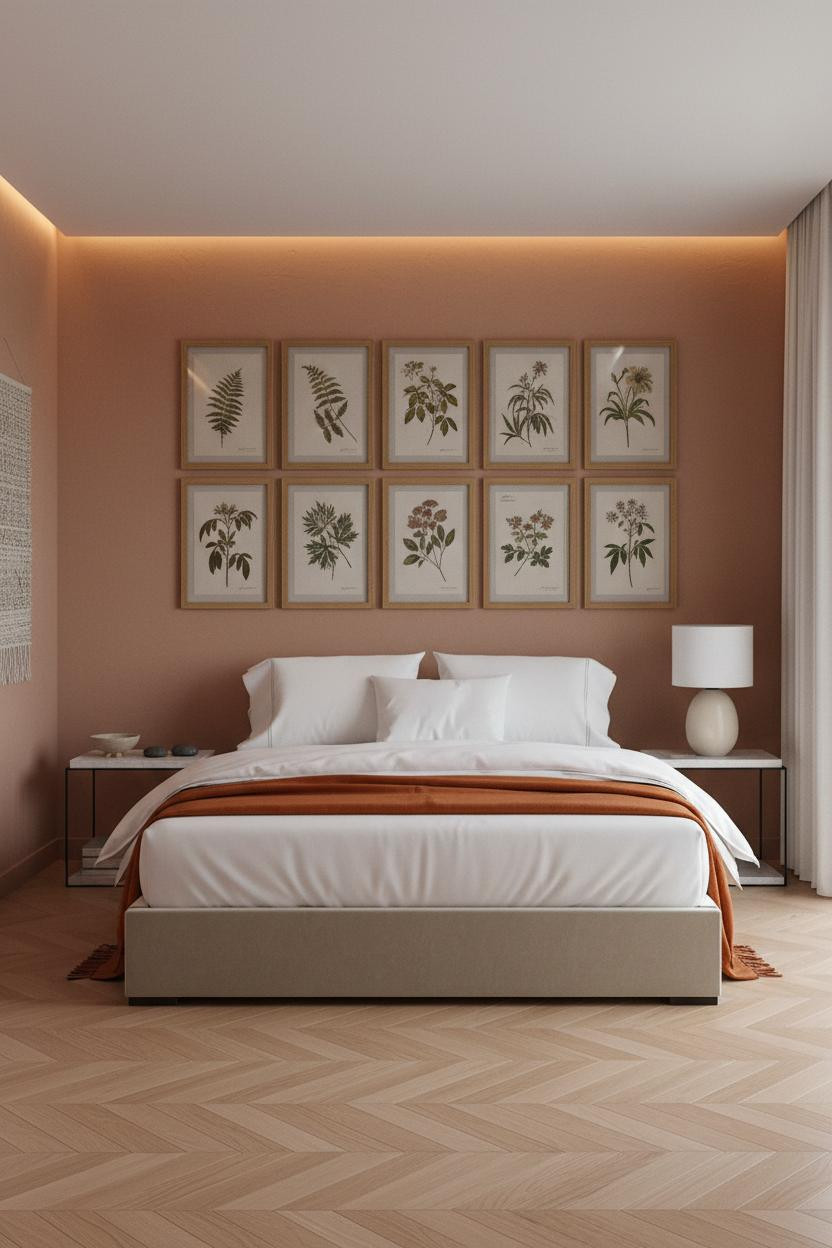


I’m honestly skeptical of gallery walls in zen rooms. Most of them end up too busy. This one earns it.
What makes it work: The frames are unfinished oak with raw linen mats, so the hand-pressed botanical prints feel like found objects rather than decoration. Breathing room between frames matters as much as the prints themselves.
The key piece: Honey birch herringbone underfoot keeps everything warm while the terracotta walls hold the earthy tone. Nothing too matchy.
Wainscoting That Earns Its Place in a Quiet Room
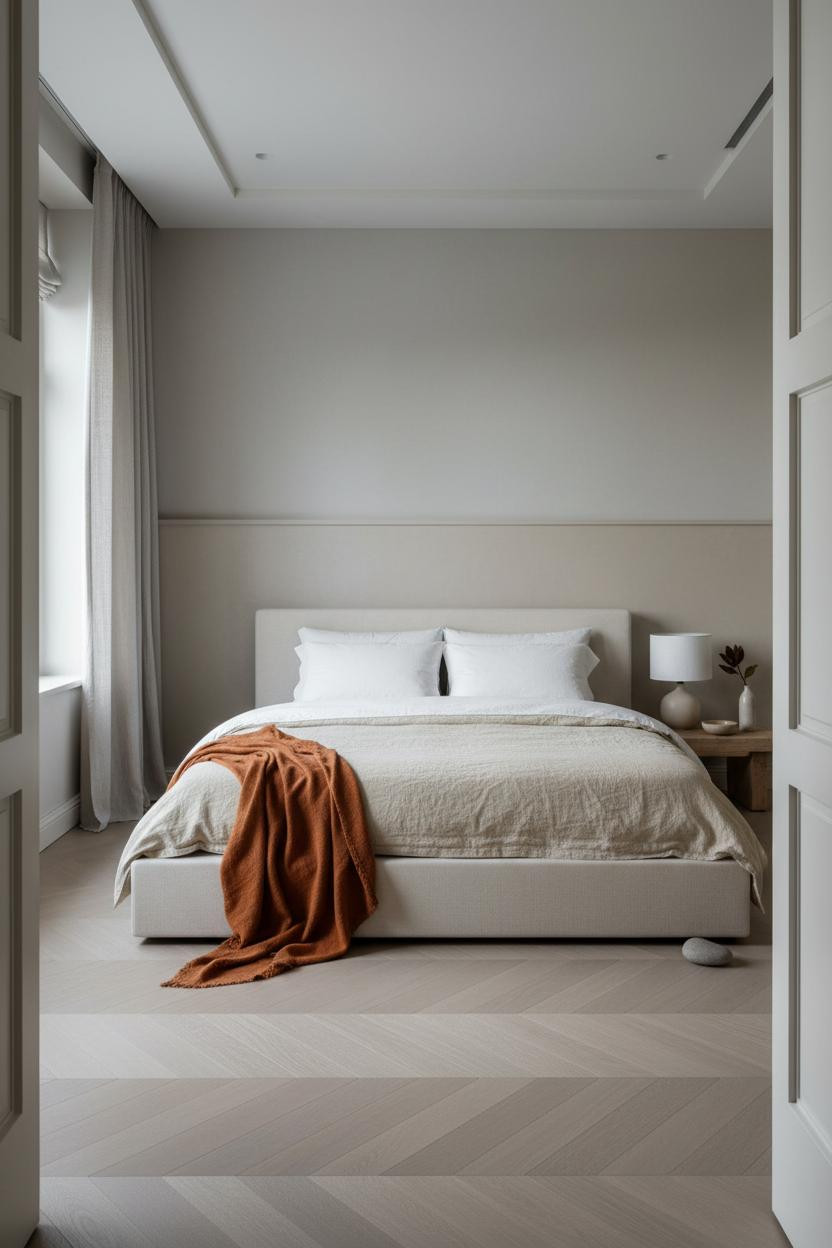
Wainscoting in a Japandi bedroom only lands when the finish is right. Glossy or painted-to-perfection kills the mood instantly.
The real strength: Chalk-matte limewash on the wainscoting panel catches flat northern light so the trowel marks read as quiet relief rather than roughness. The room feels grounded in a way that smooth walls simply can’t replicate.
Floor-to-ceiling undyed flax curtains pooling slightly at the floor are the finishing layer. Don’t hem them too short.
Shiplap Without the Farmhouse Clichés
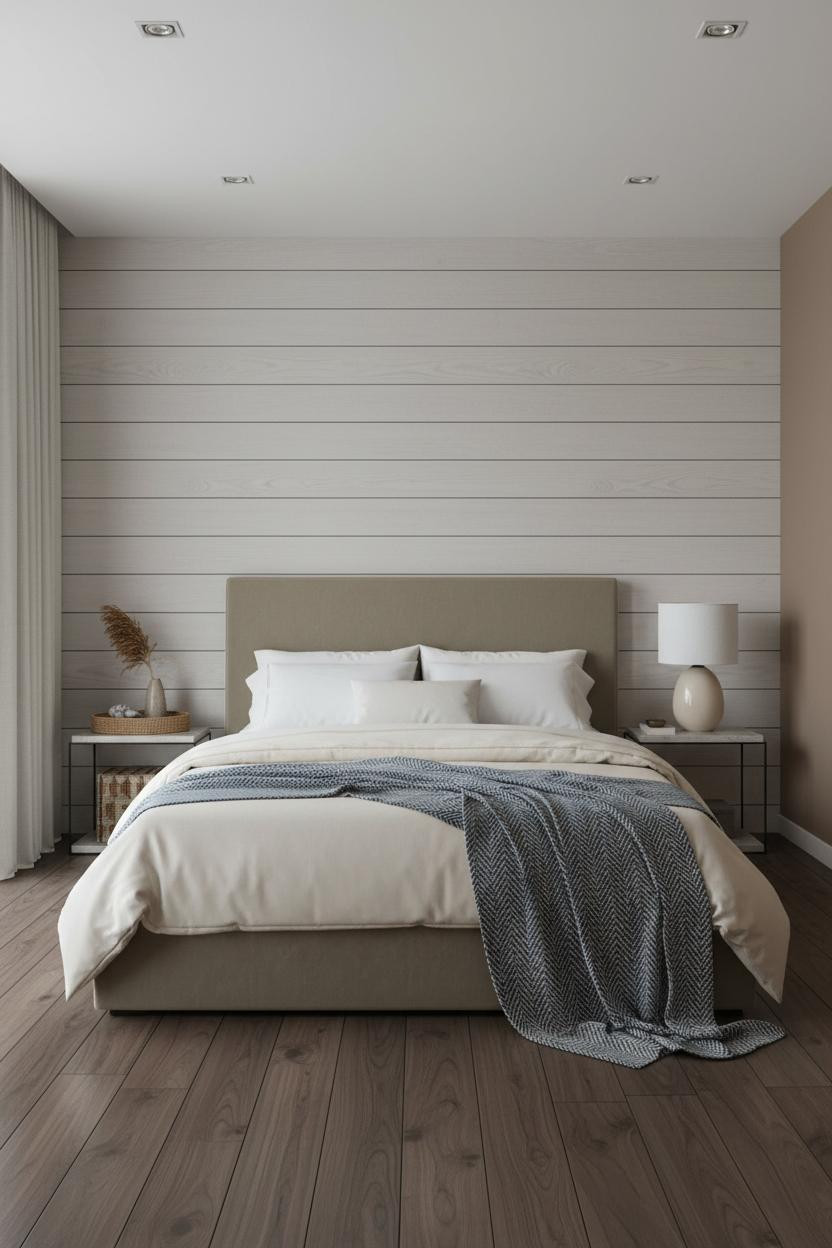

Nothing fancy. That’s the point.
What changes the room: Horizontal pale ash shiplap in a putty-toned bedroom creates meditative repetition without any of the rustic noise. Each board edge casts a hairline shadow that multiplies quietly across the wall.
And the dark walnut flooring underneath grounds the whole thing. The room feels calm and cohesive in a way that works because the contrast is deliberate, not accidental.
Ash Slats and Sand Plaster: A Pairing That Holds
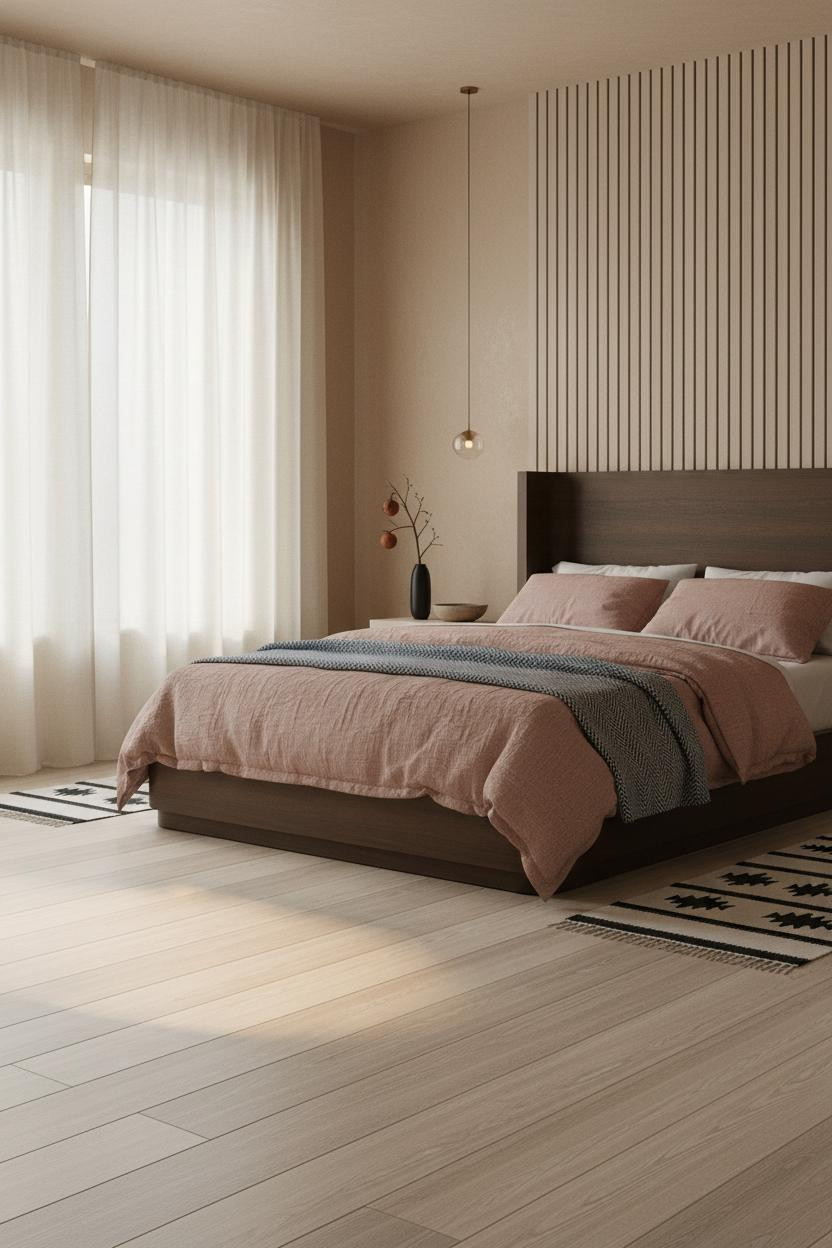

This one is divisive. Vertical slats can feel overdone. But against sand-toned matte plaster, evenly spaced ash battens stay quiet because the tones are so close. No jarring contrast, just rhythm.
Why it feels intentional: The pale pine flooring with visible knots keeps the whole room feeling like it was assembled slowly, over time, rather than ordered in a weekend.
Avoid this mistake: Don’t add a rug. The bare floor is part of what makes the slat wall land. Cover it and you lose the proportion.
Sage Green and the Alcove Niche That Earns the Color
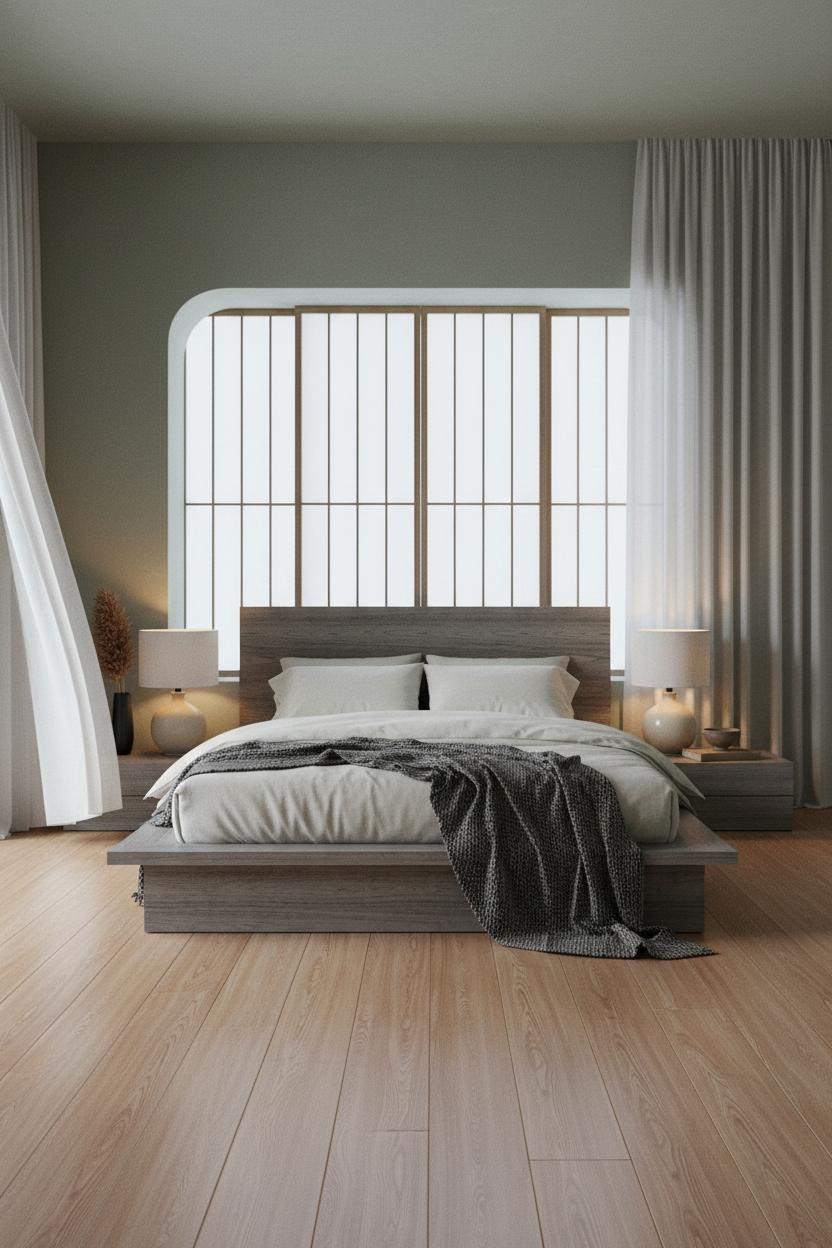

I was skeptical that sage green would hold in a minimalist bedroom. Turns out the curved niche is what saves it.
Design logic: The niche’s inner curve catches grey daylight on one side and falls into shadow on the other, so dusty sage limewash reads as dimensional rather than flat. That’s why it holds the weight of being the only color in the room.
Pro move: Paired flanking sconces casting twin amber pools keep the bedside surfaces warm while the rest of the room stays cool. Just enough contrast to keep things interesting.
The Arched Plaster Niche Is the Oldest Trick for a Reason
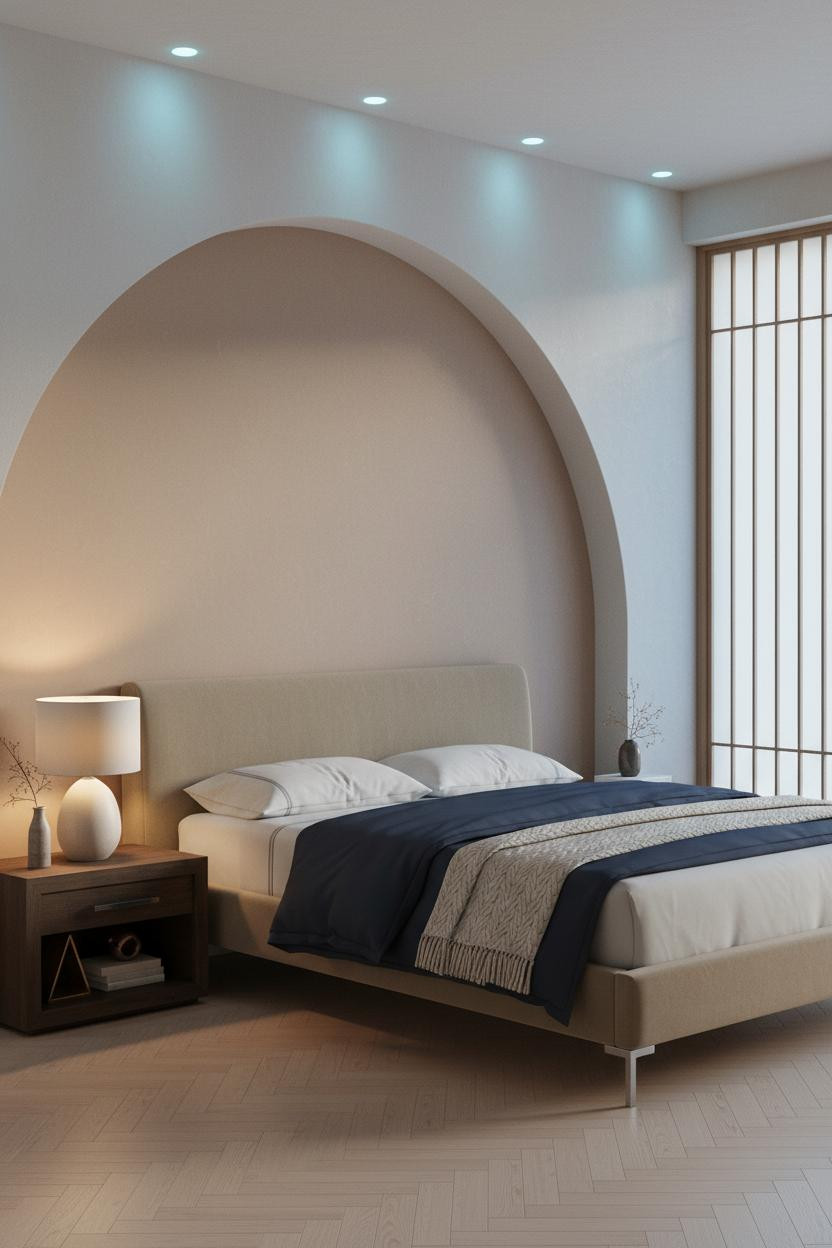
Arched niches keep appearing in wabi-sabi bedroom inspiration because they work. The curve softens the whole room without requiring anything soft in it.
Raw matte plaster inside the arch catches raking light along one smooth inner edge while the opposite side falls into cool shadow. That single architectural detail does more than any wall treatment could.
Where to start: Warm clay-toned limewash on the surrounding walls keeps the niche from reading as stark or museum-like. The birch herringbone floor does the rest.
The Walnut Platform Headboard That Changed My Mind on Floating Wood
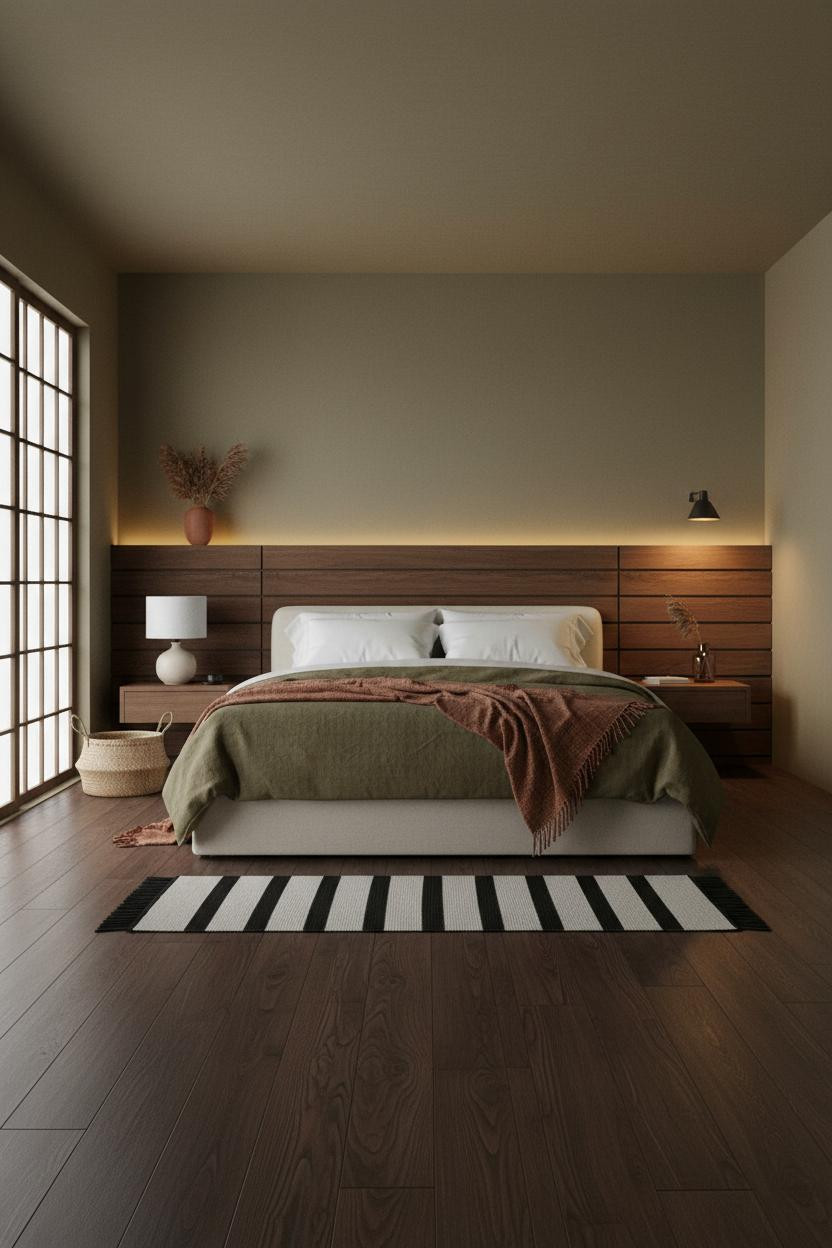

Floating headboards usually feel cold. A full-width walnut platform with horizontal slats is a different thing entirely because the raw grain catches diffused grey light in a way that reads warm without trying.
Why it holds together: The moss-toned limewash walls and dark walnut flooring are so close in value that the headboard doesn’t fight anything. It just sits there, honest and grounded.
The easy win: A backlit panel behind the headboard adds rim glow that keeps the whole wall from going flat in the evening.
Raw Timber Battens on Bleached Birch Floors
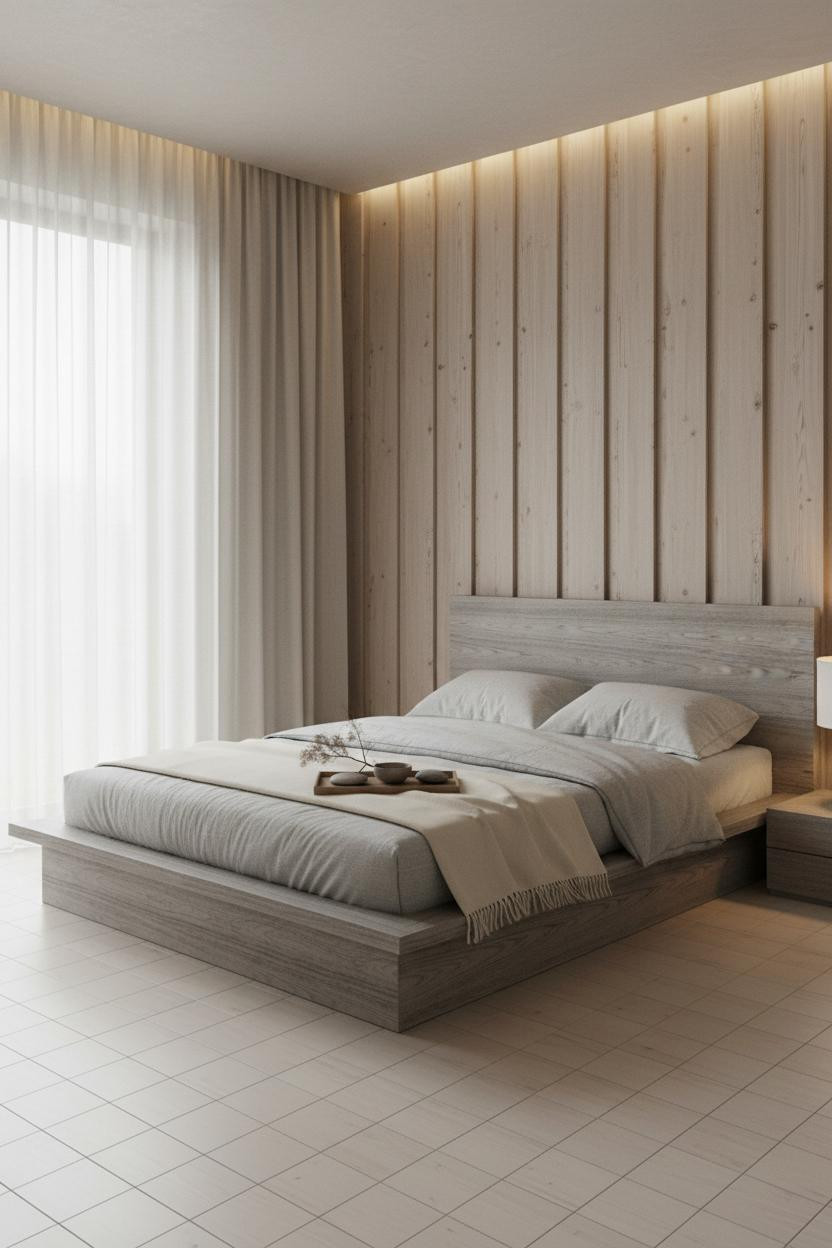
This combination works because both materials are pale. The room feels lived-in and intimate rather than stark.
What gives it depth: Narrow vertical battens in raw natural timber spaced with meditative regularity build quiet rhythm across the headboard wall, while bleached birch flooring keeps the palette light enough to breathe.
One smart swap: Floor-to-ceiling undyed flax curtains framing the window are the only layer you need. Adding a rug here would actually flatten the whole effect.
Charcoal Plaster in Late Afternoon Light
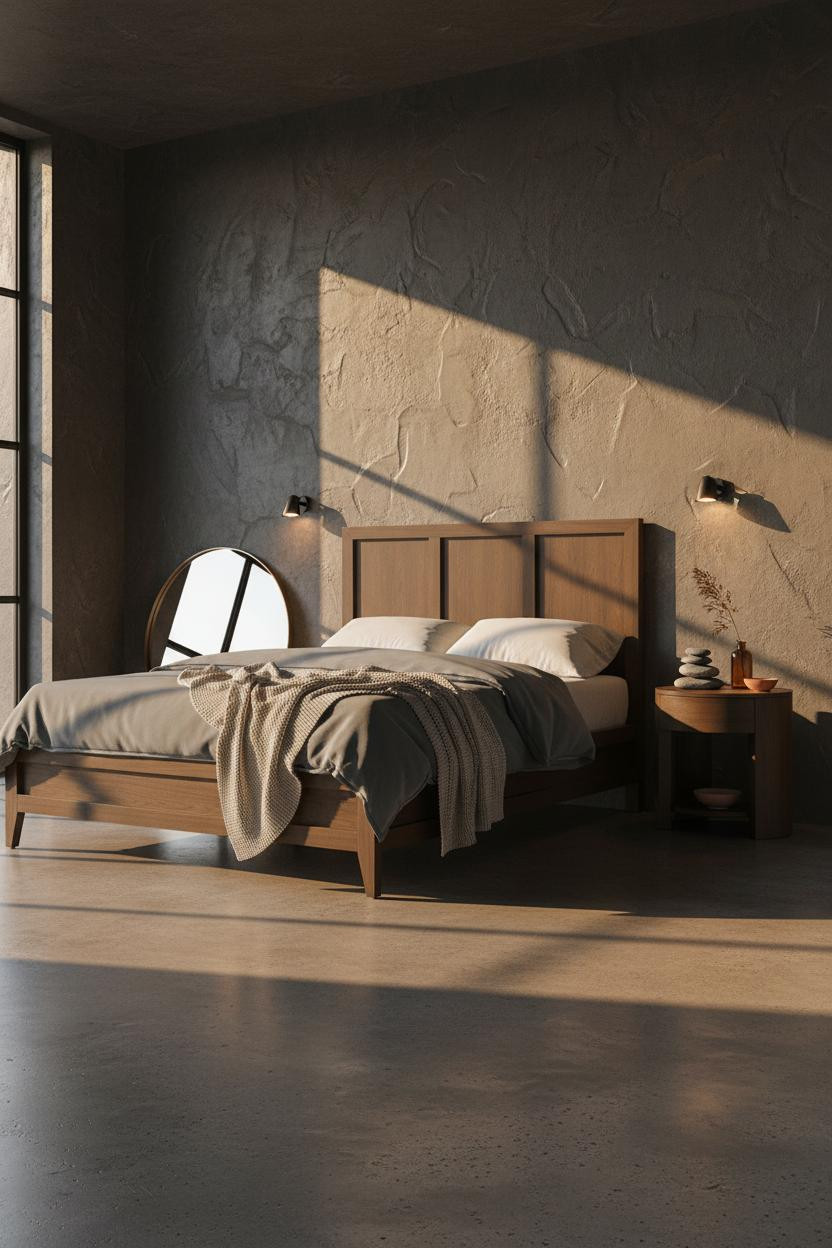
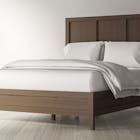
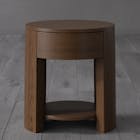
Fair warning. Charcoal plaster is the most committed choice on this list.
But the rooms that pull it off do so because hand-troweled lime plaster shifts between near-black and warm graphite as afternoon light rakes across it. It’s not a static dark wall. It’s a surface that moves with the light, which keeps the room from feeling closed in.
What not to do: Don’t pair this with cold grey bedding. The polished concrete floor already reads cool. Cream or slate keeps it warm enough to sleep in.
Exposed Beams and Lime Plaster. Nothing Extra.
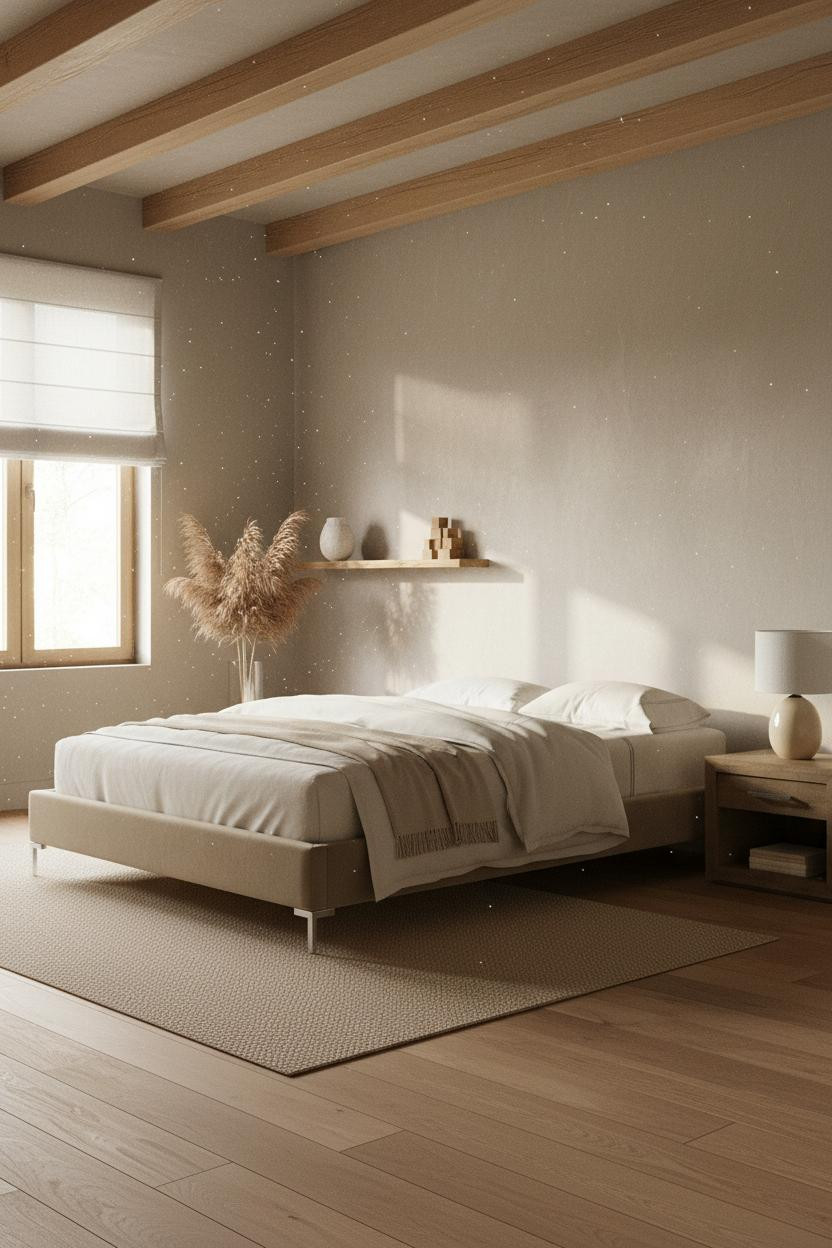
This is my favorite kind of Japandi bedroom because the structure does all the work. The beams are old. The plaster is new. And somehow that tension feels completely at ease.
Why it feels balanced: Honey-toned exposed wooden beams cast gentle parallel shadows down the lime plaster walls, which keeps vertical interest without anything hanging on the walls at all.
The finishing layer: A hand-woven jute runner in neutral tan gives the oak flooring just enough grounding while still feeling like it belongs to the room rather than being placed in it.

Our #1 Pick
Saatva Classic Mattress
America’s best-selling online luxury innerspring. 365-night trial, lifetime warranty, free white glove delivery.
Shop Saatva Classic
The Foundation Of Every Beautiful Bedroom
All of these rooms share one thing: they slow you down. But even the most considered space doesn’t do much if what you’re sleeping on works against you.
The Saatva Classic is what I’d put under every one of these palettes. Dual-coil support that holds without feeling rigid, a breathable organic cotton cover that doesn’t trap heat, and a Euro pillow top that still feels right after years. Walls get repainted. The mattress stays.

Good design ages well because it’s made well. Start with materials that are honest, keep only what earns its place, and get the sleep surface right. The rest follows from there.