
White trim can make a bedroom feel unfinished even when the furniture is carefully chosen. In a room with baseboards about 5 to 7 inches tall, colored woodwork has enough scale to become part of the design instead of disappearing around the edges.
The strongest colorful bedroom trim ideas use consistency first: one enamel color across connected woodwork, then one architectural detail around the bed or ceiling. The result feels tailored because every edge belongs to the same tonal trim scheme.
Paint Every Connected Edge
A tailored bedroom starts with continuity. Paint the baseboards, door casings, window casings, and closet doors in the same deep slate blue trim so the room reads as one architectural composition.
For most bedrooms, satin or low-luster sheen has the right balance of polish and practicality. It catches soft light without turning every fingerprint into a feature.
Use a quality waterborne alkyd enamel instead of standard wall paint, especially on doors and baseboards. A typical gallon costs roughly $35 to $93 at Home Depot or Lowe’s, with premium formulas usually leveling more smoothly and curing harder.
Frame the Bed Wall
Give the bed a clear anchor with one large rectangle of panel molding behind it. A rich burgundy panel frame works beautifully against a warm plaster wall and feels more intentional than scattered artwork.
Keep the proportions generous: allow about 3 to 5 inches of margin beyond the bed on each side, then choose rails roughly 1 3/8 to 2 inches wide. The frame should support the bed, not compete with it.
This idea suits a simple IKEA HEMNES bed because the trim supplies the drama while the furniture stays quiet. Paint the inside of the frame and the surrounding wall in the same color for a tailored, enveloping effect.
Split the Wall at Chair-Rail Height
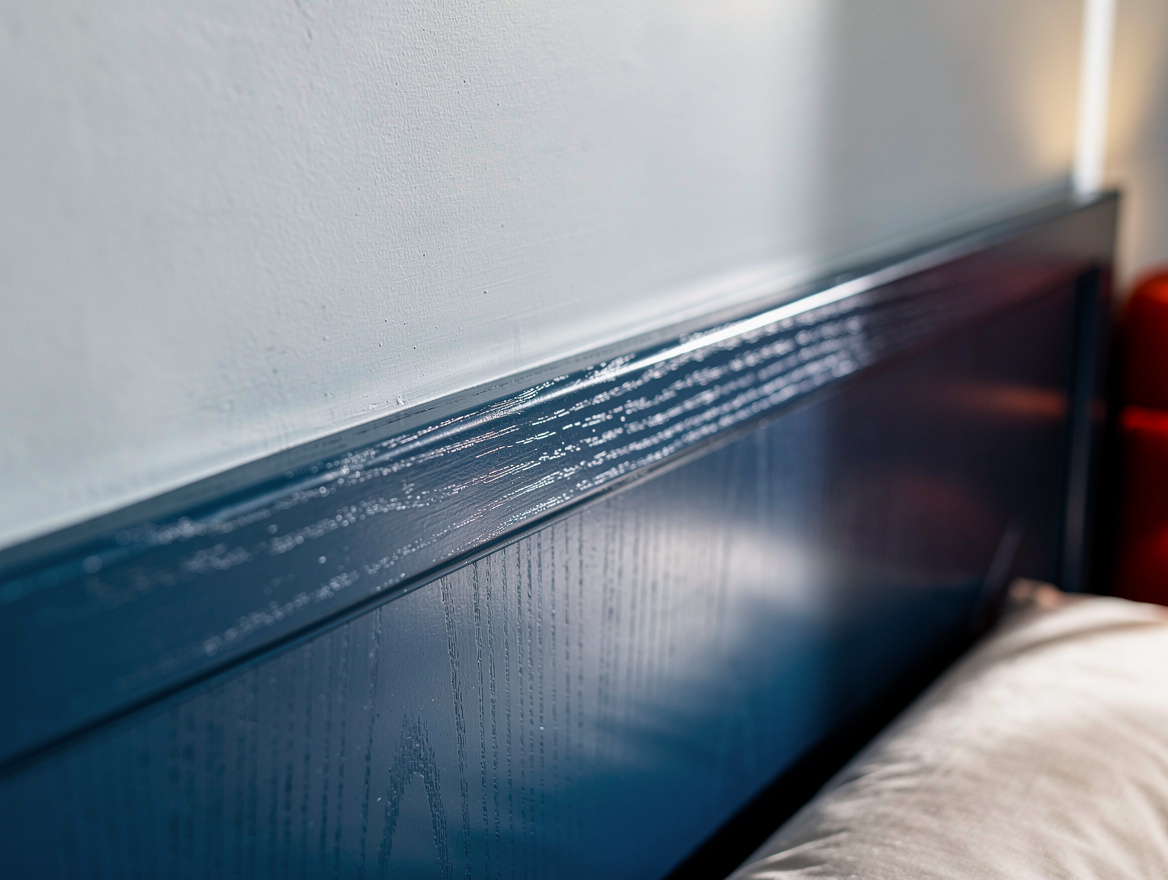
A two-tone wall gives a small bedroom a strong visual baseline. Install a deep olive chair rail around 36 to 42 inches from the floor, then carry the darker color across the lower wall.
Keep the upper section lighter and warmer so the room does not feel compressed. A creamy mineral white above a brown-red lower half can make old trim feel deliberate rather than dated.
Use a chair rail with enough presence to read from the doorway, but avoid an ornate profile in a compact room. A satin finish on the lower wall and trim adds durability near beds, desks, and storage.
Build a Quiet Picture-Frame Grid
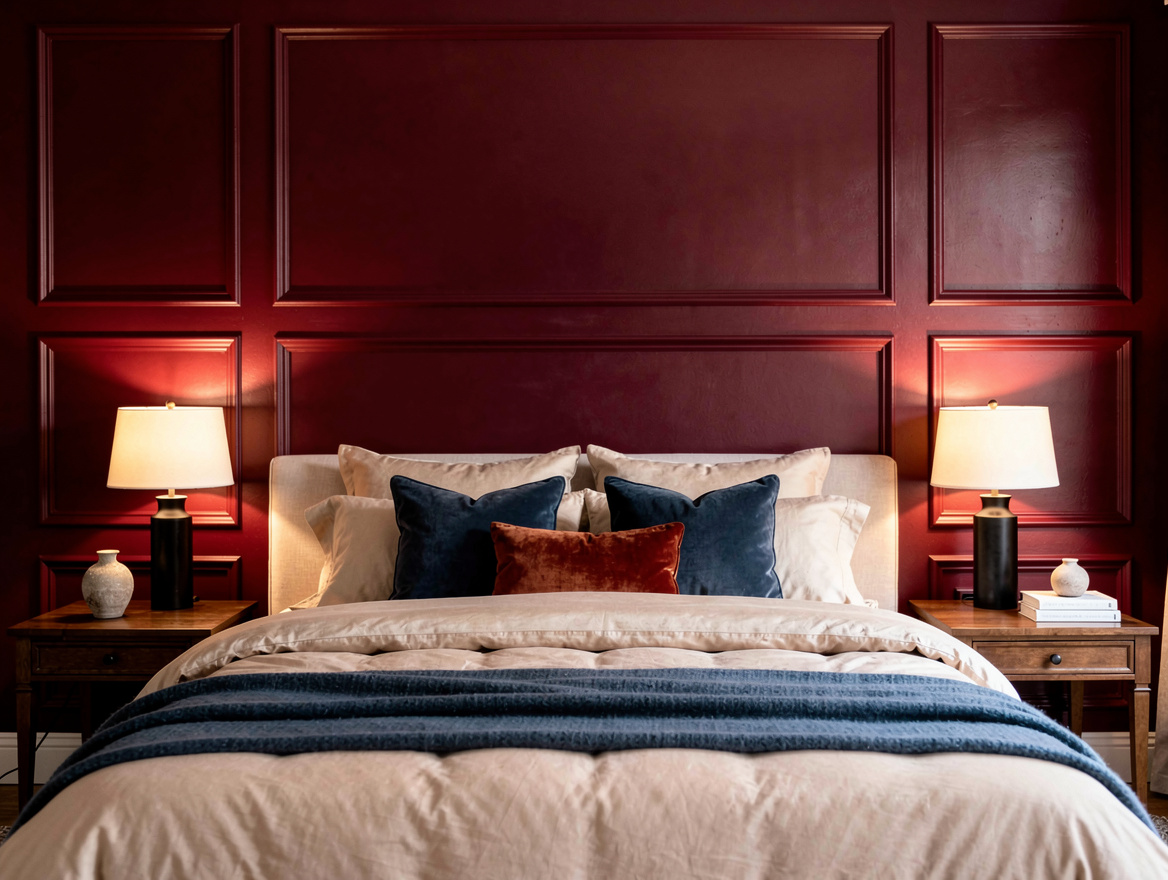
A shallow grid creates tailored detail across an entire bed wall without requiring custom cabinetry. Choose a 35-millimeter picture-frame profile and repeat it in rectangles about 24 to 36 inches wide.
For a restrained result, paint the molding and wall in one shade, then let the shadows supply the contrast. For more energy, use a saturated coral or aubergine on both surfaces and keep the bedding neutral.
Leave consistent gaps between each rectangle and stop the layout before it reaches the corners. Four well-spaced panels usually look calmer than a crowded arrangement that follows every inch of the wall.
Carry Color Onto the Ceiling
A ceiling band makes a bedroom feel finished from the moment you enter. Add a thin butter-yellow ceiling band above a picture rail or crown molding, then repeat that color on a small ceiling zone.
Use a band roughly 6 to 12 inches deep when the ceiling has enough height to support it. In a lower room, keep the band narrower and choose a soft sky blue or pale terracotta instead of a heavy dark shade.
The trim should remain simple, about 1 1/2 to 3 1/2 inches in profile, so the color stays in charge. This is especially effective in rooms with old windows, where the upper band connects the ceiling, casing, and wall in one clean gesture.
Turn the Door Into Furniture
Painting the door, casing, and baseboards in one bold shade is the fastest route to a tailored bedroom. An ink-blue bedroom door can hold its own against warm white walls and modest furniture.
Choose a casing about 3 1/2 to 4 1/2 inches wide and pair it with a baseboard at least roughly 5 1/4 inches tall. That scale gives the color enough surface area to look architectural instead of accidental.
Brick red, black-green, and plum all work when the rest of the room stays edited. A Wayfair nightstand, plain linen bedding, and one ceramic lamp are enough support; the door should remain the loudest object in the room.
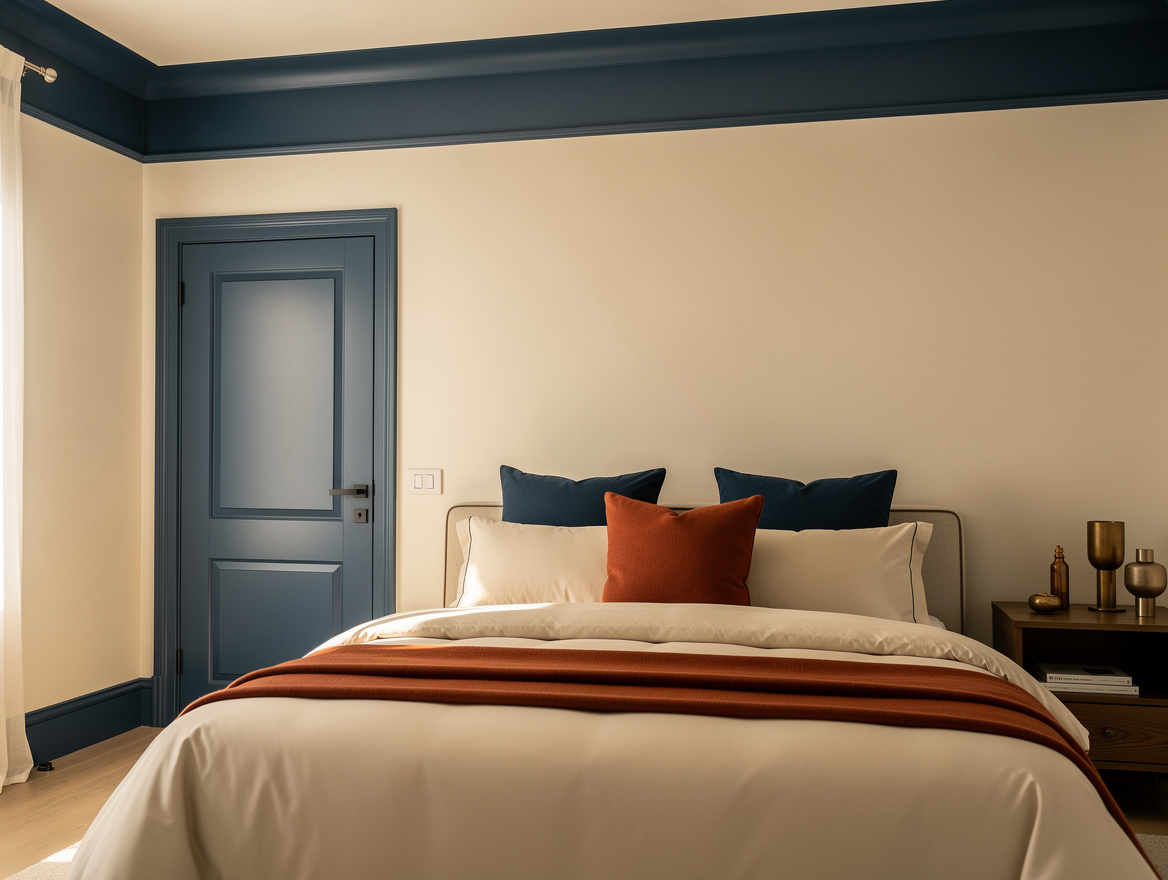
Start with the door, baseboards, and casings before buying decorative accents. Once that satin enamel finish is dry, decide whether the room needs a framed bed wall, a ceiling band, or no extra detail at all.
Mia Carter writes about small-space living and budget home makeovers. She has restyled three rentals and tests most ideas in her own 45 sqm flat.