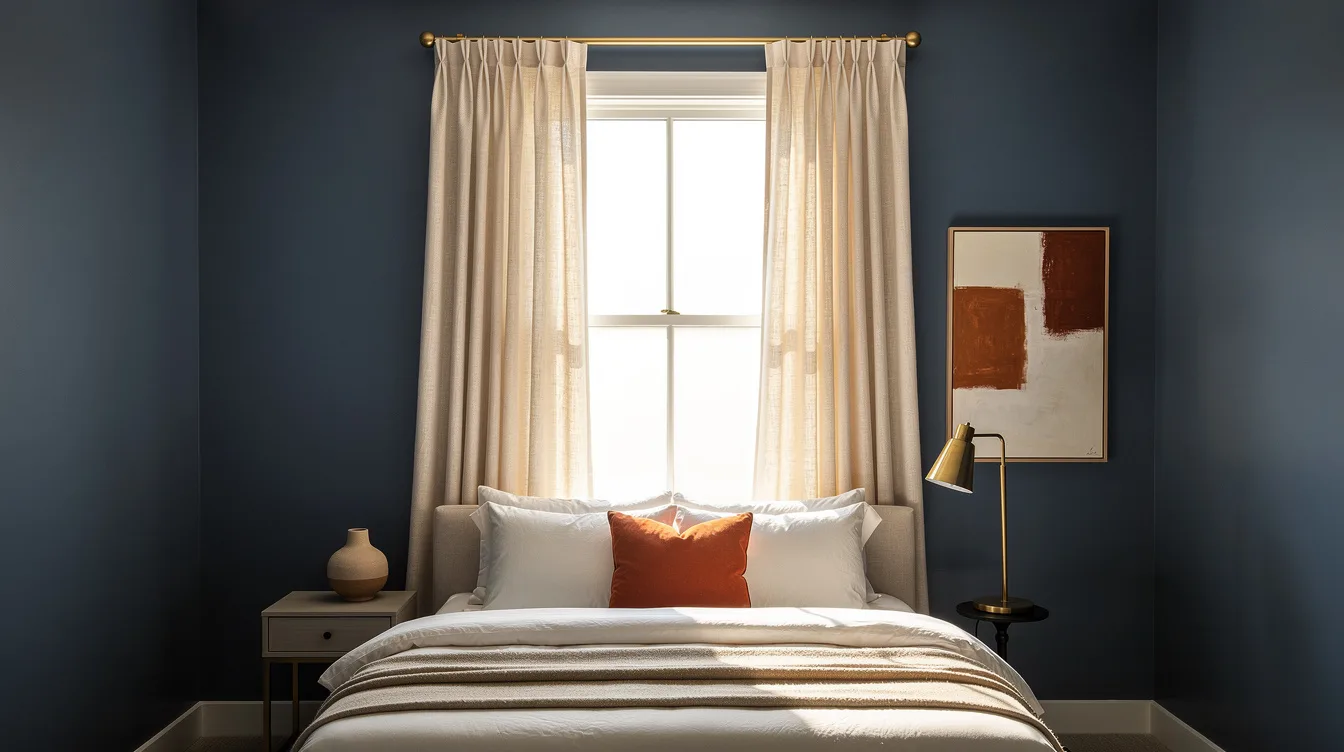
I once watched a small bedroom feel tighter after its new curtains went up, which seemed backward until I noticed the rod was nailed to the trim. The 36-inch-wide window had been treated like a boundary instead of an opening.
The fix is pleasantly practical: make the curtain treatment taller, wider, and fuller than the glass. Fabric should frame the wall, then move out of the window’s way when daylight is needed.
Raise the Rod Above the Trim
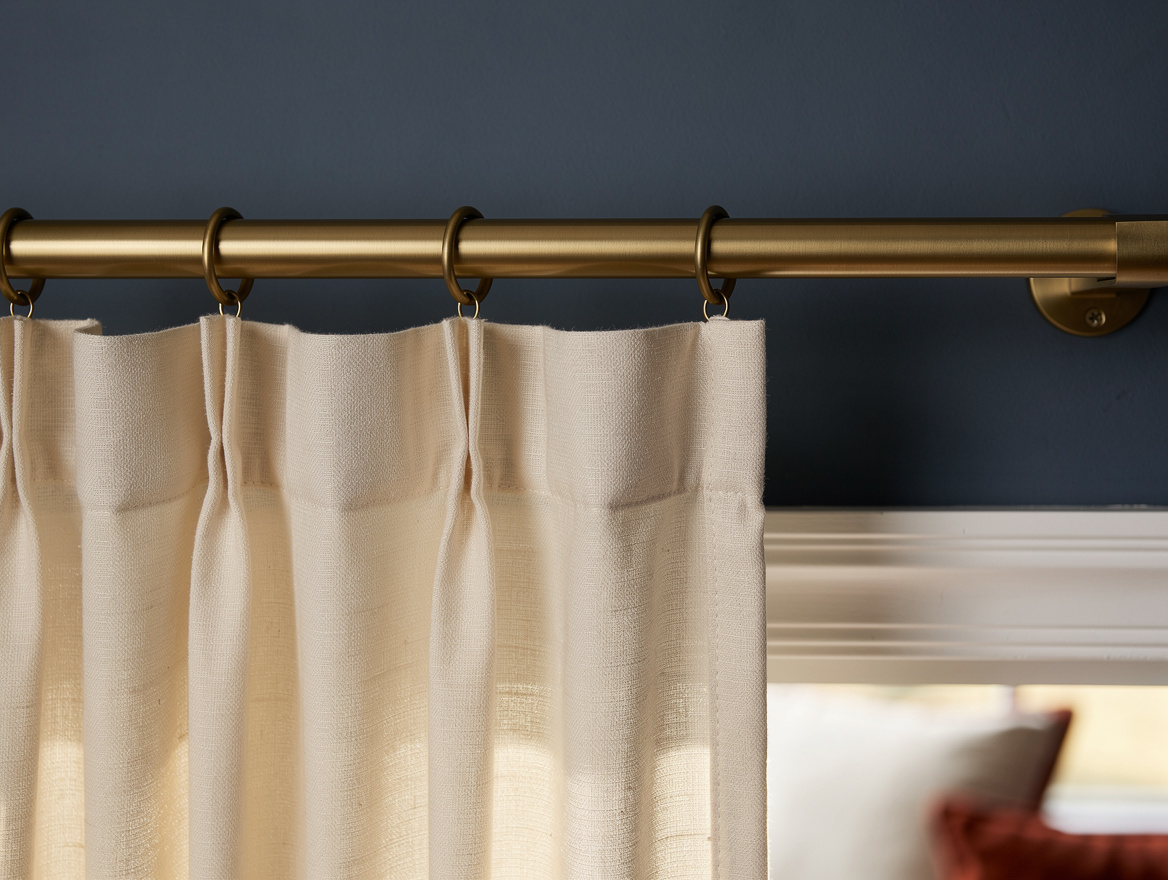
A rod parked directly above the trim makes the ceiling feel lower, especially beside a bed with a 54-inch-wide footprint. Install a slim brass curtain rod roughly 4 to 6 inches above the frame, or closer to the ceiling when the wall allows.
This extra wall space gives the eye a taller line to follow. A rod that hugs the trim gives a small window all the visual authority of a medicine cabinet.
Let the Hardware Clear Both Sides
Panels need somewhere to go when they are open. Extend the rod roughly 4 to 10 inches beyond each side of the frame so the fabric can sit mostly off the glass.
For a typical 36-inch bedroom window, a 52- to 56-inch span is a useful target when wall space permits. Choose an adjustable Target Threshold rod in a restrained finish, because oversized finials create another bulky interruption.
Choose a Drop That Reaches the Floor
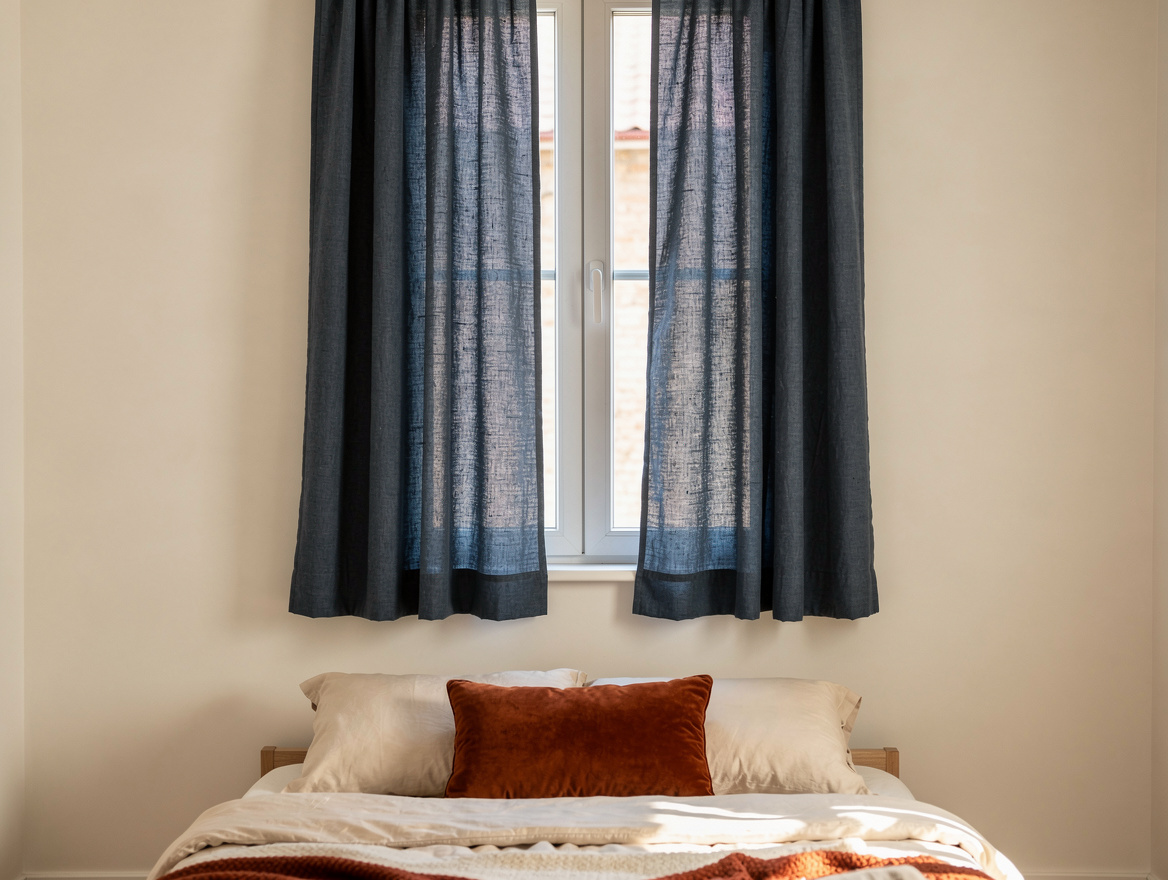
A 63-inch panel often ends around the apron, slicing the wall into an awkward upper and lower half. Floor-skimming fabric is the more convincing move: hem panels to touch the floor or hover roughly ½ to 1 inch above it.
For an 84-inch drop from rod to floor, buy long panels and hem them after installation. Standard IKEA HILJA curtains are commonly sold in long formats, and their light-filtering polyester keeps the wall from feeling sealed off.
Buy Enough Fabric to Look Intentional
Narrow panels stretched flat across the glass are the quiet culprit behind a cramped-looking window. Aim for combined fabric width of roughly twice the rod width, or around 2 to 2.5 times for sheers and a fuller finish.
On that typical 52- to 56-inch rod, two 52- or 54-inch-wide panels give about the right amount of fabric. Two 42-inch panels may cover a 36-inch window, but they usually look skimpy once closed.
Keep the Fabric Visually Light
Small bedrooms benefit from materials that catch daylight instead of blocking it. A white sheer polyester, linen-look weave, or warm ivory panel makes the treatment read as part of the wall.
Dark opaque drapes, giant botanical prints, and heavy velvet panels can work in a deliberately moody room, but they demand more visual space. A light-filtering layer with a concealed neutral blackout liner gives you softness by day and privacy at night.
Use Layers Without Adding Bulk
A double rod is worth considering when streetlights or early sun disturb sleep. Put a soft sheer panel on the front rod and a matching light-to-mid-neutral blackout panel behind it, so the window reads as one calm vertical plane.
For a typical two-panel setup, IKEA MAJGULL room-darkening curtains run about $40 to $60, while Target Threshold blackout curtains commonly land around $30 to $80 per pair or set. Favor simple back tabs, pinch pleats, or ripplefold headers over thick grommets on a chunky decorative rod.
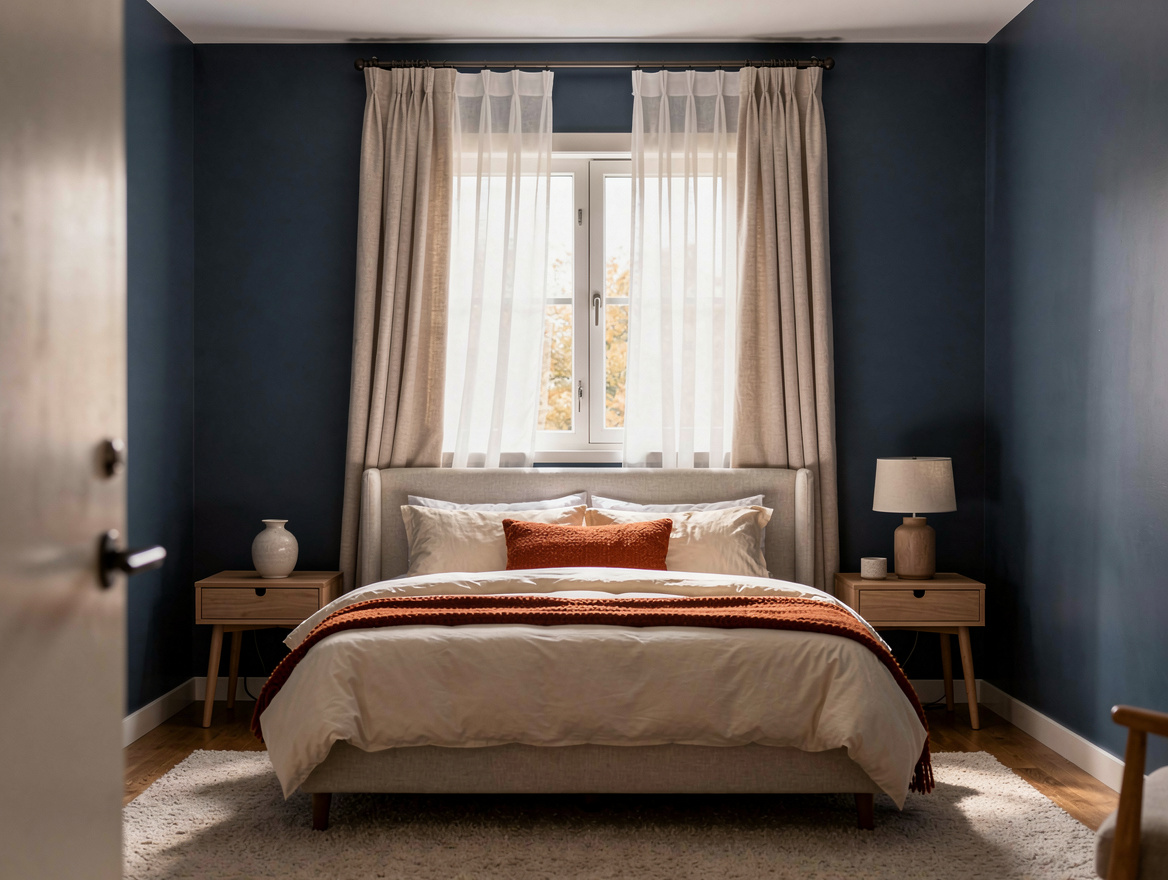
Start with the rod placement before shopping for fabric. Raising and widening that single line gives every later choice, from a sheer layer to blackout panels, room to work.
Mia Carter writes about small-space living and budget home makeovers. She has restyled three rentals and tests most ideas in her own 45 sqm flat.