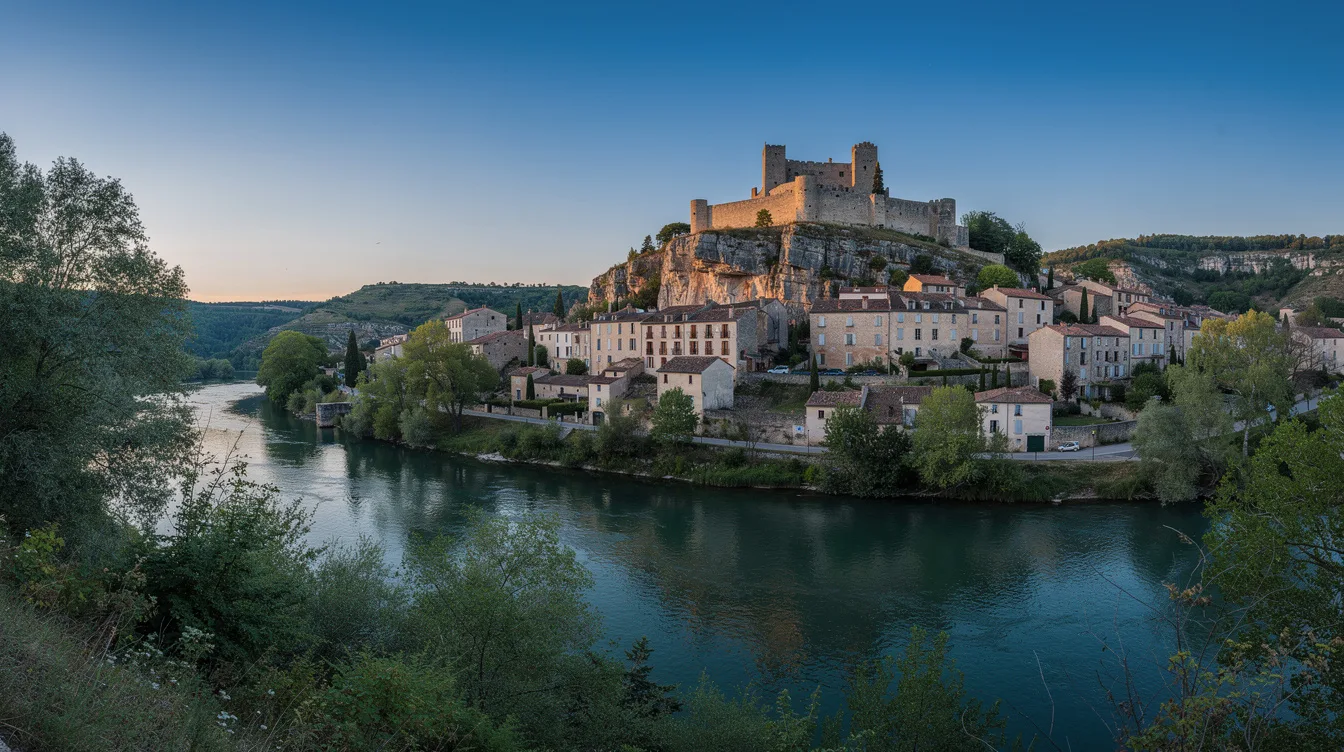
Vogüé sits beside the Ardèche River, its old stone homes climbing toward a limestone cliff. This medieval village is part of Les Plus Beaux Villages de France, and the designation makes sense the moment you see the compact streets beneath the castle.
But don’t arrive expecting a quiet secret in summer. Vogüé is about 6.2 miles south of Aubenas, so it draws day-trippers quickly. Get there in the morning, before the river parking and narrow lanes fill.
A medieval village pressed against the river
The appeal is physical. The village stands along the Ardèche, with a pale cliff behind it and water at its feet. Because everything is tightly gathered, you can walk from cobbled alleys to the riverbank in minutes.
And this is where Vogüé earns the title’s promise. Its old center has stone houses, arcades, vaulted passages, and lanes that turn just enough to make you slow down. You’ll want to wander without a route, though the streets can feel busy at midday.
The Ardèche River changes the pace. From the lanes, you hear the softer sounds of water and people settling near the shore. It feels lived-in rather than staged, but summer traffic is part of the bargain.
The castle gives Vogüé its best angle
Château de Vogüé rises above the village with its towers, a reminder of the former seigneurial family associated with the site. The building has medieval origins, and its position explains why the streets below feel almost sheltered by stone.
And the suspended gardens are worth seeking out for the valley views. You don’t come here for a huge museum day. You come because the castle, cliff, rooftops, and river line up in one tight frame.
That said, give yourself time. A quick look through the village can take half a day, but the castle and a pause by the water make a full day the better call. The reward is unhurried looking, not checking sights off a list.
Can you swim in Vogüé?
Yes, Vogüé has a riverside beach that’s especially appealing in summer, provided river conditions allow swimming. Bring what you need before settling in, then let the cold river water reset the afternoon.
But check conditions locally before you go in. The river is the attraction, not a guaranteed swimming pool. If the water isn’t suitable, the bank still gives you a fine place to sit and watch canoes move downstream.
Use Vogüé as a starting point, not a finish line
Vogüé is a known departure point for canoe trips toward the Ardèche gorges. That makes it more active than its medieval facade suggests. You can leave stone arcades behind and be on the water, with limestone rising beyond the current.
And cyclists have an easy second option. The Via Ardèche is a greenway connecting Vogüé with Grospierres over about 15.5 miles. It’s a practical way to extend the day without getting back in the car.
You can also combine Vogüé with Balazuc, Lanas, Ruoms, and Vallon-Pont-d’Arc. Don’t try to rush all of them in a few hours. Vogüé works best when you give it room to breathe, then choose one more stop.
When to go and how long to stay
Summer has the strongest pull because the beach, canoe access, and riverbank all come alive. It’s also the busiest period. Arrive early or later in the afternoon, and you’ll have a better chance of finding parking near the river.
A half day is enough for the old village, castle, and a slow walk beside the Ardèche. Add swimming, canoeing, or the greenway, and plan a full day. You’ll enjoy Vogüé more if you don’t treat it as a roadside photo stop.
By late afternoon, light settles on the stone facades and the river keeps moving below the cliff. The narrow streets may still hold visitors, but the water gives the village its quieter last word.