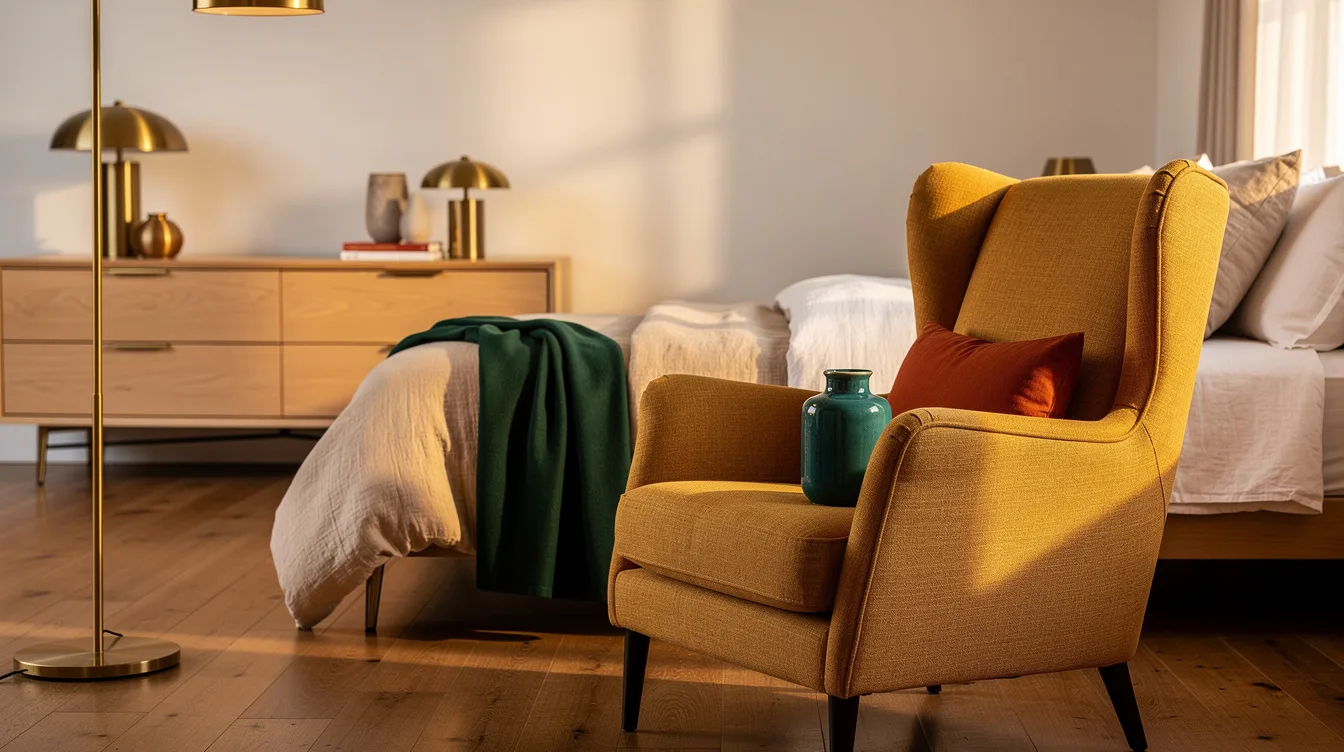
A floor lamp can solve the gloomy corner beside your dresser, then create a brand-new obstacle on the walk to the closet. In my experience, a typical 58-inch lamp feels right in a bedroom because it adds presence without looming over the bed.
The placement matters more than the silhouette. Put the light where your room needs a softer layer, keep the bulb out of your seated sightline, and protect the routes you use half-awake.
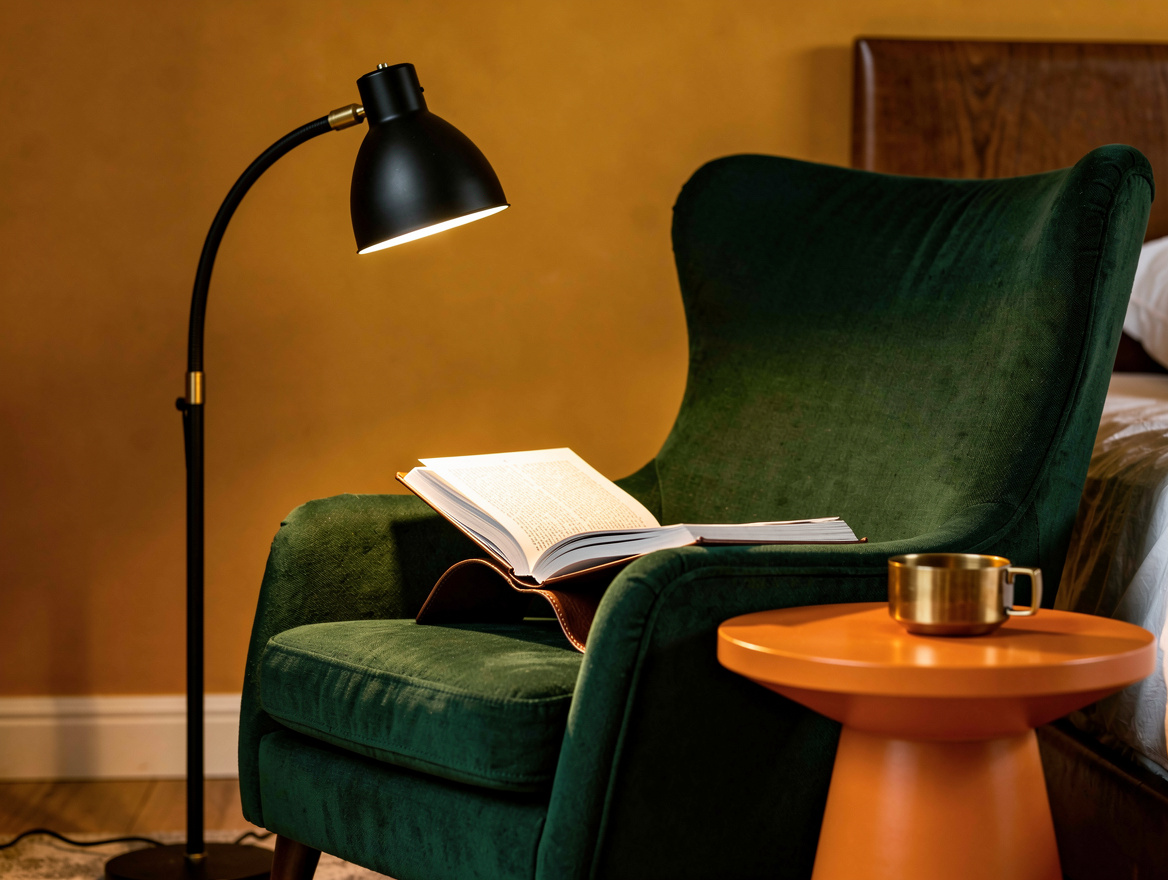
Tuck a Task Lamp Behind a Reading Chair
Place an adjustable gooseneck lamp slightly behind and to one side of a reading chair, so the beam falls over your shoulder and onto the page. A typical 56- to 60-inch height gives useful light without shining straight into your eyes.
I like a narrow matte black pharmacy lamp here because it looks purposeful, especially beside a leather chair or upholstered slipper chair. Aim for roughly 800 to 1,000 lumens if this is your real reading spot, with a dimmer for late-night chapters.
Replace a Crowded Nightstand With a Slim Lamp
A slim bedside reading lamp is the right answer when a 54-inch bed leaves little room for two generous nightstands. Set its base roughly 12 to 18 inches from the bed edge, keeping enough open floor for making the bed and getting in comfortably.
Angle the shade behind the pillow line and toward the book, not toward your face. A narrow brushed brass column lamp has more polish than a bulky table lamp squeezed onto a tiny shelf, and it keeps the surface free for water, glasses, and a phone.
Wash an Empty Corner With Ambient Light
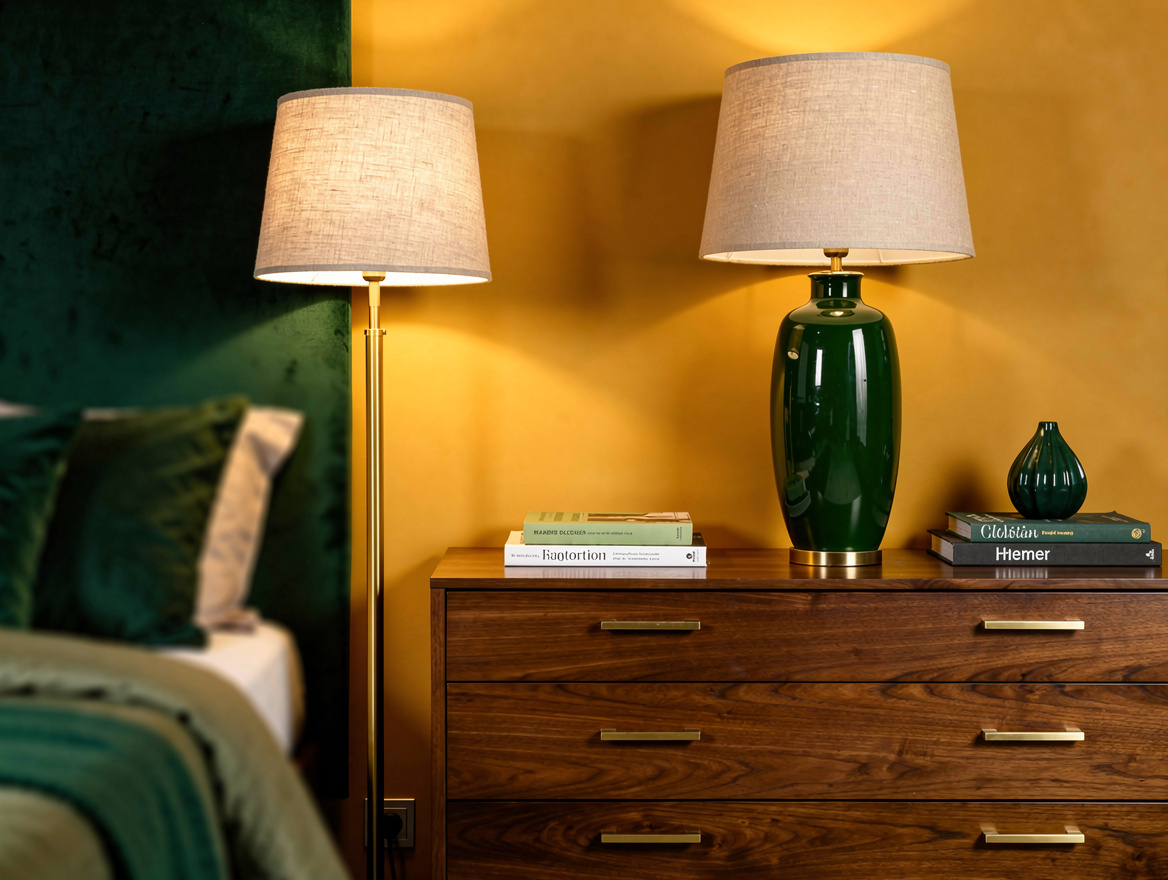
An empty corner near a low dresser or opposite the entry is where a floor lamp earns its keep. Set a linen-shade column lamp roughly 6 to 12 inches off the wall so its glow reaches both wall and ceiling instead of making one harsh bright patch.
Choose warm light around 2,200 to 2,700K for the bedroom. A typical 400- to 800-lumen bulb in a cream linen shade makes overhead lighting feel optional, which is exactly how a bedroom should feel after dark.
Light a Dresser Without Blinding the Mirror
Beside a dresser, use a diffused lamp to soften the room while you choose clothes or make the bed. Position a frosted-globe floor lamp around one foot to the side of a mirror, rather than directly in front of it, to reduce distracting glare.
This is a strong place for a dimmable ivory torchiere, particularly in a minimal bedroom with plain walls and dark wood furniture. Skip exposed clear bulbs here, because they reflect in the mirror and make an otherwise calm room feel busy.
Protect the Walking Route in a Small Bedroom
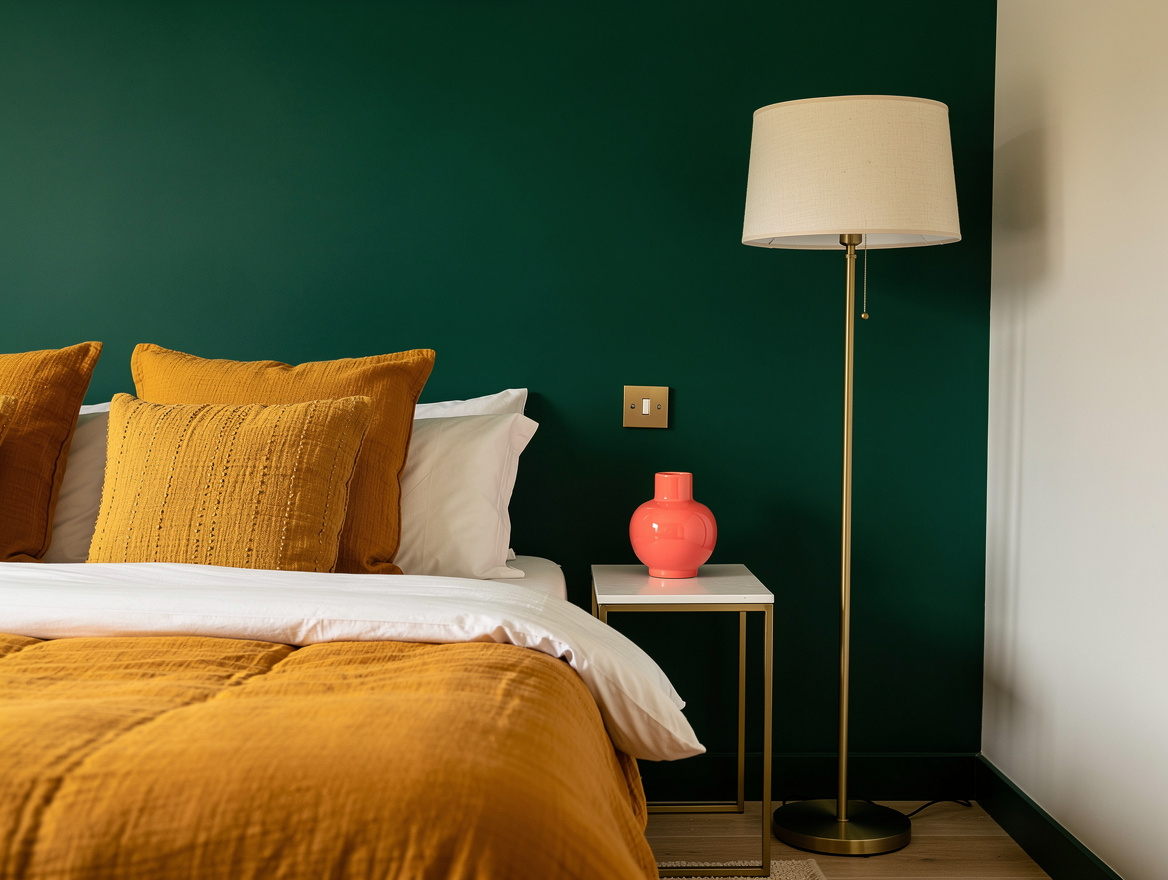
Small bedrooms reward restraint. Pick a single-post floor lamp with a circular base around 8 to 12 inches wide, and keep at least roughly 24 inches of walking clearance near the bed, wardrobe, and doorway.
Tripod lamps can be lovely, but their legs often spread roughly 16 to 24 inches and quietly take over the room. A slim IKEA floor lamp or a narrow option from Target is usually the smarter buy when every inch beside the bed already has a job.
Keep an Arc Lamp Close to Its Seat
An arc lamp should hover over a reading chair or just the outer edge of the mattress, never the center of the bed. Let the shade of a small arc lamp extend roughly 2 to 6 inches over its target, which gives focused light without the heavy, hotel-lobby look.
Keep every cord along the baseboard or hidden behind furniture. A tall bronze arc lamp across the route between the bed, bathroom, and closet is a bad idea, no matter how good it looks in a product photo.
Start with the darkest corner you actually use after sunset, then measure the walking path before ordering anything. A dimmable warm-light lamp with a small base will improve more bedrooms than an oversized statement piece.
Mia Carter writes about small-space living and budget home makeovers. She has restyled three rentals and tests most ideas in her own 45 sqm flat.