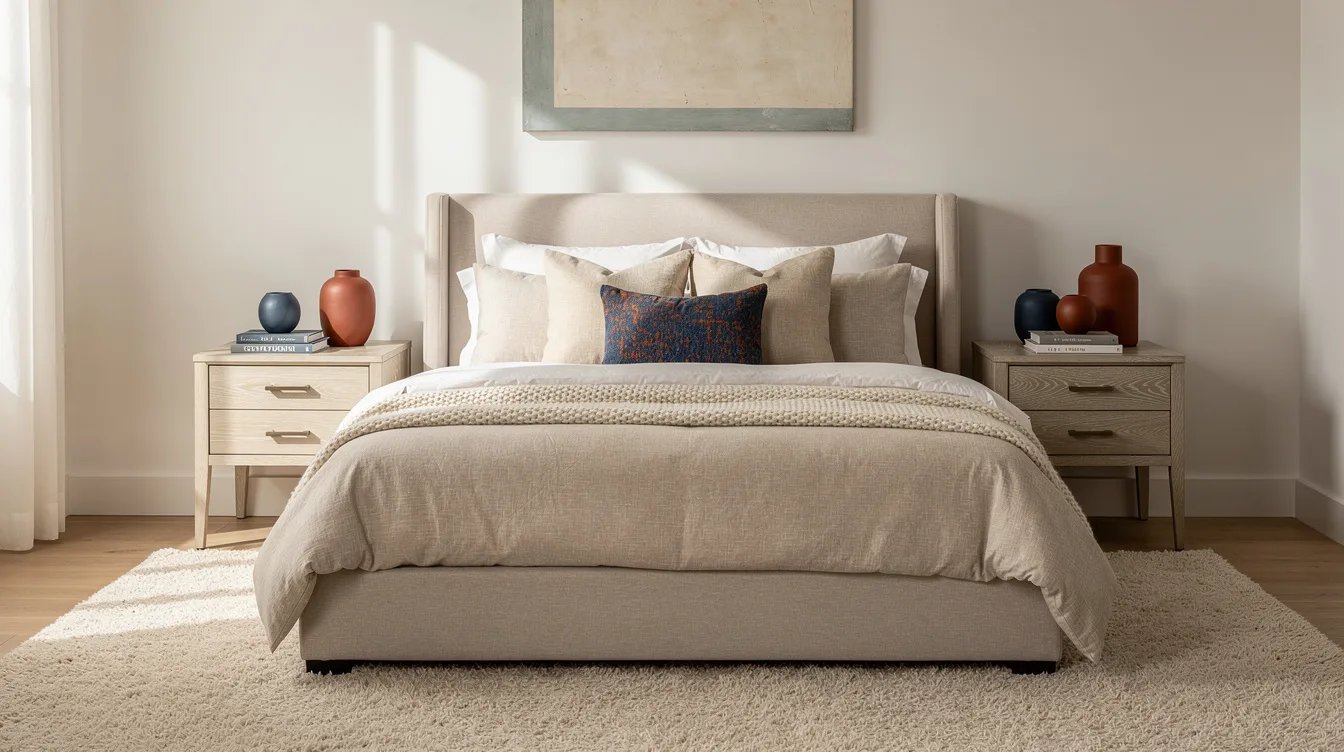
I love a neutral bedroom, but I also know how easily it slips into looking washed out. The problem usually shows up around a typical 60-by-80-inch queen bed, where pale walls, pale bedding, and a too-small rug all blend into one flat block.
The fix is rarely more decor. It is better scale, warmer finishes, and texture that actually earns its place.
Choose a Warm White That Stays Soft All Day
Most neutral bedrooms fail at the paint stage. A cold white on four walls can make morning light feel harsh and evening lamp light look slightly gray.
Start with an off-white that has a warm base, then repeat that tone in one other place so it feels intentional. Behr Swiss Coffee, sold at Home Depot, is the kind of white designers keep coming back to because it reads calm instead of clinical.
I like warm white best when the trim stays the same color or just one step brighter. High contrast trim is too sharp for a bedroom, and neutral rooms need softness more than drama.
Layer Beige Through Materials, Not More Color
A neutral room gets depth from texture before it gets anything from extra shades. Beige walls, beige bedding, and beige carpet can work, but only if the surfaces actually change.
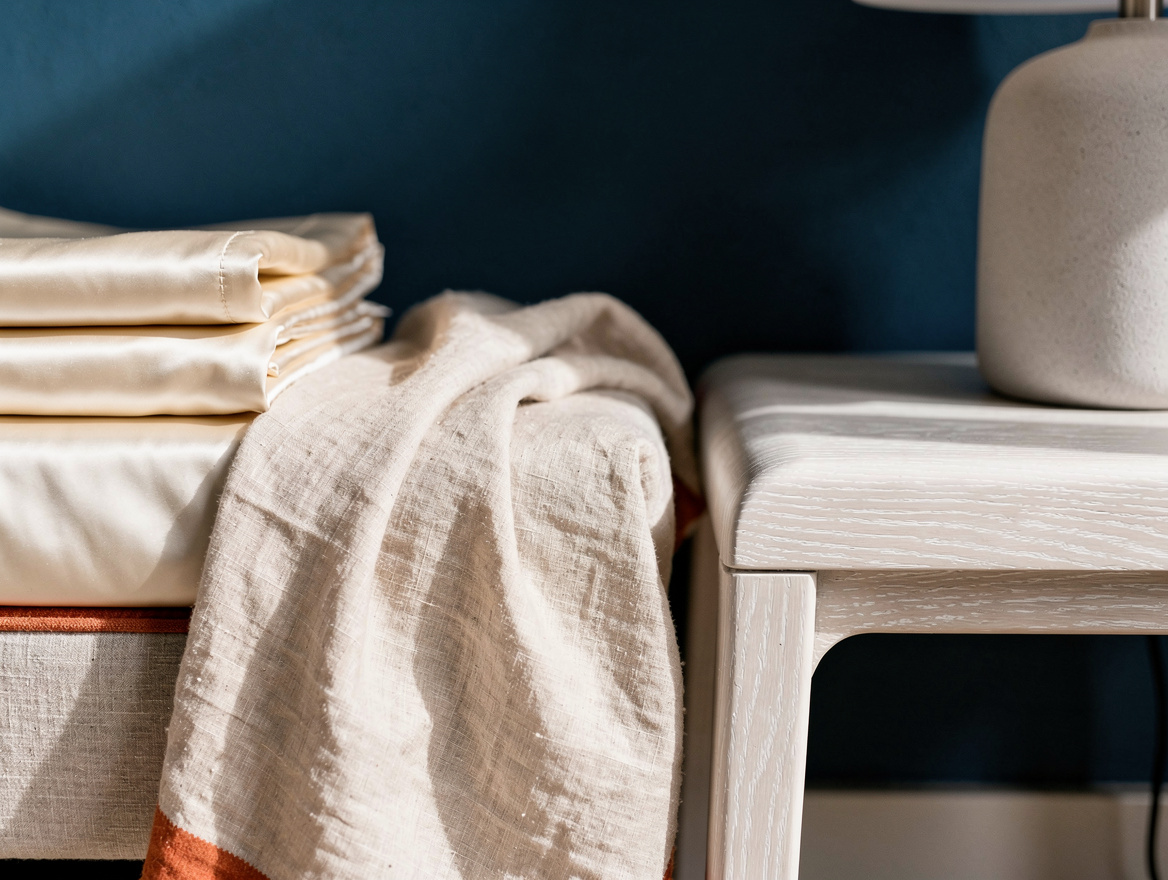
Think crisp cotton, washed linen, nubby wool, and light wood in the same sightline. IKEA NATTJASMIN sheets are often around the mid-$50 range for a queen set, and they work well because the sateen finish adds a quiet sheen against flatter fabrics.
This is where a lot of bedrooms go wrong, they rely on color names instead of material contrast. A sand throw, an oatmeal curtain, one oak bench, that mix feels finished without trying too hard.
Anchor the Bed With a Rug That Extends Past It
A typical queen bed is about 60 by 80 inches, and that size creates a very obvious visual problem if the rug is too small. When the rug only peeks out a few inches, the whole room looks skimpy.
For most queen layouts, designers prefer at least an 8-by-10 rug, and in a larger room a 9-by-12 usually feels better. A Home Depot wool-blend area rug often lands around $150 to $300 in that range, which is usually a smarter spend than upgrading a tiny accent piece.
Push the rug far enough under the bed so you still step onto something soft on both sides. That single scale fix can make plain bedding look much more expensive.
Use a Real Headboard Instead of Letting the Wall Work Alone
Neutral bedrooms need one clear focal point, and the bed should do that job. A bare wall behind the mattress makes even good bedding look temporary.
An upholstered headboard in oatmeal, ivory, or taupe gives the room shape right away. Wayfair upholstered headboards are typically available for around $150 to $300, which is often less than the combined cost of decorative extras people buy instead.
I would skip anything overly tufted or glossy here. Neutral rooms look more current with simple lines, a slightly padded profile, and fabric that feels touchable.
Swap Shiny Finishes for Matte Wood and Soft Fabric
If you want a neutral bedroom to feel restful, reduce reflective surfaces. Mirrored furniture, slick metal, and high-gloss laminate bounce too much light and break the quiet mood.
Designers usually lean on white oak furniture or similar matte wood tones because the grain adds movement without noise. Even a simple dresser in a natural finish does more for the room than a flashy nightstand ever will.
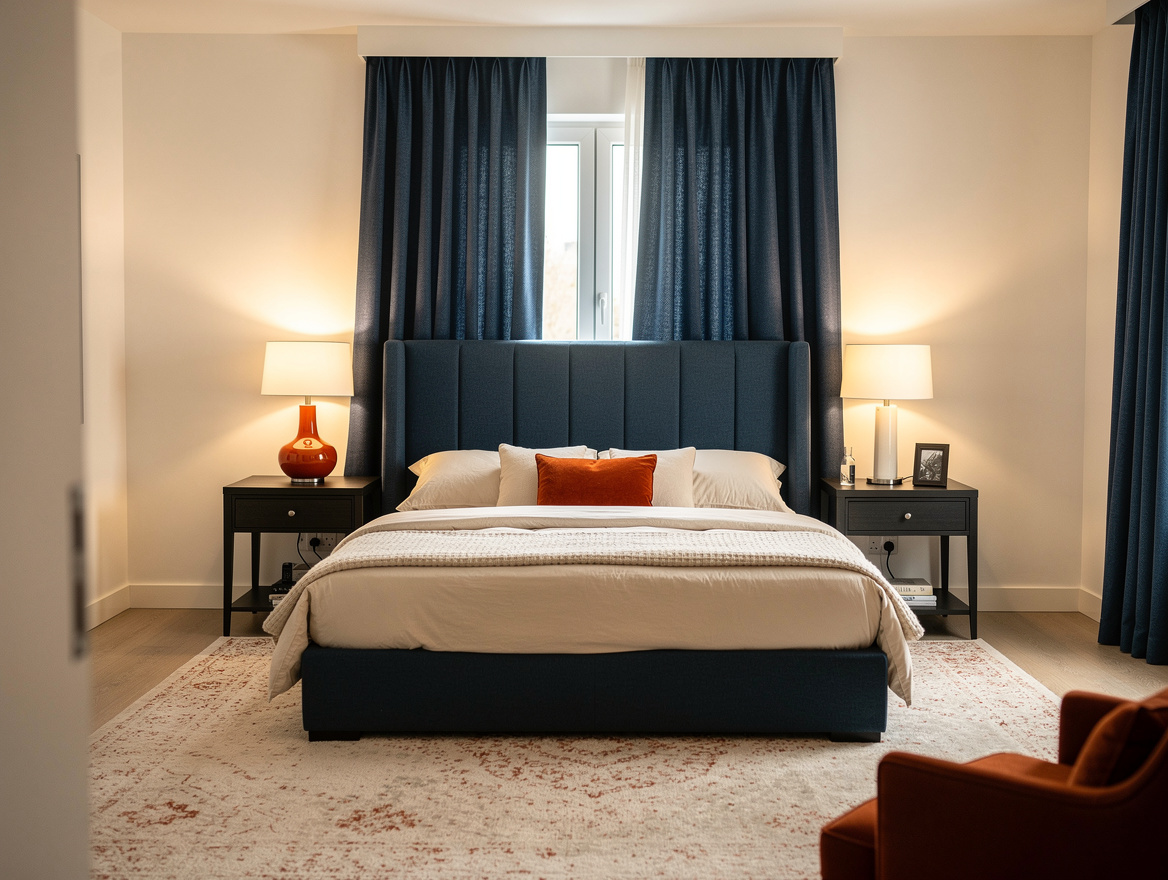
Then bring in fabric that absorbs light, not fabric that throws it back. Target Threshold blackout curtain panels are often around $30 to $40 each, and that kind of heavier weave helps a bedroom feel settled fast.
Keep Nightstands and Lamps Substantial Enough to Matter
Small bedside pieces make neutral bedrooms look underfurnished. When the bed is the biggest item in the room, tiny nightstands beside it feel like an afterthought.
A nightstand should roughly hold its own against the mattress height, and the lamp should feel scaled to the wall behind it. Walmart ceramic table lamps are often available for about $25 to $45, and a wider base usually looks better than a skinny one in a calm bedroom.
I also think matching height matters more than matching style. Two different tables can work, but if one side sits three inches lower, the room starts to feel off balance immediately.
Add One Dark Note So the Room Does Not Go Flat
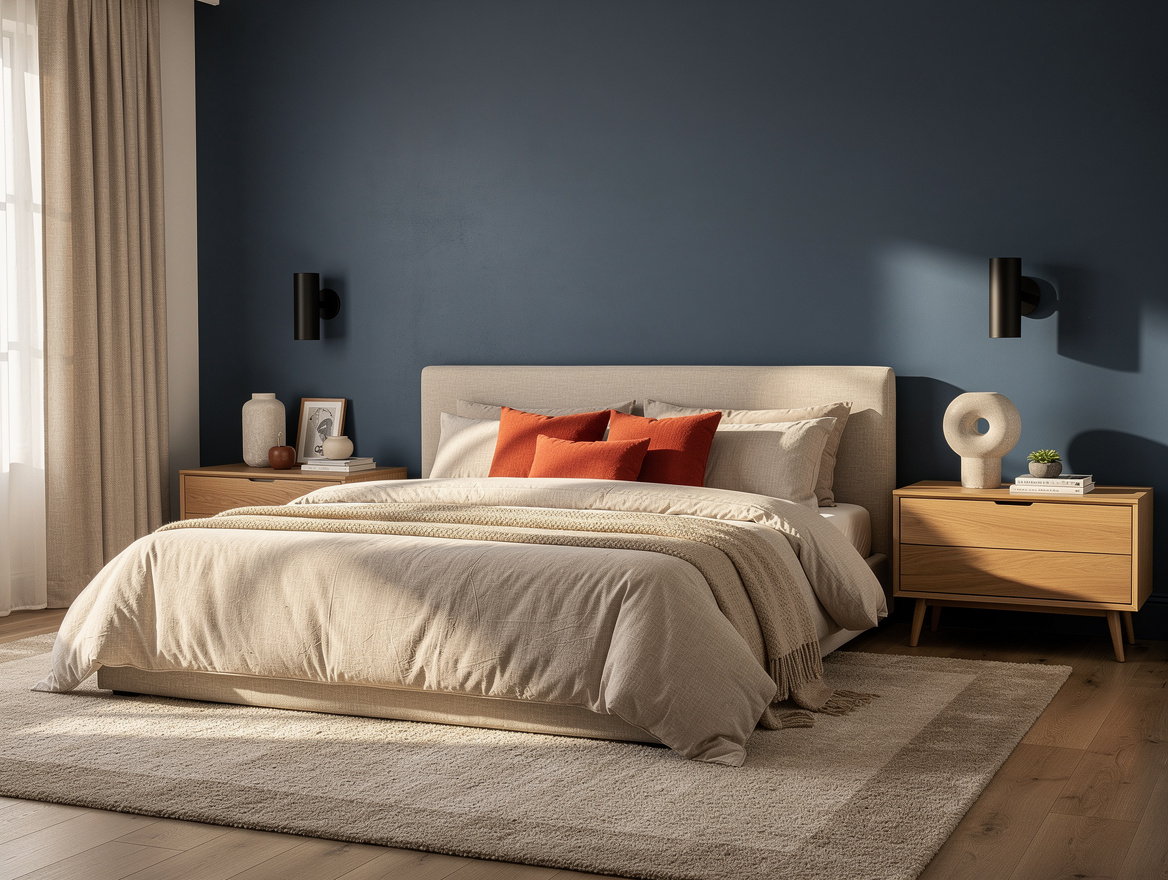
The biggest myth about neutral bedrooms is that everything should stay pale. Rooms with no visual weight usually end up feeling unfinished, even when every item is nice on its own.
You need one darker note to ground the palette: a charcoal lumbar pillow, blackened bronze sconces, or a deep walnut frame. Amazon blackout curtain rods or matte black reading sconces are often around $25 to $60, and that small contrast can sharpen the whole room.
Keep it controlled. One dark line at the windows, one dark shape at the bed, that is usually enough to stop neutral from turning bland.
Start with the rug and the headboard before you buy another throw pillow. Those two moves set the scale and give the room a center, which is what most neutral bedrooms are missing.
Once that foundation is right, the softer details fall into place much faster, and you will spend less trying to rescue a room that was only under-anchored.
Mia Carter writes about small-space living and budget home makeovers. She has restyled three rentals and tests most ideas in her own 45 sqm flat.