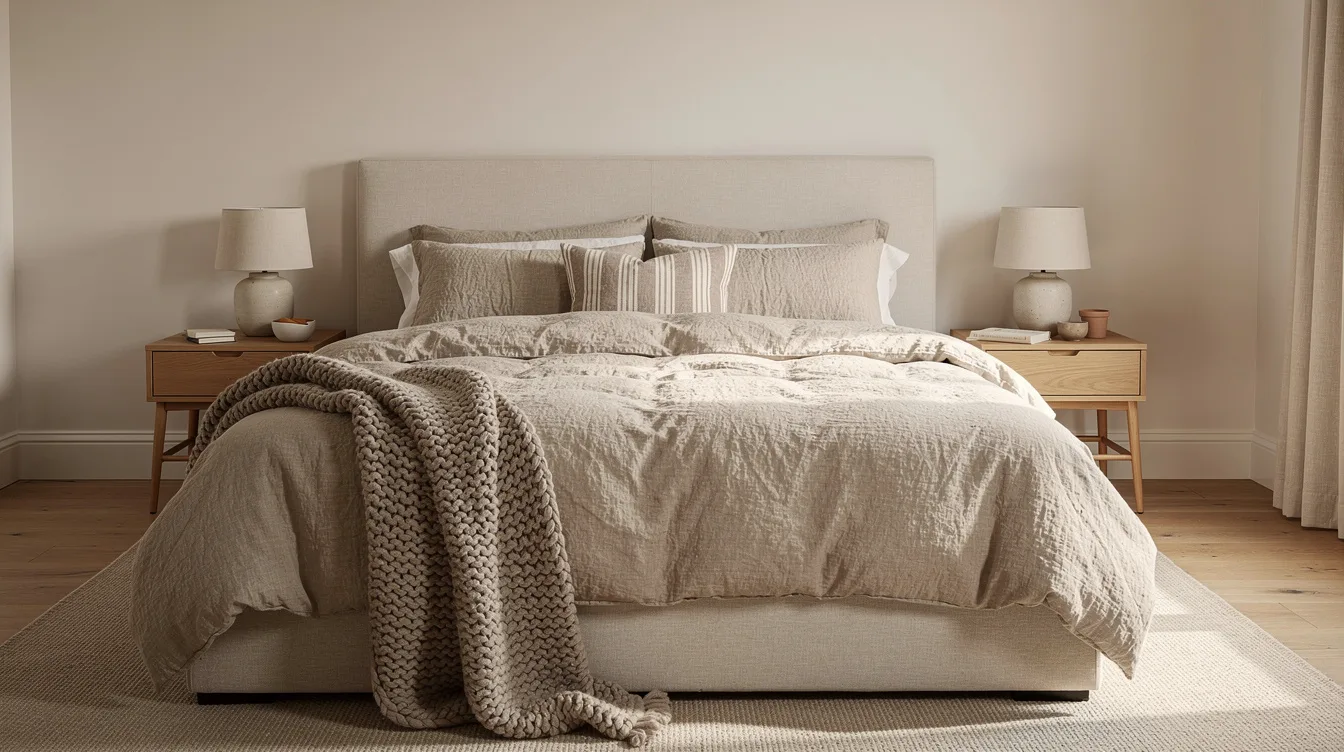
I can always tell when a bed is close to looking great but still feels off: the sheets are flat bright white, the comforter is puffy in the wrong way, and every pillow is fighting for attention. Most of the time, the fix is not buying more stuff, it is choosing better layers.
Right now, the beds that look current feel warmer, quieter, and more tactile. Think natural fabrics, soft beige or clay tones, and one or two accents that give the whole bed some shape.
Start With Warm Neutrals Instead of Stark White
The easiest upgrade is a duvet cover in cream, sand, greige, or light taupe. That warmer base looks softer in daylight and far more expensive than cold white.
I like this move because it calms the whole room fast. On sites like Target, Wayfair, and Amazon, a typical queen-size cotton or linen-blend duvet set usually lands around $70 to $150, which is enough to get a noticeably better look without going luxury.
For 2026-style bedding, tone matters more than pattern at first. A warm neutral bed reads current even before you add a throw or accent pillow.
Layer Linen and Washed Cotton for a Relaxed Finish
If you want that polished but lived-in bed, go straight to linen or washed cotton. Linen has that slightly rumpled texture that makes a bed feel intentional, not overstyled.
IKEA is useful here because its linen-focused bedding lines make the look accessible in standard US sizes. A typical queen duvet cover set in linen or linen-blend often falls in the $60 to $120 range there, while similar options on Wayfair or Amazon can climb closer to $120 to $220.
I would not chase super shiny bedding right now. Matte textures look better, feel cozier, and age better in a real bedroom.
Add One Coverlet to Keep the Bed From Looking Flat
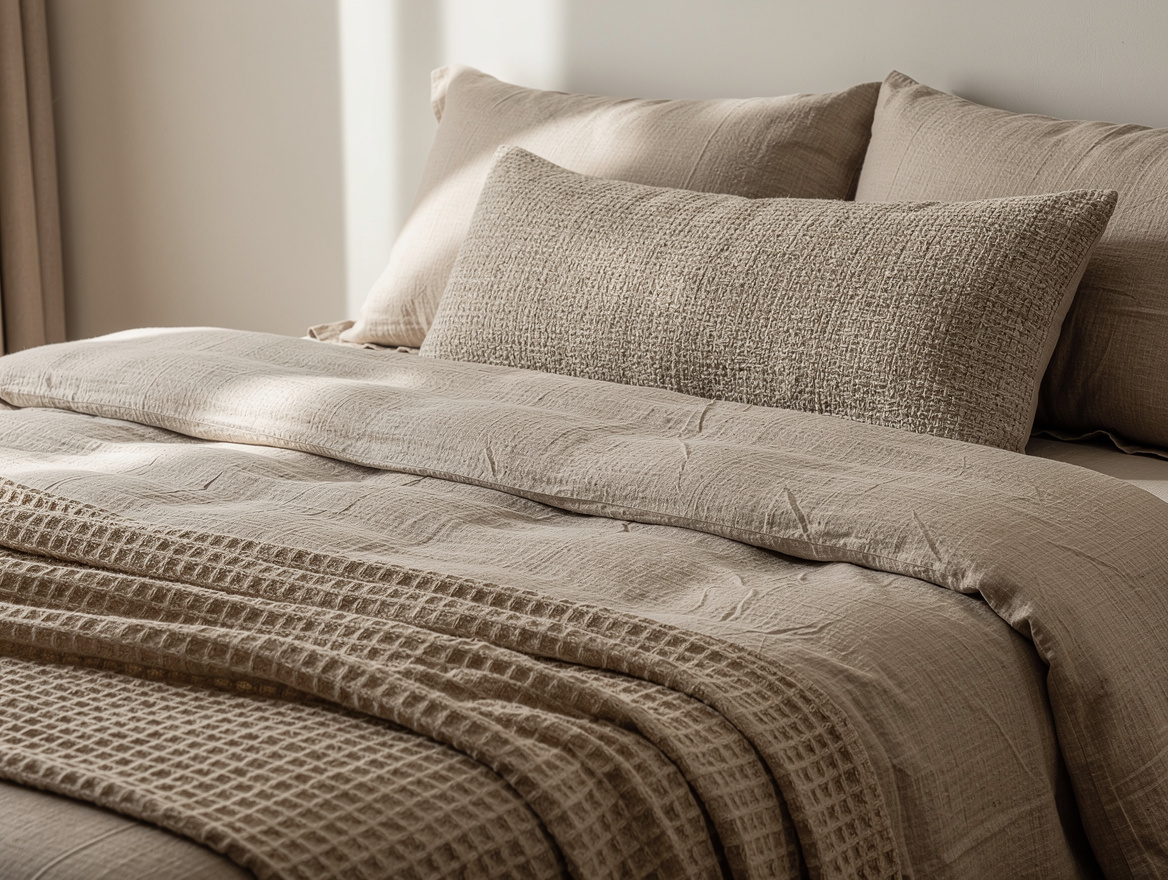
A bed with only sheets and a duvet usually looks unfinished by afternoon. One quilted coverlet or lightweight bedspread gives the surface a middle layer, which is where most stylish beds get their depth.
This piece works best in a similar tone, not a loud contrast. Try oatmeal over ivory, camel over beige, or clay over warm white, and let the color shift do the work.
On Walmart, Target, and Costco, a typical queen coverlet runs about $50 to $120, while thicker or more textured versions on Wayfair can reach $150 to $200. That is money well spent because it changes the silhouette of the whole bed.
Use Subtle Stripes or Checks When Solids Feel Too Safe
If a full neutral bed feels a little sleepy, bring in a pattern that stays quiet. Thin stripes and small checks are the sweet spot because they add movement without taking over.
A striped duvet set in beige on white, or a fine gray check on cream, looks current in a way big florals and loud prints usually do not. The pattern should read from a few feet away, but it should not be the first thing your eye sees.
At Amazon and Wayfair, a typical queen patterned set often sits around $60 to $130. Pair it with solid percale sheets, usually around $50 to $120 for a queen set, and the contrast stays crisp instead of busy.
Cut the Pillow Count and Make Every One Earn Its Spot
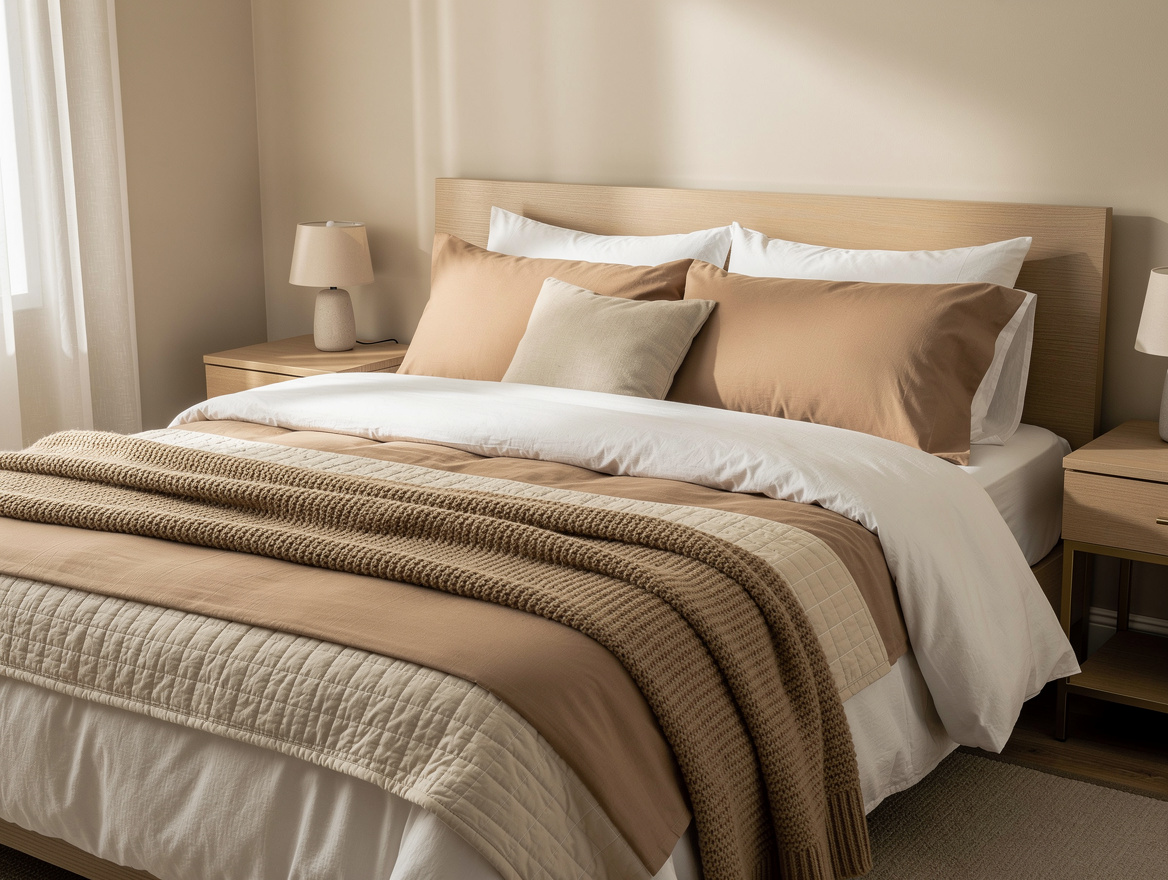
I think most beds look better with fewer pillows than people assume. Two sleeping pillows, two shams, and one accent pillow or lumbar cushion usually beat a giant pile every time.
The current look is cleaner and less stuffed. Instead of eight random cushions, use Euro shams or one oversized lumbar in a tactile fabric like bouclé, slub cotton, or brushed linen.
Typical accent pillows at Target, Walmart, and Home Depot run about $20 to $50, while simple cushion covers on Amazon often start around $10 to $30. My opinion is simple: extra pillows do not make a bed look luxurious, they usually make it look undecided.
Finish With One Darker Throw for Contrast and Texture
The layer that ties everything together is usually a throw blanket at the foot of the bed. A darker camel, mocha, olive, or muted rust throw gives the bed a clear stopping point and keeps all the neutrals from blurring together.
Texture matters more than thickness here. A waffle weave, chunky knit, or wool-blend throw adds depth even if the rest of the bedding is very simple.
On Target, Costco, and Amazon, a typical throw costs about $30 to $80, with heavier wool or textured options often reaching $100 to $120. I would rather spend on this than on another decorative pillow because the throw is visible all day.
For a queen bed, standard proportions still matter. Sheets labeled for a typical 60-by-80-inch mattress and bedding designed to drape slightly over the sides will always look more tailored than pieces squeezed to fit.
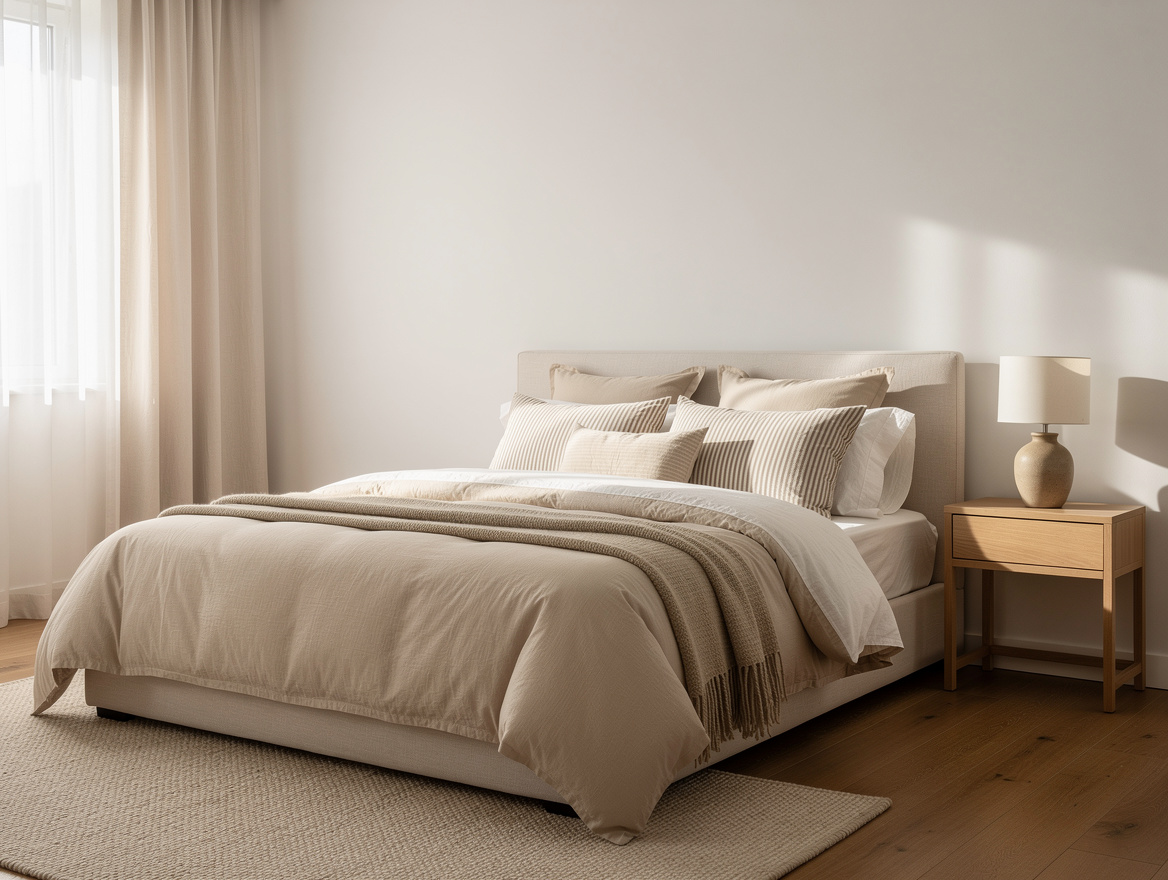
Start with the base first: swap in a warm neutral sheet set and duvet cover, then add one textured throw before you buy anything else. Once those two layers feel right, the rest of the bed gets much easier to style without overspending.
Mia Carter writes about small-space living and budget home makeovers. She has restyled three rentals and tests most ideas in her own 45 sqm flat.