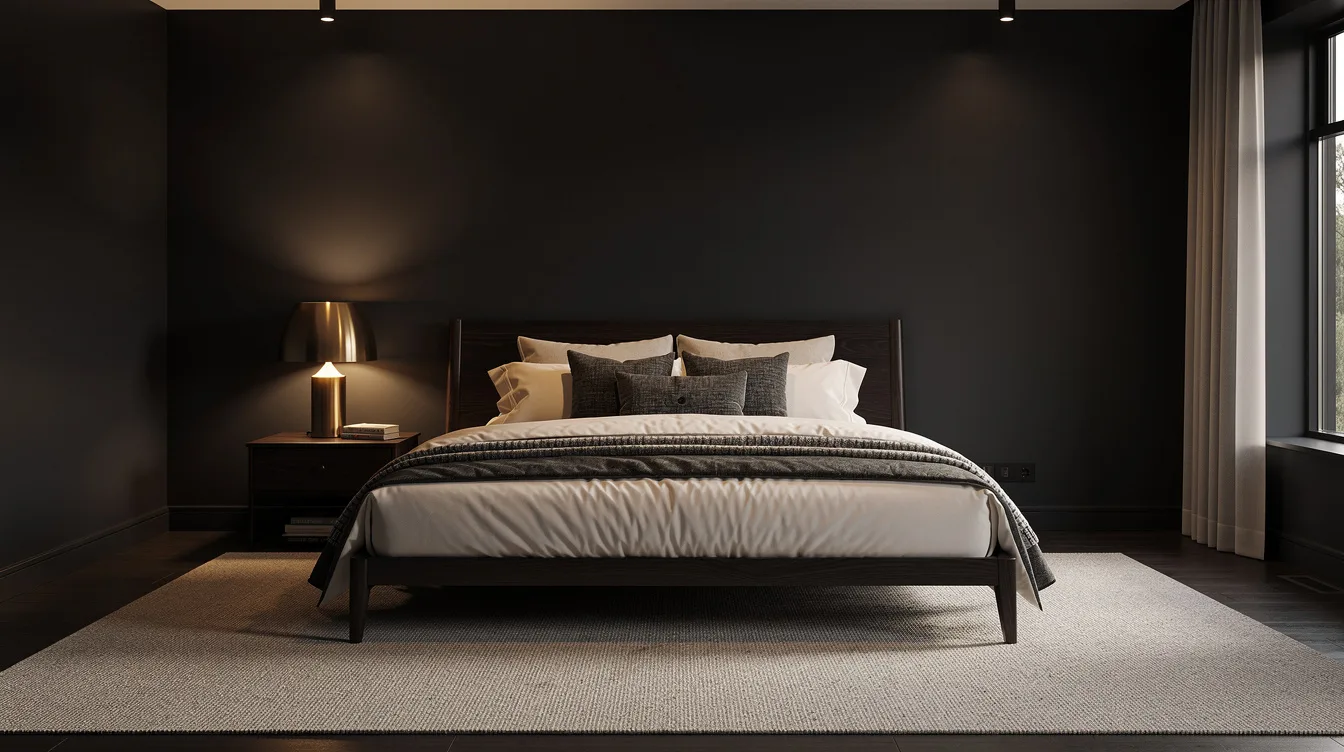
The first night I painted my bedroom darker, the room looked smaller for about ten minutes, then it started to feel calmer. My old white walls had been bouncing light onto every wrinkle in the bedding, every charger on the floor, every random pile on the dresser.
What finally made the space feel sophisticated, not gloomy, was balance. In an average 130 to 150 square foot bedroom, dark color works when the paint, textiles, and lighting all pull in the same direction.
Paint the walls deep, then stop before the ceiling
I got the richest result with a deep charcoal instead of a harsh flat black. A good starting point is a premium interior paint from Home Depot or Lowe’s, and a typical cost for enough paint in a room this size is about $180 to $300.
I would not paint the ceiling black unless the room has serious height. On a standard bedroom ceiling, dark walls with a lighter ceiling keep the room moody and polished instead of heavy.
For a room around 10 by 13 feet or 11.5 by 13 feet, you usually need enough paint to cover roughly 215 to 270 square feet of wall surface once windows and doors are factored in. That is where better paint earns its keep, because patchy dark walls look cheap fast.
Anchor the room with a lower bed
The bed changed everything. A low, simple frame in black-brown or dark wood made the room feel intentional, and IKEA is still one of the easiest places to get that look without wrecking the budget.
For a sophisticated dark bedroom, I prefer a queen bed around 63 by 80 inches in smaller rooms and a king around 76 by 80 inches if the wall is wide enough. A typical bed frame runs about $250 to $800 at Wayfair or Amazon, depending on finish and storage.
I also like an upholstered headboard in charcoal velvet or faux suede, ideally about 48 to 55 inches tall. That extra height gives dark walls some softness, and it reads more hotel than college apartment.
Layer the bedding instead of matching everything
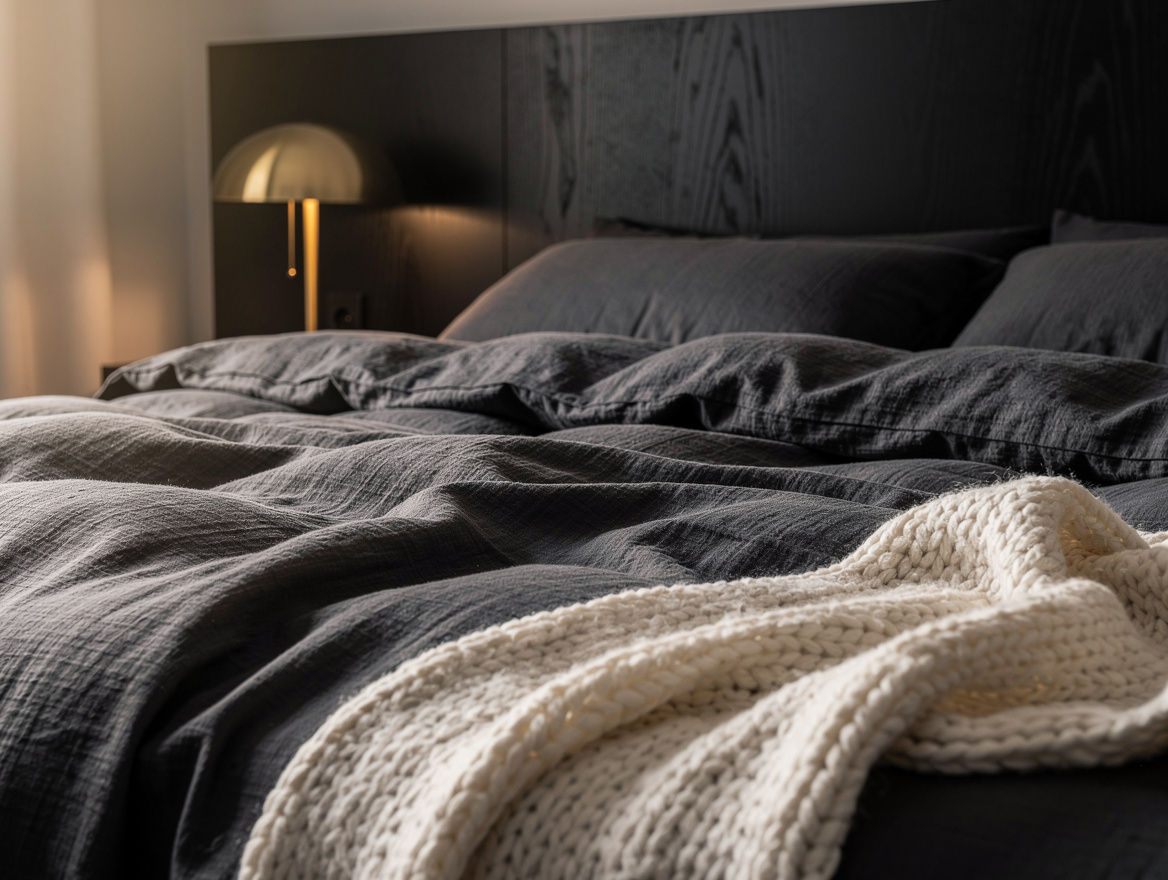
Dark bedrooms fall apart when the bedding is too flat. I had better luck mixing a charcoal duvet cover, black sheets, and one lighter layer, usually cream or oatmeal, so the bed still catches the eye.
A washed cotton or linen-look set from Target or Walmart usually lands around $60 to $180, which is enough to get the effect without chasing luxury labels. I would spend more on texture than on decorative pillows, every time.
A thick throw at the foot of the bed helps more than five extra shams. A wool or velvet throw, one warm brass accent, and crisp pillowcases do the job better than an overstyled bed ever will.
Use one large rug to quiet the floor
This was the step that made the room feel finished. A dark room with bare flooring can look cold, so I slid a 5 by 8 foot rug about two-thirds under the bed and the whole layout instantly felt softer.
For a queen bed, a 5 by 8 can work in a tighter room, but I think a 6 by 9 looks more expensive if you have the floor space. Typical retail pricing is about $120 to $350 at Wayfair, Costco, or Amazon, depending on pile and material.
I would skip tiny accent rugs here. In a dark bedroom, undersized rugs make everything look accidental, and that ruins the tailored mood you are trying to build.
Warm up the lighting, then add one hidden glow
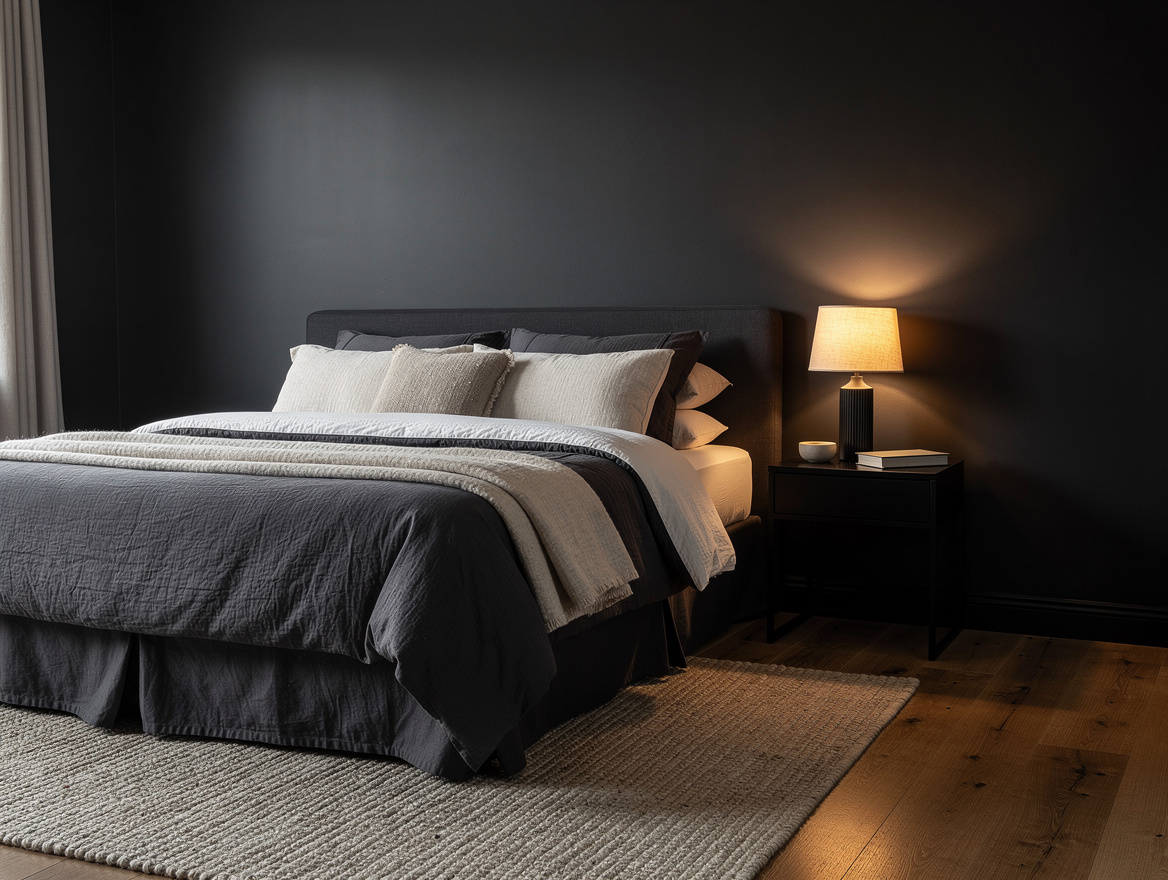
Cool white bulbs are brutal in a dark bedroom. I switched to warm bulbs in the 2200K to 2700K range, and the paint immediately looked richer instead of flat.
Bedside lamps or sconces in matte black or brass from Ace Hardware, Target, or Home Depot typically cost about $40 to $150 each. This is not where I would cheap out on shape, because the fixtures stay visible even when the room is dim.
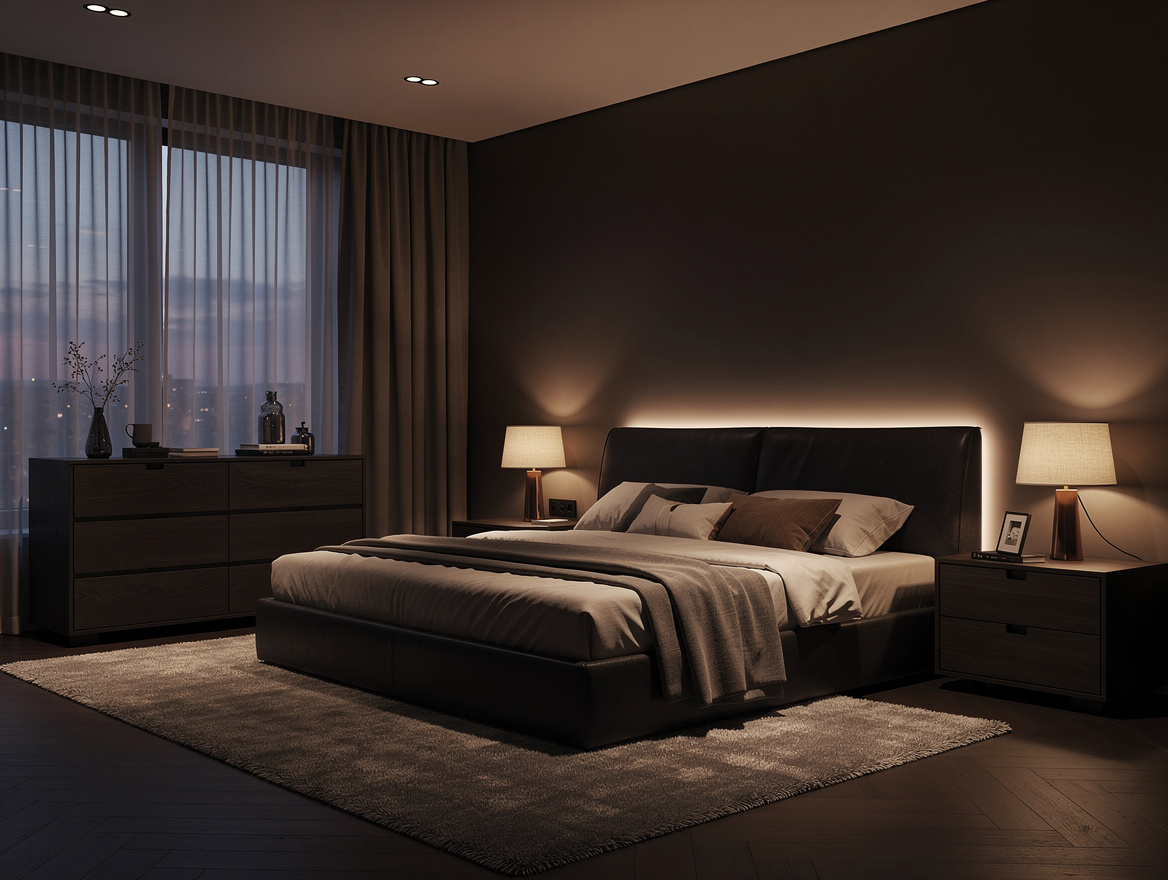
I also love a hidden LED strip behind the headboard or under a dresser edge. A typical 16-foot strip from Amazon costs around $20 to $50, and that indirect light gives the room a boutique-hotel feel without much effort.
If you like smart controls, a starter setup for dimmable smart bulbs usually starts around $20 to $80. That matters more in a dark room, because one tap can shift the whole mood from sleepy to sharp.
Keep storage matte and quiet
Dark bedrooms look sophisticated when storage disappears a little. I had the best result with matte black or dark brown pieces that do not reflect every lamp in the room.
A wardrobe system like IKEA PAX or a clean-lined dresser from Wayfair works well because the shapes are simple. Typical pricing for a larger wardrobe setup can range from about $700 to $1,500, while a dresser often sits closer to $250 to $700.
I am opinionated about this part: mirrored furniture fights the whole mood. Glass is fine in one small dose, but glossy bedroom storage usually turns a moody room into a showroom.
If you are starting from scratch, spend your money in this order: paint, bedding, lighting, then the rug. Dark walls are easy to blame, but weak lighting and thin textiles are usually the real reason the room misses.
A realistic mid-range budget for this look is often around $1,200 to $2,500 if you mix IKEA, Target, Wayfair, and one stronger hero piece. Start with one wall color and one warm lamp tonight, and the rest gets much easier to judge.
Mia Carter writes about small-space living and budget home makeovers. She has restyled three rentals and tests most ideas in her own 45 sqm flat.