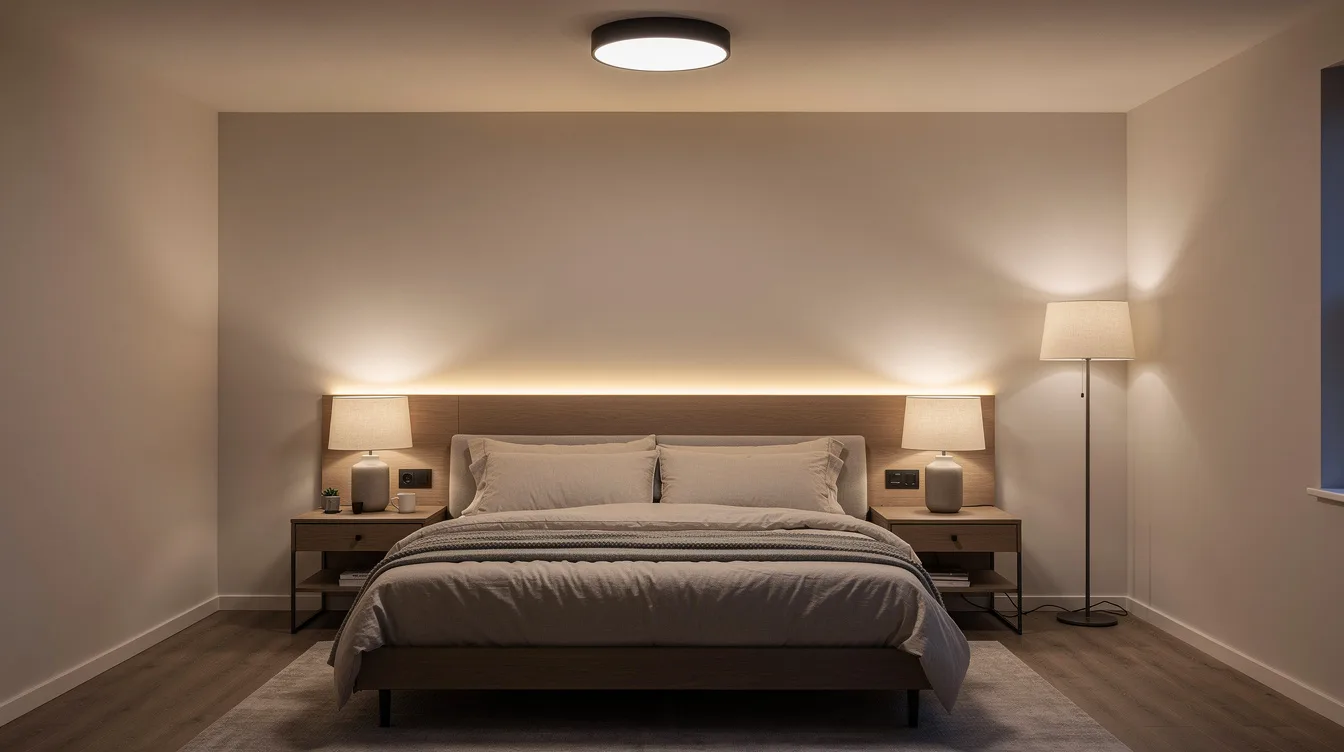
I knew my bedroom lighting was wrong because every night ended the same way: one blinding ceiling bulb, one shadowy corner, and a nightstand lamp that made half the bed useless. The room was fine during the day, then weirdly tense after 8 p.m.
What fixed it wasn’t an expensive remodel. It was layering a few separate light sources, choosing warmer bulbs, and being honest about what I actually do in the room after dark.
Start With a Low Ceiling Light You Can Actually Dim
I stopped treating the overhead light like the enemy and replaced it with a dimmable Wayfair flush mount in frosted glass. For a standard bedroom, a typical 16 to 20 inch fixture gives enough spread without hanging too low over the bed.
The price point that made sense for me was about $90 to $180, which is where a lot of simple metal-and-glass styles land. I think this is the layer people skip too quickly, and it matters because morning light needs to be clear when you’re getting dressed or cleaning.
By day, I want this fixture bright enough to feel useful, roughly in the 3000K to 4000K range if the bulb allows it. At night, dimmed warm light is the whole point, and 2700K feels far better than a cold white bulb that makes the room look flat.
Use Matching Bedside Lights for the Real Nighttime Work
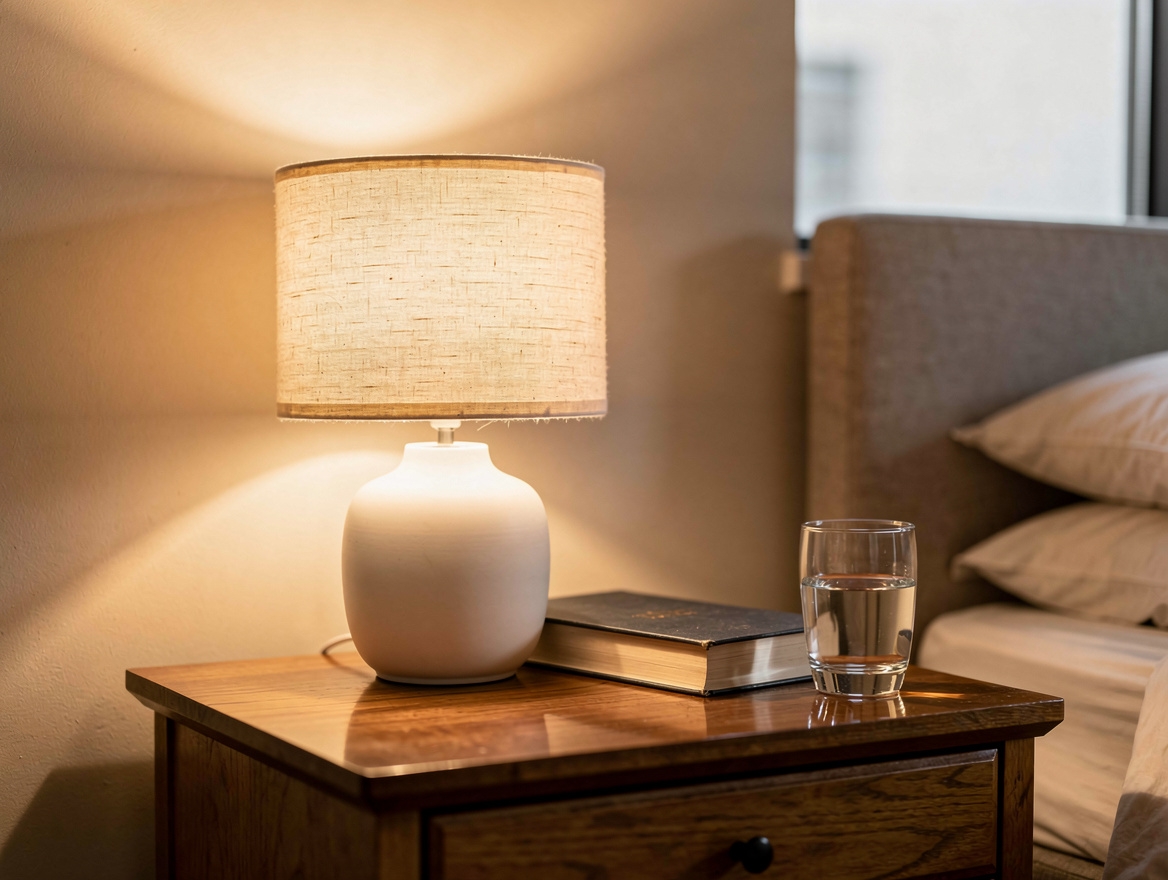
The biggest improvement came from adding two proper bedside lights instead of relying on one lamp across the room. I used a pair of IKEA table lamps with linen-look shades, and that setup instantly made the room feel balanced.
A typical bedside lamp height of 18 to 24 inches works well because the shade lands close to eye level when you’re sitting up in bed. I’d budget around $20 to $50 per lamp at IKEA, Target, or Walmart for something simple in ceramic, wood, or painted metal.
This is where I stay strict about bulb color. A warm 2700K LED with about 400 to 800 lumens per lamp is enough for reading and winding down, and anything brighter starts to feel like a dentist’s office.
Mount Sconces When the Nightstand Feels Too Crowded
In smaller bedrooms, table lamps eat up the exact surface you need for a book, water glass, and charger. Wall-mounted Home Depot sconces solved that for me in a room where the nightstands were only about 18 inches wide.
A typical placement is 22 to 26 inches above the mattress top, with the fixture slightly off the bed centerline so the light lands where you need it. Most plug-in or hardwired sconces I looked at sat in the $35 to $90 range, usually in black metal, brass-tone steel, or glass.
I prefer sconces with shades or globes over exposed bulbs. Bare bulbs may look sharp online, but in a bedroom they can feel harsh the second you turn your head toward them.
Add a Corner Lamp to Pull Light Away From the Bed
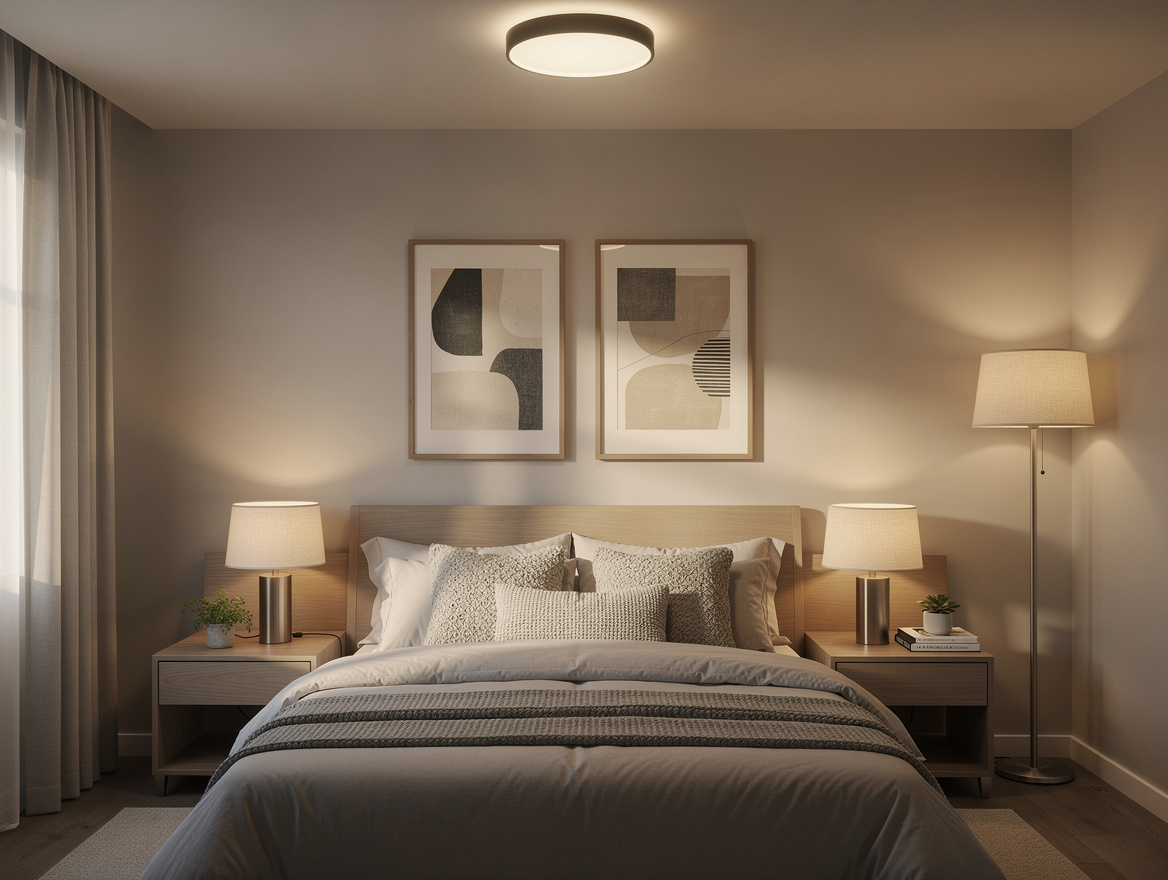
My room felt better the moment I stopped concentrating every light source near the headboard. A single Target floor lamp in the corner gave the room depth and made the bed area feel calmer at night.
A typical bedroom floor lamp is about 58 to 65 inches tall, which is enough to throw soft light across a dresser or empty wall. I found the most realistic budget range to be $40 to $120 for metal or wood-base styles with a fabric shade.
This is the layer I use after sunset when I don’t want the ceiling light on at all. It’s softer, it flatters the room more, and it keeps the space from feeling like everything revolves around one bright source above your head.
Hide LED Strips Where They Glow Instead of Shout
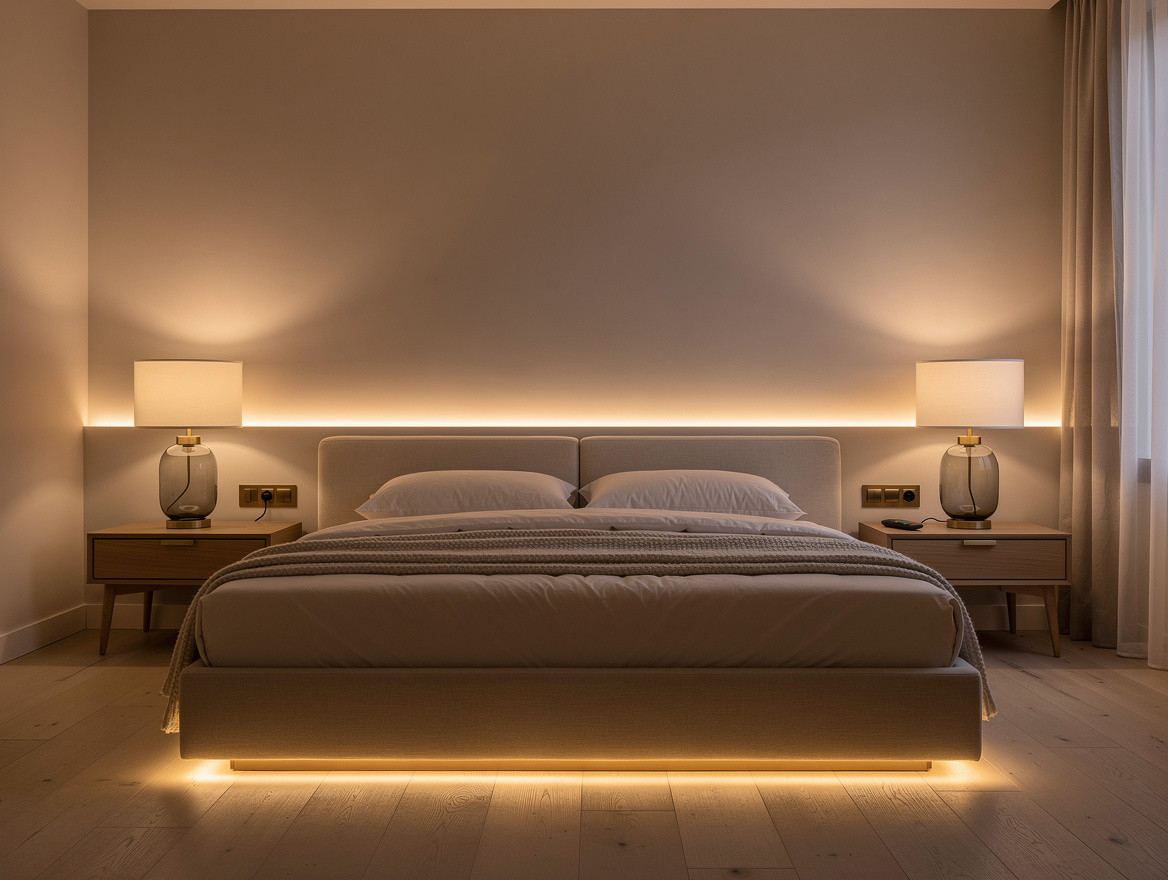
I was skeptical about LED strips because so many bedrooms use them in a way that feels loud and college-dorm-ish. The version that worked was a warm Amazon LED strip tucked behind the headboard and under the bed frame, where you see glow instead of the diodes.
For this layer, warm white around 2700K is nonnegotiable if you want the room to feel restful. A typical 16-foot dimmable strip costs about $15 to $35, and adhesive-backed versions are easy enough for a weekend setup.
I would not run color-changing lights as the main evening mood unless you genuinely like that look. Soft hidden light is more useful, more grown-up, and less likely to annoy you after a week.
Split Everything Into Separate Controls
The setup only started working from day to night once I stopped putting every light on one switch. I now keep the overhead, the bedside pair, and the accent layer on separate controls, using a mix of Lowe’s smart plugs and lamp dimmers.
Three to five independent light sources is a solid target for a standard bedroom, especially one around 130 to 160 square feet. That sounds like a lot on paper, but in practice it just means you can choose bright light for folding laundry and softer light when you’re ready to slow down.
Typical smart plugs cost about $10 to $25 each, and simple in-line dimmers aren’t much more. This is the least glamorous purchase in the whole room, but it changes the way the space works every single day.
If you want the fastest win, start with two warm bedside lights and put your overhead fixture on a dimmer next. That combo usually does more for a bedroom than buying one fancy lamp and hoping it carries the whole room.
Mia Carter writes about small-space living and budget home makeovers. She has restyled three rentals and tests most ideas in her own 45 sqm flat.